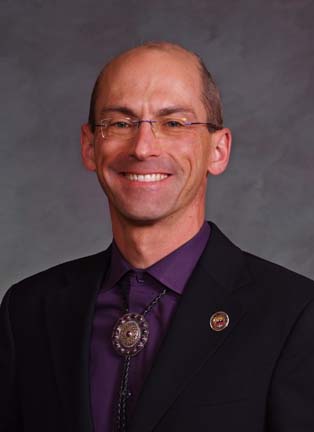
Photo of Mike Weissman
D Colorado Senate · District 28

Sen. Mike Weissman

Compare
Total votes
8,467
all sessions
Attendance
98%
155 missed
Higher than 80% of chamber peers
With party
99%
of cast votes
Higher than 75% of chamber peers
Bipartisan score
1%
crosses aisle rarely
Lower than 87% of chamber peers
Sponsored
585
bills & resolutions
Near the chamber average
Committees
4
assignments
585 bills and resolutions

Sponsored bills

Total
585
Primary
206
Co-sponsor
379
This page
585
matching current filters
Primary SB 25-157
In committee · Colorado Senate · Lead sponsor
Deceptive Trade Practice Significant Impact Standard

The bill establishes that certain evidence that a person has engaged in an unfair or deceptive trade practice constitutes a significant impact to the public. The bill also clarifies that a deceptive trade practice claim cannot be based solely on a claim that a person breached a contract or engaged in negligence or on a claim for damages based on the rendering of professional services, unless the claim for damages involves an allegation of a material misrepresentation of fact, a failure to disclose material information, or an action that cannot be characterized as providing advice, judgment, or opinion.(Note: This summary applies to this bill as introduced.)

In committee Apr 1, 2025 0 co-sponsors
Co-sponsor SR 25-008
Passed · Colorado Senate · Co-sponsor
Transgender Day of Visibility

Maddy summarySenate Resolution 25-008 designates March 31 of each year as "Transgender Day of Visibility" in Colorado. The resolution commits the Colorado Senate to defending transgender rights in health care, education, employment, housing, and civic participation while acknowledging Colorado's historical role in providing gender-affirming care. It also expresses solidarity with transgender people and other marginalized groups facing rights challenges. This symbolic resolution does not create new laws or funding but serves as a formal public affirmation of support for transgender Coloradans.

Passed Mar 31, 2025 1 co-sponsor
Co-sponsor HB 25-1015
Signed into law · Colorado House · Co-sponsor
Ability to Pay Bond Online Clarifications

Current law requires that bond can be posted online. The act makes clarifying changes to the bond statutes to ensure that bond can be posted online. (Note: This summary applies to this bill as enacted.)

Signed into law Mar 31, 2025 1 co-sponsor
Co-sponsor HB 25-1077
Signed into law · Colorado House · Co-sponsor
Backflow Prevention Devices Requirements

Backflow is the reverse flow of water, fluid, or gas caused by back pressure or back siphonage. Under current law, individuals who are engaged in the business of installing, removing, inspecting, testing, or repairing backflow prevention devices are subject to the licensure requirements for plumbers, except when the individuals are installing or testing a stand-alone fire suppression sprinkler system. The act exempts individuals engaged in the business of inspecting, testing, or repairing backflow prevention devices from licensure requirements but retains the licensure requirements for individuals engaged in the installation or removal of the devices; except that individuals who install or replace a backflow prevention device on a stand-alone fire suppression system remain exempted from the licensure requirements. The act requires that, on and after July 1, 2025, a licensed plumber who installs, tests, inspects, repairs, or reinstalls a backflow prevention device and a certified cross-connection control technician or a licensed plumber with a cross-connection control technician certification who tests or repairs a backflow prevention device must affix a tag on the backflow prevention device that contains certain information about the licensed plumber, the certified cross-connection control technician, or the licensed plumber with a cross-connection control technician certification, as applicable, and the service that was provided. (Note: This summary applies to this bill as enacted.)

Signed into law Mar 28, 2025 1 co-sponsor
Primary SB 25-148
In committee · Colorado Senate · Lead sponsor
Modifications to Campaign Finance Requirements

The bill modifies campaign finance requirements contained in the "Fair Campaign Practices Act" that are related to prohibitions on lobbyist contributions and reporting and disclosure requirements for independent expenditures, electioneering communications, federal committees, and nonprofit entities. Prohibition on lobbyist contributions ( section 2 of the bill). A lobbyist is prohibited from soliciting, making, or promising to make a contribution to an elected official or candidate for the following state offices: members of the general assembly, the governor or lieutenant governor, the secretary of state, the state treasurer, or the attorney general. Current law applies this prohibition only when the general assembly is in regular session or when any measure adopted by the general assembly in a regular session is pending before the governor for approval or disapproval. The bill changes current law so that the prohibition on lobbyist contributions applies throughout the year, regardless of whether the general assembly is in session, and also extends this prohibition to cover any individual who has been a professional lobbyist within the preceding 6 months. Reporting and disclosure requirements for independent expenditures, electioneering communications, federal committees, and nonprofit entities. The state constitution defines an "electioneering communication" to mean certain communication that unambiguously refers to a candidate and that is disseminated to the public within 30 days before a primary election or within 60 days before a general election. Senate Bill 19-086, enacted in 2019, expanded the definition of this term for purposes of campaign finance disclosures to include any communication that satisfies all other requirements specified in the state constitution but that is disseminated between the primary election and the general election. The bill further expands this definition for purposes of campaign finance disclosures to include any communication that satisfies all other requirements specified in the state constitution but that is disseminated within 90 days prior to a primary election ( sections 1 , 4 , and 7 ). The state constitution defines an "independent expenditure" to mean any purchase, payment, distribution, loan, advance, deposit, or gift of money by any person for the purpose of expressly advocating the election or defeat of a candidate or supporting or opposing a ballot issue or ballot question and that is not controlled by or coordinated with a candidate or agent of a candidate. Under existing law, any person making an independent expenditure in excess of $1,000 within 30 days before a primary, general, or regular biennial school election is required to file a report within 48 hours after obligating money for the independent expenditure. The bill expands this requirement to cover the 90 days before a primary, general, or regular biennial school election and the period between the primary and general elections and shortens the time for the filing of this report to within 24 hours after obligating money for the independent expenditure ( section 3 ). Existing law requires a disclosure on any communication that constitutes an expenditure in excess of $1,000. This disclosure must include the name of the person paying for the communication and, if the person paying for the communication is not a natural person, must identify a natural person who is the registered agent of the nonnatural person. The bill requires that this disclosure statement also identify the names of the 3 persons that have contributed the most money to the person identified as paying for the communication for the purpose of making the communication ( section 3 ). The bill also requires a written affirmation from any committee registered with the federal election commission (federal committee) that contributes, donates, or transfers $1,000 or more to any committee that is required to report or register under the "Fair Campaign Practices Act" ( section 6 ). The bill prohibits any committee from accepting such a contribution, donation, or transfer unless the federal committee provides a written affirmation that includes, as applicable: The name, address, and identification number of the federal committee; The name and address of the treasurer of the federal committee; The amount and recipient of the contribution, donation, or transfer; and A list of any person that transferred $1,000 or more to the federal committee, which includes the person's name and address and, if the person is a natural person, the person's occupation and employer. In addition, the bill requires a written affirmation from any nonprofit entity that contributes, donates, or transfers $1,000 or more to an issue committee, independent expenditure committee, or political organization ( section 5 ). The bill prohibits any such committee or organization from accepting a contribution, donation, or transfer from a nonprofit entity unless the nonprofit entity provides a written affirmation that includes, as applicable: The name and address of the nonprofit entity; The name and address of the registered agent of the nonprofit entity; The amount and recipient of the contribution, donation, or transfer; and A list of any person that is not a natural person and that donated $1,000 or more to the nonprofit entity, which includes the person's name and address.(Note: This summary applies to this bill as introduced.)


In committee Mar 27, 2025 0 co-sponsors
Primary HB 25-1286
In committee · Colorado House · Lead sponsor
Protecting Workers from Extreme Temperatures

The bill requires employers to implement protections for workers who are exposed to extreme hot and cold temperatures at the worksite, including temperature mitigation measures, rest breaks, and temperature-related injury and illness prevention plans. (Note: This summary applies to this bill as introduced.)
In committee Mar 27, 2025 0 co-sponsors
Primary HB 25-1081
Signed into law · Colorado House · Lead sponsor
Reporting Statistics on Restitution

Beginning with the judicial department's 2026 "SMART Act" hearing, the act requires the state court administrator to report statistics concerning restitution payments received and owed during the previous 5 state fiscal years. (Note: This summary applies to this bill as enacted.)

Signed into law Mar 26, 2025 0 co-sponsors
Primary HB 25-1114
Signed into law · Colorado House · Lead sponsor
Defense Review of Tangible Object for Criminal Trial

The act grants a right for defense counsel to review a tangible object related to a criminal case at least 35 days before a trial, except for cases involving sexually exploitative material, and create confidential work product following their review. Law enforcement shall designate a specific location for the evidence viewing and be present during the evidence viewing to ensure chain of custody and integrity of the evidence. The act does not limit the defense's ability to request testing or a hearing, or the court's ability to conduct a hearing, on a tangible piece of evidence. Law enforcement officers and other state officials may record an evidence viewing by either the prosecution or the defense for the purpose of ensuring the chain of custody, integrity, or safety of the evidence held by the law enforcement agency, and must provide notice to the prosecuting authority and defense if a recording occurs. Law enforcement may view the recording for purposes of organization or cataloguing the evidence, or as authorized by a court order. A trial court may enter protective orders relating to a recording of an evidence viewing. When a member of the defense team is viewing evidence and is incidentally recorded on a law enforcement body-worn camera, it is not an interaction with law enforcement for purposes of the body-worn camera statute and is not for the purpose of enforcing the law or investigating possible violations of the law. (Note: This summary applies to this bill as enacted.)

Signed into law Mar 26, 2025 0 co-sponsors
Primary HB 25-1181
Signed into law · Colorado House · Lead sponsor
Colorado Rangers Law Enforcement Shared Reserve

The Colorado rangers law enforcement shared reserve, commonly known as the Colorado rangers (CLER), is a statewide law enforcement agency that has been established as a political subdivision of the state through the execution of an intergovernmental agreement for the public purpose of promoting the safety, security, and general welfare of all Coloradans by establishing a peace officers standards and training board (P.O.S.T. board) certified statewide shared peace officer reserve force. Sections 1 through 4 of the act update laws relating to civil defense workers and peace officers to clarify the status of the CLER as a governmental entity created by intergovernmental agreement rather than as a volunteer organization, as it was prior to 2018, the requirement that a Colorado ranger be a P.O.S.T. board certified peace officer, and the scope of a Colorado ranger's authority. Section 5: Authorizes the board of the CLER to establish policies to allow compensation to be paid to a Colorado ranger if the Colorado ranger: Is deployed as a peace officer to a jurisdiction for an extended period, as defined or described in the policies; or Is deployed as a peace officer outside the state as authorized by a specified interstate compact for any length of time; and Authorizes the CLER to accept gifts, grants, and donations.(Note: This summary applies to this bill as enacted.)

Signed into law Mar 26, 2025 0 co-sponsors
Co-sponsor SB 25-170
Signed into law · Colorado Senate · Co-sponsor
Deoxyribonucleic Acid & Sexual Assault Kit Backlog Testing & Data

The act requires the Colorado bureau of investigation (CBI) to spend $3,000,000 in specifically appropriated money from House Bill 24-1430, concerning the provision for payment of the expenses of the executive, legislative, and judicial departments of the state of Colorado, and of its agencies and institutions, for and during the fiscal year beginning July 1, 2024, except as otherwise noted, on backlogged DNA evidence and sexual assault kit tests, as well as DNA retesting related to CBI's laboratory misconduct that was discovered in 2023. Additionally, the act allows CBI to contract with external labs to perform the testing. The act requires CBI to create a dashboard on the department of public safety's website to update the public on the backlog at least every 30 days. CBI shall provide the general assembly with updates on the sexual assault kit backlog, including the number of cases pending, the number of tests CBI's lab conducted, the number of tests CBI contracted out, an update on CBI's laboratory staffing levels, the average turnaround time for a sexual assault kit test, and other relevant data points every 30 days from March 10, 2025, through June 30, 2026. (Note: This summary applies to this bill as enacted.)

Signed into law Mar 26, 2025 1 co-sponsor
Showing 411 to 420 of 585 bills
Previous 1 … 41 42 43 … 59 Next