

The act authorizes the communication services for people with disabilities enterprise board (board), in consultation with the division for the deaf, hard of hearing, and deafblind (division), to enter into a contract with a third-party researcher on or before July 1, 2027, to study sign language interpretation services for the deaf, hard of hearing, and deafblind community in the state. If the board enters into a contract with a third-party researcher, the act establishes certain interview, data-collection, and comparative research requirements for the study and requires the third-party researcher to report its findings, conclusions, and recommendations to the board and the division on or before July 1, 2028.(Note: This summary applies to this bill as enacted.)
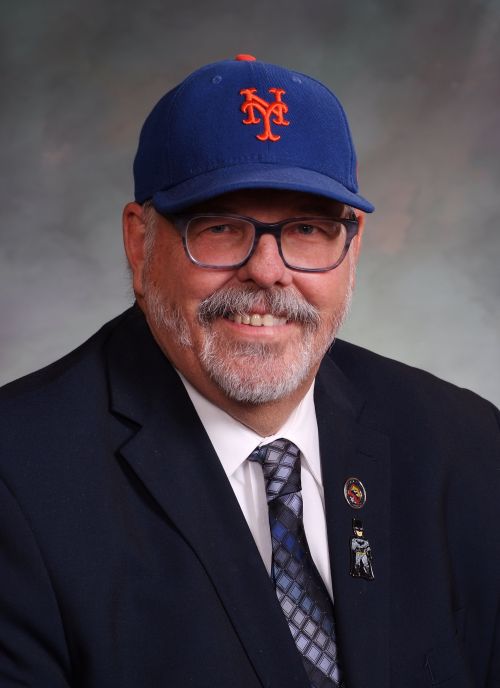
Sen. Tom Sullivan
Sponsored bills
The act increases participation, representation, and support for individuals 55 years old or older in the Colorado workforce and in organizations related to employment and the workforce by:Beginning in 2027, requiring the state work force development council (council), the Colorado commission on the aging, and other entities to meet twice a year, collect data, and work collaboratively on issues related to individuals in the workforce who are 55 years old or older;Beginning in 2028, and each year thereafter, requiring the department of labor and employment and the department of human services to jointly submit a report compiling the data collected by the council, the Colorado commission on the aging, and other entities to the general assembly and requiring the department of labor and employment, during the department's annual 'SMART Act' hearings, to summarize the report to certain legislative committees; andRequiring that the council, the commission on higher education, and the advisory committee to the commission on higher education, or their successor entities, each have at least one member serving on their governing entity that is at least 55 years old and either is actively involved in or has interest, knowledge, or experience in advocating for the interests of individuals who are 55 years old or older as related to the functions of each entity.(Note: This summary applies to this bill as enacted.)
Current law provides for a diploma endorsement of biliteracy by completing certain educational requirements in English in addition to a second language. The act changes the educational requirements for the biliteracy program and creates a diploma endorsement for bilingualism for graduating high school students. The act allows high school students in local education providers that do not offer the biliteracy or the bilingualism program to access the program through other local education providers or a state institution of higher education. If the student's local education provider does not offer and chooses not to establish a program that offers the endorsement that the student is seeking, the student's local education provider may enter into an agreement with another local education provider or state institution of higher education that offers the endorsement that the student is seeking. A local education provider or state institution of higher education may charge a fee to provide the diploma endorsement program. The fee must reflect the actual and indirect costs of running the diploma endorsement program. The enrolled student's local education provider must pay the fee on behalf of the student.(Note: This summary applies to this bill as enacted.)
The act allows an injured person to bring a cause of action for claims of injury caused by sexual orientation or gender identity change efforts (efforts) against a licensed mental health professional and allows the cause of action to be commenced at any time without limitation. Specifically, the act applies to a civil cause of action brought against a licensed mental health professional who seeks to direct a patient toward a predetermined sexual orientation or gender identity outcome or eliminate or reduce sexual or romantic attractions or feelings toward individuals of a particular sex or gender. The act permits the injured individual, or the individual's personal representative or estate if the individual is deceased, to recover economic, noneconomic, and exemplary damages, and any other damages deemed appropriate by the court. A cause of action may be brought as a survival action within 5 years after the death of the person who underwent efforts.(Note: This summary applies to this bill as enacted.)
Beginning July 1, 2026, act requires the county treasurer to provide notice of delinquent property taxes on a mobile home written in English and Spanish, and to include a statement explaining how and where a mobile home owner may obtain language translation or interpretation services. The county treasurer is required to provide the multilingual notice by mail and by personal service to the mobile home owner at the mobile home. The act modifies the process for collection of delinquent property taxes on a mobile home by allowing a county treasurer, at their discretion, to sell a tax lien on a mobile home, strike off a tax lien to the county, or determine the taxes to be uncollectible and recommend cancellation to the board of county commissioners. A tax lien must be sold in accordance with the provisions for tax lien sales on real property. The act extends the redemption period for mobile home owners whose property is subject to a tax lien to any time within 3 years from the date of the tax lien sale, or at any time before the execution of a certificate of ownership to the mobile home. Like a real property owner, an individual who both owns a mobile home and is a person with a legal disability at the time a certificate of ownership to the mobile home is issued is also allowed an extended redemption period of up to 9 years from the issuance of a certificate of ownership to their mobile home. If the mobile home owner has not exercised the right of redemption at least 3 years from the date of the tax lien sale, the purchaser or lawful holder of the certificate of purchase may apply for public auction of a certificate of option for treasurer's certificate of ownership to the mobile home, using the same procedures used for issuance of a treasurer's deed to real property. Any surplus resulting from the public auction that is deemed overbid proceeds must be disbursed to the persons entitled to receive them by law. The act specifies that if a mobile home that is subject to a tax lien or stricken off to the county is located on real property that is not owned by the mobile home owner, then the underlying landowner has a right of first refusal to pay the delinquent taxes owed on the mobile home and all other fees, costs, and expenses incurred by the county treasurer in connection with the tax lien sale process and obtain a certificate of purchase for a tax lien on the mobile home; except that an owner of a mobile home park does not have a right of first refusal unless the owner is an association of mobile home owners. If an underlying landowner exercises this right, no tax lien will be sold or stricken off to the county. When a tax lien is stricken off to the county under certain circumstances, the act allows the most recent mobile home owner to redeem the mobile home after 1 year but no later than 3 years from the date of strike off by paying the amount of delinquent taxes plus interest, fees, and costs. If a mobile home is not redeemed, and after notice to the last-known owner and any lienholder of record, the treasurer or county assessor may declare the mobile home abandoned, remove the mobile home from the county tax roll, and authorize the removal and disposal of the mobile home; except that, if an occupant of a mobile home establishes proof of ownership, the most recent mobile home owner has only a 1 year redemption period, after which the treasurer may issue the occupant a certificate of ownership for the mobile home.(Note: This summary applies to this bill as enacted.)
The act modifies the 'Uniform Election Code of 1992' (code) as follows:Regarding elections generally, includes in the definition of 'identification' for purposes of the code a division of youth services identification card or written correspondence from a county sheriff to the county clerk indicating that an elector is confined in a county jail or detention facility; repeals the definition of 'political party district'; modifies the definition of 'video security surveillance recording' to include a system in which continuous recording is triggered when motion is detected; modifies the definition of 'watcher' to prohibit a person from being selected as a watcher if the person has been convicted of certain election offenses or of committing or conspiracy to commit certain federal offenses; if the governor declares a disaster emergency due to the inability to strictly comply with the code, allows the secretary of state (secretary) to adopt rules for the proper administration of an election and requires the governor to establish an election emergency advisory group to advise the secretary and the governor regarding emergency orders or rules necessary to ensure the proper administration of an election; allows the secretary to provide access to, rather than transmit a complete copy of, all pertinent, updated elections laws to each county clerk and recorder (clerk); and requires each clerk to set operational hours for the clerk's office;Regarding the qualification and registration of electors; specifies information that all institutions of higher education, rather than just state institutions of higher education, must provide to students via email or signs concerning voting, voter eligibility, and registration, and requires the secretary to adopt rules further specifying the form and content of the emails and signs; requires the clerk to make printed affidavit forms available to correct an error in the elector's affiliation recorded in the statewide database; requires the secretary to ensure preregistrants who are 17 years and 6 months old can access their voter registration information and update that information using the state's online voter registration system; requires the statewide voter registration system to support the integration and use of geographic information system data to improve the accuracy, consistency, and reliability of voter registration records; modifies the language concerning preregistration of high school students; specifies that the principal of a public high school or their designee who assists in preregistration and registration to vote are high school liaisons, rather than deputy registrars, and eliminates certain filing requirements for registration or preregistration to vote; modifies how a clerk verifies identifiers provided by an elector who registers to vote in another county or another state; prohibits a clerk from canceling the registration record of an elector with multiple registrations unless there is a match in the county's registration records and the statewide voter registration database with respect to certain identifiers of the elector; and makes the secretary, rather than the clerk, responsible for canceling certain registrations pursuant to existing law, while still allowing the secretary to request assistance from the clerks;Regarding presidential electors, specifies that if a presidential or vice-presidential candidate dies or withdraws as a candidate after accepting the nomination of a political party but prior to the meeting of presidential electors, an elector's vote for the presidential candidate or vice-presidential candidate refers to the successor candidate nominated by the political party and clarifies that such vote is not a vote for a false slate of presidential electors;Regarding congressional vacancy elections, modifies notice, preparation, and conduct of elections; requires elections to be concurrent with a primary or coordinated election if the vacancy occurs between 150 and 90 days of such election; requires elections to be conducted according to provisions for general elections; modifies candidate nomination deadlines; clarifies the manner of nomination for an unaffiliated candidate; and specifies the arrangement of names on the ballot;Regarding access to the ballot by candidates, specifies the offices for which a candidate must fully meet the qualifications of the office and expands factors the secretary may consider in determining the qualifications to hold office to include other objective, verifiable requirements such as age, birth place, term limits, and political affiliation; repeals the ability for certificates of designation by assembly to be transmitted to the secretary by fax; specifies deadlines by which major and minor political parties must fill vacancies in their party nominations and by which vacancies in unaffiliated designations or nominations must be filled prior to a primary election and a general election, and clarifies that failure to fill a vacancy in nomination by such deadline results in that vacancy nomination remaining unfilled for that election; eliminates requirement for electors to include their county when signing a petition to nominate a candidate; allows a congressional vacancy election to be presented on the same ballot used in a presidential primary election if the elections are held on the same day; modifies the timeline for nomination of minor political party candidates; and maintains the requirement that a person file a written acceptance of nomination but eliminates the specification that the acceptance be provided by mail, fax, or hand delivery;Regarding notice and preparation of elections, clarifies that a voter service and polling center (VSPC) that experiences a shortage of supplies, including ballots, shall not close and may be required to remain open longer on election day; requires that each drop box must accept mail ballots for the 22-day period, rather than the 15-day period, prior to the day of an election; reduces the required period that a VSPC on a campus with 10,000 or more students must be open from 15 days to 10 days before an election; specifies that, in addition to existing designation by sign requirements, a VSPC on the campus of an institution of higher education must be identified and described in signs conspicuously posted at the student center and in an email sent to all enrolled students; repeals the requirement that the secretary deliver the certification of the ballot order and content to the clerk by registered mail; repeals a provision for the arrangement of names on ballots to be established by lot; adds an additional trigger for the secretary to notify clerks of the requirement to provide minority language sample ballots and in-person minority language ballots based on the release of data collected pursuant to section 203 of the federal 'Voting Rights Act of 1965' by the federal government; repeals a provision regarding the adoption and payment for voting machines; and requires the clerk of any county with 1,000 or more active electors to adopt an electronic or electromechanical voting system for use in all elections conducted by the county under the code and requires the clerk to oversee the management of such voting systems subject to the rules of the secretary; Regarding election judges, changes the age eligibility requirements for a student election judge from 16 to 15 and expands the methods for notice and acceptance of an election judge appointment;Regarding the conduct of elections, repeals the requirement that an election judge proclaim the polls are open or will be closed in 30 minutes on election day; modifies the 2-hour period that eligible electors are entitled to be absent from work to vote from only on election day to any day when VSPCs are open and specifies that an employer may deny this leave if the elector has 3 or more consecutive hours off the job while the polls are open; allows an elector to take printed or written materials of their choice into a VSPC as a resource for voting; creates new reporting requirements for counties with one or more VSPCs experiencing a wait time in excess of one hour, which wait time must be measured and recorded in accordance with rules adopted by the secretary and creates a requirement for a reporting county to include certain additional information in its next proposed election plan; repeals and reenacts, with changes, the required method of counting paper ballots by hand, requiring a team of 4 judges, audible reading of each ballot, and 2 separate accountings to be kept and compared and regular intervals, in accordance with any rules adopted by the secretary; recognizes that, in addition to a software or hardware malfunction, other significant issues may make counting ballots with electronic vote-tabulating equipment impracticable; and prohibits a designated election official from transferring custody or control of election records to a third party unless the transfer is authorized or required by the secretary of a court of competent jurisdiction;Regarding mail ballot elections, modifies the timeline for submission and approval of proposed election plans; allows the secretary to request modification of an election plan; requires the secretary to release no later than August 1 for each clerk's submitted election plan, specified information for each VSPC and each ballot drop-off location in the county for that election; modifies mail ballot delivery times; changes the enrolled-student threshold at an institution of higher education from 2,000 to 1,000 for purposes of requiring a drop box on campus and requires a drop box on the campus of private institutions of higher education in addition to state institutions; requires a clerk who fails to send a signature verification form within the 2-day deadline to send the signature verification by overnight mail or hand delivery; and requires a minimum number of hours for in-person voting at a county jail or detention center based on the number of beds available;Regarding challenges to registration, repeals and reenacts, with amendments, the process for a registered elector to protest the registration of another person, requires a $50 fee for each protest that is refunded if the protest is successful, and specifies the reasons that a protest may challenge a person's registration as incorrect;Regarding vacancies in office, in the case of a vacancy in the office of United States senator, requires the governor to appoint a person who is a member of the same political party as the former United States senator to fill a vacancy in that office; clarifies that a person appointed to fill a vacancy in a county office other than county commissioner serves only until the next general election, at which time the remainder of the vacant term, if any, is filled by election; and specifies that a county commissioner or general assembly vacancy may be filled at the next coordinated or general election; andRegarding election offenses, clarifies the offense of voter interference occurs when a person interferes with a voter within 100 feet of any building in which a polling or drop-off location is located or within 100 feet of a drop box; specifies that the offense of voter intimidation applies to any elector who is delivering up to 10 mail ballots to a drop box or drop-off-location; clarifies that the exemption for peace officers from the law prohibiting a person from carrying a firearm at a polling location does not apply if the firearm is used to intimidate electors; clarifies that offenses involving a false slate of presidential electors extends to lists of electors voting and votes for candidates for president and vice president of the United States, or their successors; and modifies enforcement and relief provisions in the case of a suit for election-related intimidation. In addition, the act:Modifies the law regarding initiatives and referendums to eliminate the requirement for an elector to include their county of residence as part of their signature on an initiative or referendum petition; extends the secretary's period for examination and validation of signatures on a petition from 30 to 60 days; and extends the secretary's period to issue a statement as to whether a petition has sufficient valid signatures from 30 to 60 days after the petition was filed; Modifies the definition of 'disaster' for the purpose of the 'Colorado Disaster Emergency Act' to include the occurrence or imminent threat of the inability to strictly comply with the code due to any natural cause or cause of human origin;Amends the 'Colorado Open Records Act' to specify that a designated election official is not required to cover or redact from a ballot any markings or messages voluntarily made by an elector; andSpecifies that oaths or affirmations for public office filed with the clerk are exempt from certain fees imposed by law. The act takes effect upon passage, except that the provisions regarding the time frame for mailing a mail ballot packet take effect July 1, 2026. For the 2026-27 state fiscal year, the act appropriates $10,000 from the department of state cash fund to the department of state for the implementation of the act.(Note: This summary applies to this bill as enacted.)
The act requires each local law enforcement agency, on or before September 1, 2026, to register for the United States bureau of alcohol, tobacco, firearms, and explosives national electronic tracing system and transmit to the electronic tracing system information about each firearm it recovers or confiscates within 90 days after recovery or confiscation of a firearm, subject to certain exceptions.(Note: This summary applies to this bill as enacted.)
Under current law, the public utilities commission (commission) may assess a civil penalty in an amount up to $550 against a transportation network company (TNC) if the TNC had written notice of a TNC driver's violation of certain prohibitions against discriminating against riders and the TNC failed to reasonably address the violation. Additionally, a driver is required to report to the TNC any refusal by the driver to provide services to a rider, and the TNC is required to annually report all such refusals to the commission. The act removes the condition that a TNC first have written notice of a driver's violation of the discriminatory prohibitions before a civil penalty may be assessed against the TNC, increases the maximum civil penalty to $1,300, and requires the commission to consider certain mitigating and aggravating factors in determining whether to assess a civil penalty and the amount of a penalty assessed. The act also requires:A TNC to mandate and provide education to drivers concerning the transportation of riders with service animals;A TNC to provide monthly, rather than annual, reporting to the commission regarding drivers' refusal to provide services;A TNC to provide a mechanism to allow a consumer to report a driver's refusal to provide transport to the consumer directly on the TNC's digital platform, which information must be included in the TNC's monthly report; andThe commission to aggregate and anonymize the TNCs' monthly reports and make the anonymized reports available to the public.(Note: This summary applies to this bill as enacted.)
The act implements recommendations of the department of regulatory agencies (department) in its 2025 sunset review of the public utilities commission (commission) as follows:Sections 1 and 3 of the act continue the commission for 7 years to September 1, 2033;Sections 4, 8, 10, 11, 16, and 17 authorize the commission to send communications by email;Sections 20 through 22 modernize certain processes, provide additional transparency, and clarify inconsistencies in certain energy statutes by:Aligning the renewable energy standard with the statutes governing clean energy targets and removing the requirements for municipally owned utilities to submit an annual compliance report to the commission regarding renewable energy standard requirements and for qualifying wholesale utilities that comply with electric resource planning to also demonstrate compliance with electric resource standards;Directing the commission to perform a study to identify any barriers to joint procurement by electric utilities with regard to advanced technology generation resources;Section 23:Prohibits an individual from impersonating a transportation network company (TNC) driver (driver). An individual who violates the prohibition commits a class 2 misdemeanor. An individual who impersonates a driver during the commission of a felony offense commits a class 6 felony. A TNC is required to conduct periodic checks utilizing facial recognition software or equally or more effective technology, as approved by the commission, to prevent driver impersonation in accordance with rules adopted by the commission. The periodic check requirement does not apply to a TNC that predominantly contracts to serve public or private schools or the government and complies with at least 90% of the commission's rules regarding safety standards for TNCs that contract with schools or school districts.Requires a TNC to provide information about the commission, including information about how a rider may contact the commission to file a complaint using a TNC's digital network, to a rider in accordance with rules adopted by the commission; andRequires commission staff who process TNC customer complaints to receive training in trauma-informed practices;Section 25 expands the types of drivers who need to have criminal history record checks performed to include drivers who are employed by any motor carriers and contract carriers;Section 28 requires the commission to perform a market study to determine if the current systems of regulating intrastate contract and common carriers optimally balance consumer protections with industry and regulatory efficiency and to report its findings and recommendations based on the study to the general assembly by January 1, 2028;Sections 29 and 30 replace the current inspection requirements for a charter bus, children's activity bus, fire crew transport, luxury limousine, off-road scenic charter, and large-market taxicab with a requirement that these vehicles be inspected on a schedule and to a standard set by rules adopted by the commission;Sections 31 through 36 and 38 update the state railroad regulation requirements to mirror current federal law and to repeal obsolete provisions;Section 39 removes the $500 fee cap paid by companies to access the Colorado no-call list, replaces it with a $1,000 fee cap, and requires conforming list brokers, which are companies that purchase the no-call list and sell it to other companies, to pay a fee established by the commission by rule;Section 41 authorizes the commission to administratively assess a filing fee schedule for filings related to communication services, telecommunications services, and basic emergency services to help finance the commission's telecommunications-related work and exempts members of the public filing complaints and public utilities subject to certain revenue-based fees imposed by the commission from paying the filing fees;Section 43 aligns the usage of money collected from charges related to the provision of 911 services with federal requirements by clarifying that the money may be expended for public safety radio equipment outside of a public safety answering point only if the equipment is used for dispatching emergency service providers to respond to 911 calls;Section 44 authorizes the commission to adopt rules that establish caps on rates charged by penal communications service providers on intrastate penal communications services provided for intrastate communications with individuals in correctional facilities and to enforce the intrastate rate. Section 44 also authorizes the commission to adopt rules requiring penal communications service providers to report outages and imposing penalties for penal communications service providers' failure to comply with commission requirements. Section 44 also requires:Penal communications service providers to cooperate with commission staff when the staff is performing biannual testing of penal communications services;The commission to develop flyers informing the public how to file complaints to the commission about penal communications services; and Correctional facilities to post the flyers;Section 45 exempts small operators of natural gas pipelines from the minimum $5,000 civil penalty required for violations of pipeline safety laws and authorizes the commission to impose a lesser civil penalty against a small operator;Section 46 directs the commission to perform a study identifying all privately owned water utilities in the state and assessing their financial conditions and needs;Section 47 requires investor-owned electric utilities to provide interconnection information and certificates to taxpayers requesting the information for purposes of claiming the federal clean electricity investment credit; andSection 48 requires the commission, on or before December 1, 2026, to open one or more miscellaneous proceedings to investigate ways to streamline energy planning proceedings, to integrate gas and electric system planning, and to make customer programming more efficient. The commission shall solicit stakeholder feedback in its investigation and, on or before November 30, 2027, shall submit a report of its findings and recommendations to legislative committees with jurisdiction over energy matters. The act also implements the following changes regarding the commission and its work:Section 2 requires electric and gas investor-owned utilities, including combined utilities, to file annual summaries of anticipated regulatory filings with the commission starting in 2027 and requires the commission to make the filings publicly available on its website, hold informational meetings regarding the filings, and submit annual reports to the general assembly summarizing the commission's major adjudicated cases and rule-makings from the previous year. Starting September 1, 2026, the commission is required to include in each of its decisions a summary of public comments received on the matter.Sections 4 through 8 concern commission authority, personnel, and management functions, with section 4 stating that the commission, acting through its director, has authority over the commission's budgeting, purchasing, planning, and related management functions, including human resources, and section 7 requiring the director of the commission to hire or designate an equity analyst to assist the commission's work regarding equity impact proceedings and to staff an equity task force appointed by the director;Section 4 also requires the governor to consider appointing commissioners with knowledge of the regulated industries and with a diversity of experience and understanding of public interest considerations. Finally, section 4 authorizes the commission to hold weekly meetings and, beginning July 1, 2027, requires a majority of the commissioners attending the weekly meetings to attend in person.Sections 9 and 12 provide that, with certain exceptions, adjudications must first be heard by an administrative law judge. Section 12 also requires the commission, by March 31, 2027, to adopt rules regarding the format of en banc commission and hearings and meetings presided over by a single hearing commissioner with respect to whether the hearings are held in person, virtually, or a hybrid of in-person and virtual participation.Section 13 requires that commission rules regarding review of an application must prescribe that an application may only be deemed incomplete if it does not meet the commission's application requirement. Section 13 also provides that the commission's failure to act upon an application within 120 days, or within an extended time granted by the commission not to exceed an additional 130 days or, under extraordinary conditions, not to exceed an additional 90 days, constitutes an approval of the application by operation of law. An unopposed permissive motion for intervention is deemed approved if the commission does not deny the motion within 30 days after its filing.Section 14 increases the maximum civil penalty applicable to public utilities for intentional violations of public utilities law from $2,000 to $7,500, applies such civil penalties to a public utility's violation of a tariff, and requires the commission to consider factors such as utility size, harm caused, and mitigating circumstances or actions in assessing the civil penalties. Section 14 also requires that civil penalties assessed against and collected from electric and gas utilities be credited to the public utilities commission fixed utility fund (fixed utility fund) to be used for affordability programs or outreach and engagement of income-qualified customers and disproportionately impacted communities.Section 15 provides guidance for intervenor compensation in commission proceedings by authorizing the commission to award an intervenor compensation if the commission determines that the intervenor made a unique substantial contribution that provided material assistance to the commission in developing the record in a proceeding and incurred reasonable costs in the proceeding. The commission may adopt rules regarding intervenor compensation, including rules for intervenor petitions for compensation and guidelines for determining reasonable costs incurred and material assistance.Under current law, money in the legal services offset fund is continuously appropriated to the department to offset its costs of legal representation in matters involving public utilities law. Section 18 shifts the appropriation to the commission to offset its costs of legal representation in such matters.Section 21 removes verification of municipally owned utilities' voluntarily filed clean energy plans by the division of administration in the department of public health and environment;Section 22 requires the commission, on or before December 31, 2027, to adopt rules establishing minimum quality-of-service metrics for investor-owned electric and gas utilities in the state;Section 24 requires the department to consult with the director of the commission regarding annual TNC permit fees and increases the maximum annual TNC permit fee to $161,250. Likewise, section 26 requires the department to consult with the director of the commission in setting certain administrative fees on motor carriers, and section 40 requires the department to consult with the director of the commission on computation of revenue-based fees owed by utilities.Section 27 provides that a person may apply to a court for enforcement of a commission order, decision, or rule regarding noncompliance by a motor carrier without having first exhausted administrative remedies; andSection 37 requires the commission to engage an independent third-party consultant to conduct a study on how the commission may modernize its personnel, organizational, and budgetary structures, which study must include an evaluation and recommendations regarding the commission's size, compensation, and funding mechanisms for equity objectives. On or before November 1, 2026, the commission shall submit an initial report, and on or before November 1, 2027, a final report, on the study's findings and recommendations to legislative committees with jurisdiction over energy matters. For state fiscal year 2026-27, section 49 appropriates $298,448 to the department with:$232,712, including $157,712 from the fixed utility fund and $75,000 from the motor carrier fund, for personal services;$16,048 from the fixed utility fund for operating expenses; and$49,688 of the amount appropriated from the fixed utility fund for reappropriation to the department of law for legal services.(Note: This summary applies to this bill as enacted.)
The act requires a volunteer lobbyist to register and file a registration statement attesting they are not being compensated. The act exempts volunteer lobbyists from registration fees. The act provides that the judicial department may designate one individual for the judicial department and one individual for each independent agency in the judicial department who may lobby on behalf of the judicial department or an independent agency in the judicial department (judicial lobbyist). A person designated by a principal executive department to be responsible for lobbying a state official or employee on behalf of the department (legislative liaison), a judicial lobbyist, or an individual who lobbies on behalf of the offices of the governor or lieutenant governor as a member of the governor's cabinet or as a personal staff employee in the offices of the governor or the lieutenant governor (governor's lobbyist) must register with the secretary of state annually. In addition to annually registering with the secretary of state, a legislative liaison, judicial lobbyist, or a governor's lobbyist must file a monthly disclosure statement with the secretary of state (disclosure statement). The act provides that a legislative liaison, judicial lobbyist, or a governor's lobbyist must indicate on the disclosure statement the bill number of any legislation for which they have lobbied or will lobby a covered official and their position regarding the legislation. The legislative liaison, judicial lobbyist, or a governor's lobbyist must update their position on the disclosure statement within 72 hours of a change in position. The act prohibits a statewide elected official or member of the general assembly from being a legislative liaison or governor's lobbyist for a period of 2 years following vacation of office. $91,000 is appropriated from the department of state cash fund to the department of state.(Note: This summary applies to this bill as enacted.)