

Under current law, facilities that provide long-term nursing, rest, and assisted living services, where residents reside for more than 30 days, are classified as residential properties. However, facilities that provide short-term convalescent care and rehabilitation services, where patrons visit the facility periodically or temporarily reside there for less than 30 days, are valued and classified as nonresidential property. The act defines a nursing home as a licensed nursing care facility, including a nursing care facility that provides convalescent care and rehabilitation services. The act specifies that land on which a nursing home is situated and any improvements affixed to that land for the use of the nursing home are classified and assessed as residential real property, regardless of a resident's length of stay. (Note: This summary applies to this bill as enacted.)
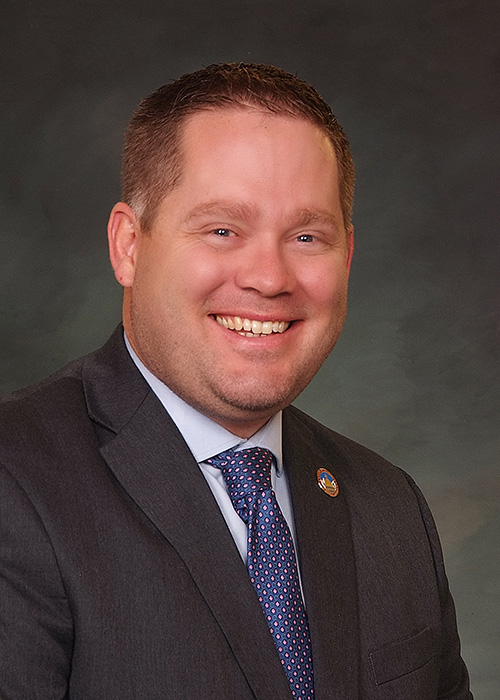
Sen. Kyle Mullica
Sponsored bills
The act creates the innovative housing incentive program (program) within the office of economic development (office). A business located in Colorado that has 500 or fewer employees and that manufactures certain types of housing may apply for funding through the program. Funding may be awarded through grants for operating expenses and for incentives for units manufactured based on criteria established by the office such as affordability, location where the unit is installed in the state, or meeting energy efficiency standards. Funding may also be awarded through loans that fund a new housing manufacturing factory or the expansion of an existing housing manufacturing factory. The act creates the innovative housing incentive program fund, requires a $40 million transfer to the fund of money from the affordable housing and home ownership cash fund that originates from the general fund, and continuously appropriates all money in the fund to the office to fund the program. The office must annually report to the general assembly regarding the expenditure of money from the innovative housing incentive program fund. (Note: This summary applies to this bill as enacted.)
The act requires the division of homeland security and emergency management in the department of public safety (division) to procure and maintain a stockpile of essential materials that is available for distribution after the governor has a declared a disaster emergency. The division, in consultation with the department of public health and environment, may distribute the essential materials to state agencies, schools, local public health agencies, hospitals, primary care providers, or other health-care providers, or to any other individual or entity that the director of the division determines is in need as a result of the disaster emergency. The division may contract with a third-party entity to administer the stockpile. To ensure that the materials in the stockpile are rotated prior to their expiration date, the act: Requires state agencies to procure essential materials from the division, to the extent possible; and Permits the division to donate or sell essential materials as necessary to avoid having stock that is past its expiration date. Any proceeds from the sale of the essential materials are credited to the newly created emergency stockpile rotation cash fund, which is continuously appropriated to the department of public safety for use by the division for administering the stockpile. Under current law, the state board of health has the authority to adopt rules and to establish standards to assure that hospitals; other acute care facilities; county, district, and municipal public health agencies; and trauma centers are prepared for an emergency epidemic that is declared to be a disaster emergency. The act specifies that under this authority the state board may adopt rules or establish standards for the maintenance of an adequate stockpile of personal protective equipment for infection control and to assure staff proficiency in using the personal protective equipment. (Note: This summary applies to this bill as enacted.)
The act directs the state treasurer to transfer $11,720,278 from the general fund to the division of professions and occupations cash fund for use beginning in the 2022-23 state fiscal year and until fully expended to fund the expenses of the state board of nursing in order to facilitate fee relief for nurses, nurse aides, and psychiatric technicians. (Note: This summary applies to this bill as enacted.)
The act creates the health-care workforce resilience and retention program (program) using existing initiatives to ensure that Colorado's health-care workforce is supported in order to meet the health-care demands of Coloradans and to support the resilience, well-being, and retention of health-care workers. The program is authorized to seek and expend gifts, grants, and donations to support the program. The program is exempt from the procurement code. The act appropriates $2 million from the economic recovery and relief cash fund for the program. The act creates the practice-based health education grant program (grant program) to increase practice-based training opportunities necessary for health profession students enrolled in accredited Colorado schools to complete degree requirements and become licensed to practice or program participants enrolled in other training or residency programs offered by a public or nonprofit Colorado medical school or accredited residency program to gain hands-on experience in pursuit of a license in the health-care field. The primary care office in the department of public health and environment administers the grant program and shall conduct a stakeholder engagement process to determine key operational components of the grant program policies and procedures. The act appropriates $20 million from the economic recovery and relief cash fund for the grant program. The act directs the state board for community colleges and occupational education (board) to administer the in-demand short-term health-care credentials program in order to support the expansion of available health-care professionals. The bill appropriates $26 million from the economic recovery and relief cash fund for these programs. The board shall allocate funds to community colleges, area technical colleges, local district colleges, and community not-for-profit organizations that deliver hybrid programming that leverages place-based supports in partnership with local district colleges, community colleges, and area technical colleges through reimbursement based on students enrolled in eligible programs for fiscal years 2022-23 to 2025-26 to: Provide assistance for tuition, fees, and course materials for eligible programs; Support alignment with existing efforts, such as apprenticeship and work-based learning, for students to earn eligible program credentials that lead into health-care careers such as nursing; and If unexpended resources exist or if the program use is less than anticipated, to expand eligible programs in allied health based on in-demand credential needs or include high school equivalency support and attainment for students without a high school degree who participate in the program. The act requires the primary care office and the governor's office of information technology to work through the government data advisory board to determine data-sharing agreements that integrate data collected by the state under existing authorities that may inform the analysis of need, allocation of resources, and evaluation of performance of state-administered or state-financed health workforce planning or development initiatives. Under current law, a nurse who holds a volunteer nurse license cannot get paid for nursing tasks. The act removes this limitation. The act directs the nurse-physician advisory task force for Colorado health care to make recommendations on: Alignment of health-care licensing with federal statutory minimums; Identification of unnecessary regulatory burdens or barriers; Regulatory reforms that support health-care licensees to work at their full scope of practice; and Feasibility of temporary candidate licenses for students nearing the completion of an accredited health-care program. The act makes the following changes and additions to the school nurse grant program: Repeals the requirement of a 5-year grant cycle; Requires that the grant supplement, not supplant, funding for school nurse positions existing in the local education provider's most recent fiscal year prior to applying for a grant; Directs the department of public health and environment to annually award grants; and Appropriates $3 million to the department of public health and environment for the grant program from the economic recovery and relief cash fund. The act appropriates $10 million from the economic recovery and relief cash fund to the department of public health and environment. The department shall use this appropriation for recruitment, re-engagement efforts of workers in the health-care profession with current or expired licenses, and staffing. (Note: This summary applies to this bill as enacted.)
The act requires every hospital to establish, by September 1, 2022, a nurse staffing committee pursuant to rules promulgated by the state board of health, either by creating a new committee or assigning the nurse staffing functions to an existing hospital staffing committee. The nurse staffing committee must have at least 60% or greater participation by clinical staff nurses. The nurse staffing committee is required to: Annually develop and oversee a master nurse staffing plan; Submit a recommended staffing plan to the hospital's senior nurse executive and governing body; and Receive, track, and resolve complaints and receive feedback from direct-care nurses and other staff. The act requires a hospital to: Submit the nurse staffing plan to the department of public health and environment (department) on an annual basis; Post the nurse staffing plan on the hospital's website; Evaluate the nurse staffing plan on a quarterly basis and, based on complaints and recommendations of patients and staff, revise the nurse staffing plan accordingly; and Prepare an annual report containing the details of the evaluation. The act prohibits a hospital from assigning direct-care providers to a nursing unit or clinical area of a hospital unless the providers are properly trained in the unit or area assigned. On or before September 1, 2022, in a form and manner determined by rules promulgated by the state board of health, each hospital is required to report: The baseline number of beds the hospital is able to staff; and The hospital's current bed capacity. If the hospital's ability to meet staffed-bed capacity falls below 80% of the required baseline in a specified period, the hospital is required to notify the department and submit a plan to meet that requirement. The act requires the department to notify a hospital if the hospital's number of staffed beds exceeds 80% of a hospital's total licensed beds and fine the hospital if the hospital does not take corrective action. Each hospital is required to update its emergency plan at least annually and as often as necessary, as circumstances warrant. The act authorizes the department to fine a hospital up to $10,000 per day for the hospital's failure to: Meet the required staffed-bed capacity; Include the amount of necessary vaccines for administration in its annual emergency plan and, to the extent they are available, have the vaccines available at each of its facilities; and Include the necessary testing capabilities, to the extent they are available at each of its facilities. The act grants rule-making authority to the department and to the state board of health. The act requires the department to report certain data to its committee of reference as part of its presentation at the hearing held pursuant to the "State Measurement for Accountable, Responsive, and Transparent (SMART) Government Act". The act requires the office of saving people money on health care in the office of the lieutenant governor (office) to study: The level of preparedness of health facilities to respond to post-viral illness resulting from the COVID-19 virus; The effects of post-viral illness resulting from the COVID-19 virus on the mental, behavioral, and physical health and the financial security of the people of Colorado; and The effects of the COVID-19 pandemic on the cost of health care in Colorado and on the resiliency of Colorado's public health system. The act requires the office to annually report its findings to the governor and to coordinate, monitor, and support efforts to improve affordability of health care, health outcomes, and public health readiness in state programs and departments. (Note: This summary applies to this bill as enacted.)
Section 1 of the bill makes legislative findings. Section 3 prohibits a cigarette, tobacco product, or nicotine product (product) retailer from selling, offering for sale, advertising for sale, displaying, shipping, delivering, or marketing in the state any flavored product, and section 2 defines flavored product as a product imparting a taste or smell other than the taste or smell of tobacco. Section 3 also prohibits the sale, offer for sale, advertising for sale, displaying, or marketing of a synthetic nicotine product and section 2 defines synthetic nicotine as nicotine derived from a source other than tobacco. A retailer, manufacturer of products, or employee or agent of a retailer or manufacturer of products engages in conduct creating a rebuttable presumption that a product is a flavored product if the person makes a public statement or claim, uses text or images, or takes other action directed toward consumers indicating that the product has a taste or smell other than the taste or smell of tobacco. Section 3 exempts pipe tobacco products, premium cigars, and shisha tobacco from the prohibition, as well as exempting a cigar-tobacco bar located in a licensed gaming establishment.Section 4 imposes the same penalties for selling, offering for sale, advertising for sale, displaying, or marketing in the state any flavored product or synthetic nicotine product that apply to unlawful sales of products to minors.Section 5 amends the definition of product to include products containing synthetic nicotine. and section 2 defines synthetic nicotine as nicotine derived from a source other than tobacco.Section 6 directs the prevention services division in the department of public health and environment (department) to convene a working group to develop, implement, and administer a grant program to award 2-year grants to applicants who are able to provide evidence-informed and individualized wrap-around services in Sections 6 and 7 add to the tobacco education, prevention, and cessation grant program in the department of public health and environment the authority to award grant money to provide resources to communities disproportionately impacted by targeted tobacco and nicotine marketing and sales or by increased or minimally improved tobacco-use and nicotine-use prevalence rates. Section 6 also directs the general assembly to appropriate $10 million from the general fund to the department for the grant program. and by the prevalence of tobacco and nicotine product use. (Note: Italicized words indicate new material added to the original summary; dashes through words indicate deletions from the original summary.) (Note: This summary applies to the reengrossed version of this bill as introduced in the second house.)
The bill authorizes the attorney general to require a cable provider and regional sports network to submit to nonbinding arbitration when negotiation for the renewal of a contract to broadcast professional sporting events continues for at least 6 weeks after the contract has expired. (Note: This summary applies to this bill as introduced.)
The act allows local education providers, upon entering into an agreement with an individual or entity that offers hunter education courses certified by the division of parks and wildlife (division), to provide a hunter education course (course) to all seventh graders. The act does not preclude a local education provider from offering hunter education courses as an elective course in any other grade. The course must satisfy the requirements of a hunter education course certified by the division; except that hands-on activities are not required. The course must be taught by a division-certified instructor. A parent or legal guardian must provide permission for a student to participate in any hands-on activities that are offered as part of the course. A hunter education course shall only allow the possession of inert firearms and dummy rounds on the grounds of any elementary, middle, junior high, or high school. The act defines local education providers to mean school districts, charter schools, and boards of cooperative services that enroll students in seventh grade. The parks and wildlife commission may accept completion of a course toward meeting the requirements of a hunter education certificate. (Note: This summary applies to this bill as enacted.)
The act implements the recommendation of the department of regulatory agencies, as specified in the department's sunset review of the health-care work force data advisory group, to sunset the advisory group. (Note: This summary applies to this bill as enacted.)