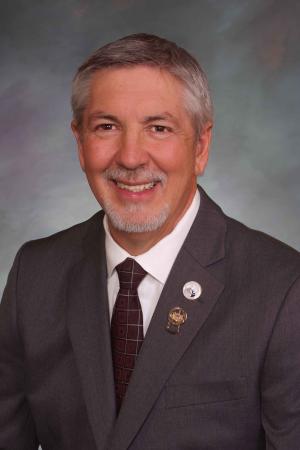
Photo of Dennis Hisey
R Colorado Senate · District 2

Sen. Dennis Hisey

Contact Email
Compare
Total votes
3,276
all sessions
Attendance
100%
2 missed
Higher than 80% of chamber peers
With party
94%
of cast votes
Near the chamber average
Bipartisan score
4%
crosses aisle rarely
Near the chamber average
Sponsored
103
bills & resolutions
Near the chamber average
Committees
0
assignments
103 bills and resolutions

Sponsored bills

Total
103
Primary
103
Co-sponsor
0
This page
103
matching current filters
Primary SB 20-220
Signed into law · Colorado Senate · Lead sponsor
Freeze Member Per Diem Amount

Currently, members of the general assembly who reside in the Denver metropolitan area are entitled to receive up to $45 per legislative day for expenses incurred during the sessions of the general assembly. In lieu of this amount, members who do not reside in the Denver metropolitan area are entitled to an amount equal to 85% of the federal per diem rate for the city and county of Denver, which is $219 for the 2019-2020 fiscal year. The act freezes the amount to be paid to members who do not reside in the Denver metropolitan area to this current amount for the 2020-2021 fiscal year. (Note: This summary applies to this bill as enacted.)

Signed into law Jun 30, 2020 0 co-sponsors
Primary SB 20-003
Signed into law · Colorado Senate · Lead sponsor
State Parks Improvement Appropriation

The act transfers $1,000,000 from the general fund to the capital construction fund for use by the department of natural resources to develop infrastructure to open a state park on the property surrounding Fishers Peak. The parks and wildlife commission is instructed to seek, accept, and expend gifts, grants, or donations from private or public sources for the purposes of developing and improving Fishers Peak state park. By December 1, 2020, the commission will submit a report to the general assembly detailing state park funding needs and shortfalls. The general fund appropriation made in the annual general appropriation act for the 2020-21 state fiscal year to the office of the governor for use by the office of information technology for applications administration is decreased by $1,000,000, thus enabling the transfer of $1,000,000 from the general fund to the capital construction fund. The act appropriates $1,000,000 from the capital construction fund to the department of natural resources for use by the division of parks and wildlife for capital construction related to infrastructure development projects, including conducting any necessary cultural and natural resource studies, at the new Fishers Peak state park in Las Animas county. (Note: This summary applies to this bill as enacted.)

Signed into law Jun 29, 2020 0 co-sponsors
Primary SB 20-118
Signed into law · Colorado Senate · Lead sponsor
Hazardous Materials Transportation Permit Issuance

Effective January 1, 2021, the act transfers the function of issuing permits for the transportation of hazardous materials and nuclear materials by motor vehicle from the public utilities commission to the department of transportation. The act also reduces state fiscal year 2020-21 cash fund appropriations from the public utilities commission motor carrier fund to the public utilities commission for personal services and operating expenses by a total amount of $20,918. (Note: This summary applies to this bill as enacted.)

Signed into law Jun 29, 2020 0 co-sponsors
Primary HB 20-1119
Signed into law · Colorado House · Lead sponsor
State Government Regulation Of Perfluoroalkyl And Polyfluoroalkyl Substances

The act addresses the authority of the state government to regulate perfluoroalkyl and polyfluoroalkyl substances (PFAS). Section 1 of the act addresses when PFAS may be used for firefighting foam system testing both in general and in certain aircraft hangars. Section 2 requires the solid and hazardous waste commission to promulgate rules for both a certificate of registration for any facility, fire department, or lessee subject to federal rules and regulations that uses or stores PFAS in its operations and for standards for the capture and disposal of PFAS. Section 3 prohibits the use of class B firefighting foam that contains intentionally added PFAS in certain aircraft hangars beginning January 1, 2023. The act appropriates $43,836 from the hazardous waste service fund to the department of public health and environment for use by the hazardous materials and waste management division. (Note: This summary applies to this bill as enacted.)

Signed into law Jun 29, 2020 0 co-sponsors
Primary HB 20-1184
Signed into law · Colorado House · Lead sponsor
Sunset Colorado Seed Act

The act implements recommendations of the department of regulatory agencies' sunset review and report on the registration functions of the commissioner of agriculture (commissioner) regarding the "Colorado Seed Act" by: Continuing the commissioner's registration functions for 11 years, until 2031; Setting fees for registration in statute and allowing the commissioner to adjust the registration fees by rule up to a maximum amount set in statute; Removing the fee discount afforded to registrants with respect to registering a second and any additional locations; and Authorizing the commissioner to establish a registration renewal schedule by rule and repealing language that made each registration effective for one year from March 1 through the last day in February, regardless of when the registration was approved.(Note: This summary applies to this bill as enacted.)

Signed into law Jun 29, 2020 0 co-sponsors
Primary HB 20-1281
Signed into law · Colorado House · Lead sponsor
Change Salary Categorizations For Certain Counties

Current law categorizes each county for purposes of establishing the salaries of elected county officers in the county. The statutory salary amounts are adjusted every 2 years for inflation and take effect for terms commencing after any change is made. The act modifies the categories of 2 counties with the accompanying percentage decrease in salary as follows: Alamosa county changes from category III-A to category III-B (7.7% decrease); and Yuma county changes from category IV-B to category IV-C (8.3% decrease).(Note: This summary applies to this bill as enacted.)

Signed into law Jun 26, 2020 0 co-sponsors
Primary HB 20-1071
Failed · Colorado House · Lead sponsor
Driving Instruction For Foster Children

Transportation Legislation Review Committee. The bill creates the foster children's driver education grant program (program) in the state department of human services (state department) to reimburse county departments of human or social services (county departments) for costs paid to private driving schools for providing driving instruction to persons in the custody of the county department who are at least 15 years and less than 18 years of age. The state department shall administer the program and award grants to county departments. On or before December 1, 2020, the state board of human services (state board) shall promulgate rules for the administration of the program. On or before November 1, 2021, and on or before January 1 each year thereafter, each county department that receives a grant through the program shall submit a report to the state department. At a minimum, the report must include the information required by rules promulgated by the state board. On or before January 1, 2021, and on or before January 1 each year thereafter for the duration of the program, the state department shall submit a summarized report to the appropriate reference committees of the general assembly. At a minimum, the report must include the information submitted to the state department by county departments. The program is repealed, effective September 1, 2030. Before the repeal, the program is scheduled for a sunset review by the department of regulatory agencies. The bill states that the program does not create any liability on behalf of a county department for contracting with a private driving school to provide driving instruction or for an injury alleged to have occurred while a person in the custody of the state department receives driving instruction from a private driving school, the cost of which instruction may be reimbursed to the county department from the program. The bill states that a certified court order is sufficient to establish the legal name, identity, date of birth, lawful presence in the United States, or Colorado residency of a person who is in the custody of the state department, is at least 15 years and less than 18 years of age, and is applying for a driver's license. (Note: This summary applies to this bill as introduced.)


Failed Jun 16, 2020 0 co-sponsors
Primary HB 20-1122
Failed · Colorado House · Lead sponsor
Homeless Youth Services Act And Grant Program

The bill updates language in the "Colorado Homeless Youth Services Act" and establishes the services for youth experiencing or at risk of experiencing homelessness grant program (grant program) in the department of local affairs (department). The age requirement for such youth is increased to 24 years of age or younger from more than 11 years of age to less than 21 years of age. The department shall promulgate rules concerning the grant program, and the office of homeless youth services shall administer and monitor the grant program. The grant program consists of up to 5 awards of up to $250,000 each awarded on or before January 1, 2021. Grant awards may only be awarded to existing providers of services to youth experiencing or at risk of experiencing homelessness, with priority given to those service providers that can expand services to underserved areas of the state, including street and community outreach, drop-in centers, emergency shelters, and supportive housing and transitional living programs. The bill requires the department to prepare and submit a report to the appropriate committees of the general assembly on the outcomes of the grant program. (Note: This summary applies to this bill as introduced.)
Failed Jun 16, 2020 0 co-sponsors
Primary HB 20-1223
Passed · Colorado House · Lead sponsor
Rural Arts Grant Program

The bill creates the rural arts grant program (grant program) in the creative industries division (division) in the office of economic development, to provide grants to artists to enhance rural prosperity through the arts and creative sector. To be eligible to receive a grant through the grant program, the artist or artists must live and work outside of the scientific and cultural facilities district and work with a qualified governmental or nonprofit organization (qualified organization) that will serve as the artist's sponsor in submitting a grant application. The division is required to implement and administer the grant program and award grants from the money annually appropriated by the general assembly for the grant program. The division is also required to promulgate rules create policies and procedures for the implementation and administration of the grant program and to publish the policies and procedures on its website . The bill specifies the information that must be included in a grant application. The council on creative industries is required to review the applications and award grants based on specified criteria. Grant recipients may use the money received through the grant program for projects that advance the artistic and cultural goals of rural communities and their economies, projects that will enhance their community's culture, or projects that provide incentive for cross-community collaborations and that have the potential to contribute to the acceptance and consideration of differing perspectives. The division is required to disburse awarded grants to the qualified organization, which shall ensure that the grant money is available to the artist or artists for the purposes specified in the grant application. The qualified organization may use up to 5% of the total amount of grant money awarded for administrative costs associated with the grant. Each qualified organization that receives a grant shall, in partnership with the artist or artists who worked on the project, submit a report regarding the use of the grant money to the division after the completion of the project for which the grant money was used. The division is required to submit an annual summarized report to the general assembly regarding the grant program. (Note: Italicized words indicate new material added to the original summary; dashes through words indicate deletions from the original summary.) (Note: This summary applies to the reengrossed version of this bill as introduced in the second house.)

Passed Jun 13, 2020 0 co-sponsors
Primary HB 20-1222
In committee · Colorado House · Lead sponsor
Veterans Hiring Preference

Because the United States equal employment opportunity commission and the federal courts have found that a private employer's veterans preference employment policy is not a violation of Title VII of the "Civil Rights Act of 1964" if there is a basis for the policy in state law, the bill creates a statutory basis to allow a private employer to give preference to a veteran of the armed forces or the National Guard and the spouse of a disabled veteran or a veteran killed in the line of duty when hiring a new employee as long as the veteran or the spouse is as qualified as other applicants for employment. The bill clarifies that an employer who adopts a program that gives preferences to veterans or their spouses is not committing a discriminatory or unfair labor practice.(Note: This summary applies to this bill as introduced.)

In committee Jun 3, 2020 0 co-sponsors
Showing 61 to 70 of 103 bills
Previous 1 … 6 7 8 … 11 Next