

Under current law, a sheriff may allow an individual to choose to stay in jail overnight after release when extenuating circumstances exist. The act makes facilitation of a connection to a service provider an extenuating circumstance. If an individual chooses to remain in jail overnight, the individual must be released by 10 a.m. the next morning. Under current law, to qualify for special needs parole, there is a distinction between inmates who are 55 years of age or older and those who are under 55 years of age. The act changes that distinction. The act makes an inmate eligible for special needs parole if the inmate suffers from a diagnosed severe cognitive impairment or serious impairment that limits the person's ability to function. If the inmate is under 55 years of age, the act provides for special needs parole if the inmate has served at least 25% of the inmate's sentence and is eligible for parole after serving 50% of their sentence including earned time; has served at least 35% of the inmate's sentence and is eligible for parole after serving 75% of their sentence including earned time; has served at least 40% of the inmate's sentence and is eligible for parole after serving 75% of the sentence; or has been diagnosed by a licensed health-care provider as having a terminal illness that is irreversible, unlikely to be cured, and likely to cause death; and has not incurred a class I code of penal discipline violation within the 12 months before the date of the application for special needs parole. An inmate who is 64 years of age or older and has served at least 20 years of their sentence and was not convicted of a class 1 or class 2 felony, unlawful sexual behavior, a crime that includes domestic violence, or stalking is eligible for special needs parole. The act makes a person eligible for special needs parole if the person has a condition such as advanced or metastatic cancer; end-stage renal disease; end-stage chronic obstructive pulmonary disorder; end-stage heart disease; end-stage liver disease; progressive neurodegenerative disease such as Huntington's disease, Parkinson's disease, and amyotrophic lateral sclerosis; intractable seizure disorder; severe dementia; or Alzheimer's disease. The act provides that when a health-care provider who is providing care or recently provided care to the person makes a determination that the person's medical condition meets the standard for special needs parole, then a referral must be made to the parole board. The department of corrections is required to include in each contract with a licensed health-care provider involved in providing inmate care a requirement that the provider screen for eligibility for special needs parole. The act requires legislative council staff to conduct a study of options for releasing aging and seriously ill offenders from secure custody to appropriate care or placing offenders in alternative programs that can better provide the offender's needed medical care. (Note: This summary applies to this bill as enacted.)
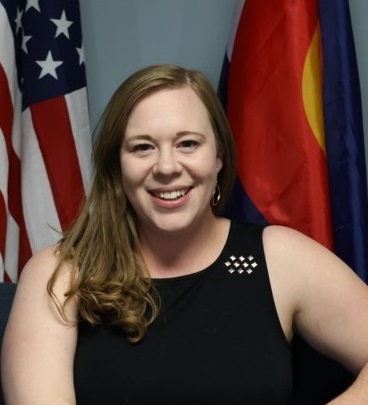
Sen. Katie Wallace
Sponsored bills
The act prohibits the sale or distribution for consideration of an algorithmic device if: The algorithmic device is sold or distributed with the intent that it will be used by 2 or more landlords in the same market or a related market to set or recommend the amount of rent, level of occupancy, or other commercial term associated with the occupancy of a residential premises; and The device sets or recommends the amount of rent, level of occupancy, or other commercial term associated with the occupancy of a residential premises based on data or a formula that is similar for each landlord. The act also prohibits the use of an algorithmic device by a person to set or recommend the amount of rent, level of occupancy, or other commercial term associated with the occupancy of a residential premises if: The person knew or should have known that another person used the algorithmic device to set or recommend the amount of rent, level of occupancy, or other commercial term associated with the occupancy of a residential premises; and The circumstances suggest that the person adhered to or participated in a scheme to fix the amount of rent, level of occupancy, or other commercial term associated with the occupancy of a residential premises. The act also prohibits a person engaged in the business of providing algorithmic device services or products that are used to set or recommend the amount of rent, level of occupancy, or other commercial term associated with the occupancy of a residential premises from using nonpublic competitor data pertaining to residential properties in Colorado in setting or recommending the amount of rent, level of occupancy, or other commercial term associated with the occupancy of a residential premises for residential properties in Colorado. A violation is deemed to be an illegal restraint of trade or commerce and is punishable in accordance with the "Colorado State Antitrust Act of 2023". VETOED by Governor 5/29/2025(Note: This summary applies to this bill as enacted.)
The act requires the state board of education (board) to adopt high school health education standards regarding drug overdose risks, identification of a drug overdose event, and drug overdose prevention and response. The act authorizes the board to seek, accept, and expend gifts, grants, or donations for the purpose of adopting these standards. The board must adopt the standards on or before July 1, 2028, if, the board receives by July 1, 2026, $20,000 from gifts, grants, or donations to adopt the standards. If sufficient money is not received, the board is required to adopt the standards on or before July 1, 2032, pursuant to the general standards schedule. Under current law, a school district, the state charter school institute (institute), or the governing board of a nonpublic school may adopt and implement a policy allowing an employee or agent of the school to furnish an opioid antagonist to any individual, including a student, but only if the student has received appropriate school-sponsored training. The act repeals the required condition that a student must receive appropriate school-sponsored training. The act authorizes a school district, the institute, a public school, or a nonpublic school to seek, accept, and expend gifts, grants, or donations for purposes related to acquiring, maintaining, and providing training for administering opioid antagonists. (Note: This summary applies to this bill as enacted.)
The act allows a health-care provider to, under certain circumstances, adjust the dose or frequency of a chronic maintenance drug without needing prior authorization from an insurance carrier. (Note: This summary applies to this bill as enacted.)
The act makes changes to requirements for preventive care coverage by health insurers for breast cancer screening, including: Relocating in statute the high-risk breast cancer screening requirements; Defining and specifying criteria for the use of diagnostic breast examinations and supplemental breast examinations; and Clarifying that, in addition to regular breast cancer screening, diagnostic and supplemental breast examinations that are medically necessary and conducted within nationally recognized screening guidelines do not require cost sharing by the patient.(Note: This summary applies to this bill as enacted.)
Current Colorado laws do not always expressly provide whether the laws apply to the Southern Ute Indian Tribe or the Ute Mountain Ute Tribe (Tribes). The act creates a rule of construction that a law does not apply to the Tribes unless the law clearly and expressly states that the law applies to the Tribes. The act further clarifies that if the general assembly enacts a new law or materially amends an existing law that is silent as to its application to the Tribes or to tribally controlled entities; purports to apply statewide; or grants a governmental agency or entity civil, criminal, or regulatory authority, it is presumed that the law does not apply within the exterior boundaries of the reservations to the Tribes, including the Tribes' officials and employees acting in their official capacities, to a tribally controlled entity, or to Tribal lands. The act reinforces that these rules of construction do not: Preclude or limit the authority of the Tribes' governing bodies from requesting inclusion in legislation pending before the general assembly; Abrogate the sovereign immunity of the state or the Tribes; or Affect the rights of the state, the Tribes, or other persons to pursue legal remedies that may be available to contest the application of laws passed by the general assembly.(Note: This summary applies to this bill as enacted.)
The act creates the provider stabilization fund for use by Colorado department of health care policy and financing (department) to distribute provider stabilization payments to safety net providers who provide services to low-income, uninsured individuals on a sliding-fee schedule or at no cost. Provider stabilization payments will be distributed to eligible safety net providers based on the proportion of low-income, uninsured individuals that an individual provider serves in comparison to the total number of low-income, uninsured individuals served by all eligible safety net providers. The state treasurer is directed to make an interest-free loan of interest earnings on the principal in the unclaimed property trust fund (UPTF) and, if the interest earnings are insufficient, from the principal of the UPTF as well, to the provider stabilization fund as follows: $25 million for the 2025-26 state fiscal year; $20 million for the 2026-27 state fiscal year; and $15 million for each of the 2027-28, 2028-29, and 2029-30 state fiscal years. The act specifies that the loan from the UPTF to the provider stabilization fund is an interfund loan that is not classified as revenue, is booked as an interfund receivable or payable, is not state fiscal year spending or state revenues, and does not count against the state fiscal year spending limit or the excess state revenues cap. The department is directed to repay the loan by January 1, 2045, but in any year in which state revenues do not exceed the limit on state fiscal year spending, the department must present to the joint budget committee a proposal to repay all or a portion of the loan at an earlier time, and to the extent possible, the general assembly must prioritize repaying the loan starting in the 2030-31 state fiscal year or sooner if funds are available. The provider stabilization fund also consists of any money the general assembly appropriates, transfers, or credits to the fund and any gifts, grants, or donations the department may receive for the fund. The act directs the department to leverage money in the provider stabilization fund to obtain federal matching money. The act establishes a provider stabilization fund advisory board (advisory board) to assist the department in implementing and administering the provider stabilization fund. The department, with assistance from the advisory board, is required to submit an annual report on the provider stabilization fund to specified committees, the governor, and the medical services board in the department. The advisory board is scheduled for repeal on September 1, 2031, and is subject to a sunset review by the department of regulatory agencies before the repeal. The act appropriates $25,000,000 from the provider stabilization fund to the department to implement the act, allocated as follows: $138,505 for personal services to administer the act, including 2.0 FTE; $15,900 for operating expenses; and $24,845,595 for provider stabilization payments to eligible safety net providers.(Note: This summary applies to this bill as enacted.)
The act creates the American Indian affairs interim committee (committee). The purpose of the committee is to examine issues and challenges that impact American Indian Tribal Nations. The committee consists of 6 voting members of the general assembly who serve for the duration of the committee unless they resign, are removed, or are no longer in office and 2 nonvoting members, one from the Southern Ute Indian Tribe and one from the Ute Mountain Ute Tribe. The act allows the committee to meet up to 6 times and recommend up to 5 bills during each interim, but the committee does not meet or recommend legislation during the 2025 interim. On or before January 15, 2031, the act requires the committee to submit a report to the executive committee of the legislative council summarizing the work of the committee during the preceding 5 years. The committee is repealed, effective June 30, 2031. (Note: This summary applies to this bill as enacted.)
No later than October 1, 2025, the act requires the department of human services (state department), in consultation with the works allocation committee, to: Develop a standardized process for each county to collect and report to the state department on a monthly basis certain information about the Colorado works program; Develop recommendations that include a menu of standardized outcome measures and required levels of evidence for third-party contracted services funded with Colorado's temporary assistance for needy families (TANF) allocation; and Submit a report to the joint budget committee (JBC) that includes a description of the standardized process and recommendations. Beginning January 1, 2026, and each January thereafter, the act requires the state department to submit a report to the JBC that includes the information collected and reported through the standardized process and the total dollar amount of Colorado's TANF allocation that is redistributed through the state budget or other programs and services and publish the information on a monthly basis on the state department's website in a publicly accessible format. No later than July 1, 2026, the act requires the state department to submit a report to the JBC that includes certain information related to the standard of need for eligibility for basic cash assistance. For the 2025-26 state fiscal year, the act appropriates $154,000 to the department of human services for use by the office of economic security to conduct the works program evaluation. (Note: This summary applies to this bill as enacted.)
The act modifies the process for filling vacancies in an unexpired term in the office of county commissioner for county commissioners affiliated with a major political party in counties that are not home rule counties and that have at least 50,000 active voters as of the last general election (vacancy). If a vacancy occurs on or after July 31 of an even-numbered year that the seat was not scheduled to be on the ballot at the general election but before July 31 of an odd-numbered year, the vacancy must be filled by vacancy committee selection until the next regularly scheduled odd-year November election following the vacancy, rather than until the next general election as is the case for vacancies that occur at other times, when the vacancy must be filled by vacancy election (vacancy election). An individual elected at a vacancy election serves until the next general election. A vacancy election is conducted as part of a coordinated odd-year November election. A major political party may opt out of the vacancy election process if at least 75% of the total voting membership of a political party's state central committee votes to do so by October 1 of the even year preceding a vacancy election. For a vacancy election to be held in November 2025, the vote must occur no later than June 30, 2025. If the state certifies any ballot content for the odd-year November election, the state is required to reimburse a county for 45% of its costs incurred in conducting the coordinated election that includes the vacancy election. Watchers, canvass boards, and election judges for the vacancy election are selected according to current processes in statute. Only registered electors of the county of the vacating commissioner who, as of 22 days before the vacancy election, are either registered with the same major political party as the vacating commissioner or are unaffiliated with a political party are eligible to vote in a vacancy election. A candidate is eligible to be placed on the ballot for a vacancy election if the candidate: Files a nominating statement signed by at least 30% of the vacancy committee members with the county clerk and recorder and the candidate's major political party by the seventieth day before the vacancy election; or Submits to the county clerk and recorder, no later than 30 days after their petition format has been approved or 85 days prior to the vacancy election, a notarized candidate's statement of intent and a petition signed by at least 200 electors who have been affiliated with the same major political party as the candidate for 22 days before signing the petition and are eligible to vote in the district for which the candidate is to be elected. A candidate may seek to be placed on the ballot through one, but not both, methods, and candidate placement on the ballot is drawn by lot. A candidate must be registered with the vacating commissioner's major political party by the first business day in January of the calendar year in which the vacancy election occurs and must be a resident of the same district as the vacating commissioner. A candidate in a vacancy election is subject to the campaign finance contribution, expenditure, and reporting requirements of the "Fair Campaign Practices Act". For the 2025-26 state fiscal year, $314,920 is appropriated from the department of state cash fund to the department of state for use by the information technology division for personal services. (Note: This summary applies to this bill as enacted.)