

Joint Budget Committee. The general assembly recognizes that the actual funded pupil count and the actual at-risk pupil count for the 2017-18 school year are lower than anticipated when the appropriation amount was established during the 2017 legislative session. In addition, local property tax and specific ownership tax receipts are more than anticipated, increasing the local share of total program funding. The bill declares the general assembly's intent to maintain total program funding at the level of the original appropriation, resulting in a reduction in the budget stabilization factor. The bill adjusts the minimum amount of total program funding specified in statute to reflect this intent. The bill decreases the state share of total program funding by the amount of the increased local property tax revenues, putting $84,034,372 back into the state education fund and $12,866,074 back into the state public school fund, for a total of $96,900,466. The bill makes technical amendments to the hold harmless full-day kindergarten funding and ASCENT program funding to reflect the total program funding amounts included in the bill. (Note: This summary applies to the reengrossed version of this bill as introduced in the second house.) Read More
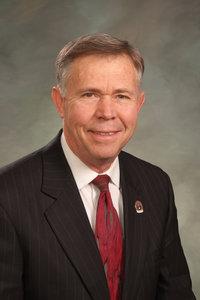
Sponsored bills
The bill establishes the 'Live and Let Live Act' in the state. (Note: This summary applies to this bill as introduced.) , Read More
Joint Budget Committee. If the state receives any federal mineral lease revenue from oil and gas production on naval oil shale reserve land that was set aside prior to January 1, 2009, and withheld by the federal government, then instead of depositing the money in the mineral leasing fund the state treasurer is required to distribute the money to the following counties or a related federal mineral lease district, if applicable: 40% to Garfield county; 40% to Rio Blanco county; 10% to Mesa county; and 10% to Moffat county. The 'Federal Mineral Lease District Act' is amended to permit these distributions to be made to a federal mineral lease district, if one exists, on behalf of a county. (Note: This summary applies to the reengrossed version of this bill as introduced in the second house.) , Read More
The bill is a referred measure to be voted upon at the election on November 6, 2018. It is known as the 'Colorado Politician Accountability Act'. The bill includes a legislative declaration that states that addressing sanctuary jurisdictions is a matter of statewide concern and that makes findings about how sanctuary policies are contrary to federal law and state interests. The bill creates a civil remedy against the state or a political subdivision of the state (jurisdiction) and against its elected officials for creating sanctuary policies. The bill also creates a crime of rendering assistance to an illegal alien that can be brought against an elected official for creating a sanctuary jurisdiction. An elected official is responsible for the creation of a sanctuary jurisdiction if the elected official votes in favor of imposing or creating a law, ordinance, or policy that allows the jurisdiction to operate as a sanctuary jurisdiction; fails to take steps to try to change a law, ordinance, or policy that allows the jurisdiction to operate as a sanctuary jurisdiction; or is a county sheriff who imposes or enforces a policy that allows the jurisdiction to operate as a sanctuary jurisdiction in a county in which the elected officials have not voted to impose or create a sanctuary jurisdiction. The bill allows any person who claims that he or she is a victim of any crime committed by an illegal alien who established residency in a sanctuary jurisdiction to file a civil action for compensatory damages against a jurisdiction and against the elected officials of the jurisdiction who were responsible for creating the policy to operate as a sanctuary jurisdiction. Notwithstanding the protections of the 'Colorado Governmental Immunity Act', the jurisdiction and its officials who are responsible for creating a sanctuary jurisdiction are civilly liable for damages if the person who engaged in the criminal activity: Is determined to be an illegal alien; Had established residency in the sanctuary jurisdiction; and Is convicted of the crime that is a proximate cause of the injury to a person or property. The maximum amount of compensatory damages for injury to persons is $700,000 per person or $1,980,000 for injury to 2 or more persons; except that no person may recover in excess of $700,000. The maximum amount of compensatory damages for injury to property is set at $350,000 per person or $990,000 for injury to multiple persons; except that no person may recover in excess of $350,000. The bill defines a 'sanctuary jurisdiction' as a jurisdiction that adopts a law, ordinance, or policy on or after the effective date of the bill that prohibits or in any way restricts an official or employee of the jurisdiction from: Cooperating and complying with federal immigration officials or enforcing federal immigration law; Sending to or receiving from or requesting from federal immigration officials information regarding the citizenship or immigration status, lawful or unlawful, of an individual; Maintaining or exchanging information about an individual's immigration status, lawful or unlawful, with other federal agencies, state agencies, or municipalities; Inquiring about an individual's name, date and place of birth, and immigration status while enforcing or conducting an official investigation into a violation of any law of this state; Continuing to detain an individual, regardless of the individual's ability to be released on bail, who has been identified as an illegal alien while in custody for violating any state law; or Verifying the lawful presence and eligibility of a person applying for a state or local public benefit as required by state and federal law. The bill sets forth the requirements for determining when an illegal alien has established residency in a sanctuary jurisdiction. An 'illegal alien' is defined as a person who is not lawfully present within the United States, as determined by federal immigration law. The governing body of any jurisdiction is prohibited from adopting a law, ordinance, rule, policy, or plan or taking any action that limits or prohibits an elected official, employee, or law enforcement officer from communicating or cooperating with an appropriate public official, employee, or law enforcement officer of the federal government concerning the immigration status of an individual residing in the state. The governing body of a jurisdiction is required to provide written notice to each elected official, employee, and law enforcement officer of the jurisdiction of his or her duty to communicate and cooperate with the federal government concerning enforcement of any federal or state immigration law. The governing body of any jurisdiction in this state is required to annually submit a written report to the department of public safety (department) that the jurisdiction is in compliance with the cooperation and communication requirements. If the department does not receive those written reports, the department is required to provide the name of that jurisdiction to the state controller. A law enforcement officer of a jurisdiction who has reasonable cause to believe that an individual under arrest is not lawfully present in the United States shall immediately report the individual to the appropriate U.S. immigration and customs enforcement office (ICE) within the department of homeland security. The governing body of any jurisdiction is required to report annually to the department on the number of individuals who were reported to ICE by law enforcement officers from that jurisdiction. The department is directed to compile and submit annual reports on compliance to the general assembly and to the state controller. The state controller is required to withhold the payment of any state funds to any jurisdiction that is found by the department to have failed to comply with these reporting requirements. The state controller shall withhold funds until the department notifies the state controller that the jurisdiction is in compliance. The bill creates the crime of rendering assistance to an illegal alien through a sanctuary jurisdiction, which is a class 4 felony. A person who is an elected official of a jurisdiction commits rendering assistance to an illegal alien through a sanctuary jurisdiction if, with intent to hinder, delay, or prevent the discovery, detection, apprehension, prosecution, conviction, or punishment of illegal aliens within the jurisdiction: He or she was responsible for creating a sanctuary jurisdiction in the jurisdiction to which the official is elected; and When, as a result of the protection afforded by a sanctuary jurisdiction, a third person engages in criminal activity and the third person: Is an illegal alien as legally defined by federal immigration law; Had established residency in the sanctuary jurisdiction that was created by the official; and Has been convicted of a crime that caused injury to a person or to property. A person who has knowledge of a crime committed by an illegal alien as a result of the creation of a sanctuary jurisdiction may file an affidavit with the attorney general or with a district attorney outlining the crime and requesting that charges be brought or that a grand jury be impaneled. The attorney general or district attorney shall investigate and respond in writing with his or her decision to the person filing the affidavit within 49 days. If the attorney general or district attorney declines to bring charges or impanel a grand jury, the person may file a second affidavit directly with the applicable court. The bill includes a severability clause and a provision that states that the bill is not subject to judicial review. If approved by the voters, the bill takes effect on the date of the proclamation by the governor and applies to acts or omissions occurring and offenses committed on or after said date. (Note: This summary applies to this bill as introduced.) , Read More
The bill prohibits terminating the life of an unborn child and makes a violation a class 1 felony. The following are exceptions to the prohibition: A licensed physician performs a medical procedure designed or intended to prevent the death of a pregnant mother, if the physician makes reasonable medical efforts under the circumstances to preserve both the life of the mother and the life of her unborn child in a manner consistent with conventional medical practice; and A licensed physician provides medical treatment, including chemotherapy and the removal of an ectopic pregnancy, to the mother that results in the accidental or unintentional injury to or death of the unborn child. The pregnant mother upon whom termination of the life of an unborn child is performed or attempted is not subject to a criminal penalty. The sale and use of contraception is not prohibited by the bill. A conviction related to the prohibition of the termination of the life of an unborn child constitutes unprofessional conduct for purposes of physician licensing. (Note: This summary applies to this bill as introduced.) , Read More
The bill repeals the 'Architectural Paint Stewardship Act', which act requires architectural paint producers to create paint stewardship programs for the recycling of architectural paint and to fund the paint stewardship programs by charging assessments on retailers and distributors, who are then required to add the amount of the assessments to the purchase price of containers of architectural paint sold in Colorado. (Note: This summary applies to this bill as introduced.) , Read More
Sentencing in the Criminal Justice System Interim Study Committee. Currently, a court is required to sentence certain sex offenders to an indeterminate sentence that is a maximum of the sex offender's life. The bill allows the court to choose either the indeterminate sentence or a determinate sentence in those cases. The bill addresses the factors related to punishment and treatment that a court must consider when deciding between an indeterminate or a determinate sentence. The court must specify its reasons on the record for choosing either a determinate or an indeterminate sentence.(Note: This summary applies to this bill as introduced.) , Read More
Joint Budget Committee. The bill sets forth guidelines for the establishment of provider rates for licensed out-of-home placement providers (providers). Rules adopted by the department of human services (department) concerning provider rates shall include cost-of-living adjustments and provider rate increases approved by the general assembly. The department is directed to continue completing an annual review of the methodology by which counties evaluate and negotiate provider rates and outcomes and submit a report to the joint budget committee. As part of the continuing review, the department shall contract with an independent vendor to: Perform a salary survey and study related to the delivery of child welfare services. The study must include salary surveys for providers; child placement employees; residential child care facility employees; and state and county employees involved with the provision of child welfare services. Perform an actuarial analysis of the costs necessary to provide services at a level required by state statute, departmental rule, or federal rules and regulations, as appropriate for the families referred; and Develop a rate-setting methodology for provider compensation using the salary survey and actuarial analysis. In developing the rate-setting methodology, the independent vendor shall solicit input from representatives of the state department, counties, the provider community, and the department of health care policy and financing. The rate-setting methodology must clearly include a process by which the full amount of any provider rate adjustments to the base rate or previously contracted rate approved by the general assembly are included as part of any final contract with a provider. The department shall provide the joint budget committee with a report defining the new rate-setting methodology on or before April 2, 2018. The new rate-setting methodology must be implemented on or before June 1, 2018, except for those rates that must be approved by the federal centers for medicare and medicaid services. (Note: This summary applies to the reengrossed version of this bill as introduced in the second house.)
Current law requires any licensed physician, physician assistant, or anesthesiologist assistant (licensee) who attends or treats any of certain injuries, including injuries resulting from domestic violence, to report the injury at once to the police of the city, town, or city and county or the sheriff of the county in which the licensee is located. The bill states that a licensee is not required to report an injury that the licensee has reason to believe involves an act of domestic violence if: The victim of the injury is at least 18 years of age and indicates his or her preference that the injury not be reported; The injury is not an injury that the licensee is otherwise required to report; and The injury is not a serious bodily injury. When a licensee declines to report an injury that he or she has reason to believe resulted from domestic violence pursuant to the victim's expressed preference, the licensee shall document the victim's request in the victim's medical record. Before a licensee reports an injury that he or she has reason to believe resulted from domestic violence, the licensee shall make a good-faith effort, confidentially, to advise the victim of the licensee's intent to do so. If a licensee has reason to believe that an injury resulted from domestic violence, then, regardless of whether the licensee reports the injury to law enforcement, the licensee shall either refer the victim to a victim's advocate or provide the victim with information concerning services available to victims of abuse. A licensee who, in good faith, refers a victim to a victim's advocate or provides a victim with information concerning services available to victims of abuse is not civilly liable for any act or omission of the victim's advocate or of any agency that provides such services to the victim. Under current law, any licensee who, in good faith, makes such a report of an injury is immune from any liability, civil or criminal, that might otherwise be incurred or imposed with respect to the making of the report. The bill states that a licensee who does not make a report under the new conditions described in the bill is also immune to such liability. (Note: This summary applies to the reengrossed version of this bill as introduced in the second house.)
Current law provides that money allocated to a county through a county block grant for the child care assistance program may be used for the provision of child care services. The bill expands allowable uses of such money to the provision of child care improvement activities as identified in the federal 'Child Care and Development Block Grant Act of 2014', as amended. (Note: This summary applies to the reengrossed version of this bill as introduced in the second house.)