

Passed Mar 5, 2024
0 co-sponsors
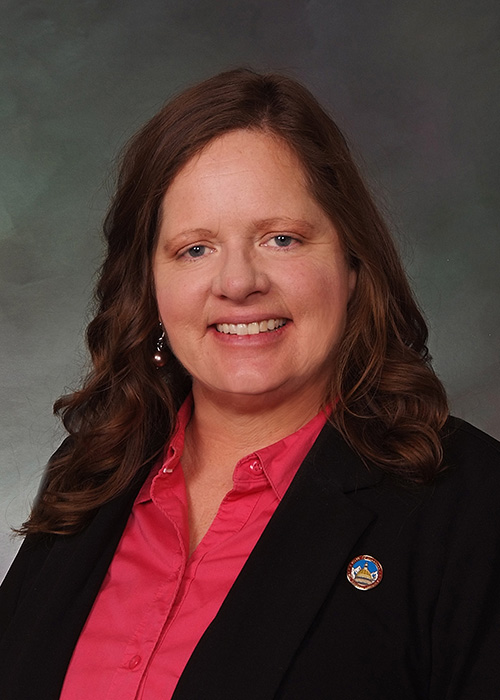
Sen. Janice Marchman
Total votes
2,798
all sessions
Attendance
87%
372 missed
Near the chamber average
With party
97%
of cast votes
Lower than 78% of chamber peers
Bipartisan score
1%
crosses aisle rarely
Near the chamber average
Sponsored
519
bills & resolutions
Higher than 80% of chamber peers
Committees
6
assignments
519 bills and resolutions
Sponsored bills
Total
519
Primary
149
Co-sponsor
370
This page
519
matching current filters
Passed Feb 15, 2024
0 co-sponsors
School Mental Health Professional Loan Repayment Program
Colorado Youth Advisory Council Review Committee. The bill creates the licensed school mental health professional loan repayment program (program) in the department of higher education. The purpose of the program is to provide loan repayment of up to $10,000 to eligible school counselors, school psychologists, and school social workers who provide mental health services to students who have limited access to mental health services. The commission on higher education (commission) administers the program. The bill creates in the state treasury the licensed school mental health professional loan repayment program fund. The bill requires that the commission submit an annual report to the education committees of the house of representatives and the senate on or before October 31 of each year the program is operational. The program repeals on July 1, 2029. (Note: This summary applies to this bill as introduced.)
In committee Feb 15, 2024
0 co-sponsors
Identical TABOR Refund
The act changes the refund mechanism for state revenues that exceed the state's fiscal year spending limit (TABOR refunds). Before passage of the act, 3 refund mechanisms for TABOR refunds applied for the 2022-23 state fiscal year: Reimbursement, paid to counties for allocation to local governments that levy property taxes, for the reduction in property taxes resulting from the property tax exemptions for qualifying seniors and veterans with a disability; An additional reimbursement that is paid to counties for allocation to local governmental entities that levy property taxes for the reduction in property taxes resulting from reductions in valuation for assessment; and A sales tax refund for individual taxpayers, the amount of which is either based on 6 tiers of income or, if there is insufficient revenue for the tiered approach, is an identical refund amount. The act creates a new temporary refund mechanism that replaces the sales tax refund mechanism for the 2022-23 state fiscal year. Under this mechanism, each qualified individual is eligible to receive an identical refund payment from the remaining excess state revenues after refunds are made through the county reimbursement mechanisms (remaining excess state revenues). The amount of the refund is equal to the amount of remaining excess state revenues divided by the number of qualified individuals, and it is a refund from all sources of state fiscal year spending. A qualified individual filing a single return is entitled to one refund, and 2 qualified individuals filing a joint return are entitled to 2 refunds. The executive director of the department of revenue is required to administer this refund in the same manner as the identical sales tax refund. The refund is not to be reported to the department of revenue as a payment of a refund, credit, or offset of state income taxes in any information return required to be filed pursuant to federal law. APPROVED by Governor November 20, 2023 EFFECTIVE November 20, 2023(Note: This summary applies to this bill as enacted.)
Signed into law Nov 20, 2023
0 co-sponsors
Prevent Harassment And Discrimination In Schools
The act defines "harassment or discrimination" as unwelcome physical or verbal conduct or any written, pictorial, or visual communication by a student or employee that is directed at a student or group of students because of that student's or group's membership in, or perceived membership in, a protected class. The conduct or communication need not be severe or pervasive under specified circumstances. Whether conduct constitutes harassment or discrimination is judged under the totality of the circumstances. The act requires a public school that enrolls students in any of grades kindergarten through 12 (public school) to accept formal reports of harassment or discrimination in writing or in person; by phone, e-mail, or online form. A report received by a public school that alleges harassment or discrimination is confidential. The act requires a public school to: Post notices describing how a student can report harassment or discrimination to the school; Grant an excused absence to a student for certain out-of-school appointments related to the student experiencing harassment or discrimination; and Provide accommodations and supportive measures to a student experiencing harassment or discrimination. Each school district, charter school, or board of cooperative services (local education provider) shall adopt procedures for investigating reports of harassment or discrimination. A local education provider shall retain the records of a harassment or discrimination report for 7 years. Each local education provider shall adopt a written policy (policy) that protects students experiencing harassment or discrimination. The policy must include the following: Information on reporting options for students, including contact information for the person designated to receive reports; An explanation of the school's role in responding to reports of harassment or discrimination; Information about resources for victims of violence; A prohibition on a school using a student report of harassment or discrimination or information learned during an investigation as the basis for, or a consideration in, investigating or exacting any disciplinary response for specified school violations by the student related to the harassment or discrimination; and Information about available accommodations and supportive measures. A public school shall make the policy available annually to students, students' parents and legal guardians, and employees. The act requires a public school to provide training to school staff about harassment and discrimination, including training about the school's policy. Each new employee of a public school must complete training upon hiring, and every 3 years thereafter. Public schools of a school district must report information about harassment or discrimination to school districts, who report that information to the department of education (department). An institute charter school reports the information to the state charter school institute, who reports the information to the department. The department reports the information to the sexual misconduct advisory committee in the department of higher education. A complaint of harassment or discrimination that is unsubstantiated, and all records related to the unsubstantiated complaint, is not a public record subject to disclosure pursuant to the "Colorado Open Records Act" and must not serve as a basis for discipline, dismissal, termination, or any employment reference or licensing action unless the conduct establishes of pattern of the same or similar behavior. The act exempts from the existing school attendance requirement excused absences for a therapy, medical, legal, or victim services appointment, or for behavioral or mental health concerns, related to harassment or discrimination. APPROVED by Governor June 6, 2023 EFFECTIVE August 7, 2023 NOTE: This act was passed without a safety clause and takes effect 90 days after sine die. (Note: This summary applies to this bill as enacted.)
Signed into law Jun 6, 2023
0 co-sponsors
Workers' Compensation
Section 1 of the act increases the limit on medical impairment benefits based on mental impairment from 12 weeks to 36 weeks. Section 2 removes language authorizing an employee to petition the division of workers' compensation in the department of labor and employment (division) for the replacement of any artificial member, glasses, hearing aid, brace, or other external prosthetic device, including dentures. The treating physician must deem such replacement necessary. Section 3 allows an employee to request an expedited hearing when the employee's temporary total disability benefits end based on an attending physician's written release to return to regular employment. Section 4 specifies that when a physician recommends medical benefits after maximum medical improvement, the benefits admitted by the insurer or self-insured employer are not limited to any specific medical treatment. Current law requires an insurance carrier to provide an independent medical examiner and all other parties a complete copy of all medical records in its possession pertaining to an injury. Section 5 limits the medical records required to be provided to records relevant to the injury. Section 5 also specifies how the division is required to determine the amount and allocation of costs to be paid by the parties for an independent medical examination. Section 6 allows a prehearing administrative law judge to issue interlocutory orders resolving disputes regarding the content and format of the independent medical examiner's medical record packet, indigency status, and the allocation of independent medical examiner costs. Current law states that, in an unappealed case, a contingent attorney fee exceeding 20% of the amount of contested benefits is presumed to be unreasonable. Section 7 increases the amount to 25%. For the 2023-24 state fiscal year, $731,640 is appropriated to the department of labor and employment from the from the workers' compensation cash fund for use by the division of workers' compensation in implementing the act. APPROVED by Governor June 5, 2023 EFFECTIVE August 7, 2023 NOTE: This act was passed without a safety clause and takes effect 90 days after sine die. (Note: This summary applies to this bill as enacted.)
Signed into law Jun 5, 2023
0 co-sponsors
Sunset Continue CO Youth Advisory Council
The Colorado youth advisory council (advisory council) is set to repeal September 1, 2023. The act continues the advisory council until September 1, 2028. The act renames the Colorado youth advisory council review committee as the Representative Hugh McKean Colorado youth advisory council review committee. The act appropriates $50,000 from the general fund to the Colorado youth advisory council cash fund. APPROVED by Governor June 2, 2023 EFFECTIVE June 2, 2023 (Note: This summary applies to this bill as enacted.)
Signed into law Jun 2, 2023
0 co-sponsors
Continuation Of Child Care Contribution Tax Credit
For income tax years commencing prior to January 1, 2025, a taxpayer who makes a monetary contribution to promote child care in the state is allowed an income tax credit that is equal to 50% of the total value of the contribution. The act extends the credit for 3 years. The act requires the department of revenue to consult with the early childhood leadership commission, the public-private collaboration unit in the department of personnel, and the department of early childhood to develop recommendations for measuring the effectiveness of the tax credit and recommendations for improving and expanding the tax credit. The act also requires the state auditor to prepare the tax expenditure evaluation report for the credit that the law periodically requires in the income tax year commencing January 1, 2026. For the 2023-24 state fiscal year, $78,254 is appropriated from the general fund to the department of revenue to implement the act and $10,881 of the appropriation is reappropriated to the department of personnel to provide document management services for the department of revenue. APPROVED by Governor May 23, 2023 EFFECTIVE August 7, 2023 NOTE: This act was passed without a safety clause and takes effect 90 days after sine die. (Note: This summary applies to this bill as enacted.)
Signed into law May 23, 2023
0 co-sponsors
Agricultural Land In Urban Renewal Areas
Currently, an urban renewal area cannot contain agricultural land unless the land falls within certain exceptions. One exception for including agricultural land is if the land was included in an approved urban renewal plan prior to June 1, 2010. The act updates the exception to specify that agricultural land may be included in an urban renewal area if the agricultural land is in an existing urban renewal plan that was originally approved or modified to include the agricultural land prior to June 1, 2010, and if the land still remains in that same urban renewal plan. VETOED by Governor May 23, 2023(Note: This summary applies to this bill as enacted.)
Vetoed May 23, 2023
0 co-sponsors
Born To Be Wild Special License Plate
The act creates the "Born to Be Wild" special license plates for certain motorcycles, passenger cars, trucks, or noncommercial or recreational motor vehicles. An applicant qualifies for the issuance of the special license plates if the applicant pays the following fees to the department: A one-time $25 fee that is credited to the highway users tax fund; An annual $50 fee that is credited to the wildlife cash fund in the division of parks and wildlife; and A one-time $25 fee that is credited to the Colorado DRIVES vehicle services account. The division of parks and wildlife is directed to use the money collected and credited to the wildlife cash fund for implementing nonlethal means of mitigating and preventing conflict with gray wolves and promoting the license plate. To implement this act, $99,642 is appropriated to the department of revenue for use by the division of motor vehicles. This appropriation consists of $11,054 from the Colorado DRIVES vehicle services account in the highway users tax fund and $88,588 from the license plate cash fund. APPROVED by Governor May 20, 2023 EFFECTIVE August 7, 2023 NOTE: This act was passed without a safety clause and takes effect 90 days after sine die. (Note: This summary applies to this bill as enacted.)
Signed into law May 20, 2023
0 co-sponsors
Ask Maddy
·
AI policy assistant
Ask Maddy about Janice Marchman
Scope: colorado
Hi! I can help you understand Janice Marchman's legislative record. What would you like to know?
Try one of these
i
Maddy answers using official bill text and legislative records. Always verify before sharing.
Sources cited inline