

The act repeals the requirement for coroners, or other officials performing like functions, to report to the department of transportation (department) deaths resulting from traffic accidents on a monthly basis. The act requires coroners, or other officials performing like functions, to report all available toxicology results to the department for each deceased party who has died as a result of a motor vehicle crash. The report must be submitted by the final business day of each quarter of the calendar year. If a participant in a crash dies within 30 days as a result of a crash, the act requires the law enforcement officer who was notified of, or investigated, the crash to submit an amended report to the department within five days after receiving a notification of the death.(Note: This summary applies to this bill as enacted.)
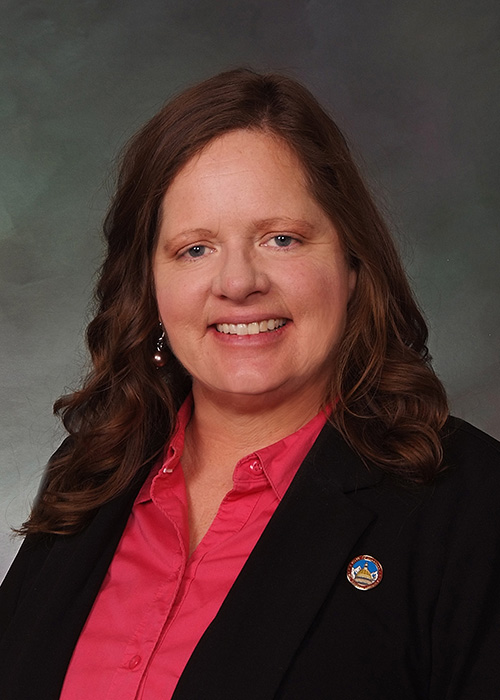
Sen. Janice Marchman
Sponsored bills
The water quality control division (division) administers a program to test for and remediate water quality issues for mobile home parks (program). The program tests for water quality issues that pose a risk to not only health or safety but also the welfare of park residents. The act authorizes the division to require remediation of welfare-related water quality violations. One of the requirements of the program is for the park owner to certify that the park owner has made certain water-quality-related notices to park residents. The act authorizes the division to issue an order requiring the park owner to comply with the park resident notice certification requirement. Under the program, the park owner is prohibited from imposing the cost of compliance with certain remediation-related requirements on park residents. The act authorizes a park owner who is also a park resident to bear this cost. The program authorizes the division to issue orders requiring the park owner to perform additional water testing, perform temporary measures necessary to address acute health risks, make additional reports to the division, create a remediation plan, implement a remediation plan, or respond to the division in connection with a remediation plan. The act clarifies that a park owner may ask for a hearing only regarding the orders that concern remediation plans. The act also clarifies that:The division has authority to enforce the requirements of the program; andThe division has authority to issue cease-and-desist orders to address violations related to the program, regardless of whether the issues are related to water quality violations. The act also provides that:An additional monthly penalty of up to $5,000 for a continuing violation may be imposed for the first 30 days of noncompliance; andA park owner is not entitled to an administrative hearing to contest an imposed civil penalty but may seek judicial review.(Note: This summary applies to this bill as enacted.)
Maddy summaryHB 1305 allows remote psychiatric inpatient facilities in Colorado to operate under a main hospital's general license instead of needing separate psychiatric hospital licensing, provided they meet specific criteria. These facilities must be located within 35 miles of a main hospital in a rural area, offer 17+ inpatient beds, meet all psychiatric hospital standards, and maintain federal provider-based status. The main hospital remains responsible for all licensing enforcement actions related to the remote location, and the facility must pay a separate licensing fee. This change aims to streamline operations while maintaining regulatory oversight through the main hospital's license.
Existing law specifies that an individual must be a certified death investigator or forensic pathologist to be eligible to hold the office of county coroner in a county with a population greater than 150,000. The act changes this requirement to apply in a county with a population greater than 300,000. The act also requires a county coroner to disclose, on the coroner's website, their financial interest in businesses regulated by their office, including a mortuary, funeral home, crematory, embalming service, or other death-care business. A coroner who has disclosed a financial interest shall not participate in an official action that would directly and specifically affect the business in which the coroner has a financial interest. The act does not prohibit a coroner or candidate for coroner from operating a death-care business.(Note: This summary applies to this bill as enacted.)
The act expands the ways in which individuals may become eligible for certification as a certified public accountant (CPA) in Colorado by creating 3 new education and experience pathways that may satisfy the requirements for CPA certification. The pathways become available for applicants beginning on January 1, 2027. The 3 pathways are:Obtaining a baccalaureate degree, completing 2 years of accounting-related work experience, completing a professional ethics course, and passing the written CPA exam;Obtaining a baccalaureate degree, completing 30 additional semester hours, completing one year of accounting-related work experience, completing a professional ethics course, and passing the written CPA exam; andObtaining a post-baccalaureate degree, completing one year of accounting-related work experience, completing a professional ethics course, and passing the written CPA exam. For each pathway, an applicant's work experience must:Meet the requirements set by the Colorado state board of accountancy (board) by rule;Include any type of service or advice representing certain accounting-related skills needed to serve the public at the time of initial certification; andBe verified by an actively licensed CPA who meets board requirements. Section 2 of the act conforms statutory provisions relating to an applicant's eligibility to sit for a CPA examination with the pathways to certification created by the act. Section 2 also reinforces that, regardless of an applicant's eligibility to sit for an exam, the applicant must complete one of the specified pathways in order to obtain a CPA certificate. Section 4 establishes that an individual CPA who is licensed or certified in good standing in another state or jurisdiction of the United States and whose principle place of business is located in another state or jurisdiction of the United States (out-of-state CPA) has all the same practice privileges as Colorado certificate holders, without the need to obtain a Colorado certificate, if the individual was required at their initial licensure or certification in the other state or jurisdiction of the United States to pass the uniform CPA examination and obtain a baccalaureate degree conferred by an accredited college or university. Additionally, the act continues the practice privileges of out-of-state CPAs who held practice privileges in Colorado as of December 31, 2024. Finally, the conferral of practice privileges upon out-of-state CPAs must be conducted in conformity with rules adopted by the board; except that the board shall not require an out-of-state CPA to provide a notice, fee, or other submission as a condition of exercising such practice privileges in Colorado.(Note: This summary applies to this bill as enacted.)
Under current law, a local education provider is required to ensure that a preschool or kindergarten student receives an individualized readiness plan (plan). The act makes it optional for local education providers to provide plans to students who demonstrate proficiency on specified assessment domains and the kindergarten reading assessment, unless the student's parent requests a plan. Under current law, a local education provider is required to annually provide information concerning assessments to students' parents. The act requires this written notice to include:The results of the student's specified assessment domains and kindergarten reading assessment;If applicable, information explaining that because of the student's assessment results, the local education provider is not required, and does not intend, to provide a plan for the student; andLanguage indicating that the student's parent may request a plan. Under current law, the department of education is required to submit an annual report to the education committees of the house of representatives and the senate concerning specified educational accountability requirements. One of the reporting requirements concerns the level of school readiness demonstrated by students enrolled in kindergarten. The act requires the department to report this information on a statewide basis and to disaggregate the information based on specific characteristics.(Note: This summary applies to this bill as enacted.)
If the state voluntarily elects to participate in a federal program that provides a tax credit for a qualified contribution to a scholarship granting organization, the bill requires the state to include all eligible scholarship granting organizations on its list identifying scholarship granting organizations to the federal government.If a school enrolls a student whose education-related expenses are paid, in whole or in part, by a scholarship granting organization, the bill requires the school to comply with nondiscrimination requirements and laws concerning students with disabilities.If the school that is subject to these requirements violates a requirement, the school is subject to an injunction and may have its eligibility to receive money for a student whose education-related expenses are paid by a scholarship granting organization suspended.(Note: This summary applies to this bill as introduced.)
Maddy summaryThis bill proposes that Colorado lawmakers consider adding guaranteed lifetime income options to the state public employees' retirement defined contribution plan and voluntary savings plans. The measure aims to ensure public employees have access to a reliable income stream in retirement, similar to what is already available in the state's traditional defined benefit plan. By allowing workers to choose options that provide lifetime payouts, the bill seeks to improve retirement security and financial confidence for over 226,000 active public employees. The resolution encourages the General Assembly to study how these new options could help workers retire with dignity while maintaining the portability of their savings.
The act requires the state board of veterinary medicine (board) to review and update the existing process by which an individual who has a license to practice veterinary medicine in another state may be licensed by endorsement to practice veterinary medicine in Colorado. The board shall adopt rules with the intent to expedite the licensure by endorsement process, including eliminating duplicative requirements and streamlining the pathway to licensure. The act clarifies that a veterinarian who administers, dispenses, distributes, or prescribes medicine to a patient in an emergency situation is not acting as a pharmacist or conducting the practice of pharmacy, and, as such, is not subject to discipline by the state board of pharmacy. The act relocates certain provisions specific to the practice of veterinary medicine from regulation by the state board of pharmacy to regulation under Colorado's veterinary practice act. Under current law, the board must approve a credentialing organization for the purpose of credentialing veterinary technicians, which credentialing organization must require the completion of an American Veterinary Medical Association accredited program for veterinary technicians. The act updates the requirement to require the completion of an accredited program for veterinary technicians offered by other associations. The act also establishes a veterinary prescription drug donation program. An owner of an animal may donate unused veterinary drugs that have been prescribed to the owner to a licensed veterinarian or an animal shelter. A licensed veterinarian may use any drugs accepted through donation if the veterinarian and drugs meet certain conditions.(Note: This summary applies to this bill as enacted.)
The bill prohibits a government entity from accessing a database that reveals an individual's or a vehicle's historical location information, subject to certain exceptions. The bill prohibits a government entity from sharing historical location information with third parties or government agencies outside their jurisdiction, subject to certain exceptions, and makes historical location information not a public record for the purposes of the "Colorado Open Records Act".The bill requires a government entity that collects historical location information to adopt a policy to maintain compliance with the provisions of the regulatory scheme.An enforcement action is created for the attorney general to enforce the provisions of the bill. Historical location information obtained in violation of the prohibitions of the bill are inadmissible in trial.(Note: This summary applies to this bill as introduced.)