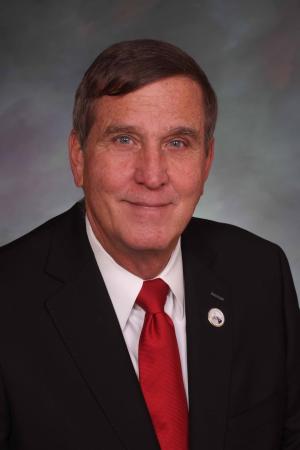
Peace officer-involved shooting or fatal use of force - law enforcement agency policies. Law enforcement agencies must develop policies to support officers involved in a shooting or fatal use of force. The policies must address pre-incident training and preparation, support for the officer at the scene of the incident, post-incident support and services, guidelines for temporary leave or duty reassignment, and guidelines for return to duty. The policies must be completed by January 1, 2020. Law enforcement agencies are required to review the policies on a biennial basis.(Note: This summary applies to this bill as enacted.) Read More
Sponsored bills
School employees - background checks - fingerprinting. Under current law, school employees are required to undergo a fingerprint-based background check. In most statutes, the fingerprints can be taken by a qualified law enforcement agency, an authorized employee of the school or school district, or a third party approved by the Colorado bureau of investigation, but a few statutes do not authorize fingerprints to be taken by an authorized school or school district employee. The act adds that authorization to those statutes. The act requires a law enforcement agency that has fingerprinting equipment that meets federal bureau of investigation image quality standards to take the fingerprints of an applicant if an approved third-party vendor is not operating within 20 miles of a school district, charter school, or nonpublic school in the agency's jurisdiction. The act states that a school or school district employee can use any fingerprinting equipment that meets the federal bureau of investigation image quality standards.(Note: This summary applies to this bill as enacted.) Read More
Food safety - produce - regulation - continuation under sunset law. The act establishes a state law to implement federal regulations regarding produce safety on farms. To implement this, the act: Authorizes the commissioner of agriculture to enter into a cooperative agreement with the United States food and drug administration and seek, accept, and expend federal funds; Authorizes the commissioner to cease implementing the state law if the commissioner does not receive adequate federal funding; Requires farms that are subject to federal law, selling more than approximately $25,000 of produce annually on average over a 3-year period, to register with the commissioner; Requires the commissioner to promulgate rules adopting 21 CFR 112, concerning produce safety, and gives the commissioner rule-making authority to administer the act; Authorizes the commissioner to enter farms and farm facilities during regular business hours to implement or enforce the act if the commissioner obtains consent from the farm or an administrative search warrant; Authorizes the commissioner to inspect records during regular business hours to implement or enforce the act and to subpoena witnesses and records; Authorizes the commissioner to issue cease-and-desist orders; Prohibits an officer, employee, or agent of the commissioner from misusing information gained during the course of the person's duties under the act; Authorizes the commissioner to impose administrative penalties; If requested, requires the commissioner to hold a hearing to issue a cease-and-desist order or impose an administrative penalty, and this process is subject to judicial review; Authorizes the commissioner to enforce cease-and-desist orders and administrative penalties in court; and Repeals these provisions in 2034, but requires a sunset review before the repeal.(Note: This summary applies to this bill as enacted.) Read More

Athletic trainers - regulation - change from registration to licensing. The act changes the terms describing the regulation of athletic trainers from "registration" to "license" and "licensure" and from "registrant" and "registered athletic trainer" to "licensee".(Note: This summary applies to this bill as enacted.) Read More

The bill specifies that a motor vehicle does not fail an emissions inspection solely because a check engine light is illuminated on the motor vehicle's dashboard. (Note: This summary applies to the reengrossed version of this bill as introduced in the second house.) Read More
Read More
Current law requires the sheriff of each county to obtain peace officer certification within one year of taking office. The bill modifies this provision to require the sheriff to have a valid certification or provisional certification from the Colorado peace officer standards and training board in order to be nominated, elected, or appointed to the office of sheriff.(Note: This summary applies to this bill as introduced.) Read More
Current law allows specified intervening professionals to transport to a treatment facility any person who appears to be in need of an immediate evaluation for treatment of a mental health disorder to prevent physical or psychiatric harm to others or to himself or herself. The authority to involuntarily hold such a person in custody expires upon the delivery of the person to the facility. The bill adds language to clarify that the authority to hold the person remains in effect until the evaluation is completed and a determination is made concerning the need for continued emergency evaluation and treatment.(Note: This summary applies to this bill as introduced.) Read More
The bill prohibits the air quality control commission from adopting motor vehicle emission standards that are more stringent than federal standards and from adopting the California motor vehicle emission standards and test procedures unless they are the same as the federal standards.(Note: This summary applies to this bill as introduced.) Read More