

Current law provides for a diploma endorsement of biliteracy by completing certain educational requirements in English in addition to a second language. The act changes the educational requirements for the biliteracy program and creates a diploma endorsement for bilingualism for graduating high school students. The act allows high school students in local education providers that do not offer the biliteracy or the bilingualism program to access the program through other local education providers or a state institution of higher education. If the student's local education provider does not offer and chooses not to establish a program that offers the endorsement that the student is seeking, the student's local education provider may enter into an agreement with another local education provider or state institution of higher education that offers the endorsement that the student is seeking. A local education provider or state institution of higher education may charge a fee to provide the diploma endorsement program. The fee must reflect the actual and indirect costs of running the diploma endorsement program. The enrolled student's local education provider must pay the fee on behalf of the student.(Note: This summary applies to this bill as enacted.)
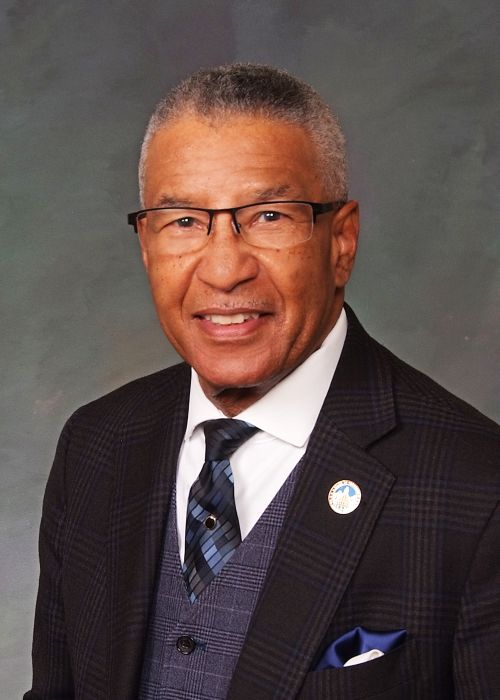
Sen. Tony Exum
Sponsored bills
The act requires an investor-owned utility (utility) to establish a percentage-of-income payment plan program (PIPP program) to assist income-qualified residential utility customers with utility costs. An income-qualified utility customer is eligible for the PIPP program if the customer meets the income eligibility criteria, lives in the service area of the utility, and either submits an application to the utility or is referred by another income-eligible assistance program offered by the department of human services, the Colorado energy office, or another energy assistance program approved by the public utilities commission (commission). A utility must approve or deny a customer's application for participation in the PIPP program within 30 days. The utility bill for a customer enrolled in a utility's PIPP program is capped at a specific percentage of the customer's household income, typically ranging from 2% to 6% of the customer's household income depending on the heating source provided and the size of the utility. The difference between a customer's actual utility bill and their PIPP program bill is covered by a fixed credit, which can be an up-front annual credit or an equal monthly credit to the customer's utility bill. The act also establishes arrearage credits for customers in the PIPP program, which are applied to eliminate a customer's preexisting debt prior to the customer's enrollment in the PIPP program. A utility's PIPP program is funded through a 'PIPP charge' itemized on all customer bills. The amount of the PIPP charge is established by the commission by rule for the utility. A utility must submit an annual report related to the utility's PIPP program to the commission. The report must include the following information:The PIPP charge revenue collected by the utility;Any amount contributed to the PIPP program by the utility from shareholder profits;A calculation of administrative costs associated with implementing and administering the PIPP program;The amount of fixed monthly or annual credits provided to customers in the utility's PIPP program; andThe amount of arrearage credits provided to customers in the PIPP program. The act exempts products fueled by propane and products used exclusively for installation in manufactured homes from emissions standards adopted by the Colorado department of public health and environment related to heating and water heating appliances until January 1, 2031. The act extends the deadline by which money in the 'Infrastructure Investment and Jobs Act' cash fund may be appropriated from July 1, 2028, until July 1, 2031.(Note: This summary applies to this bill as enacted.)
The act requires the department of health care policy and financing and the behavioral health administration to publish on each department's website an easily accessible list of secure transportation providers that have contracts with managed care entities and behavioral health administrative services organizations, as applicable.(Note: This summary applies to this bill as enacted.)
Under current law, the Colorado homeless contribution tax credit (credit) may only be claimed through state income tax year 2026. The act amends the credit to allow taxpayers to claim the credit through state income tax year 2030.(Note: This summary applies to this bill as enacted.)
The act allows the division of fire prevention and control to seek, accept, and expend gifts, grants, or donations to implement the requirements of the firefighter behavioral health benefits program.(Note: This summary applies to this bill as enacted.)
Beginning on or before July 1, 2028, the act extends certain application, accounting, and notice provisions already in place for federal survivor benefits awarded to a child or youth who is in foster care (child or youth) to federal supplemental security income benefits (SSI), which are monthly payments awarded to a child or youth with a disability and limited resources. The act adds requirements for a county department of human or social services (county department) to follow specified procedures for identifying a child or youth with a disability who may qualify for SSI and for documenting the disability. If the county department determines that a child or youth may be eligible to receive SSI, the county department is required to initiate the application process within 45 days after receiving certain information. If a child or youth is receiving SSI, the county department must document how the money is spent in the state's child welfare case management system. If legal custody of a child or youth receiving SSI or federal survivor benefits is transferring from a county department to another individual, the act requires the county department to reassess the designation of the representative payee or fiduciary receiving and managing federal benefits on behalf of the child or youth. The reassessment must be performed in consultation with interested parties and in compliance with federal requirements.(Note: This summary applies to this bill as enacted.)
The act authorizes a local government or a special district (local government) to enter into an agreement with one or more entities for the purpose of providing the local government with service from a thermal energy network. A local government that is authorized by law to issue bonds may issue bonds for the purpose of financing thermal energy infrastructure, interconnections, or customer connections within the jurisdiction of the local government. The act increases the net electric generating capacity of a community geothermal garden from 5 megawatts to 25 megawatts. The act requires the Colorado energy and carbon management commission (commission) and the Colorado geological survey to collect data and information related to geological resources in the state. The commission shall make recommendations to encourage safe and effective development of geothermal resources and report those recommendations to the general assembly on or before November 15, 2026. The act requires investor-owned electric utilities (utilities) to identify small-scale geothermal projects and large-scale geothermal projects (geothermal projects). The utility must solicit proposals for the development of small-scale geothermal projects of up to 25 megawatts of net electric generating capacity and large-scale geothermal projects that are greater than 25 megawatts of net electric generating capacity. The utility shall submit applications for the development of the geothermal projects to the public utilities commission if the utility receives a bid in response to the request for proposals. The public utilities commission must review the application and approve, conditionally approve, deny, or modify the application within 120 days after receiving the application.(Note: This summary applies to this bill as enacted.)
Risk assessments assess a parolee's criminogenic needs and risk of recidivism and are used to guide parole supervision planning, identify appropriate interventions, and establish parole supervision levels or categories. The act requires the department of corrections (department) to establish a risk assessment quality review team to develop policies and implement practices that determine whether risk assessments are completed accurately and consistently and to ensure a sustained process of review and training. For its 'SMART Act' hearing beginning in 2027, and each year thereafter, the department is required to include information concerning reviewed risk assessments, including findings and measures implemented to mitigate recent high error rates in risk assessments. The act clarifies that risk assessment outputs are criminal justice records for purposes of public inspection. The act prohibits an agreement that prohibits the disclosure of information in a risk assessment output that is subject to disclosure under the law.(Note: This summary applies to this bill as enacted.)
The act expands the definitions of 'grandparent' and 'great-grandparent' in the context of court-ordered family time to account for situations in which the child's father or mother is deceased. To align with changes enacted in 2023 that address kinship and relative placements more broadly, the act repeals language specific to grandparent placements in child welfare cases and the types of evidence a court considers in connection with a grandparent's past abusive or neglectful conduct. When a child or youth is removed from the home, the act requires the court to prioritize the child's or youth's temporary placement with a relative or kin, unless the court finds by a preponderance of the evidence that temporary placement with the relative or kin is not in the best interests of the child.(Note: This summary applies to this bill as enacted.)
The act allows an injured person to bring a cause of action for claims of injury caused by sexual orientation or gender identity change efforts (efforts) against a licensed mental health professional and allows the cause of action to be commenced at any time without limitation. Specifically, the act applies to a civil cause of action brought against a licensed mental health professional who seeks to direct a patient toward a predetermined sexual orientation or gender identity outcome or eliminate or reduce sexual or romantic attractions or feelings toward individuals of a particular sex or gender. The act permits the injured individual, or the individual's personal representative or estate if the individual is deceased, to recover economic, noneconomic, and exemplary damages, and any other damages deemed appropriate by the court. A cause of action may be brought as a survival action within 5 years after the death of the person who underwent efforts.(Note: This summary applies to this bill as enacted.)