SB 2 Colorado Senate · 2026 Regular Session

Energy Affordability

Summary
The act requires an investor-owned utility (utility) to establish a percentage-of-income payment plan program (PIPP program) to assist income-qualified residential utility customers with utility costs. An income-qualified utility customer is eligible for the PIPP program if the customer meets the income eligibility criteria, lives in the service area of the utility, and either submits an application to the utility or is referred by another income-eligible assistance program offered by the department of human services, the Colorado energy office, or another energy assistance program approved by the public utilities commission (commission). A utility must approve or deny a customer's application for participation in the PIPP program within 30 days.     The utility bill for a customer enrolled in a utility's PIPP program is capped at a specific percentage of the customer's household income, typically ranging from 2% to 6% of the customer's household income depending on the heating source provided and the size of the utility. The difference between a customer's actual utility bill and their PIPP program bill is covered by a fixed credit, which can be an up-front annual credit or an equal monthly credit to the customer's utility bill. The act also establishes arrearage credits for customers in the PIPP program, which are applied to eliminate a customer's preexisting debt prior to the customer's enrollment in the PIPP program.     A utility's PIPP program is funded through a 'PIPP charge' itemized on all customer bills. The amount of the PIPP charge is established by the commission by rule for the utility. A utility must submit an annual report related to the utility's PIPP program to the commission. The report must include the following information:The PIPP charge revenue collected by the utility;Any amount contributed to the PIPP program by the utility from shareholder profits;A calculation of administrative costs associated with implementing and administering the PIPP program;The amount of fixed monthly or annual credits provided to customers in the utility's PIPP program; andThe amount of arrearage credits provided to customers in the PIPP program.      The act exempts products fueled by propane and products used exclusively for installation in manufactured homes from emissions standards adopted by the Colorado department of public health and environment related to heating and water heating appliances until January 1, 2031.     The act extends the deadline by which money in the 'Infrastructure Investment and Jobs Act' cash fund may be appropriated from July 1, 2028, until July 1, 2031.(Note: This summary applies to this bill as enacted.)
Bill status signed all 5 stages cleared
Introduction
Jan 2026
Committee Review
Apr 2026
Senate Passage
May 2026
House Passage
May 2026
Signed into Law
Jun 2026
Introduced Jan 14, 2026 Signed Jun 2, 2026
Maddy AI version diff · 5 comparisons

What changed between versions

Rerevised Final Act · 5 edits · May 20, 2026
MODERATE
The bill was reorganized from a 'Rerevised' draft to a 'Final Act' ready for the Governor's signature, removing internal committee tracking and bill summary notes. Substantively, the new text clarifies that utilities must establish a Percentage-of-Income Payment Plan Program (PIPP) for residential customers, defining eligibility based on income criteria and allowing enrollment through direct application or referrals from other assistance programs.
Scope change
The bill's scope remains focused on establishing a PIPP for investor-owned utilities in Colorado, but the final text explicitly expands the referral eligibility to include programs from the Department of Human Services, the Colorado Energy Office, and other commission-approved energy assistance programs.
TECHNICAL

Removed internal legislative markers such as session dates, committee names, and bill summary notes that were present in the draft version.

DEFINITION

Added precise legal definitions for key terms including 'Administrative Costs' (capped at 10% of fixed credits or $10,000), 'Fixed Credit', and 'Unaffordable Portion' to ensure consistent application.

REQUIREMENT

Mandated that investor-owned utilities publish specific information on their websites regarding the PIPP program, including income eligibility, application processes, and charge amounts.

ELIGIBILITY

Clarified that applicants can enroll in the PIPP either by submitting a direct application or by being referred by other income-eligible assistance programs.

Stated that applicants are not required to make a payment on their account as a condition of being accepted into the program.

Floor votes

How they voted

This bill passed the Senate by voice vote (no roll call recorded).
Full legislative history

Actions timeline

Total actions
16
Key actions
7
Committee
3
Amendments
1
Jun 2, 2026
Signed into law
Governor Signed
executive
May 21, 2026
Lower · Passed
Signed by the Speaker of the House
lower
May 21, 2026
Upper · Passed
Signed by the President of the Senate
upper
May 13, 2026
Introduced
Senate Considered House Amendments - Result was to Concur - Repass
upper
May 12, 2026
Lower · Passed
House Third Reading Passed - No Amendments
lower
Apr 30, 2026
Lower · Passed
House Committee on Energy & Environment Refer Unamended to House Committee of the Whole
lower
Apr 20, 2026
Introduced
Introduced In House - Assigned to Energy & Environment
lower
Apr 17, 2026
Upper · Passed
Senate Third Reading Passed - No Amendments
upper
Apr 10, 2026
Upper · Passed
Senate Committee on Appropriations Refer Unamended to Senate Committee of the Whole
upper
Mar 11, 2026
Committee
Senate Committee on Transportation & Energy Refer Amended to Appropriations
upper
Jan 14, 2026
Introduced
Introduced In Senate - Assigned to Transportation & Energy
upper
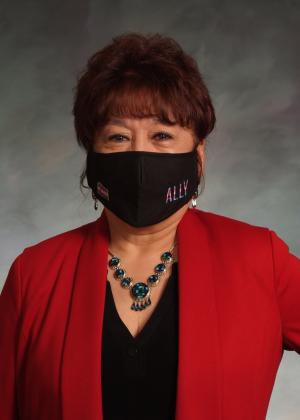
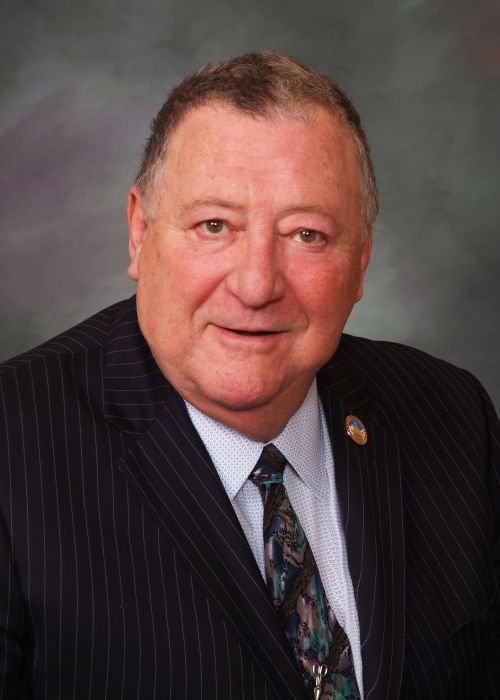
4 primary · 25 co-sponsors

Sponsors