

The act prevents a pharmacy benefit manager (PBM) from prohibiting a rural independent pharmacy from using a private courier or a delivery service to deliver a prescription drug to a patient. A PBM is required to reimburse a rural independent pharmacy for a prescription drug in an amount not less than the national average drug acquisition cost for the dispensed prescription drug ingredients, plus pay a dispensing fee. When a PBM conducts an audit of a rural independent pharmacy and the audit results in a recoupment of more than $1,000 or a penalty of more than $1,000, the PBM must: Electronically notify the rural independent pharmacy of the rural independent pharmacy's rights to appeal at least 30 days before the recoupment of funds; If the rural independent pharmacy does not respond to the electronic notification within 30 days after the electronic notification, again electronically notify the rural independent pharmacy of the rural independent pharmacy's rights to appeal at least 30 days before the recoupment of funds; and If the rural independent pharmacy does not respond to the second electronic notification within 30 days after the second electronic notification, serve process on the rural independent pharmacy notifying of the rural independent pharmacy's rights to appeal at least 30 days before the recoupment of funds. The act allows a rural independent pharmacy to operate without being under the direct charge of a pharmacist if the initial interpretation and final evaluation of the prescription is done by a state-licensed pharmacist in person or remotely. (Note: This summary applies to this bill as enacted.)
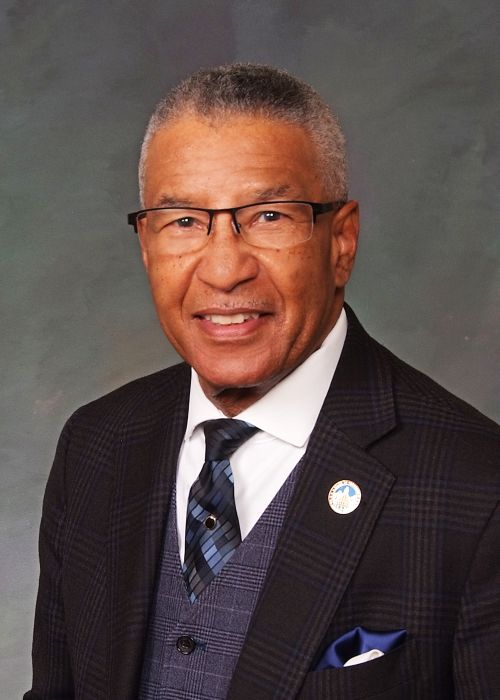
Sen. Tony Exum
Sponsored bills
The act authorizes the department of health care policy and financing (HCPF) to seek and accept gifts from private or public sources for the primary care fund. The act authorizes a federally qualified health center (FQHC) to establish a separate subsidiary company for the purpose of providing fee-for-service services outside of the FQHC's standard cost report if the subsidiary is providing fee-for-service services that have historically been provided and reimbursed on a fee-for-service basis and if HCPF determines that the subsidiary's reimbursements would be budget neutral. Upon receiving any necessary federal authorization, HCPF is required to reimburse a subsidiary of an FQHC on a fee-for-service basis for services that are eligible for fee-for-service reimbursement. A subsidiary that receives reimbursement is authorized to pass through money received from the reimbursement directly to the FQHC operating as the subsidiary's parent corporation. Services reimbursed to an FQHC's subsidiary are excluded from the FQHC's cost report. The act requires HCPF to exclude all costs associated with a subsidiary company from the calculation of a FQHC's reimbursement rates and requires a FQHC that establishes a separate subsidiary company to include the costs associated with the subsidiary in its cost report that is necessary to calculate reimbursement rates. (Note: This summary applies to this bill as enacted.)
On or after July 1, 2025, the act requires a person, before commencing a project to install or substantially repair a contiguous fence of at least a specified certain size in the Sangre de Cristo land grant lands (covered fencing project), to submit an application for the covered fencing project to the local government with jurisdiction over the covered fencing project (application) if the local government has opted into the act's requirements. No later than 14 days after the local government's receipt of an application, the local government must publish notice of the application on the local government's website. No later than 60 days after the local government's receipt of an application, the local government must either approve or reject the application based on certain criteria; except that, despite the criteria, a local government may approve an application if it determines that the benefits of the covered fencing project outweigh the harms. If the local government finds that a covered fencing project presents no significant environmental impacts, then the local government shall not require a person commencing the covered fencing project to submit an application or pay a fee. The act does not apply to a covered fencing project that is necessary for a public utility or department of transportation project, an energy sector public works project, the safety or security of a public school or prison, or fences provided by the division of parks and wildlife. (Note: This summary applies to this bill as enacted.)
The act creates the geologic storage stewardship enterprise (enterprise) in the department of natural resources (department) for the purpose of: Determining the amount of annual stewardship fees; Funding the long-term stewardship of geologic storage facilities in the state; Funding the plugging, abandoning, reclaiming, and, as necessary, remediating of orphaned geologic storage facilities in the state if the energy and carbon management commission (commission), after notice and a hearing, determines that available financial assurance is insufficient; and Ensuring that costs associated with long-term stewardship of geologic storage facilities are borne by geologic storage operators in the form of stewardship fees. The act creates the geologic storage stewardship enterprise board (enterprise board) to administer the enterprise. The act requires each geologic storage operator to pay an annual stewardship fee for each ton of injection carbon dioxide that the geologic storage operator injects in the state. The commission collects the stewardship fee on the enterprise's behalf. All money collected as stewardship fees is credited to the geologic storage stewardship enterprise cash fund (fund), which is created in the act. Money in the fund is continuously appropriated to the enterprise. The enterprise shall adopt rules as necessary to implement the act and the commission may adopt rules to implement its collection of stewardship fees on behalf of the enterprise. The willful violation of a commission rule, regulation, permit, or order concerning class VI injection wells used for injecting carbon dioxide for underground storage is a misdemeanor subject to a fine of $5,000 to $7,000 per day for each act of violation. To approve a geologic storage operator's request to close a site, the commission must first determine that the geologic storage operator has contributed money to the fund. Upon the commission's approval of a site closure: Ownership of the injection carbon dioxide and ownership of any remaining facilities transfer to the state without payment of additional compensation; Except in specified circumstances, the geologic storage operator is released from all regulatory liability associated with the continued storage of the injection carbon dioxide and the long-term stewardship of the associated geologic storage facility; and The enterprise undertakes long-term stewardship of the injection carbon dioxide and any associated geologic storage facility. The act makes several updates to laws concerning the administration of underground geothermal resources, including: Clarifying that "nontributary groundwater" does not include "designated groundwater", as these terms are defined in current law; Exempting certain geothermal operations from needing a well permit from the state engineer; Requiring the state engineer to notify the operator of a prior geothermal operation of an application for a proposed well, and allowing the operator the opportunity to request a hearing if the application causes concern for material injury to the prior geothermal operation; Renaming the state board of examiners of water well construction and pump installation contractors as the "state board of examiners of water well and ground heat exchanger contractors" (state board of examiners); Establishing that the authority to regulate shallow geothermal operations is shared by the state engineer and the state board of examiners; and Regulating ground heat exchanger contractors in the same manner that currently exists for water well construction contractors and pump installation contractors.(Note: This summary applies to this bill as enacted.)
The Tony Grampsas youth services grant program (grant program) provides grants to community-based programs to reduce incidents of youth crime and violence. The youth mentoring program, the student dropout prevention and intervention program, and the student before-and-after school project (collectively, the "programs") were created within the grant program. The act repeals the individual programs and instead lists the programs as allowable uses for grant money under the grant program. The act transfers certain responsibilities from the Tony Grampsas youth services board (board) to the department of human services (department). The act repeals local public-to-private funding match requirements. The act requires each entity that receives a grant to annually report certain information to the department; except that an entity that has an operating budget of less than $1.5 million, or that receives a grant in the amount of not more than $25,000, is not required to report on the outcomes achieved by the services provided and the methods used to track the outcomes. The act decreases the appropriation from the marijuana tax cash fund to the youth mentoring services cash fund by $500,000 and reappropriates the money to the grant program by $500,000. The act decreases the appropriation from the youth mentoring services cash fund to the grant program by $504,120. (Note: This summary applies to this bill as enacted.)
Under current law, certain provisions are required in a public school contract (contract), and if the provisions are omitted from a contract, the law deems that the provisions are automatically included in the contract. The act clarifies that the list includes that a contractor is required to comply with accessibility standards adopted by the office of information technology for an individual with a disability. The act adds a provision to the list to require a contractor to indemnify, hold harmless, and assume liability on behalf of a public school contracting entity, the public school, and the public school's employees and agents, for all remedies for noncompliance with standards that ensure technology accessibility to persons with disabilities. The act requires that a contract or agreement entered into between a state agency or public entity and a contractor must require a contractor to comply with accessibility standards adopted by the office of information technology for an individual with a disability. Additionally, the contractor must indemnify, hold harmless, and assume liability on behalf of a state agency or public entity's officers, employees, and agents for all remedies for noncompliance with standards that ensure technology accessibility to persons with disabilities. If the provisions are omitted from a contract, the law deems that the provisions are automatically included in the contract. (Note: This summary applies to this bill as enacted.)
The statewide welcome, reception, and integration grant program provides grants to community-based organizations that provide culturally and linguistically appropriate navigation of services to migrants who have arrived in the United States within the past year and do not qualify for federal support services or refugee resettlement assistance benefits. The act removes the requirement that a migrant must have arrived in the United States within the past year and instead requires community-based organizations to prioritize assisting migrants who have arrived in the United States within the past 3 years. (Note: This summary applies to this bill as enacted.)
The act implements the recommendation of the department of regulatory agencies in its 2024 sunset review and report on the rural alcohol and substance abuse prevention and treatment program by continuing the program until September 1, 2030. (Note: This summary applies to this bill as enacted.)
The act permits the state, a county, a city and county, a school district, or a municipality to, with approval from a school district's board of education, install and utilize automated vehicle identification systems (system) on the school district's school buses to detect a driver of a vehicle that overtakes a stopped school bus with actuated visual signal lights in violation of current law. A school district that installs and utilizes a system for this purpose must enter into a memorandum of understanding with one or more law enforcement agencies. If a system detects a violation, the state, a county, a city and county, or a municipality may impose a civil penalty of up to $300. The act creates a rebuttable presumption that when an image produced by a system includes an electronic indicator signifying that a school bus's visual signal lights are actuated, the visual signal lights are presumed to be actuated and operational and the school bus is presumed to be stopped to receive or discharge school children. The act mandates that the fines collected through the use of the system must not be used as the basis for the compensation to the system manufacturer or vendor and that the compensation must not be based exclusively upon the number of citations issued or revenue generated by the system.(Note: This summary applies to this bill as enacted.)
In 2023, Senate Bill 23-261 created a new definition of "direct care consumer" and defined the term as "an eligible person, as defined in section 25.5-6-1101 (4)". That same year, Senate Bill 23-289 amended the definition of "eligible person" in section 25.5-6-1101 (4), leaving an incorrect reference to "eligible person" in Senate Bill 23-261. The act makes technical changes to correct the incorrect reference. (Note: This summary applies to this bill as enacted.)