

Existing law permits an individual to request a self-pay estimate of the total cost of an anticipated health-care service (self-pay estimate) from the designated billing or patient services personnel representing the health-care provider or health-care facility providing the service. Unless the patient suffers a medical emergency or other unforeseen circumstance that affects the services provided, statute states that the final cost of the health-care service must be no more than 15% higher than the self-pay estimate or $400, whichever is less. The act corrects the mistake in the statutory language by clarifying that the $400 qualifier relates to the permissible dollar amount above the cost estimated in the self-pay estimate rather than the qualifier itself reflecting the maximum allowable cost of the health-care service, regardless of the service provided. Further, when referencing the exception in statute that, due to an emergency or unforeseen circumstance, the total cost of services may exceed the self-pay estimate by more than 15% or $400, the act removes the erroneous qualifier, "whichever is less", as that language is inapplicable when the exception applies. (Note: This summary applies to this bill as enacted.)
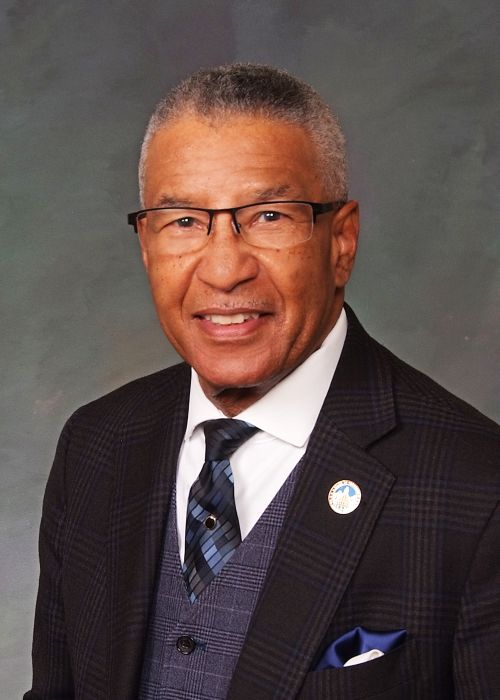
Sen. Tony Exum
Sponsored bills
The act creates the community schoolyards grant program (grant program) in the division of local government (division) within the department of local affairs (department). The grant program is a 2-part grant program that includes: The planning and design grant program (planning program), which awards up to $150,000 to each grant recipient selected by the division for the planning and design of a community schoolyard; and The capital construction and improvement grant program (construction program), which awards up to $850,000 to each grant recipient selected by the division for the capital construction of a community schoolyard. The purpose of the grant program is to address inequities in underserved and underfunded schools and communities, specifically communities socially or economically affected by the development, processing, or energy conversion of minerals and mineral fuels subject to taxation, by: Making community schoolyards accessible to the broader community outside of school hours; Improving physical activity and mental health opportunities for students and community members; and Incorporating natural landscapes, natural playgrounds, and recreational spaces that promote adaptation; sustainability; resilience; and hands-on learning across subject matters, including science, technology, engineering, arts, and mathematics. On or before January 15, 2026, the division shall implement a timeline for the planning program and the construction program (programs), which must include, at a minimum: Announcing each of the programs; Accepting applications from eligible applicants for each of the programs; Selecting the grant recipients for each of the programs; Distributing grant money to the grant recipients for each of the programs; and Establishing reporting timelines and requirements for each of the programs. On or before January 15, 2028, the division shall compile a report summarizing the grant recipient reports from the programs. The division shall submit the report to the education committees of the house of representatives and senate; the house of representatives transportation, housing, and local government committee; and the senate local government and housing committee, or their successor committees. For the 2025-26 and 2026-27 state fiscal years, the department shall use $4 million from the local government mineral impact fund or the local government severance tax fund for the grant program. The division may use up to 5% of the funds it receives for the grant program to pay for the direct and indirect costs of administering the grant program. The division may adopt rules to carry out the purposes of the grant program. The grant program is repealed, effective January 1, 2030. For the 2025-26 state fiscal year, $50,000 is appropriated to the department for use by the division from the reappropriated funds from the local government mineral impact fund and the local government severance tax fund. (Note: This summary applies to this bill as enacted.)
The act requires that, immediately after a railroad notifies the state's watch center in the department of public safety (watch center) of an emergency involving a train, the watch center must notify the public utilities commission (commission) and the office of rail safety (office) of the incident. The commission is required to submit a report to specified committees of the general assembly on the information reported by railroads regarding an emergency involving a train. A crew member of a train operated by a railroad may communicate with first responders during an emergency situation after notifying the railroad dispatch. A crew member has discretion in determining the appropriate response to the emergency situation, including cutting the railroad crossing. A railroad employee or a crew member is immune from civil liability and is not liable in civil damages for actions taken in good faith in the course of a response to an emergency situation involving a train. The act eliminates the shared authority that the commission, the department of public safety, and the department of transportation had to inspect and investigate railroads and grants the commission alone the authority to engage in inspection, investigation, and enforcement activities regarding the following railroads: A class I railroad; A railroad operating on any line that was used by class I railroads as of July 1, 2024; and A passenger railroad. The act requires the office to gather, analyze, and assess information, including: Data to create a more comprehensive understanding of railroad safety; Wayside detector information; Information regarding blocked public crossing locations; Information regarding railroad maintenance activity; An assessment of the state's ability to respond to a large-scale release of hazardous materials from railroad transportation; The best practices for ensuring financial responsibility for response, cleanup, and damages from major rail events, including reviewing best practices from other states; and Communication issues impacting railroad lines in the state. Beginning on or before July 1, 2027, a railroad regulated by the commission is required to pay a fee to cover the costs incurred by the commission and the office in relation to the act. The commission shall determine a methodology for calculating the fee by rule, and the commission may include specified criteria in the calculation. The total amount collected pursuant to the annual fee must not exceed $2,900,000 in a calendar year. A railroad regulated by the commission must pay the fee in equal quarterly installments and is subject to penalties and interest if they fail to timely pay the fee. (Note: This summary applies to this bill as enacted.)
The act extends the Emily Keyes - John W. Buckner organ and tissue donation awareness fund indefinitely. (Note: This summary applies to this bill as enacted.)
Section 1 of the act requires, in addition to othr existing uses, that interest and income earned on the investment of the money in the public school fund to be used to pay for the costs of administering a newly created shared equity down payment assistance program. Section 2 requires at least one member of the public school fund investment board (board) to have expertise in community investments, requires the board to direct the state treasurer to securely invest money deposited in the public school fund in a manner that prioritizes specified new investment objectives, and authorizes the board to enter into contracts with investment advisors or other investment professionals to provide advice on community investments. Section 3 extends the time frame under which the state treasurer may make up a loss of principal to the public school fund by taking actions which lead to gains in the fund from 18 to 24 months. Section 4 creates a new community investment portfolio (portfolio) within the public school fund, and requires the state treasurer to invest at least 20% of the public school fund's value into the community investment portfolio by July 1, 2032. Money in the portfolio must be invested in community investments, and allowable community investments include: Bonds issued by Colorado school districts and charter schools; Certificates of participation issued by Colorado school districts and charter schools; Mortgage pass-through securities and collateralized mortgage obligations secured by residential real estate, the majority of which is owned by public school employees; Loans to the Colorado middle income housing authority for a revolving loan fund that funds rental housing developments that include preferences for public school employees; Bonds issued by the middle income housing authority that fund rental housing developments which include preferences for public school employees; Bonds or mortgage-backed securities issued by the Colorado housing and finance authority that fund rental housing developments that include preferences for public school employees or mortgages secured by residential real estate, the majority of which is owned by public school employees; Mortgage revenue bonds that support public school employee mortgages with interest rates of 3% or less; Loans to community development financial institutions or nonprofits with a history of providing affordable home ownership financing that fund: Housing that includes preferences for public school employees; or Low-interest mortgages secured by residential real estate that is owned by public school employees; Down payment shared appreciation products secured by residential real estate that is owned by public school employees; and Other investments that support public purpose of the portfolio. The educator first home ownership program (program) is created within the portfolio. Subject to a specified limitation, the treasurer shall invest the following amounts in the program by the following dates: By July 1, 2028, the greater of 6% of the fund's value or $100 million; and By July 1, 2030, the greater of 12% of the fund's value or $200 million. The treasurer shall aim to invest a target of 75% of the money in the program into the shared equity down payment assistance program for public school employees. The shared equity down payment assistance program must be established by July 1, 2026. Once the shared equity down payment assistance program is established: The public school fund investment board shall purchase from the program manager the mortgage products created through the shared equity down payment assistance program; and The public school investment board may provide notice of any discontinuation of future investments that the program manager has not already committed to the shared equity down payment assistance program, which notice must be provided at least 6 months prior to discontinuation. The treasurer shall aim to invest a target of 25% of the money in the program into allowable community investments. The program manager shall establish underwriting criteria and other guidelines for the shared equity down payment assistance program so that the shared equity down payment assistance program: Prioritizes first-time home buyers that use the home as a primary residence; Provides shared equity down payment assistance to public school employees and aims to help as many public school employees as possible achieve affordable home ownership; and Allows appreciation-sharing between the shared equity down payment assistance program and the borrower. Unless investments in the shared equity down payment assistance program have been discontinued and there is no fund money invested in the shared equity down payment assistance program, the program administrator shall present an annual report to the board on program outcomes. For the 2025-26 state fiscal year, section 5 appropriates $375,900 from interest or income earned on the investment of the money in the public school fund to the department of the treasury. (Note: This summary applies to this bill as enacted.)
The act implements and describes the operation of the pediatric primary care practice program (primary care program) in the department of early childhood (department). The purpose of the primary care program is to provide funding and support to a pediatric primary care medical practice (medical practice) to integrate into the medical practice a professional who specializes in whole-child and whole-family health and well-being. The department shall contract with an implementation partner (primary care partner) to implement, operate, and administer the primary care program. The primary care partner shall create and implement a team-based, research-informed pediatric primary care practice evidence-based model (evidence-based model). The evidence-based model must be a comprehensive approach to guide pediatric care medical practices to deliver services to children from birth to 3 years of age and their families. The primary care partner shall: Establish an application and selection process with the department for select medical practices to participate in the primary care program; Review applications from medical practices and select applicants to participate in the primary care program; Work with selected applicants to complete assessments on the applicants' community health-care systems, health and well-being practices, and related concerns; and Train and support the medical practices selected to participate in the primary care program to maintain fidelity to the evidence-based model. The executive director of the department may adopt rules to carry out the purposes of the primary care program. (Note: This summary applies to this bill as enacted.)
Current law states that rules adopted by the marijuana enforcement division (division) may include certain subjects. The act states that: Rules concerning record keeping may include certain information and must include certain other information; and The rules may require medical marijuana products manufacturers or retail marijuana products manufacturers to use an approved licensed premises and approved equipment to manufacture and prepare products not infused with regulated marijuana for the purpose of quality control and research and development in the formulation of regulated marijuana products. If a license holder is required to maintain books and records in the seed-to-sale inventory tracking system, the license holder need not maintain duplicate copies of the books and records. If a license holder violates regulatory requirements, the division may require the license holder to maintain additional records. The act states that the division may adopt rules concerning identification cards for controlling beneficial owners, passive beneficial owners, or individuals who handle or transport regulated marijuana on behalf of license holders. Current law requires all applicants for an employee identification card to obtain a fingerprint-based criminal history check. The act requires only controlling beneficial owners and passive beneficial owners to obtain a fingerprint-based criminal history record check, and other employees must merely obtain a name-based judicial record check. The act requires that rules adopted by the division concerning video recording requirements must include rules to address specific aspects of such surveillance. The act authorizes the division to notify license holders by digital communication of their license expiration date. Current law authorizes marijuana cultivation facilities and marijuana products manufacturers to provide research and development units (R-and-D units) to managers and sets standards for the practice. The act reforms these standards with regard to labeling, testing, packaging, and tracking. The act also prohibits a facility or manufacturer from committing certain acts involving R-and-D units and requires the division to adopt rules concerning the issuance of R-and-D units to occupational licensees. The act repeals provisions that prohibit a person from: Having a controlling beneficial ownership, passive beneficial ownership, or indirect financial interest in a license that was not disclosed; Having day-to-day operational control over the business if the person isn't a Colorado resident; and Engaging in transfer of ownership without prior approval. The act authorizes the division to set and collect a fee to fulfill requests for copies of a license application. Current law requires a person that accepts a court appointment as a receiver, personal representative, executor, administrator, guardian, conservator, trustee, or any other similarly situated person for a medical marijuana business to notify the state and local licensing authorities of the appointment and apply for a finding of suitability. Current law also prohibits a person from possessing, operating, managing, or controlling a medical marijuana business on behalf of another except by court appointment . The act applies these laws to retail marijuana businesses. The act provides that on July 1, 2025, and July 1, 2026, the state treasurer will transfer $300,000 from the general fund to the marijuana entrepreneur fund. The appropriation to the division from the marijuana cash fund in the annual general appropriation act for the 2025-26 state fiscal year is decreased by $25,883 if certain conditions apply. The appropriation to the Colorado bureau of investigation from the Colorado bureau of investigation identification unit fund made in the annual general appropriation act for the 2025-26 state fiscal year is decreased by $252,645 if certain conditions apply. (Note: This summary applies to this bill as enacted.)
The act requires a metropolitan district that is a party to a lease or rental agreement that was effective as of January 1, 2025, or later and was filed with the county assessor's office in support of a claim for a property tax exemption based on the use of the property for purposes of the metropolitan district to file with the county assessor's office a statement (statement) describing: The metropolitan district's use of the leased property; The metropolitan district's authority to use the leased property for the metropolitan district's purposes; Any use of the leased property by a private person for private purposes; and Any disclosure filed by a member of the board of directors of the metropolitan district in accordance with certain laws that govern disclosures of conflicts of interest. If the statement includes a disclosure that relates to the leased property and is filed by a member of the board of directors of the metropolitan district in accordance with certain laws that govern disclosures of conflicts of interest, the county assessor shall, within 14 days of receipt of the statement, submit the statement to the metropolitan district's governing body. Within 63 days of receipt of the statement, the governing body shall issue a written decision including findings of fact and a conclusion as to whether the leased property is used for a public purpose. If the governing body concludes that the leased property is not used for a public purpose, the leased property is not exempt from taxation, and the county assessor shall implement the governing body's decision. The decision of the governing body is not subject to appeal and does not give rise to any private right of action. The act clarifies that a leasehold interest in real or personal property that is owned by a private person and that has been leased to the state or a political subdivision of the state, the use and possession of which has been leased back to a private person for private purposes, is taxable to the owner. (Note: This summary applies to this bill as enacted.)
The office of legislative workplace relations (OLWR) was established in 2019 as an entity within the office of legislative legal services to provide services to the general assembly, its members and employees, and the legislative services agencies. Specifically, the OLWR is directed to provide services related to employee relations, training, compliance, workplace culture, and workplace harassment, including investigations of complaints under the general assembly's policies on workplace expectations and workplace harassment. The act rebrands the OLWR as the legislative human resources division and directs the division to provide human resource services to the legislative branch, which includes the existing services required by law and additional services, such as benefits administration, compensation and classification, hiring and recruitment, and new employee onboarding, within available resources. (Note: This summary applies to this bill as enacted.)
The act creates a civil cause of action for a peace officer if the peace officer reports or discloses conduct that is in violation of, or the peace officer reasonably believes is in violation of, any law or policy and the report or disclosure is a contributing factor in the employer of the peace officer's decision to take adverse employment action against the peace officer. A peace officer may seek the following damages: Reinstatement; Back pay with interest; Any other equitable relief the court deems appropriate; Compensatory damages for other pecuniary losses, emotional pain and suffering, inconvenience, mental anguish, loss of enjoyment of life, and other nonpecuniary losses; and Reasonable attorney fees and costs. The act creates an affirmative defense to the action if the peace officer's employer would have taken the action that forms the basis of the suit against the peace officer based on a legitimate nonretaliatory basis. The action is not subject to the "Colorado Governmental Immunity Act". The statute of limitations to bring the action is 2 years. The act does not apply to an employee who provides false information or who does not follow internal reporting and administrative procedures related to whistleblower conduct. All law enforcement agencies shall provide a training to employees or a workplace posting, or both, regarding the requirements of the act. (Note: This summary applies to this bill as enacted.)