The state allows a student pursuing higher education who satisfies statutorily specified eligibility criteria to claim an income tax incentive for amounts paid for tuition and fees for qualifying academic semesters or terms that the student completes. The act clarifies the statute that provides for the income tax incentive to improve the administration, including data tracking and reporting, of the incentive. For the 2025-26 state fiscal year, $135,446 is appropriated from the general fund to the department of revenue for use by the taxation business group to implement the act. (Note: This summary applies to this bill as enacted.)
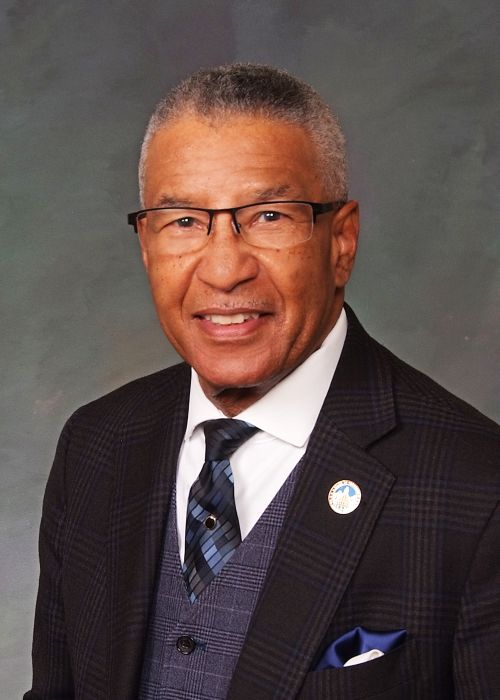
Sen. Tony Exum
Sponsored bills
Prior to taking enforcement actions to recover money owed to a unit owners' association (HOA) and related collection costs or attorney fees through the foreclosure of an association lien, the act requires the HOA to be in compliance with HOA lien or foreclosure laws (lien or foreclosure laws) and applicable lien or foreclosure provisions of the HOA's declaration, bylaws, articles, and rules and regulations (governing documents). If the HOA is not in compliance with the lien or foreclosure laws or the governing documents, the court may stay the foreclosure proceedings to grant the HOA reasonable time to come into compliance and shall consider the effect of the HOA's noncompliance if awarding the HOA attorney fees. For purposes of sending notices to unit owners relating to delinquent assessments or foreclosure actions, the HOA shall periodically request from a unit owner or the unit owner's designated contact an email address, a telephone number, and a cellular number for texts. An HOA's written policy concerning the collection of unpaid assessments must require the notice of deficiency that the HOA sends to a unit owner to include the following: An advisement that the unit owner may request a copy of the HOA's ledger verifying the amount owed, which copy of the ledger shall be sent to the unit owner no later than 7 business days after the request; An advisement that failure to pay a delinquent assessment could result in the HOA filing a lien and instituting foreclosure of the lien (foreclosure action) and that a foreclosure action could result in the sale of the unit at auction and the unit owner losing some or all of the unit owner's equity in the unit; and An advisement that free information relating to the HOA's collection of assessments and the HOA's ability to file a foreclosure action and a link to credit counseling information is available online through the HOA information and resource center (recourse center). At least 30 days prior to initiating a foreclosure action, the HOA must send notice of the HOA's intent to foreclose the association lien, including notice that the foreclosure of the lien will result in the sale of the unit at auction, which could result in the unit owner losing all or some equity in the unit; the unit owner may obtain credit counseling prior to foreclosure; and free online information relating to foreclosure by an HOA is available through the resource center. No later than 5 business days after the HOA initiates legal action to foreclose a lien and sell a unit at auction, the HOA shall provide the unit owner with notice that the unit owner has a right to cure the delinquency and to file a motion with the court to stay the sale of the property at auction. At any time after an HOA files an action for foreclosure of the HOA's lien on a unit, but prior to the date of auction, the unit owner may file a motion with the court to stay the auction of the unit to allow the unit owner to list the unit for sale at fair market value or at an alternate amount determined by the court. The court's order is in effect for 9 months after the date of the order. The court may extend the 9-month stay for good cause or upon proof that the sale of the unit is imminent. Proceeds from the sale will be held in escrow for the court to determine the distribution of the sale proceeds. As part of an HOA's annual registration (annual registration) with the director of the division of real estate in the department of regulatory agencies (director), an HOA shall submit the following information, which aggregated data must be included in the resource center's annual report: The number of unit owners 6 or more months delinquent in the payment of assessments during the preceding 12 month period; The number of judgments obtained against unit owners; The number of payment plans entered into with unit owners; and The number of foreclosure actions filed by the HOA and other information requested by the director.(Note: This summary applies to this bill as enacted.)
The act requires the state auditor to conduct or cause to be conducted performance audits (audits) of the air pollution control division in the department of public health and environment and the division of unemployment insurance in the department of labor and employment (divisions). The audits will determine whether each of the divisions effectively and efficiently performs and fulfills its statutory obligations. In addition, as part of the audits, the state auditor is required to: Determine whether a division complies with statute and its statutory purpose; Assess the impact of a division's processes on providing access to program benefits and, for the labor and employment division audit only, identify any division processes that may be unnecessary, unreasonable, or cause delays; Determine whether a division's staffing and funding levels are sufficient for it to efficiently and effectively perform its statutory duties and responsibilities, which, in for the air pollution control division audit only, must include assessment of how funding or staffing changes made at the state level might impact local governments; and Determine whether a division requested and was appropriated additional resources and whether the approval or denial of such a request impacted program implementation and timing of implementation. The initial audit of the air pollution control division must begin and be completed in calendar year 2026, with an additional audit occurring in calendar year 2031. The initial audit of the division of unemployment insurance must begin and be completed in calendar year 2027, with an additional audit occurring in calendar year 2032. Upon completion of an audit, the state auditor is required to submit a written audit report to the legislative audit committee. (Note: This summary applies to this bill as enacted.)
The act establishes visitation as a right for a person confined in a correctional facility (confined person). The department of corrections (department) may: Limit visitation for a confined person who is in restrictive housing or as a sanction following a conviction for a class 1 code of penal discipline violation; Reduce, but not eliminate, the number of visits available per week to a confined person as a result of an increase in the person's custody classification level; Temporarily deprive visitation as necessary for facility operations or for the safety of the facility, persons in the facility, and the general public; and Deny or cancel visitation for a confined person at any time as necessary to comply with requirements imposed by a court order, for victim safety, to prevent communication with a co-defendant, to preserve the integrity of a criminal investigation, to comply with treatment protocols, or for any other reason required by law. Video visits may supplement, but must not take the place of, in-person visits when in-person visits are permitted. If a confined person provides the department with reasonable notice that a requested visitation is for virtual attendance at a funeral or during or immediately following the birth of a child in the person's family, the act requires the department to make all reasonable efforts to allow the person to participate in the visitation via virtual attendance, or, if virtual attendance is not possible, via telephone. The department may adopt policies to govern visitations, including policies necessary to allow visitation as part of routine facility operations. The act states that it does not create a private right of action. The act permits a confined person to file a grievance with the department if the confined person alleges deprivation of visitation. The department is required to include information about visitation and grievances in its annual SMART Act hearing. (Note: This summary applies to this bill as enacted.)
Section 20 of article X of the state constitution (TABOR) defines "fiscal year spending" as not including either "damage awards" or "property sales". Although TABOR does not define either "damage award" or "property sale", the TABOR implementing statutes do. The act clarifies both of these definitions for state fiscal years commencing on or after July 1, 2024. The act clarifies that "damage award", as used for the purpose of determining whether specific money received by the state is subject to the TABOR limitation on state fiscal year spending, includes certain fines and monetary penalties imposed by the state. The act also clarifies that "property sale", as used for the purpose of determining whether specific money received by the state is subject to the TABOR limitation on state fiscal year spending, includes certain specified types of sales by the state. (Note: This summary applies to this bill as enacted.)
The act prohibits residential rental agreements, in relation to a tenant's death, from requiring acceleration of rent beyond the end of the month or more than 10 business days after the dwelling unit is vacated after notice to the landlord of the tenant's death, whichever is later. Further, the act prohibits the enforcement of terms in rental agreements that authorize liquidated damages or other penalties if the rental agreement is terminated before the end of its term due to the death of a tenant. The act authorizes a landlord to take possession of the dwelling unit without filing an eviction action or otherwise obtaining a court order if the personal representative of the tenant's estate notifies the landlord of the surrender of the premises or,30 days after the death of the tenant, rent remains unpaid or substantially all of the tenant's property has been removed. In addition, a landlord may retain a security or damages deposit sufficient to cover costs of damages caused by the death of the tenant. (Note: This summary applies to this bill as enacted.)
The act incorporates the federal "Uniform Code of Military Justice" (federal code) into the "Colorado Code of Military Justice" (state code), including specifically the punitive articles and general article of the federal code, which describe punishable offenses, and the statute of limitations that applies to charges brought pursuant to the state code. The act repeals sections of the state code that are duplicative of the incorporated federal code. Additionally, the act: Applies the state code to a member of the state military forces (member) at all times, except when the member is ordered to active federal service pursuant to title 10 of the United States Code; Clarifies a commanding officer's authority to impose nonjudicial punishment under the state code; Makes changes to the procedures that govern courts-martial, the punitive authority of courts-martial, and the review of the decisions of courts-martial; and If concurrent civilian and military jurisdiction exists over the same offense and a district attorney has filed felony charges against a member for the offense, requires the state military forces to defer felony prosecution of the member to the district attorney.(Note: This summary applies to this bill as enacted.)
The act imposes requirements related to money appropriated to the department of higher education to be used by the Auraria higher education center (AHEC) in the 2025-26 state fiscal year. Money appropriated for operational costs must be used as agreed upon by the constituent institutions in baseline service level agreements. Any service or performance level agreement that the AHEC enters into using money appropriated for the 2025-26 state fiscal year must: Be executed by all contracting parties no later than September 1, 2025; Clearly describe the services, service and staffing levels, and performance expectations that are contracted for; and Provide that, if costs for services exceed the prices provided for in the contract, those excessive costs will not be assumed or incurred until an additional contract is executed or the original contract is amended. In the 2025-26 state fiscal year, the AHEC shall manage all resources related to baseline service level agreements and goals and shall present quarterly updates to the constituent institutions regarding baseline service level agreements and goals. For other services for the 2025-26 state fiscal year that are not already contracted for in the baseline service level agreements, the AHEC shall establish fee structures, and the constituent institutions may enter into agreements with the AHEC for the provision of those services. The act requires the constituent organizations and the AHEC to contract with an independent third-party entity that shall conduct the Auraria comprehensive study (study). The constituent institutions and the AHEC shall agree upon which independent third-party entity will conduct the study before executing a contract to select the independent third-party entity. If the constituent institutions and the AHEC do not agree upon an independent third-party entity by August 1, 2025, the Colorado commission on higher education shall, no later than December 31, 2025, select the independent third-party entity from options proposed by the constituent institutions. The study must examine the operations of the Auraria campus and the services provided to students by the constituent institutions and by the Auraria board of directors through the AHEC. The study must also examine the money that the general assembly appropriates to the department of higher education that is used in connection with the AHEC; the accounting of such money, and any appropriations or transfers of such money, in accordance with section 20 of article X of the state constitution; and recommendations for future appropriations that will be used in connection with the AHEC. The independent third-party entity shall present a report on the findings of the study; except that, if the independent third-party entity cannot complete the report by December 31, 2025, the independent third-party entity shall notify the constituent institutions and the AHEC and shall present the report no later than January 30, 2026. The study must include: A review of all plans and studies conducted in the past 15 years regarding the mission, vision, and development of the Auraria campus; An evaluation of the statutory design and mission of the Auraria campus; An evaluation of the current governance model of the Auraria campus; An evaluation of the operations and management structures under the current governance model of the Auraria campus; A comparison of the current governance model to alternative governance models which may yield greater efficiencies in service delivery; and An evaluation of the financial supports and structures of Auraria campus governance and operations. The constituent institutions may seek, accept, and expend gifts, grants, or donations from private or public sources for the purpose of funding the study, and shall enter into a cost-sharing agreement to pay for the study using gifts, grants, and donations. The act reduces the general fund appropriation made in the annual general appropriation act for the 2025-26 state fiscal year to the department of higher education for the college opportunity fund program for fee-for-service contracts with state institutions by $31,435,042. The act appropriates $31,435,042 from the general fund to the department of higher education for use by the AHEC. (Note: This summary applies to this bill as enacted.)

The act requires an employer or the employer's insurer to use the division of workers' compensation's (division) utilization standards when responding to a request for authorization from a treating physician, and, if they do not, the director of the division may deem the services as authorized, reasonable, and necessary and require payment for the services by the employer or the employer's insurer. The act provides injured workers control over the selection of their primary treating physician in workers' compensation cases, allowing them to choose from any level I or level II accredited physician through the division subject to geographic limitations. The act creates the mechanism by which an injured worker may select the treating physician and requires the employer or insurer to choose the physician when an injured worker is unable or unwilling to select the treating physician. (Note: This summary applies to this bill as enacted.)

The department of public health and environment (department) is required to conduct a study of capital needs for rural and frontier hospitals throughout the state (study). The rural and frontier hospital capital needs study task force (task force) is created and is required to oversee the study. The study must measure the number of studied facilities that are not compliant with current and relevant design and building code standards for health-care facilities, identify the age of core facilities and any additions to those facilities, and estimate the costs for renovating or replacing facilities identified as having capital needs. No later than 18 months after the first meeting of the task force, the department is required to complete the study and compile the results of the study into a report. The department is required to present the report to the respective health and human services committees of the senate and house of representatives. The task force is made up of the following 7 members who must be appointed no later than 2 months after sufficient funding has been secured for the implementation of the act: 3 members who work in rural or frontier hospitals; One member who is an architect professional; One member who is a construction contractor professional; One member who represents hospitals; and One member of the general public who lives in a rural area or frontier area. In addition to overseeing the study, the task force is responsible for developing and approving the parameters of the study and overseeing the department's report. The task force may also facilitate contracting with a private sector consulting company to assist with data compilation, research, and outreach to rural and frontier hospitals. The task force is required to hold its first meeting within 2 months of all appointments being made to the task force and meet at least quarterly after the first meeting until the study and the report are complete. The requirements imposed on the department, the task force, and any third party in connection with the study are contingent upon money being available through gifts, grants, or donations for the purpose of conducting the study. (Note: This summary applies to this bill as enacted.)