

The division of housing in the department of local affairs (division) administers an affordable home ownership program (program) that makes grants to nonprofit organizations, local governments, community development financial institutions, and community land trusts (eligible organizations) and tribal governments to support affordable home ownership, including the development of residential housing units that are described in an eligible organization's funding request (project). Current law specifies that only a household with an income less than or equal to 120% of the area median income is eligible for assistance through the program, but it is unclear whether this requirement applies to housing units constructed by an eligible organization through one of its projects. The act clarifies that only a household with an income less than or equal to either 120% of the area median income of households of that size in the jurisdiction of a local government in which the households are located, or 120% of the statewide area median income of households of that size, is eligible for housing constructed by an eligible organization through one of its projects. In addition, the act requires the program to offer housing that costs not more than 38% of a household's monthly income unless the ownership program is providing a homeowner with assistance for home rehabilitation. The act also requires the program to offer grants and loans to groups or associations of mobile home owners and their assignees to support affordable homeownership for households with income less than or equal to 120% of the area median income of households of that size in the territory or jurisdiction of the local government in which the households are located, and specifies that the monthly housing payment must not cost more than 35% of the monthly household income. The act allows the division to modify the maximum percentage of income that a household may allocate pursuant to the program as applied to a residential unit constructed by an eligible organization as part of an affordable housing project pursuant to a waiver process initiated by an eligible organization if a substantial need for housing the project's target population exists, the unit has been adequately marketed to eligible buyers for purchase for at least 6 months after final completion of the unit, and the unit has not been purchased by an eligible buyer within that 6-month period. For grants from the program to support tribal government programs, the tribe is responsible for establishing limitations on household income and maximum percentage of income that a household may allocate for monthly housing costs and a tribal affordability mechanism in lieu of any state-prescribed use covenant. The tribe shall submit evidence to the division that it has satisfied these requirements but is not required to disclose confidential tribal data, including the specific limitations or mechanisms it sets. The division also administers a land banking program (land banking program) that makes grants to local and tribal governments and loans to nonprofits to acquire and preserve land for the development of affordable housing. For grants made to local governments or loans to nonprofits, the development of affordable housing includes rental housing projects with an imputed income limit by household size not to exceed 60% of area median income. Regulated units in the project must have a gross rent limit that does not exceed 30% of the imputed income limitation applicable to the units. Current law requires that a project provide for-sale housing that may be purchased by a household with an annual income of 100% of area median income. The act changes the income limit to 120% of area median income. For land banking program grants to support tribal government programs, the tribe is required to establish income limits by household size and gross rent limits and is not required to use the limits otherwise required for eligible organizations. The tribal government is required to submit evidence that it has established income and gross rent limits but is not required to disclose confidential tribal data, including what the specific limitations are. The division may issue a waiver with housing cost limits that are different from those requested by an eligible organization if different housing cost limits would better serve needs identified in the community, the project remains financially feasible, and there are eligible buyers that meet the division's requirements. Alternatively, the division may modify the total amount of funding to account for an increase in the sales price of the unit. In lieu of this process, the division may approve an eligible organization's process for determining when to exceed the maximum monthly household income for a unit funded by the program, which shall not require a 6-month marketing period. The division may allow an eligible organization to rent residential units constructed as part of the project. On or before December 31, 2026, the division is required to issue guidance for when units within a project may be rented and develop a process by which rented units may return to the for-sale market. A homeowner may rent a unit funded by the ownership program as long as the unit remains their primary residence.(Note: This summary applies to this bill as enacted.)
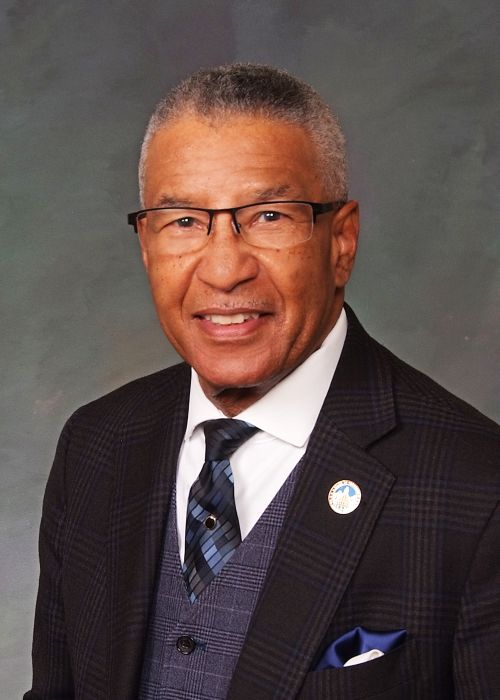
Sen. Tony Exum
Sponsored bills
Maddy summaryThis Senate Resolution officially recognizes the 125th anniversary of Western Colorado University and honors its contributions to higher education and workforce development in Colorado. The document commends the university's students, faculty, staff, and alumni for their dedication over the past century and a quarter. It serves as a symbolic acknowledgment rather than a law that changes policy or allocates funding.
The act makes a technical revision to language from Senate Bill 25-070, enacted in 2025, to clarify an online marketplace's obligation to alert law enforcement if the online marketplace knows or should have known that a third-party seller is selling or attempting to sell stolen goods to a consumer in Colorado.(Note: This summary applies to this bill as enacted.)
The act corrects technical defects and incorrect cross-references in certain statutes administered by the department of revenue as follows:Section 1 of the act amends the list of conditions a taxpayer must meet to claim a refundable income tax credit for certain businesses located in the state so that the list of conditions terminates correctly and conforms with standard drafting practices;Sections 2 and 4 correct outdated cross-references in the statute governing the collection of tax on gasoline and special fuels and the statute governing the road usage fee and bridge and tunnel impact fee;Section 3 clarifies the amount that can be claimed for a property tax or rent assistance grant and a heat or fuel expenses assistance grant based on the year the claim was made; andSection 5 removes the definitions for 'battery electric motor vehicle' and 'plug-in hybrid electric motor vehicle' from the statute that creates the high-performance transportation enterprise, as those defined terms do not otherwise appear in the statute.(Note: This summary applies to this bill as enacted.)
The act makes the following changes to transportation- and traffic-related statutes:Clarifies tire, chain, and alternate traction device requirements for use on a state highway by removing references to four-wheel and all-wheel drive; Prohibits an individual from stopping, standing, or parking a vehicle in the portion of a roadway designated as a bike lane, except when necessary to avoid conflict with other traffic or in compliance with the directions of a police officer or an official traffic control device;Clarifies that specified officers and authorized employees may move an attended or unattended motor vehicle, vehicle, cargo, or debris that is on a highway right-of-way and that obstructs or impedes traffic or highway maintenance or operations; andUpdates statutory references relating to vehicle or traffic collisions or collisions involving other transportation devices to use the term 'crash' or 'incident' in addition to or in place of the term 'accident' and defines 'crash' to include events involving motor vehicles, vulnerable road users, or other transportation devices.(Note: This summary applies to this bill as enacted.)
The act makes changes and clarifications in the provisions related to the department of early childhood (department). The act:Eliminates the scheduled repeal of licensing exemptions for certain in-home child care arrangements in which the children are related to the caregiver, are siblings, or number fewer than five;Updates provisions related to early care and education provider reimbursement for services performed before final eligibility determinations in the Colorado child care assistance program;Lowers the age limit for children served by the early childhood mental health consultation program from 8 years old to 6 years old and adjusts that program's reporting requirements;Clarifies the sources of money appropriated to the universal preschool program;Requires the department to keep confidential identifying records and facts regarding children and their relatives;Clarifies that child care facilities approved, certified, or licensed by tribal governments are exempt from the department's licensing rules; andAdjusts the membership requirements and duties of the early childhood leadership commission and subcommittee membership requirements for the rules advisory council.(Note: This summary applies to this bill as enacted.)
Under current law, the maximum amount of liability of the petroleum storage tank fund for an individual occurrence of a leak, spill, or release of a petroleum product from an underground storage tank (occurrence) is $2,000,000. The act allows an owner or operator of an underground or aboveground storage tank (owner or operator) to exceed this amount of liability with the permission of the director of the division of oil and public safety (director) and the petroleum storage tank committee (committee). If the director and the committee grant such permission, the director and committee shall establish a new maximum amount of liability per occurrence for the owner or operator. Under current law, all class I, II, and III liquid fuel products must comply with the most current applicable standards of ASTM International. The act allows the director to adopt a rule or issue policy guidance that provides exceptions to specific requirements established in an ASTM standard.(Note: This summary applies to this bill as enacted.)
The act makes the following changes to statutes concerning accessible housing standards:Defines 'accessible story' as a story on an accessible route that contains living, sleeping, cooking, bathing, and toilet facilities and, if available in the dwelling unit, laundry facilities. A basement is not an 'accessible story' if the basement floor is located more than 4 feet below the exterior finished grade, which is determined by assessing the vertical difference at any point along the exposed periphery of the dwelling unit.Defines 'dwelling unit' as any portion of a building that contains living facilities, including a room or rooms in a living facility that have shared cooking, bathing, toilet, or laundry facilities, such as dormitories, shelters, assisted living facilities, and boarding homes. 'Dwelling unit' also means living facilities that include provisions for sleeping, cooking, bathing, and toilet facilities for one or more persons and that are used for extended stays, such as time-shares and extended-stay motels. 'Dwelling unit' does not mean a guest room in a motel or hotel.Defines 'ICC A117.1' as the 'Standard for Accessible and Usable Buildings and Facilities' 2017 edition, or any successor standard, as adopted by reference by the building code of the responsible enforcement agency;Clarifies that 'Type A' and 'Type B multistory dwelling units' must include at least one accessible story that can be accessed via an accessible entrance; Requires projects with fewer than 50 units may use any combination of accessible dwelling units to comply with the standards; Requires projects with 50 or more units to include at least 2% accessible dwelling units, and that they must include at least on unit that is either a 'Type A', 'Type B', 'Type A Multistory', 'Type B Multistory', or 'Type C visitable' dwelling unit; andPermits covered enforcing agencies to develop alternative processes to resolve appeals of orders, decisions, or determinations made by the enforcing agency regarding the application and interpretation of the standards for accessible housing law.(Note: This summary applies to this bill as enacted.)
Current law includes an incorrect reference to an 'acute treatment unit', which license type was condensed into the license for behavioral health entities in 2019. The act updates the terminology from 'acute treatment unit' to 'behavioral health entity' to conform with existing license types.(Note: This summary applies to this bill as enacted.)
When a peace officer has reasonable suspicion that a crime of domestic violence has occurred, the peace officer is required to search the national crime information center database to determine whether a military protection order has been issued against one of the parties. If a military protection order has been issued against a party, the peace officer shall notify the military law enforcement agency that entered the protection order into the database. The act includes the existence of a military protection order as relevant evidence that the court shall consider when determining whether to issue a temporary civil protection order.(Note: This summary applies to this bill as enacted.)