The 2025 general appropriations act is amended to balance and make adjustments to the total amount appropriated to the department of transportation.(Note: This summary applies to this bill as enacted.)
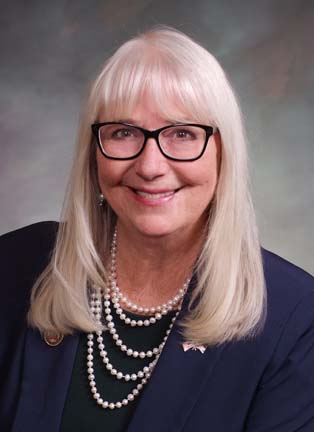
Rep. Eliza Hamrick
Sponsored bills
Colorado imposes 3 charges on all retail sales of prepaid wireless telecommunications services: A prepaid wireless 911 charge, a prepaid wireless 988 charge, and a prepaid wireless telephone disability access (TDA) charge, which, effective January 1, 2026, replaced the former telecommunications relay service charge. The act makes the following modifications to the laws implementing the 3 prepaid wireless telecommunications services:Corrects erroneous cross references in connection with the prepaid wireless telecommunications services;Modifies the definition of 'prepaid wireless telecommunications service' (prepaid wireless definition) in the statute that implements the prepaid wireless 911 charge to include a wireless telecommunications service that is paid in advance, sold in predetermined units of time or money that decline with use or provides unlimited use of the service for a fixed time, and allows a user to make 911 calls. In addition, the act harmonizes the prepaid wireless definition for all 3 of the prepaid wireless telecommunication services.Adds providers of prepaid wireless telecommunications services (providers) to the definition of 'retail transaction' and to surcharge remittance procedures for the prepaid wireless 911 charge;Includes the prepaid wireless 988 charge in the list of taxes or fees that are administered by the department of revenue (department); Consistent with the treatment of confidential tax information regarding the prepaid wireless 911 charge, allows the department to disclose confidential tax information regarding the prepaid wireless TDA charge and the prepaid wireless 988 charge to their respective enterprises and to the public utilities commission;Consistent with the requirement for electronic filing and payment for the prepaid wireless 911 charge and the TDA charge, allows the department to require electronic filing and payment for the prepaid wireless 988 charge;Consistent with the prepaid wireless 911 charge, clarifies that telecommunications services that are not subject to the prepaid wireless TDA charge are subject to other TDA charges imposed by law and makes the same clarification regarding the prepaid wireless 988 charge; andConsistent with the prepaid wireless 911 charge, imposes the prepaid wireless 988 charge on providers that use federally supported services to provide free prepaid wireless telecommunications services.(Note: This summary applies to this bill as enacted.)

The bill enacts the softbound volumes of the Colorado Revised Statutes 2025, the subsequent changes approved by the voters at the statewide election on November 4, 2025, and the 2025 Colorado First Extraordinary Session Supplement as the positive and statutory law of the state of Colorado and establishes the effective date of said publication.(Note: This summary applies to this bill as enacted.)

The executive committee of the legislative council (executive committee) is authorized to adopt policies regarding the ability of members of the general assembly to remotely participate in interim committee meetings and in legislative proceedings during a disaster emergency. The act expands the executive committee's authority to adopt policies to allow remote participation in meetings of any joint committees comprised of members from both chambers that are held at any time of the year.(Note: This summary applies to this bill as enacted.)
Maddy summaryThis House Memorial honors the life and service of former Colorado Representative Carl Miller, who passed away in August 2025. The document formally recognizes his contributions to Colorado through his work in local government, the mining industry, and public service, including his role in establishing the National Mining Hall of Fame and Museum. It extends condolences to Miller's family and pays tribute to his dedication to his community and state during his career as a state representative and public utility commissioner.
The act allows a board of county commissioners and the governing body of a municipality to sell and dispose of property owned by the county or municipality, as applicable, to provide for affordable housing and allows a municipality to enter into a long-term rental or lease agreement for the development of affordable housing. The act allows for the approval of a mutijurisdictional housing authority at a biennial local election instead of only during a general election or an election held on the first Tuesday in November of an odd-numbered year. The ballot question about establishing the authority may be combined with a question about a tax, impact fee, multiple-fiscal year debt, or other financial obligation. The act allows a board of county commissioners to use ad valorem tax revenue for housing authorities, housing programs, and workforce housing. The act entitles an entity subject to income tax to which a middle-income housing tax credit is transferred by a governmental entity or quasi-governmental entity to claim the credit without owning an interest in a qualified project. The sale and use of construction materials by contractors is exempt from taxation if the materials are used by the state in its governmental capacity only. The act provides that 'governmental capacity' includes the construction of workforce housing projects undertaken by counties.(Note: This summary applies to this bill as enacted.)
On and after January 1, 2027, the bill prohibits the recording of a new covenant or declaration that purports to encumber residential property by requiring the owner to acquire and pay for membership in a private membership club.The bill requires a private membership club to provide a property owner with certain information related to the budget and operations of the private membership club by mailing information to property owners and posting the information on the private membership club's public website.(Note: This summary applies to this bill as introduced.)
The act modifies the Colorado agricultural future loan program (program) to permit certain eligible entities to receive funding from the program. An eligible entity is defined as an entity that is certified by the division of conservation (division) or an entity that:Is a district that has authority to conduct water activities, an irrigation district, or a ditch and reservoir company; andHas a letter of support from an entity certified by the division. The act directs the commissioner of agriculture to adopt rules that prioritize awarding loans to eligible entities that seek to acquire and conserve agriculturally productive land and to transfer ownership of that land to an eligible farmer or rancher who qualifies for a loan from the program.(Note: This summary applies to this bill as enacted.)
Maddy summaryThis bill reappoints Kerri L. Hunter as Colorado's State Auditor for a five-year term from July 1, 2026, to June 30, 2031. The reappointment follows a unanimous recommendation from the Legislative Audit Committee, which reviews candidates for the position based on qualifications and experience. Under Colorado law, the General Assembly appoints the State Auditor, and this resolution formally approves Hunter's continued service after her initial term ended in 2026. The measure directly affects the State Auditor's office by extending its leadership while maintaining the existing appointment process.
Maddy summaryThis bill designates March 8, 2026, as International Women's Day in Colorado and acknowledges the historical and ongoing contributions of women to society. It recognizes women's achievements across various fields, including politics, business, and social movements, while highlighting Colorado's early history of women's suffrage and female leadership in state government. The resolution encourages continued celebration of this day and commits the legislature to supporting policies that promote gender equality and women's empowerment.