

The act establishes a process for a person to voluntarily waive the right to purchase a firearm (voluntary waiver). The Colorado bureau of investigation (bureau) in the department of public safety (department) shall deny a firearm transfer to the person while the voluntary waiver is in effect. The bureau shall develop an online portal (portal) for a person to electronically file for a voluntary waiver, update contact information, and revoke a voluntary waiver. The bureau is required to verify the filer's identity before accepting a voluntary waiver or revocation. The bureau shall enter a voluntary waiver into the national instant criminal background check system and any other federal or state computer-based systems used to identify prohibited purchasers of firearms. A person may revoke the voluntary waiver by filing for revocation with the bureau. The waiver remains in effect for 30 days after the bureau accepts the revocation. A person filing the voluntary waiver form may provide the name and contact information of a person who will be contacted if the person attempts to purchase a firearm while the voluntary waiver is in effect or if the filer revokes the voluntary waiver. The act prohibits a person from attempting to purchase a firearm while subject to a voluntary waiver. Attempting to purchase a firearm while subject to a voluntary waiver is a civil infraction, punishable by a maximum $25 fine. The voluntary waiver process and the prohibition on attempting to purchase a firearm while subject to a voluntary waiver are contingent on the department receiving $200,000 of gifts, grants, or donations to develop and operate the portal. The act permits the department to seek, accept, and expend gifts, grants, or donations for the portal. (Note: This summary applies to this bill as enacted.)
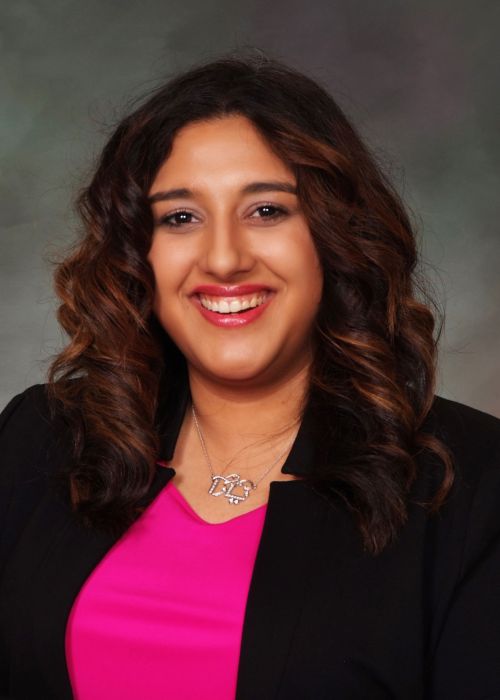
Rep. Yara Zokaie
Sponsored bills
The act implements some of the recommendations of the department of regulatory agencies (department) regarding the motorcycle operator training (MOST) program, as contained in the department's sunset review of the MOST program, as follows: Lowers the required minimum age to be a MOST instructor from 21 to 18 years of age; and To align with the placement of the MOST program within the Colorado state patrol rather than the department of transportation, clarifies that a MOST vendor must meet standards promulgated by the Colorado state patrol rather than by the department of transportation. The act also makes the following changes to the MOST program that were not included in the department's sunset review: Continues the MOST program in the office of the chief of the state patrol in the department of public safety (chief) for 5 years, until September 1, 2030; and Allows the chief to expend money from the MOST fund for a tuition benefit paid to MOST vendors to be passed on to eligible students in the form of reduced costs for eligible courses, as established by the chief by rule.(Note: This summary applies to this bill as enacted.)
Current law allows a person who is committed, imprisoned, or arrested (person in custody) the right to communicate with an attorney or family member by making a reasonable number of telephone calls or through any other reasonable manner. The act adds the attorney's authorized representative to those whom a person in custody can communicate with. Current law allows a person in custody the right to consult with an attorney. The act requires a peace officer or person employed at a place of confinement to provide an attorney or the attorney's authorized representative the ability to initiate communication with a person in custody through telephone calls, interactive audiovisual conferencing, or any other reasonable method of electronic communication, as determined by the jail or correctional facility administration. The communication must be private, unrecorded, and without cost to the confined person and attorney or the attorney's representative, subject to all reasonable administrative and operational procedures. (Note: This summary applies to this bill as enacted.)
Current law limits to 10 years the time a school district can lease district property not needed for its purposes. The act allows a school district to lease district property for any term of years for purposes of a solar field, energy storage system, or affordable housing. If a board of education of a school district leases or rents property for the purposes of an affordable housing project, the board of education shall develop a policy that defines affordable housing for the project. (Note: This summary applies to this bill as enacted.)
With regard to the family and medical leave insurance program (program), the act extends the duration of paid family and medical leave, up to an additional 12 weeks, for a parent who has a child receiving inpatient care in a neonatal intensive care unit. The act also changes the premiums financing the program benefits by extending the current premium amount, 0.9% of wages per employee, through 2025 and setting the premium amount for the 2026 calendar year at 0.88% of wages per employee. For each subsequent calendar year, the director of the division of family and medical leave insurance (director) is required set the premium on or before September 1 of the preceding year, in a manner such that: At the end of the year, the balance of the family and medical leave insurance fund (fund) is not less than 6 months' worth of projected expenditures from the fund required for performance of the functions and duties of the director; The volatility of the premium rate is minimized; and The premium amount does not exceed 1.2% of wages per employee.(Note: This summary applies to this bill as enacted.)
The act adds statutory protections for in vitro fertilization and other assisted reproductive health-care procedures. Current law requires gamete banks and fertility clinics (donor banks) to maintain donor identifying information and update it every 3 years. The act requires donor banks to encourage donors to inform the donor banks of significant updates to the donor's medical history after the donor made a donation. The donor bank is then required to document that significant medical history update. Current law prohibits donor banks from interfering with an adult donor-conceived person communicating about the gamete donor with the donor-conceived person's friends, family, or other third parties. The act encourages donor banks to provide information to donor-conceived persons regarding the physical and emotional risks associated with releasing a donor's private information to outside parties. The act repeals certain provisions relating to gamete donor record stewardship in the event of donor bank dissolution, bankruptcy, or insolvency and eliminates the requirement that donor banks inform a recipient parent about future implications about a gamete donor's medical history or other persons conceived using the same gamete donor. Current law requires the department of public health and environment (department) to draft written materials that must be provided to individuals prior to donating or receiving gametes. The act maintains that requirement, but does not require donor banks to use the department's written material. Donor banks are permitted to develop their own written materials to meet the statutory requirement of providing certain information to an individual prior to donating or receiving gametes. The act eliminates the department's ability to perform on-site inspections or perform in-person investigations on donor banks located outside the state. (Note: This summary applies to this bill as enacted.)
The act removes the term "homosexuality" from the definition of sexual conduct in the sexually explicit materials harmful to children part of the "Colorado Criminal Code". (Note: This summary applies to this bill as enacted.)
The act creates the work-based learning consortium pilot program (pilot program) in the department of higher education (department). The purpose of the 3-year pilot program is to: Demonstrate the value of work-based learning in postsecondary curricula by studying the impact of industry-sponsored projects on course objectives and learning outcomes; Promote the adoption of work-based learning in higher education by working with faculty at institutions of higher education (institutions) that participate in the pilot program (participating institutions) to embed project-based learning opportunities into credit-bearing programs; Provide broader access to collegiate work-based learning for students; Measure the impact of work-based learning on participating students; and Learn how institutions can increase the value of postsecondary education through career exposure and preparedness. Pending the receipt of sufficient funds, the department shall convene a consortium (consortium) of representatives from participating institutions, the commission on higher education (commission), the department of labor and employment, the department of education, and a subject matter expert with experience implementing work-based learning. The consortium shall: Work with each participating institution's faculty to embed industry-sponsored projects in course curriculum that meet the work-based learning quality standards; Work with the department to determine the impact of industry-sponsored projects; Work with a third-party platform to connect faculty from participating institutions to employers for the purpose of developing high-quality, project-based learning opportunities for classroom instruction; Advise the commission on strategies to improve student access to high-quality, work-based learning opportunities for students based on participating faculty members' experience embedding industry-sponsored projects into curriculum; Develop best practices for institutions to expand access to work-based learning in the classroom through industry-sponsored projects; and Develop findings and recommendations. Subject to available appropriations, at the end of the pilot program, the act requires the consortium to complete and submit a report to the education committees of the house of representatives and the senate, or their successor committees. The report must include: A description of the consortium's findings and recommendations; Details on the consortium's impacts on participating institutions and the effects of creating additional work-based learning activities on students, faculty, and employers; and Recommendations for statutory changes, financial resources, department policy changes, and policy changes in institutions that are necessary to improve successful work-based learning opportunities for students in institutions. The department may seek, accept, and expend gifts, grants, or donations from private or public sources for the pilot program. The department shall transmit all gifts, grants, or donations to the state treasurer, who shall credit the money to the higher education work-based learning consortium fund (fund). If, by June 30, 2028, the money in the fund has never reached or exceeded $2 million dollars, the state treasurer shall return each grantor's or donor's gift, grant, or donation. On or before November 1, 2026, the commission shall recommend a list of terms used by institutions related to work-based learning to the Colorado workforce development council for inclusion in the talent development glossary (glossary). The purpose of the list of terms is to: Augment the glossary so that collegiate work-based learning activities are accurately reflected in statewide efforts to promote work-based learning; and Demonstrate to institutions relevant opportunities to participate in statewide efforts to promote work-based learning. On or before July 1, 2026, the commission shall work with institutions, the Colorado workforce development council, the department of education, the consortium, nonprofit organizations, industry associations, and businesses to develop recommendations on how to best embed work-based learning opportunities into current degree pathways. On or before December 31, 2026, the department shall work with institutions to identify which work-based learning activities are measurable and how to best report work-based learning activities. Institutions that are eligible for the work-study program may use work-study program money to cover the costs of work-based learning credits for students who are required to complete credit-bearing work-based learning requirements to graduate from an institution. The office of economic development (office) administers the universal high school scholarship program (program). The act allows the office to spend unexpended or unencumbered money appropriated in the 2023-24 state fiscal year through the 2025-26 state fiscal year without further appropriation. The act requires that expenditures for the administrative costs of the program not exceed $1.5 million. The act extends the date for the state treasurer to transfer all unexpended and unencumbered money in the universal high school scholarship cash fund from December 30, 2026, to June 30, 2027. (Note: This summary applies to this bill as enacted.)
Beginning January 1, 2027, the act: Allows a pharmacy benefit manager (PBM) to earn income derived from the assessment of a flat-dollar service fee for the provision of a prescription drug; Prohibits a PBM from earning income based on the price or cost of a prescription drug; Prohibits a PBM from designing a formulary to favor a certain branded pharmaceutical or biologic; Requires a PBM to be reimbursed by a health benefit plan for lowering the plan's prescription drug spending over a given period of time and for the direct services the PBM provides to the plan; Sets the amount that a PBM shall reimburse an unaffiliated pharmacy or a PBM-affiliated retail, mail order, or specialty pharmacy for a prescription drug; and Requires a contract between a PBM and a health benefit plan to contain a provision where the PBM discloses prescription drug cost information to the health benefit plan and a provision authorizing the health benefit plan to execute an audit to validate compliance with the contract.(Note: This summary applies to this bill as enacted.)
The act prohibits using an automated driving system to drive a commercial motor vehicle unless an individual who holds a commercial driver's license is in the vehicle, is in the driver's seat if the vehicle is transporting hazardous materials, monitors the vehicle's driving, and intervenes, if necessary, to avoid illegal or unsafe driving. The penalty is $1,000 for a first offense, is $2,000 for a second offense, and doubles for each subsequent offense. The act does not apply to light-duty vehicles. VETOED by Governor 5/29/2025(Note: This summary applies to this bill as enacted.)