

Maddy summaryHJR 1007 is a symbolic resolution honoring Native American veterans' historical and ongoing military service. It recognizes their disproportionate contributions - such as over 12,000 serving in WWI (despite limited citizenship), 70% per capita service in WWII, and Code Talkers in the Pacific Theater - and current service (31,000 active-duty Native Americans today). The resolution specifically acknowledges Colorado's Indigenous lands, highlights Colorado's appointment of its first Native veteran to the state Board of Veterans Affairs, and commemorates veterans' sacrifices across conflicts from the Revolutionary War to modern times. As a non-binding resolution, it expresses legislative recognition but does not create new policy or funding.
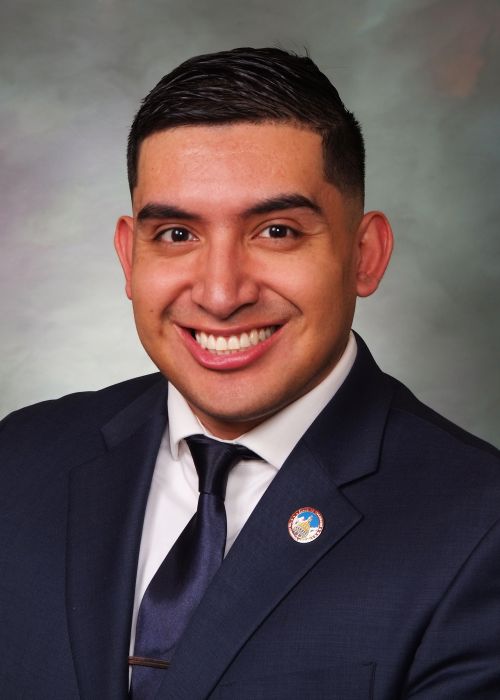
Rep. Ryan Gonzalez
Sponsored bills
Maddy summaryThis Senate Joint Resolution (SJR 7) is a ceremonial resolution recognizing February 2026 as Black History Month. It does not create new laws or affect any individuals or policies - it solely commemorates the annual observance of Black History Month through historical context and Colorado-specific examples. The resolution cites Dr. Carter G. Woodson’s founding of Negro History Week in 1926, its evolution into Black History Month during the Civil Rights Movement, and highlights Colorado’s Black historical figures like Barney Ford, Clara Brown, and early state representatives. It serves as a symbolic acknowledgment of contributions to American history, not a policy change.
Maddy summarySJR 5 designates January 26, 2026, as "Colorado 4-H Day" to recognize the 4-H program's work with Colorado youth. The resolution honors the program's role in developing leadership and life skills through hands-on learning in areas like health, agriculture, and citizenship. It does not create new laws or requirements but formally acknowledges the efforts of 4-H volunteers and staff who serve over 110,000 youth annually in Colorado.
Maddy summaryHJR 1003 is a ceremonial joint resolution designating January as National Blood Donor Month in Colorado. It formally recognizes voluntary blood donors and urges all eligible Coloradans to donate regularly, while encouraging businesses and organizations to sponsor community blood drives with centers like Vitalant. The resolution has no binding legal effect - it expresses support and promotes awareness but does not create new laws, funding, or requirements. It directly affects Colorado residents (especially eligible donors), blood collection organizations, and local businesses through its non-binding recommendations.
Maddy summaryHJR 1002 is a commemorative resolution honoring Dr. Martin Luther King Jr. It does not create new laws or policies. The resolution recognizes Dr. King's legacy through historical context about his civil rights leadership, his "I Have a Dream" speech, and his role in key legislation like the Civil Rights Act of 1964. It specifically acknowledges Colorado's history of observing MLK Jr. Day, noting that Colorado became the 50th state to recognize the holiday in 2000. The resolution serves only to formally commemorate Dr. King's life and work, with no direct effect on citizens or new government requirements.
Maddy summaryHouse Resolution 1001 appoints specific staff members to roles within the Colorado House of Representatives for the 75th General Assembly's Second Regular Session. It names individuals to positions including Chief Clerk, Assistant Chief Clerk, Journal Clerk, sergeants-at-arms, and leadership support staff for both majority and minority parties, plus student interns from Arrupe Jesuit High School. The resolution was approved without amendments on January 20, 2026, and serves as routine staffing for legislative operations. This procedural resolution does not create new laws or affect public policy.
Maddy summarySJR 2 is a procedural resolution titled "State of the State," which authorizes the Governor to deliver the annual State of the State address to the legislature. It does not create new laws or affect specific groups; it serves as a formal legislative procedure for convening the address. The resolution follows standard procedural steps (introduction, readings) without substantive policy content. As a routine procedural measure, it has no concrete policy changes or direct impact beyond facilitating the Governor's annual report to lawmakers.
Maddy summarySJR 3 is a procedural resolution scheduling a joint meeting of Colorado's Senate and House of Representatives on January 16, 2026, to hear a message from representatives of the Ute Mountain Ute Tribal Council and Southern Ute Tribal Council. It directs the appointment of a six-member committee (three from each chamber) to escort tribal representatives to the session. The resolution recognizes the tribes' historical and cultural contributions to Colorado but does not create new laws or policies. This is a formal procedural step to facilitate the tribal message, not a substantive legislative change.
The act requires the state auditor to conduct or cause to be conducted performance audits (audits) of the air pollution control division in the department of public health and environment and the division of unemployment insurance in the department of labor and employment (divisions). The audits will determine whether each of the divisions effectively and efficiently performs and fulfills its statutory obligations. In addition, as part of the audits, the state auditor is required to: Determine whether a division complies with statute and its statutory purpose; Assess the impact of a division's processes on providing access to program benefits and, for the labor and employment division audit only, identify any division processes that may be unnecessary, unreasonable, or cause delays; Determine whether a division's staffing and funding levels are sufficient for it to efficiently and effectively perform its statutory duties and responsibilities, which, in for the air pollution control division audit only, must include assessment of how funding or staffing changes made at the state level might impact local governments; and Determine whether a division requested and was appropriated additional resources and whether the approval or denial of such a request impacted program implementation and timing of implementation. The initial audit of the air pollution control division must begin and be completed in calendar year 2026, with an additional audit occurring in calendar year 2031. The initial audit of the division of unemployment insurance must begin and be completed in calendar year 2027, with an additional audit occurring in calendar year 2032. Upon completion of an audit, the state auditor is required to submit a written audit report to the legislative audit committee. (Note: This summary applies to this bill as enacted.)
The act prohibits residential rental agreements, in relation to a tenant's death, from requiring acceleration of rent beyond the end of the month or more than 10 business days after the dwelling unit is vacated after notice to the landlord of the tenant's death, whichever is later. Further, the act prohibits the enforcement of terms in rental agreements that authorize liquidated damages or other penalties if the rental agreement is terminated before the end of its term due to the death of a tenant. The act authorizes a landlord to take possession of the dwelling unit without filing an eviction action or otherwise obtaining a court order if the personal representative of the tenant's estate notifies the landlord of the surrender of the premises or,30 days after the death of the tenant, rent remains unpaid or substantially all of the tenant's property has been removed. In addition, a landlord may retain a security or damages deposit sufficient to cover costs of damages caused by the death of the tenant. (Note: This summary applies to this bill as enacted.)