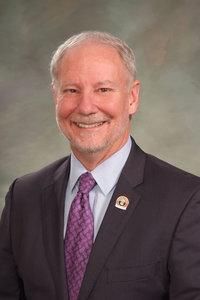
Photo of Dave Young
D Colorado House · District 50

Rep. Dave Young

Compare
Total votes
0
all sessions
Attendance
-
of floor votes
With party
0%
of cast votes
Bipartisan score
0%
crosses aisle rarely
Sponsored
48
bills & resolutions
Committees
0
assignments
48 bills and resolutions

Sponsored bills

Total
48
Primary
48
Co-sponsor
0
This page
48
matching current filters
Primary SB 18-253
Signed into law · Colorado Senate · Lead sponsor
CSTARS Account Transfer To DRIVES Account Effective Date

Joint Budget Committee. The bill establishes a uniform date of July 1, 2019, to transition the department of revenue's Colorado state titling and registration (CSTARS) account to the department of revenue's DRIVES vehicle services account. The bill also delays for one year the corresponding statutory repeal dates.(Note: This summary applies to the reengrossed version of this bill as introduced in the second house.) , Read More


Signed into law May 29, 2018 0 co-sponsors
Primary HB 18-1300
Signed into law · Colorado House · Lead sponsor
Bachelor Nursing Completion Degree Local District College

The bill allows a local district college (college), such as Aims community college, to offer a bachelor of science degree in nursing program as a completion degree in nursing to students who have or are pursuing an associate degree in nursing, provided that the college's board of trustees determines it is appropriate to address the needs of the communities within its service area, as approved by the Colorado commission on higher education based on existing criteria. (Note: This summary applies to the reengrossed version of this bill as introduced in the second house.) , Read More
Signed into law May 29, 2018 0 co-sponsors
Primary HB 18-1407
Signed into law · Colorado House · Lead sponsor
Access To Disability Services And Stable Workforce

Joint Budget Committee. The bill requires the department of health care policy and financing (department) to seek federal approval for a 6.5% increase in the reimbursement rate for certain services specified in the bill that are delivered through the home- and community-based services intellectual and developmental disabilities, supported living services, and children's extensive supports waivers. Service agencies shall use 100% of the increased funding resulting from the increase in the reimbursement rate for compensation, as defined in the bill, for direct support professionals, as defined in the bill. The bill requires service agencies to document the use of the increased funding for compensation using a reporting tool developed by the department and the service agencies, and to submit a report to the department for the 2018-19 through the 2020-21 fiscal years. The department has access to the supporting documentation and may determine that a service agency is not using the increased funding as required. The state department has ongoing discretion to request information from service agencies demonstrating how the agencies are maintaining the increases in compensation for direct support professionals beyond the 3-year reporting period. If the department determines that a service agency does not use 100% of the increased funding resulting from the increase in the reimbursement rate for compensation for direct support professionals, the service agency may take action within a specific time frame to contest the determination or submit a corrective action plan to the department. The department shall recoup from the service agency the amount of funding resulting from the reimbursement rate increase that is not used for compensation for direct support professionals. Once sufficient data is available to assess the impact and outcomes of the reimbursement rate increase on persons with intellectual and developmental disabilities, the department shall include the impact and outcome data, including staff stability survey data, in its annual report to the general assembly concerning the waiting list for intellectual and developmental disability services. The bill requires the department to initiate 300 nonemergency enrollments from the waiting list for the home- and community-based services developmental disabilities waiver in the 2018-19 state fiscal year. The medical services board (board) in the department shall promulgate rules establishing additional criteria for reserve capacity enrollments based on the age and capacity of a person's parent or caregiver. As part of the rule-making process, the board shall solicit stakeholder feedback from persons with intellectual and developmental disabilities and their families. The department shall include in a monthly report the number of persons who were moved off the developmental disabilities waiting list for both nonemergency enrollments and reserve capacity enrollments. (Note: This summary applies to the reengrossed version of this bill as introduced in the second house.) , Read More

Signed into law May 24, 2018 0 co-sponsors
Primary SB 18-254
Signed into law · Colorado Senate · Lead sponsor
Child Welfare Reforms

Joint Budget Committee. The bill addresses numerous reforms to the funding structure for the state's child welfare services. Section 1 of the bill clarifies the types of child welfare services that must be available and provided, as necessary and appropriate, by county departments of human or social services (county departments). Sections 2 and 7 of the bill eliminate the option for county departments to maintain unspent general fund money from the child welfare services block allocation if they participate in the collaborative management program or the integrated care management program. Section 3 of the bill adds a statutory definition of and citation to the federal 'Family First Prevention Services Act of 2018'. Section 4 of the bill creates a program in the child welfare system for residential out-of-home placements for children and youth with intellectual and developmental disabilities. Section 5 of the bill: Changes the number of and process for appointments to the child welfare allocations committee; and Requires the development of a child welfare system funding model. Section 6 of the bill: Increases the percentage that counties are reimbursed by the state for adoption and relative guardianship subsidies from 80% to 90%; Formalizes the input process of the child welfare allocations committee; Allows the department of human services (state department) to submit supplemental budget requests for increases in out-of-home placement provider rates and adoption and relative guardianship expenditures; Modifies language concerning negotiations between county departments and providers for out-of-home placement rates; Requires capacity evaluations in counties or regions; Requires the state department to perform an analysis and cost projections to determine the fiscal impact on the state for changes in federal reimbursement rates for child welfare expenditures that result from the federal 'Family First Prevention Services Act of 2018'; Modifies the close-out process for child welfare expenditures; and Creates a child welfare prevention and intervention services cash fund into which unspent general fund money allocated to county departments through block allocations are transferred for sustainability of state-approved prevention and intervention programs and services. Section 8 of the bill creates the delivery of child welfare services task force.(Note: This summary applies to the reengrossed version of this bill as introduced in the second house.) , Read More

Signed into law May 18, 2018 0 co-sponsors
Primary HB 18-1319
Signed into law · Colorado House · Lead sponsor
Services Successful Adulthood Former Foster Youth

The bill allows county departments of human or social services to extend the provision of certain services for a successful adulthood to foster care youth between the ages of 18 and 21 who have exited the foster care system (former foster care youth), including assistance with employment, housing, education, financial management, mental health care, and substance abuse treatment (services for a successful adulthood). The bill also tasks the state department of human services with establishing a former foster care youth steering committee. The purpose of the steering committee is to develop recommendations for an implementation plan that supports the long-term provision of services for a successful adulthood for former foster care youth. (Note: This summary applies to the reengrossed version of this bill as introduced in the second house.) , Read More

Signed into law May 18, 2018 0 co-sponsors
Primary SB 18-252
Passed · Colorado Senate · Lead sponsor
Competency to Proceed Evaluations And Services

The bill makes numerous changes to statutes related to the process of determination of competency to proceed in a criminal case. Section 1 of the bill updates the definitions section of article 8.5 of title 16 to include new terminology. Section 2 of the bill makes changes in the regulation of a second competency evaluation (evaluation) requested by the court, including reducing the time frame that the prosecution or defense may request a second evaluation from 14 days to 7 days and clarifying that the department of human services (department) is not responsible for conducting a second evaluation. Section 3 of the bill concerns changes to competency evaluations and reports, including that: The court shall order the evaluation be conducted on an out-of-custody basis, unless otherwise provided. If the evaluation must be conducted on an in-custody basis, the department is required to begin the evaluation no later than 7 days after the department's receipt of a court order directing the evaluation. The department shall complete the evaluation no later than 45 days after receipt of the court order, unless for good cause shown; A defendant must have bond set unless they are otherwise ineligible for bond. The court shall determine the type of bond after consideration of factors. The court shall include as a condition of bond the defendant's cooperation with a competency evaluation; The court may order a defendant into the department's custody for purposes of an evaluation under stated circumstances; If the defendant is in the custody of the department, provisions for returning the defendant to the custody of the county jail or to the community are set forth; The competency evaluation report (report) must include: If the defendant is determined to be incompetent to proceed, whether or not there is a substantial probability that he or she can be restored to competency within the allowable time frame and whether inpatient or outpatient restoration services are recommended; If available, information on previous evaluations or restoration services provided to the defendant; and If the defendant meets the criteria for civil certification or is eligible for services for individuals with intellectual and developmental disabilities. If the report concludes that the defendant is incompetent to proceed, the department may initiate restoration services unless either party objects within 72 hours after receipt of the report; Sections 4, 5, and 6 of the bill outline procedures to follow after a determination of competency or incompetency to proceed, including that: If the defendant is released on bond, a determination of whether restoration services are to be provided on an outpatient or inpatient basis. If the defendant is ordered to outpatient restoration services and he or she is uncooperative or fails to begin services, the individual agency responsible for providing restoration services shall notify the court within 28 days; The department is the entity responsible for the development of restoration curricula and necessary training to create outpatient restoration services in any setting; If the defendant remains in custody, the court shall order the department to provide restoration services at the place where the defendant is in custody and if the department has no available beds for inpatient restoration services if inpatient restoration services are recommended. The department shall begin outpatient restoration services as soon as practicable after a court's order; The court shall commit the defendant to the custody of the department for inpatient restoration services if the defendant has not been restored to competency within 150, unless the timeline is extended for good cause shown. The timeline must exclude time during which the defendant refuses to accept services or treatment; For a defendant who is receiving outpatient and in-custody restoration services, the court shall review the case every 30 days to assess the defendant's progress toward restoration to competency; If outpatient restoration services have been ordered and the department is unable to provide such services, the court may commit the defendant to the department's custody until outpatient services are available; If inpatient restoration services have been ordered, the most clinically appropriate setting must be used; and The bill reduces the time that either party may request a second evaluation from 14 days to 7 days after receipt of a report concerning competency. If a second evaluation is allowed, the second evaluation report must be completed and filed with the court within 42 days, as opposed to the current requirement of 63 days. Section 7 of the bill outlines the options for reviews, civil certification (certification), provision of services for persons with intellectual and developmental disabilities (provision of services), and termination of proceedings (termination), including that: Time periods for review and final determinations related to certification, provision of services, and termination are established for different levels of offenses; In no instance may confinement exceed the maximum term of confinement that could be imposed for the most serious offense with which the defendant is charged, less any time credits the defendant is entitled to; At the end of any maximum amount of time, the court shall dismiss the charges and any certification proceedings or provision of services are to be governed by appropriate laws; The court is required to review the defendant's case at least every 3 months with regard to the probability that the defendant will eventually be restored to competency and to whether there is justification for certification or confinement. The court shall review a current evaluation report that includes information on whether there is a substantial probability the defendant will be restored to competency within the allowable time frame, and if the defendant meets the criteria for certification or the provision of services; If the defendant is charged with a misdemeanor, misdemeanor drug offense, or petty offense, excluding victim's rights offenses; and has been committed to the custody of the department or otherwise confined for an aggregate period of 3 months, and the court determines that he or she remains incompetent to proceed and there is not a substantial probability that he or she will be restored to competency within the next 3 months, the court shall dismiss the charges against the defendant. If the court determines there is a substantial probability that the defendant will be restored to competency within the next 3 months, restoration services may continue for another 3 months. After 6 months, the court shall dismiss the charges against the defendant; If the defendant is charged with a class 5 or class 6 felony, excluding victim's rights offenses, a level 3 or level 4 drug felony, or any misdemeanor offense not otherwise included in earlier section, and has been committed to the custody of the department or otherwise confined for an aggregate period of 1 year, and the court determines that he or she remains incompetent to proceed and there is not a substantial probability that he or she will be restored to competency within the next six months, the court shall dismiss the charges against the defendant. If the court determines there is a substantial probability that the defendant will be restored to competency within the next six months, restoration services may continue for another six months. After 18 months, the court shall dismiss the charges against the defendant; If the defendant is charged with any other felony offense, except a class 1, class 2, or class 3 felony, a sex offense, a crime of violence, or a level 1 or level 2 drug felony, and has been committed to the custody of the department or otherwise confined for an aggregate period of 3 years, and the court determines that he or she remains incompetent to proceed and there is not a substantial probability that he or she will be restored to competency within the next year, the court shall dismiss the charges against the defendant. If the court determines there is a substantial probability that the defendant will be restored to competency within the next year, restoration services may continue for another year. After 4 years, the court shall dismiss the charges against the defendant, unless any party objects. If a party objects to dismissal of charges, the court shall set the matter for a hearing; Prior to the dismissal of any charges, the court shall identify whether the defendant meets the requirements for certification or provision of services. If so, the court may stay the dismissal for 21 days and notify the department and county attorney in the relevant jurisdiction of the pending dismissal; and Certification proceedings may be brought against a defendant at any time. Sections 8, 9, 10, and 11 of the bill provide that officers of the judicial branch, district attorneys, public defenders, and attorneys for the office of alternate defense counsel should receive training concerning determinations of competency to proceed for juveniles and adults, evaluation reports, services to restore competency, and certification proceedings.(Note: This summary applies to the reengrossed version of this bill as introduced in the second house.) , Read More

Passed May 9, 2018 0 co-sponsors
Primary HB 18-1197
Passed · Colorado House · Lead sponsor
Student-centered Pilot Accountability Systems

The bill authorizes a school district, board of cooperative services, or charter school (local education provider) or group of local education providers to create local, student-centered pilot accountability systems (pilot accountability system) for measuring the performance of the public school systems operated by the participating local education providers. A pilot accountability system must be designed to assess student learning, professional culture, and resource allocation within a participating local education provider. The bill describes the minimum requirements for a pilot accountability system proposal, including the manner in which the participating local education providers will determine whether the pilot accountability system is successful. A local education provider that participates in a pilot accountability system must continue to comply with the accountability and accreditation statutes. A local education provider or group of local education providers may receive a grant to operate the pilot accountability system by submitting the proposal to the department of education (department), agreeing to allow the department to monitor implementation of the pilot accountability system, and agreeing to submit to the department its evaluations of the success of the pilot accountability system. Subject to available appropriations, the participating local education provider or group of local education providers will receive an annual grant so long as they comply with the monitoring and reporting requirements. For each year in which the department distributes a grant, the department must prepare a report of the implementation of the pilot accountability systems; submit it to the governor, the state board of education, and the education committees of the general assembly; and post it on the department website. The authorization for the pilot accountability system grants repeals in 5 years. (Note: This summary applies to the reengrossed version of this bill as introduced in the second house.) , Read More

Passed May 2, 2018 0 co-sponsors
Primary HB 18-1289
Passed · Colorado House · Lead sponsor
Exempt Local Government School Districts Forced Pooling

Current law authorizes 'forced' or 'statutory' pooling, a process by which any interested person–typically an oil and gas operator–may apply to the Colorado oil and gas conservation commission for an order to pool and develop oil and gas resources located within a particularly identified drilling unit absent consent from the mineral owner. The bill exempts school districts that own mineral rights and mineral rights owners that are located on open space designated by a local government if the local government acquired the mineral rights before the application was filed from being forced pooled but maintains their ability to engage in voluntary pooling. (Note: This summary applies to the reengrossed version of this bill as introduced in the second house.) , Read More

Passed May 2, 2018 0 co-sponsors
Primary HB 18-1336
Signed into law · Colorado House · Lead sponsor
Repeal Local Government Retail Marijuana Impact Grant Program

Joint Budget Committee. On July 1, 2019, the bill repeals the local government retail marijuana impact grant program, under which the department of local affairs (department) awards grants to eligible local governments for documented marijuana impacts. Any encumbered money from the fiscal year 2017-18 appropriation to the department remains available for expenditure in the next fiscal year. The bill also repeals a reporting requirement regarding the effectiveness of the grant program.(Note: This summary applies to the reengrossed version of this bill as introduced in the second house.) , Read More

Signed into law Apr 30, 2018 0 co-sponsors
Primary HB 18-1333
Signed into law · Colorado House · Lead sponsor
Concerning part C child find responsibilities of state departments, and, in connection therewith, making an appropriation.

Joint Budget Committee. Child find, part of the federal 'Individuals with Disabilities Education Act', requires states to identify and serve children with disabilities. Part C of child find concerns identifying children from birth through 2 years of age for early intervention services. Part C child find is administered by the department of education. Early intervention services for children through 2 years of age are administered by the state department of human services. The bill defines 'early intervention evaluations' as evaluations performed pursuant to part C child find. The bill requires the state department of human services and the department of education to enter into an interagency agreement (agreement) to study the administration of early intervention evaluations. The departments are required to enter into the agreement by October 1, 2018, and to report the results of the study performed pursuant to the agreement to the joint budget committee by June 30, 2019. (Note: This summary applies to the reengrossed version of this bill as introduced in the second house.) , Read More

Signed into law Apr 30, 2018 0 co-sponsors
Showing 11 to 20 of 48 bills
Previous 1 2 3 5 Next