

The act encourages each local education provider to adopt a policy to reduce food waste in school cafeterias and food preparation facilities (policy). The policy may address food waste diversion and aversion initiatives, including composting, donation of excess food to local nonprofits, or share table programs that permit students to return whole food or beverage items for redistribution to other students. A local education provider that implements a policy shall comply with all applicable sanitation and health requirements, including protocols to prevent student exposure to allergens, and shall require school personnel to complete related safety training. Current law establishes the Colorado circular communities enterprise (enterprise) to award grants and other funding and to provide technical assistance to certain entities throughout the state that pursue a circular economy for waste management, including waste diversion and aversion. The act requires the enterprise to consider reducing food waste by incentivizing public schools to develop and implement effective composting, excess food donation, or share table programs. The act extends limited immunity from civil and criminal liability to school personnel and local education providers that supervise food and beverage redistribution in accordance with policies that include share tables. (Note: This summary applies to this bill as enacted.)
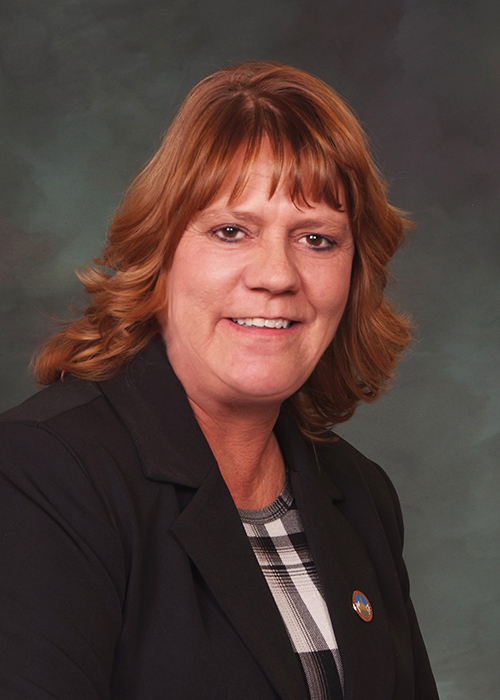
Rep. Tisha Mauro
Sponsored bills
Beginning on January 1, 2026, any political subdivision of the state, public entity, or nonprofit corporation that provides paratransit services in the state (paratransit provider) is required to establish, in coordination with local public entities providing emergency services, a plan to communicate information and provide paratransit services during emergencies. The communication plan must include information on the number of riders who use paratransit services and the resource capacity of the paratransit provider, including the number of drivers and the number of vehicles used to provide paratransit services. Paratransit providers and public entities providing emergency services are also required to submit a report to the transportation legislation review committee on or before September 1, 2026, about the implementation of the communication and emergency services plan. (Note: This summary applies to this bill as enacted.)
On and after April 10, 2025, the act prohibits the state and local licensing authorities (licensing authorities) from issuing a new liquor-licensed drugstore license (license). Licensing authorities may continue to renew existing licenses. On and after April 10, 2025, a person holding a license (licensee) is prohibited from changing the location of, merging, selling, converting, or transferring a license; except that a licensee that holds a license that was issued to an independent pharmacy before January 1, 2025, may change the location of or sell or transfer the license to another licensee that is an independent pharmacy that holds a license or to a person that does not already have a license. The act defines an independent pharmacy as a prescription drug outlet privately owned by at least one licensed pharmacist with no ownership interest by or affiliation with a chain or publicly owned pharmacy. The act prohibits an owner, part owner, shareholder, or person interested directly or indirectly in a liquor-licensed drugstore from having an interest in more than 8 licenses. (Note: This summary applies to this bill as enacted.)
The act requires the division of fire prevention and control, which hosts the wildfire information and resource center website and provides information regarding active wildfires on the website, to include hyperlinks to websites that display emergency information and wildfire updates for each county in Colorado and to coordinate with county governments in order to provide the hyperlinks. (Note: This summary applies to this bill as enacted.)
The act requires the public utilities commission (commission) to adopt rules requiring that, unless the applicable road authority is a local government, the total costs to maintain an existing railroad crossing (total costs) are shared equally between the railroad, railroad corporation, rail fixed guideway, transit agency, or owner of the track (railroad) and the applicable road authority. If the applicable road authority is a local government, the commission must adopt rules that require the total costs to be apportioned as follows: The railroad is responsible for the costs to maintain the portion of the existing railroad crossing that is between the ends of the railroad ties; and The local government is responsible for the costs to maintain the portion of the existing railroad crossing that is outside of the ends of the railroad ties. The act applies to costs accrued on or after the effective date of the act unless the costs accrue pursuant to an agreement entered into by the parties before the effective date of the act, which agreement provides for the distribution of the costs to be shared between the parties. (Note: This summary applies to this bill as enacted.)
The prosecution fellowship program in the department of higher education provides money to the Colorado district attorneys' council (CDAC) to fund fellowships for persons who have recently graduated from a law school in Colorado to allow them to pursue careers as prosecutors in rural Colorado. The program, through a prosecution fellowship committee, places up to 6 fellows in rural district attorneys' offices throughout the state each year. The act changes the prosecutor fellowship program to provide fellowship funding to rural district attorneys' offices to recruit and hire new deputy district attorneys rather than selecting and placing fellows in rural district attorneys' offices. The selected offices then use the money to recruit and hire new district attorneys. The act requires the prosecution fellowship committee to determine which rural district attorneys' offices receive funding. On or before January 1, 2028, CDAC shall provide a report to the judiciary committees regarding the prosecutor fellowship program. (Note: This summary applies to this bill as enacted.)
Colorado statute states that a marriage is valid only if it is between one man and one woman. That provision has been unenforceable since the United States Supreme Court decision in Obergefell v. Hodges , 576 U.S. 644 (2015), in which the Court ruled that same-sex couples have a fundamental right to marry. The act repeals the provision.(Note: This summary applies to this bill as enacted.)
Maddy summarySJR 25-008 designates March 3, 2025, as "Buy Colorado Day" (also called "303 Day") and March 3-10, 2025, as "Buy Colorado Week" to encourage Coloradans to support local businesses. The resolution urges residents to spend money at homegrown Colorado brands and enterprises, highlighting the state's diverse business community including restaurants, breweries, agricultural producers, and retailers. This symbolic measure has no legal force and serves as a recognition of Colorado's economic contributions, not a new policy or requirement. It directly affects all Coloradans by promoting a voluntary shift in consumer behavior toward local spending.
Maddy summaryThis symbolic resolution designates March 21 as "Single Parent Day in Colorado" to recognize single parents' efforts in raising children. It directly honors single parents across the state, referencing U.S. Census data showing over 10 million single-parent households nationwide. The resolution continues Colorado's recognition of the day, aligning with President Reagan's 1984 national declaration. It has no policy or funding provisions - it is purely a commemorative gesture without legal or financial impact.
Maddy summaryThis House Resolution (HR 25-1004) designates March 31, 2025, as "Cesar Chavez Day" in Colorado to honor Cesar Chavez and Dolores Huerta. It recognizes their shared legacy in advocating for farm workers' rights, including organizing the United Farm Workers, securing union contracts, and improving workplace safety and fair treatment. The resolution has no legal effect or policy changes - it is purely commemorative, expressing the House's acknowledgment of their historical contributions. It does not directly affect any individuals or create new obligations. The resolution was passed by the Colorado House of Representatives and signed by the Speaker.