Maddy summaryHJR 1028 is a joint resolution that declares the Colorado House of Representatives' intent to honor a $2 million investment in school funding studies by creating a multi-year plan to address their findings. The bill directs the legislature to review the recommendations from two recent studies, which found that current school funding levels are inadequate and teacher salaries are too low, and to decide which study's methodology to follow for implementation. It requires the development of a structured plan that includes revenue triggers to phase in changes aimed at improving school funding equity and teacher compensation.
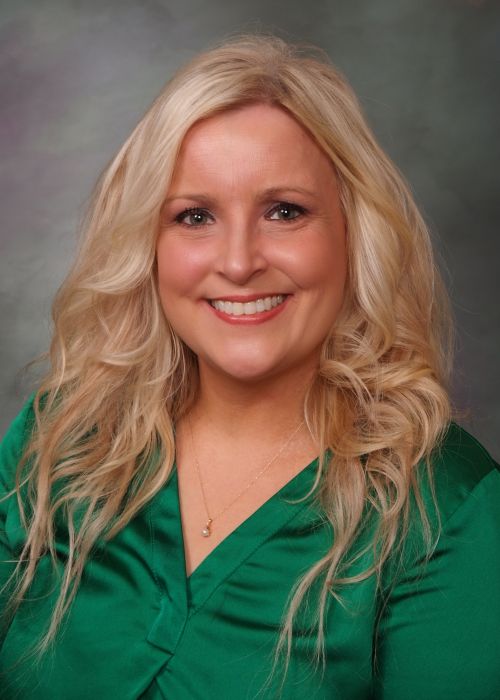
Rep. Gretchen Rydin
Sponsored bills
Beginning on January 1, 2028, a health insurance carrier (carrier) of an individual or group health benefit plan in Colorado (plan) shall, when calculating a covered person's contribution to an out-of-pocket maximum or cost-sharing requirement under the plan, account for and credit to the covered person's contribution an out-of-pocket expense that the covered person incurs by purchasing a prescription drug directly from a pharmacy or direct-to-consumer platform (contribution credit). The carrier shall apply the contribution credit to the out-of-pocket maximum or cost-sharing requirement that is applicable in the plan year in which the out-of-pocket expense was incurred. To receive a contribution credit, a covered person must provide to the carrier proof of payment for a direct purchase of a prescription drug, such as an itemized receipt or pharmacy record, within 90 days after making the purchase (proof of payment). The carrier may request additional information or documentation if the proof of payment is insufficient or incomplete. The carrier shall not apply a contribution credit in the following circumstances:For an amount of a covered person's out-of-pocket expense incurred by the direct purchase of a prescription drug that is greater than the amount the covered person would have incurred if they had obtained the same prescription drug in the same plan year from an in-network pharmacy and pursuant to the terms of their plan;If the covered person does not provide proof of payment;If the covered person incurred the out-of-pocket expense by purchasing a prescription drug that is not covered under the formulary of the covered person's plan, unless the carrier grants an exception; orIf the covered person does not comply with the carrier's utilization management processes, including prior authorization and step therapy protocols required under the covered person's plan.(Note: This summary applies to this bill as enacted.)

Maddy summaryHR 1007 is a commemorative resolution honoring Colorado's 150th anniversary of statehood in 2026. The bill directly affects the people of Colorado and various government officials by formally recognizing the state's history, culture, and achievements. Its key provisions call on citizens to celebrate this milestone with gratitude and dedication to liberty while committing to preserve natural resources, promote civic education, and strengthen infrastructure. The resolution does not create new laws or funding but serves as a symbolic acknowledgment of the state's legacy and future goals.
The act prohibits employers from making deductions from the wages or compensation of an employee for personal protective equipment. The act also requires an employer with 500 or more employees who are engaged in the slaughter of livestock or the rendering or packaging of meat to provide its employees reasonable access to restrooms. The division of labor standards and statistics in the department of labor and employment may fine an employer who fails to provide restroom access.(Note: This summary applies to this bill as enacted.)

Maddy summaryThis bill is a resolution that formally honors Colorado law enforcement officers for their service and sacrifices. It expresses gratitude for their role in protecting communities and encourages residents to engage with police to build trust. The measure does not create new laws or funding but serves as a public acknowledgment of officers' work and challenges.
The act creates the retail theft prevention advisory board (advisory board) in the division of criminal justice in the department of public safety (division). The advisory board shall develop procedures related to applying for a grant for the retail theft prevention grant program created in the act; review grant applications and award grants; collect and analyze data related to organized felony-level retail theft and gift card fraud trends, losses, prosecutions, and outcomes in Colorado; and develop policy recommendations in coordination with state and federal partners on how to combat felony-level retail theft and gift card fraud. The act creates the retail theft prevention grant program in the division. A state or local law enforcement agency, district attorney's office, multijurisdictional or regional task force, or tribal law enforcement agency may apply for a grant, which may be used to investigate and prosecute organized felony-level retail theft or gift card fraud; develop or invest in technology, data-sharing systems, and analytics tools to analyze felony-level retail theft and gift card fraud metrics; provide training and technical assistance to retailers or law enforcement agencies; and develop prevention and deterrence initiatives specific to felony-level retail theft and gift card fraud. Beginning January 2028, the act requires the division to annually report during its 'SMART Act' hearing certain information about the retail theft prevention grant program and felony-level retail theft in Colorado. The act extends the crime prevention through safer streets grant program (safer streets grant program) to November 1, 2029, and makes the retail theft prevention grant program an allowable use of the money appropriated for the safer streets grant program. On July 1, 2027, $200,000 of the unexpended and unencumbered money remaining at the end of the 2026-27 state fiscal year from the money appropriated for the safer streets grant program reverts to the general fund.(Note: This summary applies to this bill as enacted.)
The act requires the department of corrections (department) to furnish an individual being discharged from the department's custody a release allowance of at least $100, free of any deductions. Beginning by September 15, 2027, and annually thereafter, the department is required to collect and report discharge data, including the number of individuals released from department correctional facilities, the number and percentage of released individuals who received the release allowance, and the total amount of money spent on release allowances. The department must issue a report to the general assembly annually. The act repeals provisions requiring the department to give an individual a ticket to leave prior to discharging the individual from a correctional facility. The act requires eligible offenders to participate in the department's existing program to procure state-issued identification cards for offenders (program), unless the offender affirmatively opts-out of the program. Beginning by September 15, 2027, and annually thereafter, the department is required to collect data on the process of securing necessary identification documents to issue state identification cards and issue a report to the general assembly. The report must include the number and percentage of offenders released with an identification card, birth certificate, and social security number and the number and percentage of offenders who were ineligible to participate in the program and the reason for ineligibility. The department is prohibited from charging an offender a fee to obtain a state identification card, and any fee incurred in the process of securing an offender's identification documents to create the state identification card must be assessed after the offender has been released and may be consolidated with existing restitution, fees, or other legal financial obligations owed by the offender. The department of public health and environment shall assist the department in securing necessary identification documents.(Note: This summary applies to this bill as enacted.)
With certain exceptions, the act prohibits an employer or an employer's agent from demanding, confiscating, retaining, or otherwise requiring an individual who is an employee or an applicant for employment or who is performing work or seeking to perform work for the employer in any capacity, including a migrant worker or seasonal employee, to surrender the individual's government-issued identification card. A person that knowingly violates the act's prohibition commits criminal possession of an identification document, which is a class 2 misdemeanor. A person commits a bias-motivated crime if, with the intent to intimidate or harass another individual, in whole or in part, because of that individual's actual or perceived race, color, religion, ancestry, national origin, physical or mental disability, sexual orientation, or transgender identity, the person:Violates the act's prohibitions; orProvides, or threatens to provide, an individual's government-issued identification document to federal immigration authorities, except where required or permitted by state or federal law. Such a bias-motivated crime is a class 1 misdemeanor, and a victim may seek additional remedies available under law.(Note: This summary applies to this bill as enacted.)
The act requires that school districts test the vision of students in pre-kindergarten, in addition to testing the vision of students in kindergarten and the first, second, third, fifth, seventh, and ninth grades. The act updates terminology by replacing the word 'sight' with the word 'vision'.(Note: This summary applies to this bill as enacted.)
The act prohibits individuals lawfully permitted to provide psychotherapy services in the state (regulated professionals) from allowing an artificial intelligence system (AI system) to interact with clients in any form of therapeutic communication without synchronous, real-time interaction between the regulated professional, the AI system, and the client, or generate therapeutic recommendations or treatment plans without review and approval by the regulated professional. Except for educational, administrative, simulation, or training purposes or as part of a research program, a regulated professional shall not use an AI system to provide, direct, or guide psychotherapy, clinical intervention, counseling, diagnosis, treatment planning, or other activity that constitutes the practice of psychotherapy with an individual or group unless the use satisfies the conditions specified in the act. At initial client contact, a regulated professional shall inform clients of the prohibitions regarding use of AI systems in the practice of psychotherapy. Regulated professionals may be disciplined by the appropriate licensing board in the department of regulatory agencies for violations of this act. The act allows regulated professionals to use an AI system to assist in providing administrative support or supplementary support, as these terms are defined in the act, for psychotherapy services if the regulated professional maintains responsibility for reviewing any outputs of the AI system used to provide administrative support or supplementary support. If a client's therapeutic session will be recorded or transcribed through the use of an AI system, the regulated professional must disclose in advance the use of an AI system and the purposes for its use, and obtain written, informed consent from the client. The act does not prohibit a regulated professional from using an AI system within accredited or approved educational, instructional, or professional training programs, so long as the AI system is used solely for educational, administrative, simulation, or training purposes and is not deployed, marketed, or represented as a tool for use with clients, patients, or the public. Further, a regulated professional may be involved in the development, testing, or evaluation of an AI system solely for research purposes under the oversight of a federally registered institutional review board, so long as the AI system is not offered to consumers or used outside of the research setting. The act does not apply to regulated professionals who use or recommend the use of technology in the state that does not diagnose or treat mental health disorders, clearly discloses that the technology is not a substitute for clinical care, and:Provides self-help, therapeutic homework, coaching, patient navigation, guided meditation, journaling, or other tools specified in the act; orIs regulated by the federal food and drug administration. Except as provided in the act, the act also makes it an unfair or deceptive trade practice under the 'Colorado Consumer Protection Act' for an individual, corporation, or entity (person) to use any term, letter, or phrase in the use of an AI system in a manner that:Indicates or implies that the AI system's outputs are provided by, endorsed by, or equivalent to services provided by a regulated professional;Represents that the AI system provides psychotherapy services; orRepresents that a user's data is confidential in a manner that would lead a reasonable user to believe that the privacy of their data is protected in a manner similar to therapist-client confidentiality. The act does not impose liability on a regulated professional for defects in or failures of an AI system that are attributable to the developer or deployer of the AI system. Further, under conditions specified in the act, nothing in the act prohibits a person from developing, testing, or evaluating an AI system solely for research purposes or using an AI system in educational, instructional, or training programs. In addition, it is not an unfair or deceptive trade practice for a person to use a technology that does not diagnose or treat mental health disorders, clearly discloses that the technology is not a substitute for clinical care, and:Provides self-help, therapeutic homework, coaching, patient navigation, guided meditation, journaling, or other tools specified in the act; orIs regulated by the federal food and drug administration.(Note: This summary applies to this bill as enacted.)