

The act allows the attorney general to disclose to law enforcement personnel any materials or information obtained through the implementation or operation of the safe2tell program (program) if the attorney general reasonably deems such disclosure necessary for the prevention of imminent physical harm or serious bodily injury to one or more persons.The act permits a court to issue a court order for production of records upon the request of a law enforcement agency, public safety agency, or district attorney, under seal, for program materials identifying a reporting party if the court, following an in camera review, determines probable cause exists that a reporting party to the program knowingly used the program in the commission of false reporting of an emergency and release of program materials is justified on balance in view of the probable violation and the program purpose of anonymity. The court may lift the sealing only on a motion of a district attorney upon showing of good cause following an in camera review of the information. If charges are filed against a person that rely on the information provided pursuant to the court order, the sealing order automatically expires and the information is subject to discovery obligations.The program produces awareness and educational materials for the program. The act requires those materials to include an explanation of the circumstances when a student's report may not remain anonymous.(Note: This summary applies to this bill as enacted.)
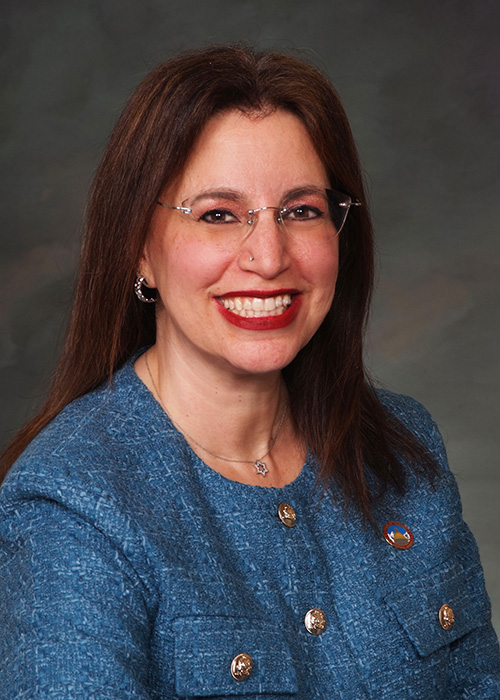
Rep. Dafna Michaelson Jenet
Sponsored bills
The act creates an option for a person with a disability that interfere's with the person' ability to effectively communicate with a peace officer to request that the department of revenue (department) place a discreet disability identifier symbol on the person's driver's license or identification card. The symbol must represent all types of disabilities, such as cognitive disabilities, neurological diversities, mental health disorders, sensory needs, chronic illness, chronic pain, and physical disabilities. The person may also choose to have the disability information removed from the driver's license or identification card and the department will issue a new driver's license or identification card. There is no fee to either place the symbol on or remove the symbol from a driver's license or identification card.The act also requires the department to collect information that the owner of a vehicle voluntarily discloses about the disability of a person who is either authorized to drive, or a regular passenger of, the registered vehicle. The department shall make this information immediately available to a peace officer who queries information about the registered vehicle. The vehicle owner may also choose to have the disability information removed from the vehicle registration information.The department is required to notify peace officers about the creation of the disability identifier symbol and the availability of information regarding the disability of a driver or passenger of a motor vehicle.By January 15, 2023, and each year thereafter, the department is required to report to legislative committees the percentage of persons who register a vehicle and have disclosed disability information.To implement the act, $89,298 is appropriated from the general fund to the department of revenue.(Note: This summary applies to this bill as enacted.)
The act creates a regulatory framework for individuals practicing as radon measurement professionals or radon mitigation professionals. On and after July 1, 2022, an individual is prohibited from practicing as a radon measurement professional or radon mitigation professional unless the individual is licensed by the director of the division of professions and occupations in the department of regulatory agencies. The act establishes the requirements to qualify for a license, exemptions to the licensure requirements, and the grounds upon which disciplinary action may be taken against a licensee.The regulation of radon professionals is scheduled to repeal on September 1, 2027. Before the repeal, the regulatory provisions are scheduled for sunset review by the department of regulatory agencies.The act appropriates $63,134 from the division of professions and occupations cash fund to the department of regulatory agencies to implement the act. Of this total amount, $40,308 is allocated to personal services, $6,875 is allocated to operating expenses, and $15,951 is allocated and reappropriated to the department of law for the provision of legal services.(Note: This summary applies to this bill as enacted.)
The act:Specifies title use restrictions for certified addiction specialists, certified addiction technicians, and addiction counselor candidates; Establishes clinical supervision privileges for licensed and certified addiction counselors to provide supervision of persons working toward certification or licensure; and Clarifies the education and hours of practice required to be certified or licensed as an addiction counselor and the scope of practice of licensed addiction counselors. Expands the practice of a certified addiction technician and requires the state board of human services to promulgate rules that include education requirements for certified addiction technicians, certified addiction specialists, and licensed addiction counselors.(Note: This summary applies to this bill as enacted.)
The act continues the requirement that an opioid prescriber must adhere to the limitations on prescribing opioids.The act continues the funding for the medication-assisted treatment expansion pilot program for the 2020-21 fiscal year and each year thereafter.The act creates the regional health connector workforce program in the University of Colorado School of Medicine to educate health-care providers on evidence-based and evidence-informed therapies and techniques; provide support and assistance to primary care providers as a link between multiple services to improve community health; assist primary care practices and community agencies in connecting patients with mental health or substance use disorders to support and treatment options; educate health-care providers; and provide clear information to providers and community members about COVID-19.The act expands the Colorado State University AgrAbility project (project) by providing funding for the project's rural rehabilitation specialists to provide information, services, and research-based, stress-assistance information, education, suicide prevention training, and referrals to behavioral health-care services to farmers, ranchers, agricultural workers, and their families to mitigate incidences of harmful responses to stress experienced by these individuals.The act continuously appropriates money to the harm reduction grant program.No later than July 1, 2023, the department of health care policy and financing (HCPF) shall contract with one or more independent review organizations to conduct external reviews requested for review by a medicaid provider when there is a denial or reduction for residential or inpatient substance use disorder treatment and medicaid appeals have been exhausted.No later than October 1, 2021, HCPF shall consult with the office of behavioral health (OBH), residential treatment providers, and managed care entities (MCE) to develop standardized utilization management processes to determine medical necessity for residential and inpatient substance use disorder treatment, which processes must be incorporated into existing MCE contracts no later than January 1, 2022.No later than July 1, 2022, HCPF shall contract with an independent third-party vendor to audit 33% of all denials of authorization for inpatient and residential substance use disorder treatment for each MCE.The act requires the state medical assistance program (medicaid) to include screening for perinatal mood and anxiety disorders for the caregiver of each child enrolled in medicaid in accordance with the health resources and services administration guidelines. The screening must be made available to any caregiver, regardless of whether the caregiver is enrolled in medicaid, so long as the caregiver's child is enrolled in medicaid.No later than July 1, 2023, the Colorado department of human services (CDHS) shall develop a statewide data collection and information system to analyze implementation data and selected outcomes to identify areas for improvement, promote accountability, and provide insights to continually improve child and program outcomes.The act requires CDHS, in collaboration with the department of agriculture, to contract with a nonprofit organization primarily focused on serving agricultural and rural communities in Colorado to provide vouchers to individuals living in rural and frontier communities in need of behavioral health-care services.The act creates the county-based behavioral health grant program in OBH to provide matching grants to county departments of human or social services for the expansion or improvement of local or regional behavioral health disorder treatment programs. The grant program repeals July 1, 2023.The act creates the behavioral health-care workforce development program in OBH to increase the behavioral health-care workforce's ability to treat individuals, including youth, with severe behavioral health disorders.No later than August 1, 2021, CDHS shall develop a program to provide emergency resources to licensed providers to help remove barriers such providers face in serving children and youth whose behavioral or mental health needs require services and treatment in a residential child care facility.The act requires CDHS, in collaboration with HCPF, to develop a statewide care coordination infrastructure to drive accountability and more effective behavioral health navigation to care that builds upon and collaborates with existing care coordination services.The act requires the center for research into substance use disorder prevention, treatment, and recovery support strategies to engage in community engagement activities to address substance use prevention, harm reduction, criminal justice response, treatment, and recovery.The act continues the building substance use disorder treatment capacity in underserved communities grant program indefinitely.The act requires the perinatal substance use data linkage project to utilize data from multiple state-administered data sources when examining certain issues related to pregnant and postpartum women with substance use disorders and their infants.No later than January 1, 2022, OBH shall use a competitive selection process to select a recovery residence certifying body to certify recovery residences and educate and train recovery residence owners and staff on industry best practices.The act requires OBH to establish a program to provide temporary financial housing assistance to individuals with a substance use disorder who have no supportive housing options when the individual is transitioning out of a residential treatment setting and into recovery or receiving treatment for the individual's substance use disorder.The act creates the recovery support services grant program for the purpose of providing recovery-oriented services to individuals with a substance use disorder or co-occurring substance use and mental health disorder.The act removes the requirement that the office of ombudsman for behavioral health access to care (office) enter into a memorandum of understanding with CDHS and subjects the office to state personnel and fiscal rules.The act continues the appropriation to the maternal and child health pilot program indefinitely.The act continues the program to increase public awareness concerning the safe use, storage, and disposal of opioids and the availability of naloxone and other drugs used to block the effects of an opioid overdose.The act requires a correctional facility or private contract prison to offer a person in custody, upon release from the facility, at least 2 doses of an opioid reversal medication and education about the appropriate use of the medication.The act removes municipal, county, or fire program district fire stations from the definition of "safe station" as it relates to the disposal of controlled substances.The act requires the opioid and other substance use disorders study committee to meet in the 2022 interim rather than the 2021 interim.The act requires the university of Colorado school of medicine to provide practice consultation services and stipends to health-care providers who are eligible to provide medication for opioid use disorder.The act creates the behavioral and mental health cash fund which consists of $550 million the state received from the federal "American Rescue Plan Act". The act requires the executive committee of the legislative council to create a task force to meet during the 2021 interim and issue a report with recommendations to the general assembly and governor on policies to create transformational change in the area of behavioral health.The act appropriates additional one-time money to the Colorado health service corps fund from the money received from the federal "American Rescue Plan Act".The act adds services for families with behavioral health needs as an allowable use for the high-risk families cash fund.The act continues the harm reduction grant program and the maternal and child health pilot program indefinitely.The act appropriates state money and money received by the "American Rescue Plan Act" to various state departments for certain behavioral health-related programs.(Note: This summary applies to this bill as enacted.)
The act creates the "support foster families" license plate for vehicles. A person is qualified to be issued the plate if the person makes a donation to a designated nonprofit organization that meets the act's qualifications. In addition to the normal fees for a license plate, a person must pay 2 additional one-time fees for the issuance of the plate. The fees are credited to the highway users tax fund and the licensing services cash fund, respectively.The act appropriates $14,145 for use by the division of motor vehicles to implement the act.(Note: This summary applies to this bill as enacted.)
The act creates the hospice and palliative care license plate for vehicles. A person is qualified to be issued the plate if the person makes a donation to a designated nonprofit organization. The person must also make an annual donation to the organization.In addition to the normal fees for a license plate, a person must pay 2 additional one-time fees for the issuance of the plate. One of these fees is credited to the highway users tax fund and the other fee is credited to the licensing services cash fund.To implement the act, $6,907 is appropriated to the department of revenue for use by the division of motor vehicles.(Note: This summary applies to this bill as enacted.)
Veterans who have disabilities may obtain a special license plate without paying taxes or fees for the plate or the vehicle. For additional vehicles, the veteran pays the normal fees plus 2 one-time fees of $25, one of which goes to the highway users tax fund and the other goes to the licensing services cash fund.The act creates a license plate that honors United States women veterans who have disabilities. The requirements and benefits are substantially the same as they are for a disabled veteran license plate.For the 2021-22 state fiscal year, $5,481 is appropriated for use by the division of motor vehicles to implement the act.(Note: This summary applies to this bill as enacted.)
The act establishes a temporary youth mental health services program (program) in the office of behavioral health within the department of human services (department) to facilitate access to mental health services, including substance use disorder services, for youth to respond to identified mental health needs, including those needs that may have resulted from the COVID-19 pandemic. The program reimburses providers for up to 3 mental health sessions with a youth and may provide additional reimbursement subject to available money.As soon as practicable, but no later than August 1, 2021, the department is required to enter into an agreement with a vendor to create, or use an existing, website or web-based application as a portal available to youth and providers to facilitate the program.The program is repealed, effective June 30, 2022.The act appropriates $9,000,000 to the department of human services from the general fund to implement the act.(Note: This summary applies to this bill as enacted.)