

The bill eliminates certain mandatory conditions of parole while preserving the discretion of the state board of parole (board) and parole officers to impose such conditions. Specifically, the bill removes the requirement that: The board fix the manner and time of payment of restitution as a condition of every parole; Every parolee obtain the knowledge and consent of his or her community parole officer before changing residence, instead requiring a parolee to notify his or her parole officer before any change of residence; Every parolee submit to urinalysis or other drug tests; Every parolee not associate with any other person on parole, on probation, or with a criminal record or with any inmate of a correctional facility without the permission of his or her community parole officer; and The board require every parolee at the parolee's own expense to submit to random chemical testing of a biological substance sample from the parolee to determine the presence of drugs or alcohol.(Note: This summary applies to the reengrossed version of this bill as introduced in the second house.)
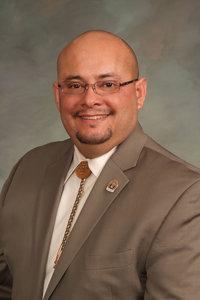
Sponsored bills
The bill clarifies the intent of the general assembly for establishing a coordinated behavioral health crisis response system (crisis system). The crisis system is intended to be a comprehensive, appropriate, and preferred response to behavioral health crises in Colorado. By clarifying the role of the crisis system and making necessary enhancements, the bill puts systems in place to help Colorado end the use of jails and correctional facilities as placement options for individuals placed on emergency mental health holds if they have not also been charged with a crime and enhances the ability of emergency departments to serve individuals who are experiencing a behavioral health crisis. The crisis system is intended to provide an appropriate first line of response to individuals in need of an emergency 72-hour mental health hold. The statewide framework created by the crisis system strengthens community partnerships and ensures that first responders are equipped with a variety of options for addressing behavioral health crises that meet the needs of the individual in a clinically appropriate setting. The bill expands and strengthens the current crisis system in the following ways: Encourages crisis system contractors in each region to develop partnerships with the broad array of crisis intervention services in the region; Requires crisis system contractors to be responsible for community engagement, coordination, and system navigation for key partners in the crisis system. The goals of community coordination are to formalize key relationships within contractually defined regions, pursue collaborative programming for behavioral health services, and coordinate interventions as necessary with behavioral health crises in the region. Increases the ability of all crisis services facilities, including walk-in centers, acute treatment units, and crisis stabilization units within the crisis system, regardless of facility licensure, to adequately care for an individual brought to the facility in need of an emergency 72-hour mental health hold; Expands the ability of mobile response units to be available within 2 hours, either face-to-face or using telehealth operations for mobile crisis evaluations; Recognizes the obligations of hospitals and hospital-based emergency departments under federal law to screen and stabilize every patient who comes to the hospital-based emergency department, including those patients experiencing a behavioral health crisis; and Requires that, on or before January 1, 2018, all walk-in centers throughout the state be appropriately designated, adequately prepared, and properly staffed to accept an individual in need of an emergency 72-hour mental health hold. The department of human services (department) shall ensure consistent training for professionals who have regular contact with individuals who are experiencing a behavioral health crisis. The department shall conduct a needs and capacity assessment of the crisis system. The office of behavioral health is required to submit a report on or before November 1, 2017, and on or before May 1, 2018, concerning the status of funding, the use of new and existing resources, and the implementation of additional behavioral health crisis services. This report is separate and in addition to the information the department is required to provide concerning the crisis system in its annual SMART report to the general assembly. The bill removes language from statute that allows, at any time for any reason, an individual who is being held on an emergency 72-hour mental health hold to be detained or housed in a jail, lockup, or other place used for the confinement of persons charged with or convicted of criminal offenses. The effective date of this component of the bill is May 1, 2018. The bill requires annual reports to the department by each emergency services facility that has treated a person pursuant to an emergency 72-hour mental health hold. The reports must only include aggregate and nonidentifying information. The reports must include information on the names and counties of involved facilities; the total number of persons treated at the facility; a summary regarding the different reasons for which persons were treated at the facility; and a summary of the disposition of the persons transferred to a designated mental health facility. An appropriation from the marijuana tax cash fund is authorized. (Note: This summary applies to the reengrossed version of this bill as introduced in the second house.)
The bill eliminates the cap on noneconomic damages for the wrongful death of a minor child. The bill clarifies that, for purposes of the wrongful death statutes, 'minor child' is defined using the general statutory definition of 'minor', which is 'any person who has not attained the age of twenty-one years'. (Note: This summary applies to the reengrossed version of this bill as introduced in the second house.)
The bill mandates funding instruction in public schools of history and civil government of the United States and Colorado, including but not limited to the history, culture, and contributions of American Indians, Hispanic Americans, African Americans, and Asian Americans. Current law requires school districts to convene community forums to discuss the content standards in history and civil government at least once every 10 years. The bill requires the forums to be held at least every 2 years. The history, culture, and civil government in education commission is established to make recommendations to the state board of education when the state board performs the scheduled review of education standards in 2018 so those standards and programs accurately reflect the history, culture, and civil government of the United States and Colorado, including the contributions and influence of American Indians, Hispanic Americans, African Americans, and Asian Americans. (Note: This summary applies to the reengrossed version of this bill as introduced in the second house.)
Currently, Columbus day is one of 10 legal holidays in Colorado. Section 2 of the bill repeals Columbus day as a state legal holiday. Consequently, in order to maintain the number of days off enjoyed by state employees, section 3 grants state employees an annual 'floating' holiday, on a day in October of each employee's choice, in accordance with rules promulgated by the department of personnel and subject to approval by each employee's supervisor. Section 1 contains a nonstatutory legislative declaration, and sections 4 and 5 make conforming amendments.(Note: This summary applies to this bill as introduced.)
The bill creates the 'Colorado Right to Rest Act', which establishes basic rights for persons experiencing homelessness, including, but not limited to, the right to use and move freely in public spaces, to rest in public spaces, to eat or accept food in any public space where food is not prohibited, to occupy a legally parked vehicle, and to have a reasonable expectation of privacy of one's property. The bill does not create an obligation for a provider of services for persons experiencing homelessness to provide shelter or services when none are available.(Note: This summary applies to this bill as introduced.)
The bill requires the department of public safety to include in its annual 'State Measurement for Accountable, Responsive, and Transparent (SMART) Government Act' hearing information concerning reports submitted by law enforcement agencies concerning crimes committed in the state during the previous year, including but not limited to information concerning reports of bias-motivated crimes. (Note: This summary applies to the reengrossed version of this bill as introduced in the second house.)
The bill prohibits a state or political subdivision from: Providing the race, ethnicity, national origin, immigration status, or religious affiliation of a Colorado resident to the federal government without determining it is for a legal and constitutional purpose; Aiding or assisting the federal government in creating, maintaining, or updating a registry for the purpose of identifying Colorado residents based on race, ethnicity, national origin, immigration status, or religious affiliation; Aiding or assisting the federal government or a federal agency in marking or otherwise placing a physical or electronic identifier on a person based on his or her race, ethnicity, national origin, immigration status, or religious affiliation; and Aiding or assisting, including using state or local lands or resources, the federal government in interning, arresting, or detaining a person based on his or her race, ethnicity, national origin, immigration status, or religious affiliation.(Note: This summary applies to the reengrossed version of this bill as introduced in the second house.)