

The act authorizes the department of higher education to enter into a limited purpose fee-for-service contract with the board of regents of the university of Colorado for allocation to programs or institutions of higher education to expand an existing rural track program. If an allocation is made to a program or institution to expand an existing rural track program, the department of higher education shall utilize a formula developed and revised annually by the rural program office, in collaboration with the institutions, that is based on data that documents the program's or institution's fulfillment of certain requirements. The act requires the rural program office to submit a report to the general assembly each year that includes the allocation formula developed by the rural program office. The act creates the rural hospital cash fund and on July 1, 2024, requires the state treasurer to transfer $1,742,029 from the general fund to the rural hospital cash fund for the purpose of distributing money in equal amounts to rural hospitals. For the 2024-25 state fiscal year, the act appropriates $866,667 from the general fund to the department of higher education for the college opportunity fund program to be used for limited purpose fee-for-service contracts with institutions of higher education. APPROVED by Governor June 6, 2024 EFFECTIVE June 6, 2024(Note: This summary applies to this bill as enacted.)
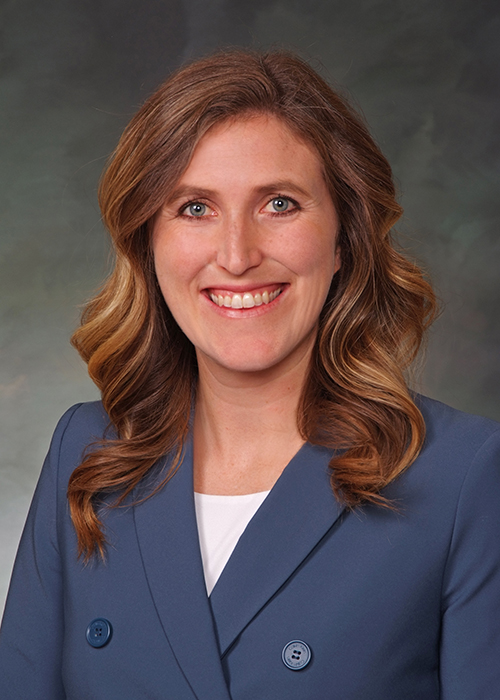
Rep. Meghan Lukens
Sponsored bills
The act creates the agricultural and rural community behavioral health program (program) in the behavioral health administration (BHA). The BHA is required to identify a specific BHA staff person to serve as a liaison between the BHA, the department of agriculture (department), behavioral health-care providers, rural community leaders, agricultural communities, and nonprofit organizations that serve agricultural communities. The program shall: Engage in statewide community outreach to educate communities on behavioral health issues facing farmers, ranchers, other agricultural industry workers, their families, and rural communities; Establish interdepartmental relationships; and Develop an understanding of and address the root causes of behavioral health issues in the agricultural industry and in rural communities. The act creates the agricultural behavioral health community of practice work group (work group) in the department. The purpose of the work group is to convene a group of leaders and experts in agriculture and behavioral health care to improve access to behavioral health care for those involved in agriculture and their families. The work group consists of at least 7 members and shall: Compile best practices to provide behavioral health care to those involved in agriculture and their families; Identify gaps in the provision of behavioral health care to those involved in agriculture; Engage with other stakeholders involved in behavioral health care focused on those involved in agriculture; Collect data, as permitted by state and federal data privacy laws, on behavioral health-care outcomes in agricultural communities and steps taken to support those involved in agriculture through behavioral health initiatives and programs; and Report to the department and the BHA on the data collected and recommend legislative or policy changes to further improve agricultural behavioral health care. The work group is scheduled for sunset review and repeal on September 1, 2029. The act establishes the agricultural behavioral health grant program (grant program) in the department. Subject to available appropriations, the department may administer the grant program. The purpose of the grant program is to: Continue existing programs or create new programs that address the root causes of behavioral health issues in the agricultural industry or in rural communities; Strengthen collaborative efforts between organizations and communities in addressing the root causes of behavioral health issues in the agricultural industry or in rural communities; and Improve access to health, wellness, and behavioral health care for farmers, ranchers, other agricultural industry workers, and their families. The act requires the department to contract with a statewide agricultural organization to convene an in-person annual summit for organizations with an interest in promoting and providing behavioral health care to agricultural communities. The department and the BHA are required to enter into an interagency agreement to share data collected in the course of addressing behavioral health-care issues in the agricultural industry and in rural communities. The interagency agreement must state that the data shared will be aggregated and anonymized, and data sharing must be in compliance with state and federal data privacy laws. On or before January 1, 2026, and each January 1 thereafter, the department is required to submit a report summarizing data collected by the work group, and data collected from grant recipients, to the agriculture, water, and natural resources committee and the health and human services committee of the house of representatives and the agriculture and natural resources committee and the health and human services committee of the senate, or their successor committees, and the BHA. On or before January 1, 2027, and each January 1 thereafter, the department shall include in the report a summary of the data collected regarding the in-person annual summit. For the 2024-25 state fiscal year, the general assembly appropriates $61,989 from the general fund for use by the department to implement the act. For the 2024-25 state fiscal year, the general assembly appropriates $145,116 to the department of human services for use by the BHA to implement the act. APPROVED by Governor June 6, 2024 EFFECTIVE August 7, 2024(Note: This summary applies to this bill as enacted.)
The act creates the educator safety task force (task force) in the office of school safety (office) in the department of public safety (department). The task force consists of the following voting members: the director of the office, teachers, education support professionals, a school support professional, school administrators, a charter school teacher and a charter school administrator, a representative of an organization representing students and families from disproportionately impacted schools, a representative of a statewide organization that represents students with disabilities, an individual who works for a nonprofit that focuses on school safety, and a restorative justice professional. The task force members must be appointed by July 31, 2024. The task force also includes the following nonvoting members: the commissioner of education, a representative of the behavioral health administration, and a student who represents a community disproportionately impacted by school discipline. The task force shall convene no later than September 1, 2024, and shall meet at least 4 times in 2024 and at least 3 times in 2025 and may hold meetings with remote participation. On or before June 30, 2025, the act requires the task force to review, investigate, and make recommendations to the education committees of the house of representatives and the senate, the governor, the state board, the commissioner of education, and the department concerning: Any issue relating to the safety and well-being of public school staff, including laws or regulations that affect the safety and well-being of public school staff; The effects of the declining number of education professionals on student behaviors, as well as the impact of widespread staff shortages and the effects of class size and caseloads on disruptive learning environments; Incidents of aggressive student behaviors toward educators; The work and recommendations of existing education task forces; The impact of insufficient funding, lack of coordination of services between school and community, and the lack of wraparound services on learning environments; and The role that resource inequality may play in staff safety issues. The act appropriates $146,250 for the 2024-25 state fiscal year for administrative services related to the office from the general fund to the department to implement the act. APPROVED by Governor June 5, 2024 EFFECTIVE June 5, 2024(Note: This summary applies to this bill as enacted.)
The act requires an applicant for an overweight motor vehicle permit to provide third-party documentation establishing the gross weight of the load if the permit application is for a vehicle and load combination that weighs at least 200,000 pounds and less than 500,000 pounds. The carrier is required to carry the documentation in the vehicle during the permitted move and produce the documentation for any state agency or law enforcement personnel. In addition to any other penalty, a driver who violates this provision is subject to a penalty of one dollar per pound in excess of the gross weight authorized by the permit. The act authorizes the department of transportation to issue a single-use overweight or oversize state permit or local permit on an expedited basis to help in an emergency. If the permit is a local permit, the applicant and the executive director of the department of transportation, or the executive director's designee, are required to make a reasonable attempt to contact and obtain the approval of the local authorities. If the department of transportation is unable to contact or obtain the approval of the local authority within a reasonable amount of time, the department of transportation may issue the local permit. If the permitted vehicle needs a law enforcement escort, the department of transportation must obtain the approval of the state patrol. The local permit fees must be collected and remitted to the local authorities. APPROVED by Governor May 31, 2024 EFFECTIVE August 7, 2024(Note: This summary applies to this bill as enacted.)
The act expands the types of programs a pathways in technology early college high school (p-tech school) may focus on beyond science, technology, engineering, and mathematics. Under current law, the college opportunity fund program provides a stipend for eligible undergraduate students in Colorado. Generally, an eligible undergraduate student is ineligible to receive a stipend for more than 145 credit hours during the student's lifetime. The act makes an exception to this lifetime limitation for college-level credit hours earned while the eligible undergraduate student was enrolled in a concurrent enrollment program, the accelerating students through concurrent enrollment program, the teacher recruitment education and preparation program, or a p-tech school. APPROVED by Governor May 30, 2024 EFFECTIVE August 7, 2024(Note: This summary applies to this bill as enacted.)
The act creates 3 new programs to be implemented and administered by the division of housing in the department of local affairs (division). The division is required to adopt policies, procedures, and guidelines for each program on or before November 1, 2024; except that, if there is insufficient funding before July 1, 2025 to implement and administer the child care facility development capital grant program, then the division is required to adopt policies, procedures, and guidelines for this program on or before November 1, 2025. For each program, consultation between the division and the department of early childhood is required for the policies the division develops and adopts to implement the programs. Additionally, the division is required to publish on its website and submit an annual report regarding the programs to specified legislative committees and to the department of early childhood. The child care facility development toolkit and technical assistance program is created to provide technical assistance from consultants and related professionals to enable interested child care providers, developers, employers, public schools, institutions of higher education, and local governments to understand the technical aspects of planning, developing, building, and co-locating child care facilities. The division must prioritize applications for projects that will meet a demonstrable need for child care in the areas of greatest need across the state and that satisfy one or more purposes of the program. The division's annual report must contain information regarding the assistance provided under this program and the uses of such assistance by program recipients. This program is available until July 1, 2028. The child care facility development planning grant program is created to incentivize and support local governments in identifying and making regulatory updates or improvements to community planning, development, building, zoning, and other regulatory processes to support the development of child care facilities. The division must develop a menu of recommended policy or regulatory tools, and eligible recipients for the grant must intend to implement one or more of such tools off the menu or identify other local policies or programs to implement to streamline the eligible recipient's regulatory environment for the development of child care facilities. The division's annual report must contain information regarding the amount of grants distributed and a description of recipients' use of the grants. This program is available until July 1, 2028. The child care facility development capital grant program is created to provide eligible entities, which are local governments, public schools, institutions of higher education, or public-private partnerships, with money to support the development of licensed child care and to construct, remodel, renovate, or retrofit a child care facility to meet a demonstrated need for child care in an eligible entity's community. The division shall utilize the state housing board within the division to review and make recommendations on grant applications. Grant recipients are required to provide a financial match. The financial match required from a grant recipient is 50% for a center-based facility and 25% for a home-based facility. More weight is given to applications that represent geographic diversity, will serve a high percentage of families below the area's median income, commit to providing a well-compensated staff, co-locate with or repurpose facilities with other uses, plan to serve children in regions with low child care capacity, or plan to serve infants and toddlers. The division's annual report must contain information regarding the amount of grants distributed and a description of recipients' use of the grants. The act also creates the child care facility development cash fund (fund) for use by the division to administer and implement the 3 programs and to make grants under the child care facility development planning grant program and the child care facility development capital grant program. On August 15, 2024, the state treasurer shall transfer $250,000 from the general fund to the fund. The money from the transfer must be used before June 30, 2025, to implement the child care facility development toolkit and technical assistance program and the child care facility development planning grant program, and the division must prioritize money first for the toolkit and technical assistance program. Then, after June 30, 2025 but before June 30, 2028, money from the transfer can be used for all 3 programs, and after July 1, 2028, but before June 30, 2029, money from the transfer may be used for the child care facility development capital grant program. Additionally, the division may receive gifts, grants, or donations to implement and administer and make grants under the child care facility development capital grant program. The division may also use $70,000 from the general fund transfer for administrative costs. For the 2024-25 state fiscal year, the act appropriates $250,000 from the child care facility development cash fund to the department of local affairs for child care facility development. APPROVED by Governor May 29, 2024 EFFECTIVE August 7, 2024(Note: This summary applies to this bill as enacted.)
Under current law, a board of county commissioners or governing body of a municipality (local government) may authorize the use of graywater within its jurisdiction. Graywater refers to certain types of wastewater that is collected from fixtures before it is treated and put to certain beneficial uses. The act authorizes the installation of graywater treatment works in new construction projects and the use of graywater statewide; except that a local government: May adopt an ordinance or a resolution prohibiting the installation of graywater treatment works or the use of all graywater or categories of graywater use within its jurisdiction; and Shall notify the division of administration in the department of public health and environment of any such local ordinance or resolution adopted and of any local ordinance or resolution adopted that authorizes a use of graywater previously prohibited. APPROVED by Governor May 29, 2024 EFFECTIVE January 1, 2026(Note: This summary applies to this bill as enacted.)
A coal transition community is a Colorado municipality, county, or region where a Colorado coal-fueled electrical power generating plant that was in operation at any time in 2017, a Colorado coal mine that was actively producing at any time in 2017, or a center for the manufacturing or transportation supply chain of such a plant or coal mine was or is located. Section 2 of the act expands the duties of the rural opportunity office in relation to coal transition communities by requiring the rural opportunity office, in coordination with county commissioners, municipal officials, local chambers of commerce and economic development organizations, institutions of higher education, private industry, and any local organizations dedicated to increased rail usage, to pursue opportunities for new, early stage, and existing businesses and support business and industry development and economic diversification in coordination with workforce training opportunities and existing state and federal programs that are designed for coal transition communities. Section 3 prohibits contracts for the right to use the Moffat tunnel for more than 99 years. Section 4 allows the department of local affairs to convey or transfer ownership of all tangible property, real and personal, or any interest in property owned by the Moffat tunnel improvement district for less than fair market value if the department of local affairs finds that such a conveyance and transfer is in the public interest. Section 5 creates 2 income tax credits. The first income tax credit is a fully refundable income tax credit (freight tax credit). The freight tax credit incentivizes taxpayers to incur costs in the use of freight rail transportation of freight that either originates or terminates at a business located in a coal transition community and on a rail line in this state that the department of transportation has determined is at risk of inactivity or abandonment due to a lack of demand resulting from coal transition (relevant costs). The Colorado office of economic development (office) administers the freight tax credit and may annually reserve up to $5 million worth of tax credits on or after January 1, 2025, but prior to January 1, 2036. A taxpayer must apply to the office for the reservation of the freight tax credit. After the office reserves the freight tax credit for a taxpayer, the office may issue the taxpayer a tax credit certificate in an amount equal to 75% of the relevant costs both stated in the taxpayer's tax credit application and incurred by the taxpayer. The second income tax credit created in section 5 is also a fully refundable income tax credit (operator tax credit). The operator tax credit incentivizes railroad operators to maintain rail line access to coal transition communities. For income tax years 2027 through 2037, a common carrier engaged in the transportation of freight on a rail line designated by the department of transportation (department) as a "qualified rail line" is allowed a credit in an amount stated in a tax credit certificate issued by the department. The amount in a tax credit certificate must not exceed 75% of the direct operating and capital improvements necessary to maintain or improve a qualified rail line as stated in the taxpayer's tax credit application and incurred by the taxpayer. The department is required to designate a rail line as a qualified rail line if the department determines that the rail line is at risk of inactivity or abandonment and is covered by an access agreement for passenger rail access. A taxpayer must apply to the department for the issuance of an operator tax credit certificate. The department may annually issue up to $5 million of operator tax credits. The operator tax credit is subject to recapture if the taxpayer does not meet one or more of the service criteria specified in an access agreement for the qualified rail line. Current law establishes a number of criteria for any municipality, county, or group of contiguous municipalities or counties to propose an area of such municipality, county, or group of municipalities or counties to be designated as an enterprise zone. Section 6 allows an area that is both a rural area and a tier one transition community, as defined by law, to be proposed as an enterprise zone. A business in an enhanced rural enterprise zone can earn a tax credit for hiring new employees. Section 7 designates the portion of any county that is a tier one transition community as an enhanced rural enterprise zone. APPROVED by Governor May 29, 2024 EFFECTIVE August 7, 2024(Note: This summary applies to this bill as enacted.)
The act continues the rural jump-start zone grant program (grant program) until July 1, 2025, and the grant money in the rural jump-start grant fund account reverts to the general fund on June 30, 2025. The act changes the total allowable administrative cost of the grant program from $100,000 per fiscal year to $300,000 total for the sum of all fiscal years that the grant program is in effect. The new business income tax credit and the new hire income tax credit, which are benefits under the grant program, are extended for 5 years and are available for income tax years commencing before January 1, 2031. The act prohibits the Colorado office of economic development (office) from approving more than 3 rural jump-start zones in counties with populations of less than 100,000 in any year. The number of credit certificates that the office may issue in each approved rural jump-start zone in one income tax year for all new hires employed by all new businesses is increased from 300 to 600 for businesses that are in one of the 14 industries that the office targets for economic development in the state. The act appropriates $873,304 from the rural jump-start zone grant fund account to the office of the governor for use by economic development programs. To implement the act, the office may use this appropriation for rural jump-start. APPROVED by Governor May 29, 2024 EFFECTIVE May 29, 2024(Note: This summary applies to this bill as enacted.)
Before transferring or negotiating to transfer any subdivision or part of a subdivision, a developer is required to apply for registration with the real estate commission (commission). Current law requires that, with permission from the commission, any reservation fees that a developer receives from prospective purchasers while the developer's registration application is pending must be held in trust by a third party and be fully refundable. If the subdivision is a time share estate, the act requires that, after the commission has approved a developer's registration application, any earnest money received by the developer from a prospective purchaser must be held in trust by an independent third party. The act creates an exception to this requirement for earnest money deposits received from an accredited investor. A developer may use funds from an accredited investor's deposit for development purposes only if the purchase contract or other written disclosure clearly sets forth: To whom the funds will be delivered; When the delivery will occur; How the funds will be used; and Any restrictions on the use of the funds. APPROVED by Governor May 28, 2024 EFFECTIVE August 7, 2024(Note: This summary applies to this bill as enacted.)