

Under current law, there are requirements of an athletic association, an institution of higher education, and a student athlete regarding a student athlete's compensation for their name, image, or likeness. The act extends these requirements to an individual who is eligible to engage in an intercollegiate sport. The act allows an institution of higher education or athletic association to compensate a student athlete for the use of the student athlete's name, image, or likeness. Under current law, a student athlete is prohibited from entering into a contract if it conflicts with a team contract. The act repeals this prohibition and related provisions. The act requires each institution of higher education to submit to the department of higher education a copy of its annual report to the organization with authority over intercollegiate athletics, including information concerning gender- and sport-based spending. Under the "Colorado Open Records Act", the act exempts from the public right of inspection personally identifiable information that is contained within an agreement or contract concerning a student athlete's or prospective student athlete's name, image, or likeness, or any communication or material related to an agreement or a contract concerning a student athlete's or prospective student athlete's name, image, or likeness. (Note: This summary applies to this bill as enacted.)
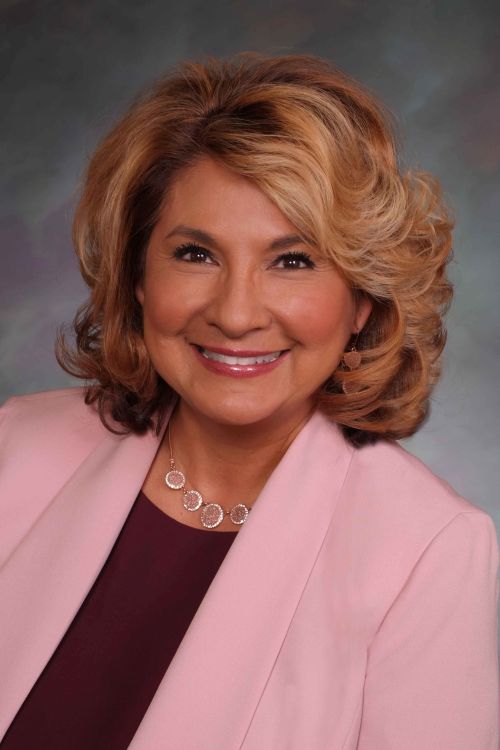
Sponsored bills
Backflow is the reverse flow of water, fluid, or gas caused by back pressure or back siphonage. Under current law, individuals who are engaged in the business of installing, removing, inspecting, testing, or repairing backflow prevention devices are subject to the licensure requirements for plumbers, except when the individuals are installing or testing a stand-alone fire suppression sprinkler system. The act exempts individuals engaged in the business of inspecting, testing, or repairing backflow prevention devices from licensure requirements but retains the licensure requirements for individuals engaged in the installation or removal of the devices; except that individuals who install or replace a backflow prevention device on a stand-alone fire suppression system remain exempted from the licensure requirements. The act requires that, on and after July 1, 2025, a licensed plumber who installs, tests, inspects, repairs, or reinstalls a backflow prevention device and a certified cross-connection control technician or a licensed plumber with a cross-connection control technician certification who tests or repairs a backflow prevention device must affix a tag on the backflow prevention device that contains certain information about the licensed plumber, the certified cross-connection control technician, or the licensed plumber with a cross-connection control technician certification, as applicable, and the service that was provided. (Note: This summary applies to this bill as enacted.)
Under current law, owners of certain large buildings (covered buildings) are required to annually collect and report each covered building's energy use to the Colorado energy office. The act clarifies that agricultural buildings are not covered buildings, and therefore, owners of agricultural buildings are exempt from the energy use collecting and reporting requirements. The act defines an agricultural building as a building or structure used to house agricultural implements, hay, unprocessed grain, poultry, livestock, or other agricultural products or inputs primarily for the purpose of maintaining or operating an agricultural process. Agricultural implements include certain agricultural equipment and do not include implements that are primarily for rent or sale. The act permits an owner of an agricultural building to submit for an affirmative exemption from any requirement to report benchmarking data and for an exemption to remain valid until there is a change in ownership or a change that renders the building no longer an agricultural building. For the duration of an exemption, the owner of an agricultural building is required to certify, upon request, the exemption status of an exempt building. (Note: This summary applies to this bill as enacted.)
The bill requires employers to implement protections for workers who are exposed to extreme hot and cold temperatures at the worksite, including temperature mitigation measures, rest breaks, and temperature-related injury and illness prevention plans. (Note: This summary applies to this bill as introduced.)
The public employees' retirement association (PERA) board (board) conducts or causes to be conducted an actuarial experience study of PERA and a periodic actuarial audit of PERA. Both the actuarial experience study and the periodic actuarial audit, neither of which were referenced in law prior to passage of the act, are conducted approximately once every 5 years, but the timing of the actuarial experience study and the periodic actuarial audit is not aligned. The act requires the board to conduct or cause to be conducted the actuarial experience study every 4 years, beginning with the actuarial experience study that the board conducted in the 2024 calendar year, rather than every 5 years. In addition, the act requires the board to conduct or cause to be conducted the periodic actuarial audit of PERA in the 2026 calendar year and every 4 years thereafter , rather than every 5 years, and to ensure that each periodic actuarial audit takes into consideration the results and findings of the most recent actuarial experience study that was conducted or caused to be conducted by the board. For several years, the pension review commission has been required to commission an independent review of the economic and investment assumptions used to model PERA's financial situation. The act requires the commission to commission the independent review every 4 years, rather than every 3 years, within 3 months of the release of the periodic actuarial audit of PERA conducted or caused to be conducted by the board. (Note: This summary applies to this bill as enacted.)
The state maintains a stockpile of essential materials (stockpile), including personal protective equipment, that the division of homeland security and emergency management (division), in consultation with the department of public health and environment, is authorized to distribute in response to a declared disaster emergency to any state agency, school, local public health agency, hospital, primary care provider, other health-care provider, tribal government with jurisdiction in Colorado, or other entity or individual (eligible recipient) that the director of the division (director) determines is in need as a result of a declared disaster emergency. The act broadens the authority of the director over the stockpile so that the director or the director's designee may distribute essential materials from the stockpile: After the governor has declared a disaster emergency; When the director or the director's designee determines that there are other circumstances in which there is a need for or benefit to distribution; or When the director or the director's designee determines that their distribution will enhance the ability of eligible recipients and their community partners to respond to future disaster emergencies or other circumstances in a way that would help protect public health or safety, including the distribution of essential materials for the purposes of ensuring that they can be used in normal, nonemergency times before their useful life ends. While included under current law as "any other entity", the act also explicitly adds "nonprofit organizations" and "faith-based organizations" to the statutory list of eligible recipients. The act also requires the department of public safety to annually include, as part of its presentation during its "SMART Act" hearing, specified information concerning the acquisition of essential materials for and distribution of essential materials from the stockpile. (Note: This summary applies to this bill as enacted.)
Beginning with the judicial department's 2026 "SMART Act" hearing, the act requires the state court administrator to report statistics concerning restitution payments received and owed during the previous 5 state fiscal years. (Note: This summary applies to this bill as enacted.)
The act substitutes gender-neutral language for gendered language in title 35, a title concerning agriculture, of the Colorado Revised Statutes. The act also updates archaic language in title 35. (Note: This summary applies to this bill as enacted.)
The act allows a candidate who is on the ballot for an election for the office of United States congress, state office, or district office of state concern and is subject to a recount to select one watcher in addition to any watchers otherwise selected for the recount. The act also allows a candidate that is on the ballot for an election coordinated by the county clerk and recorder that is not for the office of United States congress, state office, or district office of state concern and is subject to a recount to select one watcher for the recount in addition to any watchers otherwise selected for the recount. (Note: This summary applies to this bill as enacted.)
The act grants a right for defense counsel to review a tangible object related to a criminal case at least 35 days before a trial, except for cases involving sexually exploitative material, and create confidential work product following their review. Law enforcement shall designate a specific location for the evidence viewing and be present during the evidence viewing to ensure chain of custody and integrity of the evidence. The act does not limit the defense's ability to request testing or a hearing, or the court's ability to conduct a hearing, on a tangible piece of evidence. Law enforcement officers and other state officials may record an evidence viewing by either the prosecution or the defense for the purpose of ensuring the chain of custody, integrity, or safety of the evidence held by the law enforcement agency, and must provide notice to the prosecuting authority and defense if a recording occurs. Law enforcement may view the recording for purposes of organization or cataloguing the evidence, or as authorized by a court order. A trial court may enter protective orders relating to a recording of an evidence viewing. When a member of the defense team is viewing evidence and is incidentally recorded on a law enforcement body-worn camera, it is not an interaction with law enforcement for purposes of the body-worn camera statute and is not for the purpose of enforcing the law or investigating possible violations of the law. (Note: This summary applies to this bill as enacted.)