

Maddy summaryHJR 25-1019 is a symbolic resolution honoring Native American veterans' military service and contributions. It expresses recognition of their disproportionate service throughout U.S. history, including roles as code talkers in WWII and current high per-capita service rates. The resolution does not create new programs, funding, or legal obligations; it solely affirms Colorado's commitment to acknowledging their sacrifices and addressing unique hardships faced by Native American veterans. It directly affects Native American veterans, service members, and their communities in Colorado, particularly those connected to tribes like the Southern Ute and Ute Mountain Ute. The resolution passed both chambers of the Colorado legislature in February 2025 as a non-binding statement of support.
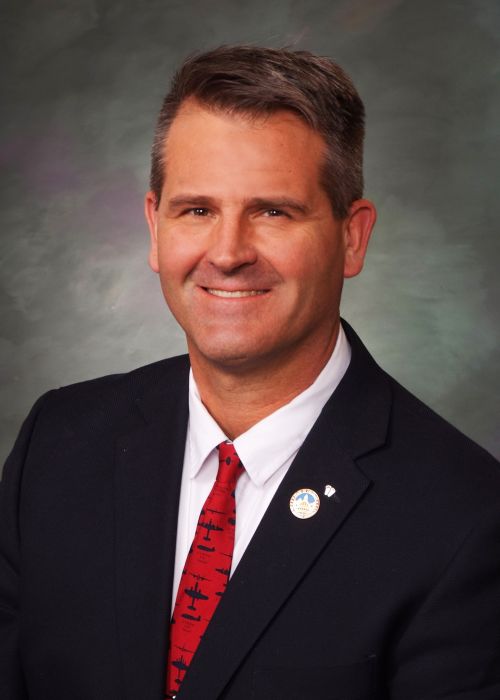
Rep. Ken DeGraaf
Sponsored bills
Maddy summaryHJR 25-1020 is a symbolic resolution recognizing the contributions and historical service of African American veterans. It formally acknowledges their service across all U.S. military conflicts since the Revolutionary War, including challenges they faced with segregation and discrimination. The resolution highlights key milestones like the 1.25 million African Americans who served in WWII and the 1948 desegregation order (Executive Order 9981), while noting ongoing barriers to full equality. It does not create new benefits, policies, or legal obligations - it solely serves as a statement of recognition. The resolution passed unanimously in both chambers in early 2025.
Maddy summaryHJR 25-1010 is a symbolic resolution designating Colorado's Military, Veterans, and POW/MIA Appreciation Day to honor active service members, veterans, and their families. It expresses legislative gratitude for military contributions, supports installations like Fort Carson, and encourages Coloradans to participate in annual celebrations. The resolution does not create new laws or programs but serves as a formal recognition of military service and sacrifice. It passed unanimously in both chambers of the Colorado legislature in early 2025.
Maddy summaryThis joint resolution commemorates the 57th anniversary of the 1968 North Korean capture of the USS Pueblo, a U.S. Navy ship named after Pueblo, Colorado. It honors the crew's bravery, notes Colorado's historical connection to the ship, and calls for North Korea to return the vessel. The resolution designates January 23 as "USS Pueblo Day" for annual remembrance. As a symbolic gesture, it has no legal effect on policy or operations.
Maddy summaryHJR 25-1013 is a symbolic joint resolution honoring Colorado veterans who served in World War II on the 80th anniversary of the war's end. It recognizes the service of approximately 250,000 Coloradans who served during 1941-1945, including over 3,500 who died in action, and specifically references Colorado's military units like the 10th Mountain Division and the 157th Infantry Regiment. The resolution encourages support for commemorating this anniversary but does not create new programs, funding, or legal obligations. As a procedural resolution, it serves only to express legislative recognition.
Maddy summaryHJR 25-1016 is a Colorado legislative resolution honoring veterans who served in the Persian Gulf War (1990-1991), including three Coloradans who died in combat. It formally acknowledges their service, honors those who made the ultimate sacrifice, expresses gratitude to families of fallen service members, and encourages all Coloradans to remember their sacrifices. The resolution does not create new laws or policies but serves as a symbolic recognition through the Colorado General Assembly. It was passed unanimously by both chambers of the state legislature in early 2025.
The act transfers all the unexpended and unencumbered money in the financial literacy and exchange (FLEX) fund to the general fund on June 30, 2025, and repeals the FLEX program on July 1, 2025. (Note: This summary applies to this bill as enacted.)
Current law requires mandatory sentencing to at least the minimum of the prescribed range for a person who, within the immediately preceding 4 years, was twice convicted of felony theft from a store and who is once again convicted of felony theft from a store. The bill requires a state court to sentence a person convicted of burglary, robbery, theft, or a related property crime from or of a store, who was convicted of any 2 of the specified property crimes or comparable municipal offenses from or of a store within the preceding 4 years, to at least the midpoint term for the current offense. The bill adds language to the existing theft statute clarifying how a gift card's value is determined for purposes of determining the offense level and associated penalty. If the stolen item of value is a gift card, then the value is the full monetary face value or, in the case of a variable load gift card, the maximum potential value, regardless of whether funds have been transferred to the gift card at the time of the theft. The bill adds gift cards to the list of written instruments subject to forgery. (Note: This summary applies to this bill as introduced.)
For property tax years commencing during property tax reassessment cycles (cycles) that begin on or after January 1, 2025, the bill changes the amount of the exemptions for the owner-occupied primary residence (residence) of a qualifying senior, a veteran with a disability, or the surviving spouse of a United States armed forces service member who died in the line of duty or veteran whose death resulted from a service-related injury or disease (exemptions) from 50% of the first $200,000 of actual value of the residence to 50% of an amount of actual value of the residence equal to 50% of the estimated state median home value (median home value) for the state; except that, if the median home value declines, the exemption amount continues to be calculated based on the median home value used to calculate the exemption amount for the property tax years included in the prior cycle. The state constitution currently only allows a senior who has owned and occupied the senior's residence for 10 years, or the surviving spouse of such a senior (surviving spouse), to claim the exemption. If at the 2026 general election the voters of the state approve a referred constitutional amendment to allow a senior or a surviving spouse who has previously qualified for the exemption for 2016 or any later year for a prior residence to claim the exemption for the senior's or surviving spouse's current residence regardless of how long the senior or surviving spouse has owned and occupied that residence, the bill makes the statutory changes needed to conform to the constitutional amendment. (Note: This summary applies to this bill as introduced.)
The state constitution currently only allows a senior who has owned and occupied the senior's primary residence for 10 years, or the surviving spouse of such a senior, to claim a property tax exemption for 50% of the first $200,000 of actual value of the primary residence (exemption). If approved by the voters of the state at the 2026 general election, the concurrent resolution will allow a senior, or the surviving spouse of such a senior, who has previously qualified for the exemption for 2016 or any later year for a prior primary residence to claim the exemption for the senior's current owner-occupied primary residence regardless of how long the senior has owned and occupied that residence. (Note: This summary applies to this concurrent resolution as introduced.)