

The act permits Emily Griffith technical college (college) to offer an associate of applied science degree program (degree program) with approval from the state board for community colleges and occupational education (board). The degree program must include a registered apprenticeship program and certain transferable general education courses. In considering the college's request to offer a degree program, the board shall consider student and workforce demand, alignment with registered apprenticeship programs, cost-effectiveness for students and the state, and accreditation and licensing requirements. An approved degree program is eligible to receive federal "Carl D. Perkins Career and Technical Education Improvement Act" funds. (Note: This summary applies to this bill as enacted.)
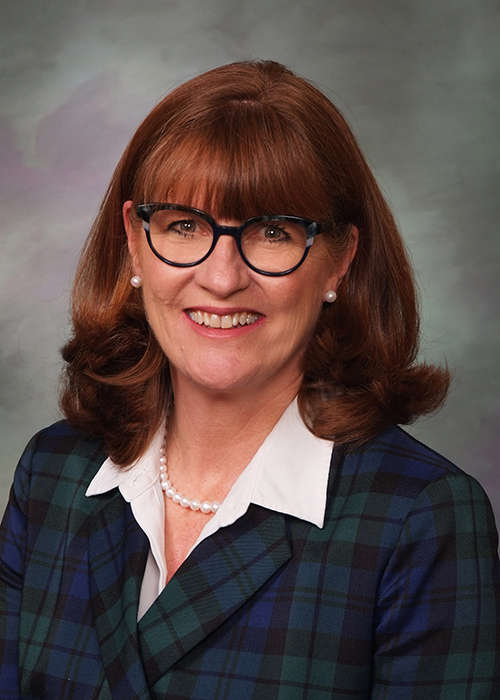
Sponsored bills
On and after April 10, 2025, the act prohibits the state and local licensing authorities (licensing authorities) from issuing a new liquor-licensed drugstore license (license). Licensing authorities may continue to renew existing licenses. On and after April 10, 2025, a person holding a license (licensee) is prohibited from changing the location of, merging, selling, converting, or transferring a license; except that a licensee that holds a license that was issued to an independent pharmacy before January 1, 2025, may change the location of or sell or transfer the license to another licensee that is an independent pharmacy that holds a license or to a person that does not already have a license. The act defines an independent pharmacy as a prescription drug outlet privately owned by at least one licensed pharmacist with no ownership interest by or affiliation with a chain or publicly owned pharmacy. The act prohibits an owner, part owner, shareholder, or person interested directly or indirectly in a liquor-licensed drugstore from having an interest in more than 8 licenses. (Note: This summary applies to this bill as enacted.)
The act requires the division of fire prevention and control, which hosts the wildfire information and resource center website and provides information regarding active wildfires on the website, to include hyperlinks to websites that display emergency information and wildfire updates for each county in Colorado and to coordinate with county governments in order to provide the hyperlinks. (Note: This summary applies to this bill as enacted.)
The Timothy Montoya task force (task force): Analyzed the root causes of why a child or youth runs away from an out-of-home placement; Developed consistent, prompt, and effective responses to recover a missing child or youth; Addressed the safety and well-being of a child or youth upon the child's or youth's return to the out-of-home placement; and Made recommendations. The act implements the task force recommendations that focus on preventing a child or youth from running away from a residential child care facility (facility). The act requires the office of the child protection ombudsman (office) to conduct a statewide inventory survey (survey) of facilities to address: The physical infrastructure currently in place to deter children and youth from running away; and The physical infrastructure needed to deter children and youth from running away. The office shall consult with the department of human services to develop the survey. On or before July 1, 2026, the office shall submit a report to the health and human services committees of the house of representatives and the senate, or their successor committees, that summarizes the results of the survey. The act requires each facility, on or before July 1, 2026, to develop an efficient, well-structured, and trauma-informed policy that outlines how the facility responds to a child or youth who threatens or attempts to run away from care. The policy must include whether the facility uses physical restraints. Each facility shall provide a copy of the policy to the child or youth and the child's or youth's parent, legal guardian, or custodian during the child's or youth's intake at the facility. When a facility discovers that a child or youth is missing from its care, the facility shall notify the child's or youth's parent, legal guardian, or custodian and the guardian ad litem or counsel for youth within 4 hours after the discovery of the missing child or youth. If the facility cannot make initial contact with the child's or youth's parent, legal guardian, or custodian, the facility must make repeated efforts to notify the child's or youth's parent, legal guardian, or custodian. (Note: This summary applies to this bill as enacted.)
Under current law, each member of a board of directors of an irrigation district (board of directors) and each judge of election of an irrigation district (judge of election) receives compensation of not more than $100 per day. In addition, a contract entered into by a board of directors that involves a consideration that exceeds $250,000 but does not exceed $400,000 must be authorized and ratified in writing by no less than one-third of the electors of the irrigation district according to the number of votes cast at the last district election. A contract that exceeds $400,000 must be authorized and ratified at an election in the manner provided for the issuance of bonds. To account for inflation, the act: Increases the amount of compensation for members of a board of directors and judges of election to up to $150 per day; and Requires that, to be binding, a contract entered into by a board of directors that exceeds $400,000 but does not exceed $650,000 must be authorized and ratified in writing by no less than one-third of the electors of the irrigation district according to the number of votes cast at the last district election, and a contract that exceeds $650,000 must be authorized and ratified at an election in the manner provided for the issuance of bonds. The act requires that the dollar amounts related to compensation of members of a board of directors and judges of election, as well as those related to contracts entered into by a board of directors, must be increased for inflation every 5 years, beginning July 1, 2029. (Note: This summary applies to this bill as enacted.)
The prosecution fellowship program in the department of higher education provides money to the Colorado district attorneys' council (CDAC) to fund fellowships for persons who have recently graduated from a law school in Colorado to allow them to pursue careers as prosecutors in rural Colorado. The program, through a prosecution fellowship committee, places up to 6 fellows in rural district attorneys' offices throughout the state each year. The act changes the prosecutor fellowship program to provide fellowship funding to rural district attorneys' offices to recruit and hire new deputy district attorneys rather than selecting and placing fellows in rural district attorneys' offices. The selected offices then use the money to recruit and hire new district attorneys. The act requires the prosecution fellowship committee to determine which rural district attorneys' offices receive funding. On or before January 1, 2028, CDAC shall provide a report to the judiciary committees regarding the prosecutor fellowship program. (Note: This summary applies to this bill as enacted.)
Colorado statute states that a marriage is valid only if it is between one man and one woman. That provision has been unenforceable since the United States Supreme Court decision in Obergefell v. Hodges , 576 U.S. 644 (2015), in which the Court ruled that same-sex couples have a fundamental right to marry. The act repeals the provision.(Note: This summary applies to this bill as enacted.)
Current law authorizes public hospitals with fewer than 50 beds to enter into collaborative agreements with other hospitals or hospital affiliates to engage in activities to increase access to health care. The act changes the law to allow public and private, nonprofit hospitals that are not owned by or affiliated with a health system that is comprised of 3 or more hospitals to enter into collaborative agreements. (Note: This summary applies to this bill as enacted.)
The act requires an individual who is licensed to practice medicine or licensed to practice as an advanced practice registered nurse to make certain disclosures to patients if the individual delegates medical-aesthetic services to an individual who is not a licensed health-care provider. (Note: This summary applies to this bill as enacted.)
The act allows a local government to seek from the state auditor an exemption from the annual audit of its financial statements if the local government's total fiscal year revenues and expenditures are each less than or equal to $200,000, instead of less than $100,000 as was previously the case. The act also allows a local government to seek from the state auditor an exemption from the annual audit of its financial statements if either the local government's total fiscal year revenues or expenditures are at least $200,000 and not more than $1,000,000, instead of at least $100,000 and not more than $750,000 as was previously the case. (Note: This summary applies to this bill as enacted.)