

Issue · Housing

Housing (Homeownership)

Every housing bill, vote, and legislator stance in Colorado, automatically classified by Maddy, our AI policy reader.

Total bills
2
2026 Regular Session
Top supporter
Marc Snyder
100% support rate
Top opponent
Larry Liston
25% support rate
Ranked legislators
3
2 support · 1 oppose
Key legislators

Who's moving homeownership in Colorado

Legislators moving homeownership in Colorado
Legislator Party Stance Support rate Votes
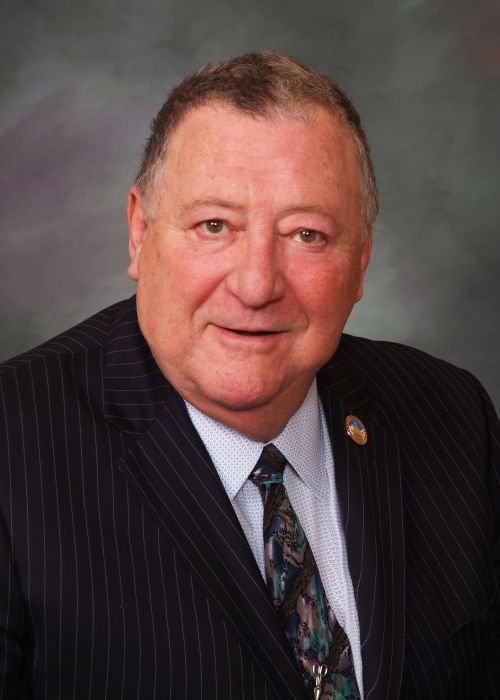
Marc Snyder
Marc Snyder Senate · District 12
D
Strong +
100% 3
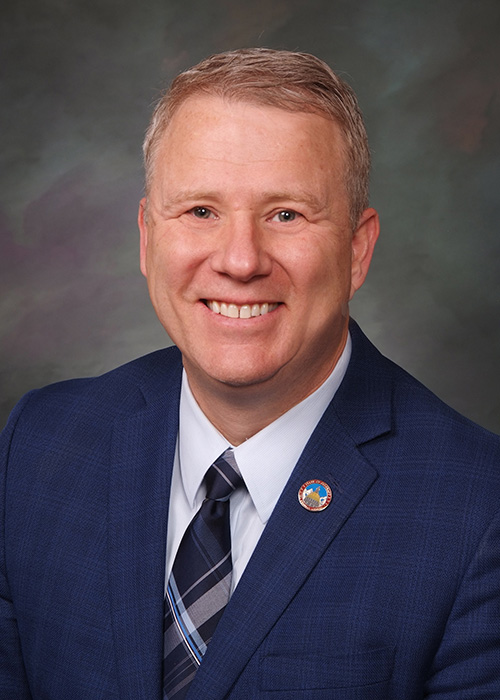
Chris Kolker
Chris Kolker Senate · District 16
D
Support
67% 3
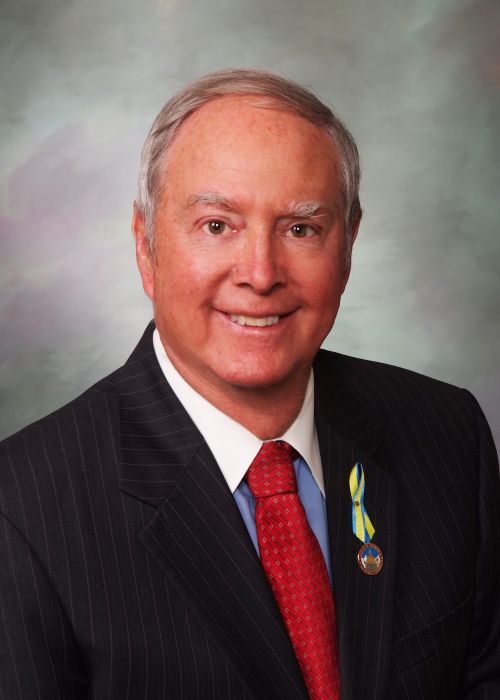
Larry Liston
Larry Liston Senate · District 10
R
Oppose
25% 4
Showing 2 of 2 bills

All housing bills

signed · Colorado · Senate Jun 4, 2026

SB 155: Increase Access Homeowner's Insurance Enterprise

The act creates the strengthen Colorado homes enterprise (enterprise), which is a government-owned business created in the division of insurance (division) in the department of regulatory agencies. The enterprise is governed by a 7-member board (board), including the commissioner of insurance (commissioner), or their designee; members with expertise in home hardening, risk mitigation, resilient roof systems, and insurance underwriting or actuarial analysis; and members representing the interests of insurance companies, consumers, and counties.     The primary purpose of the enterprise is to impose and collect an annual fee (fee) from an admitted insurance company that offers multiperil homeowner's insurance policies in the state and is subject to certain filing requirements with the division, not including the fair access to insurance requirements association (insurer).     The enterprise shall use fee revenue to provide business services to insurers that pay the fee, including:Reducing insurer losses and administrative expenses due to hail damage claims by defraying the cost of retrofitting residential property by providing grants for the installation of resilient roof systems (grants). At least 85% of the fee revenue must be used for grants to Colorado homeowners to retrofit residential property to reduce insurer losses due to hail and windstorms.Analyzing data on hail losses to identify areas of the state to target for installation of resilient roof systems;Setting standards for resilient roof systems and awarding workforce training grants for installing and certifying resilient roof systems;Creating codes of conduct for roofing contractors to ensure roofs are properly and appropriately installed;Evaluating roofing protocols to ascertain if the protocols meet science-based, certifiable standards; Conducting or contracting with a third party to conduct a study to analyze insurance risk in high-risk wildfire areas of the state; andImproving market stability throughout the state.     Beginning in the 2027 calendar year, the amount of the fee imposed and collected by the enterprise is an amount equal to 0.5% of the total premium collected by an insurer on multiperil homeowner's insurance policies in the state in the immediately preceding calender year. The insurer shall not surcharge the fee amount to policyholders. The enterprise may lower or cease collecting the fee from an insurer in any calendar year to ensure that total fee revenue does not exceed $100 million in the first 5 years of the enterprise's existence.          In awarding grants, the board shall prioritize homes that are the homeowner applicant's (applicant) primary residence and shall consider other criteria, including applicant income, the age of the roof, the size of the home, the number of grant applicants, whether the home is in a locality with hail-resistant building codes, and whether the applicant lives in a location that has historically had a higher susceptibility to extreme weather events. In order to ensure the necessary workforce, fee revenue may also be used to award grants to defray the costs of training and certification related to installing and certifying resilient roof systems. A contractor that is awarded bids and receives money from a grant is prohibited from waiving homeowner's insurance deductibles.     In addition, the board shall use fee revenue to conduct or contract with a third party to conduct a study to analyze insurance risk in high-risk wildfire areas of the state, including an analysis of market competition in those areas and the impact of a high risk program on the potential losses in the high-risk wildfire areas of the state and the availability of homeowner's insurance in those areas. The board or third party conducting the study shall engage with relevant stakeholders that include, at a minimum, representatives of reinsurers and reinsurance brokers, insurers writing homeowner's insurance contracts or policies in Colorado, individuals with expertise in complex financial instruments and debt instruments, and consumers or other individuals with expertise in wildfire mitigation. The board shall send the study to certain committees of the general assembly.          The board shall adopt rules and policies for the regulation of the enterprise's affairs and the conduct of enterprise business, including standards for resilient roof systems and standards for contractor-specialized training in the installation of impact-resistant roof systems.     No sooner than January 1, 2027, and upon the commissioner adopting rules, an insurer offering multiperil homeowner's insurance for property or risks located in the state is required to submit an annual filing to the commissioner that includes the number of policies in force, the number of homes that have installed a resilient roof system, the discount applied to homes due to the presence of a resilient roof system, and the wind and hail claims frequency and severity for homes with and without a resilient roof system.     $66,250 is appropriated from the legal services cash fund to the department of law to provide legal services to the department of regulatory agencies to implement the act. The appropriation is from revenue received from the department of regulatory agencies that is continuously appropriated to the department of regulatory agencies from the strengthen Colorado homes enterprise fund. The appropriation to the department of law is based on an assumption that the department of law will require an additional 0.3 FTE to implement the act.(Note: This summary applies to this bill as enacted.)
Sub-Topics Homeownership
signed · Colorado · Senate May 6, 2026

SB 40: Affordable Home Ownership Program

The division of housing in the department of local affairs (division) administers an affordable home ownership program (program) that makes grants to nonprofit organizations, local governments, community development financial institutions, and community land trusts (eligible organizations) and tribal governments to support affordable home ownership, including the development of residential housing units that are described in an eligible organization's funding request (project). Current law specifies that only a household with an income less than or equal to 120% of the area median income is eligible for assistance through the program, but it is unclear whether this requirement applies to housing units constructed by an eligible organization through one of its projects. The act clarifies that only a household with an income less than or equal to either 120% of the area median income of households of that size in the jurisdiction of a local government in which the households are located, or 120% of the statewide area median income of households of that size, is eligible for housing constructed by an eligible organization through one of its projects.     In addition, the act requires the program to offer housing that costs not more than 38% of a household's monthly income unless the ownership program is providing a homeowner with assistance for home rehabilitation.     The act also requires the program to offer grants and loans to groups or associations of mobile home owners and their assignees to support affordable homeownership for households with income less than or equal to 120% of the area median income of households of that size in the territory or jurisdiction of the local government in which the households are located, and specifies that the monthly housing payment must not cost more than 35% of the monthly household income. The act allows the division to modify the maximum percentage of income that a household may allocate pursuant to the program as applied to a residential unit constructed by an eligible organization as part of an affordable housing project pursuant to a waiver process initiated by an eligible organization if a substantial need for housing the project's target population exists, the unit has been adequately marketed to eligible buyers for purchase for at least 6 months after final completion of the unit, and the unit has not been purchased by an eligible buyer within that 6-month period.     For grants from the program to support tribal government programs, the tribe is responsible for establishing limitations on household income and maximum percentage of income that a household may allocate for monthly housing costs and a tribal affordability mechanism in lieu of any state-prescribed use covenant. The tribe shall submit evidence to the division that it has satisfied these requirements but is not required to disclose confidential tribal data, including the specific limitations or mechanisms it sets.     The division also administers a land banking program (land banking program) that makes grants to local and tribal governments and loans to nonprofits to acquire and preserve land for the development of affordable housing. For grants made to local governments or loans to nonprofits, the development of affordable housing includes rental housing projects with an imputed income limit by household size not to exceed 60% of area median income. Regulated units in the project must have a gross rent limit that does not exceed 30% of the imputed income limitation applicable to the units. Current law requires that a project provide for-sale housing that may be purchased by a household with an annual income of 100% of area median income. The act changes the income limit to 120% of area median income. For land banking program grants to support tribal government programs, the tribe is required to establish income limits by household size and gross rent limits and is not required to use the limits otherwise required for eligible organizations. The tribal government is required to submit evidence that it has established income and gross rent limits but is not required to disclose confidential tribal data, including what the specific limitations are.     The division may issue a waiver with housing cost limits that are different from those requested by an eligible organization if different housing cost limits would better serve needs identified in the community, the project remains financially feasible, and there are eligible buyers that meet the division's requirements. Alternatively, the division may modify the total amount of funding to account for an increase in the sales price of the unit. In lieu of this process, the division may approve an eligible organization's process for determining when to exceed the maximum monthly household income for a unit funded by the program, which shall not require a 6-month marketing period.     The division may allow an eligible organization to rent residential units constructed as part of the project. On or before December 31, 2026, the division is required to issue guidance for when units within a project may be rented and develop a process by which rented units may return to the for-sale market. A homeowner may rent a unit funded by the ownership program as long as the unit remains their primary residence.(Note: This summary applies to this bill as enacted.)