

Maddy summaryThe Pray Safe Act of 2025 establishes a Federal Clearinghouse within the Department of Homeland Security to provide research-backed safety and security resources for houses of worship (like churches, mosques, and synagogues), faith-based organizations, and nonprofit groups deemed at risk of threats. The clearinghouse will compile evidence-based safety guidelines, list federal and state grant programs for security improvements, and offer training materials on measures like facility hardening and incident response. It requires annual updates to Congress and expires four years after enactment. The bill directly supports these organizations by centralizing accessible safety resources and grant information without creating new funding.
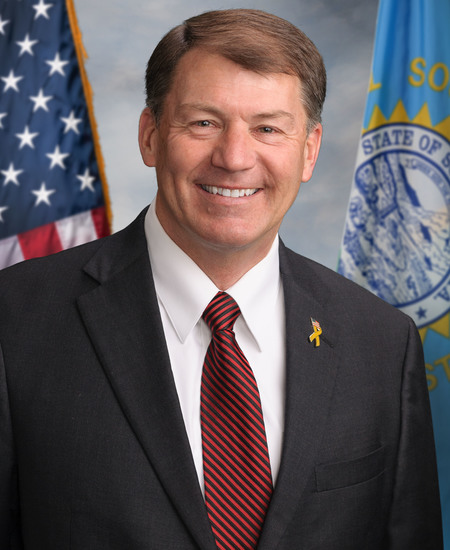
Sen. Mike Rounds
Sponsored bills
Maddy summaryS 2907, the Chloe Cole Act, prohibits health care professionals, hospitals, or clinics from performing "chemical or surgical mutilation" on minors under 18. This includes using puberty blockers, sex hormones, or surgeries intended to alter a child's body to align with a gender identity different from their sex assigned at birth. The law creates a private right of action, allowing victims or their guardians to sue providers in federal court for damages - including emotional distress and punitive damages - unless the treatment qualifies under specific exceptions (e.g., medically necessary care for disorders of sexual development, injuries, or detransition). It explicitly excludes counseling, referrals, or discussions of treatment options from liability, and sets a 25-year statute of limitations for lawsuits starting from the victim’s 18th birthday.
Maddy summarySRES 391 is a symbolic Senate resolution condemning the assassination of Charlie Kirk, a conservative campus advocate and founder of Turning Point USA, who was killed on September 10, 2025, at Utah Valley University. The resolution expresses the Senate’s strongest condemnation of the killing, extends condolences to his family (including his wife Erika and two children), and honors his work promoting civil discourse on college campuses. As a non-binding resolution, it does not create policy changes or affect any individuals through legislative action.
Maddy summaryThis Senate resolution (SRES 383) commemorates the 80th anniversary of World War II's conclusion on September 2, 1945, with Japan's surrender, honoring veterans from both the Pacific and European theaters. It specifically mourns the casualties of the Battle of Okinawa (April-June 1945), reaffirms the Treaty of San Francisco (1951), and recognizes U.S. alliances in the Indo-Pacific region formed after the war. The resolution is purely ceremonial, expressing Senate gratitude and calling for public commemoration - no new policies or direct impacts on citizens are created.
Maddy summaryThe Healthcare Workforce Resilience Act creates 40,000 new immigrant visas for nurses and physicians by recapturing unused employment-based visas from fiscal years 1992 through 2024. It reserves 25,000 visas specifically for nurses and 15,000 for physicians, available to applicants who file petitions within three years of the bill's enactment. These visas are exempt from country-based limits, processed more quickly without additional fees, and require employers to attest that hiring foreign workers won’t displace U.S. healthcare workers.
Maddy summaryThis bill amends the Federal Deposit Insurance Act to change how banks count "reciprocal deposits" (deposits from other banks) when calculating brokered funds. It sets tiered percentage limits: banks with under $1 billion in total deposits can count up to 50% of reciprocal deposits as local, while larger banks face lower percentages (40% for $1B-$10B, 30% for $10B-$250B, etc.). The rule directly affects banks that use deposit brokers, particularly medium and large institutions, by allowing them to count more reciprocal deposits toward local deposit requirements. This reduces the portion of deposits classified as "brokered," potentially easing compliance for banks seeking to maintain local deposit ratios.
Maddy summaryThis bill amends the Clean Air Act to require renewable fuel components in fuel for ocean-going vessels, alongside existing requirements for home heating oil and jet fuel. It directly affects shipping companies operating ocean vessels by mandating renewable fuel content starting in the second calendar year after enactment. The key mechanism updates the definition in the Clean Air Act to explicitly include "fuel for ocean-going vessels" in the renewable fuel requirements. The Environmental Protection Agency must issue implementing regulations within one year of the bill's enactment and submit a report to Congress one year after those regulations are finalized.
Maddy summaryThis bill amends the Bank Holding Company Act to require a minimum 15-year holding period for merchant banking investments. Banks would need to hold these investments - where they make equity stakes in non-financial companies - for at least 15 years before selling, applying to both new investments and existing ones held on the bill's enactment date. The change directly affects banks engaged in merchant banking activities by altering the regulatory timeframe for holding such investments. It modifies specific provisions of the Bank Holding Company Act without creating new programs or altering eligibility.
Maddy summaryThis bill creates a pathway for Afghan allies who supported U.S. operations in Afghanistan to obtain conditional permanent resident status in the United States. It defines "Afghan allies" as individuals who served in Afghan security forces or provided direct support to U.S. missions during the period from 2001-2021. The bill establishes a process for reviewing applications, conducting security assessments, and referring eligible individuals to the U.S. Refugee Admissions Program, with conditional permanent resident status that can be converted to full permanent residency after 4 years if certain conditions are met.
Maddy summaryThe MEDIC Careers Act of 2025 aims to improve the transition of military medics (Armed Forces clinical health care personnel) into civilian healthcare careers, such as nurse aides or medical assistants. It requires the Defense Secretary to develop recommendations addressing barriers like credential translation, standardization of military training, and access to bridge programs, with a report due within 180 days. The bill also creates a $5 million annual pilot program (2026-2030) to fund grants for healthcare providers in underserved areas, supporting hiring, training, and retention of separating military medics through license preparation and coordination with transition programs. This directly affects military medics separating from service and healthcare providers in rural or medically underserved communities.