

Maddy summaryThe FAIR Act of 2025 would prohibit companies from requiring pre-dispute arbitration agreements or waivers that prevent individuals from joining class or collective lawsuits in employment, consumer, antitrust, or civil rights cases. This directly affects workers, consumers, and small businesses who currently face forced arbitration for issues like workplace discrimination, product defects, or unfair business practices. The bill makes such agreements unenforceable while allowing voluntary arbitration after disputes arise and leaving collective bargaining agreements unaffected. It applies to all disputes occurring after the law takes effect, without changing how voluntary arbitration works post-dispute.
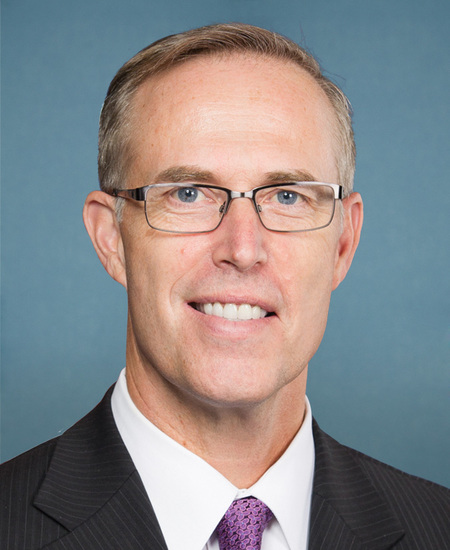
Rep. Jared Huffman
Sponsored bills
Maddy summaryHJRES 121 proposes a constitutional amendment to allow Congress and states to set reasonable limits on money raised or spent to influence elections. It would permit regulations distinguishing between natural persons (individuals) and corporations or other artificial entities, potentially restricting corporate spending in elections. The amendment explicitly states that such regulations cannot abridge press freedom. This is a proposed constitutional change requiring ratification by three-fourths of state legislatures, not yet law.
Maddy summaryHR 5309, the Congressional Tribute to Constance Baker Motley Act of 2025, authorizes a posthumous Congressional gold medal for Constance Baker Motley, a pioneering civil rights attorney and judge. The bill directs the Treasury Secretary to strike the medal with her image and name, to be presented to her son, Joel W. Motley III, and her niece, Constance Royster. It also permits the sale of bronze duplicates at cost to cover expenses, with proceeds going to the U.S. Mint fund. This is a commemorative measure with no substantive policy changes, honoring Motley’s legacy as the first African-American woman appointed to a federal judgeship.
Maddy summaryThis bill imposes a corporate tax penalty on large companies where CEO pay exceeds 50 times the average worker's pay. Specifically, corporations with a pay ratio above 50:1 face a tax rate increase of 0.5% to 5% (depending on how high the ratio is), effective for taxable years starting after 2025. It applies only to corporations with average annual revenue of at least $100 million over the prior three years, exempting smaller businesses. The penalty is calculated using a 5-year average of compensation data from SEC filings, and the Treasury will issue rules to prevent avoidance tactics like shifting to contractor workforces.
Maddy summaryHRES 697 is a symbolic House resolution recognizing suicide as a preventable public health issue and supporting the designation of September as "National Suicide Prevention Month" and September 10, 2025, as "World Suicide Prevention Day." It does not create new laws or allocate funds but formally expresses congressional support for these designations to raise awareness. The resolution cites statistics showing suicide as a leading cause of death across age groups, including among veterans and adolescents, and emphasizes mental health as equally important as physical health. It acknowledges the need for diverse prevention strategies without specifying new policies or programs. This resolution is purely declarative, aiming to bolster public awareness rather than enact concrete changes.
Maddy summaryThis bill reaffirms that certain lands taken into trust by the U.S. for federally recognized tribes under the 1934 Indian Reorganization Act remain in trust status. It specifically applies to land taken into trust before the bill's enactment for tribes that were federally recognized at the time the land was acquired. The bill does not create new policy but formally confirms existing trust status for these specific parcels. It directly affects tribes that held federal recognition when their land was taken into trust under the 1934 Act.
Maddy summaryHRES 684 is a non-binding House resolution designating September 9, 2025, as "National Firearm Suicide Prevention Day." It aims to raise public awareness about firearm suicide statistics (including that firearms were used in 55% of U.S. suicides in 2023) and promote safe firearm storage as a key suicide prevention strategy. The resolution encourages health professionals to discuss safe storage with patients and supports existing awareness efforts led by organizations like Brady and End Family Fire. It directly affects the public and healthcare providers by emphasizing evidence-based prevention practices, not by creating new laws.
Maddy summaryThe TERRA Act enables Indian Tribes to integrate funding from multiple federal programs into comprehensive plans addressing environmental threats and natural disasters, including climate impacts like flooding, erosion, wildfires, and sea level rise. The bill streamlines administrative processes by requiring only a single annual report instead of multiple reports from individual programs and allows tribes to reallocate funds across different services as needed. It establishes a streamlined permitting process for environmental reviews and creates an expedited fee-to-trust process for land acquisitions to support community-driven relocation efforts. The Act aims to reduce bureaucratic barriers while empowering tribes to address environmental challenges through their own community-driven strategies within the federal trust responsibility framework.
Maddy summaryThis resolution (HRES 680) recognizes suicide as a serious public health issue and designates September 8, 2025, as "988 Day" to highlight the national three-digit crisis hotline (988 Suicide and Crisis Lifeline). It does not create new laws or funding but formally supports existing efforts to raise awareness about the 988 hotline, which connects people in mental health crisis to 24/7 support services. The resolution emphasizes the hotline's role in suicide prevention, citing data showing it handled nearly 18 million contacts since 2022 and was reported as helpful by 98% of users. It urges continued public education about the hotline, particularly for high-risk groups like LGBTQI+ youth, and encourages broader access to mental health services.
Maddy summaryThis resolution (HRES 677) is a formal statement by the House of Representatives affirming the Federal Reserve's independence from political influence. It specifically supports Chairman Jerome Powell and the Board of Governors in making monetary policy decisions based on economic data, not political pressure. The resolution urges the President and executive branch to respect the Fed's statutory independence and avoid actions or rhetoric that could undermine its credibility. It emphasizes that maintaining this independence is critical for economic stability, price control, and global confidence in U.S. financial markets.