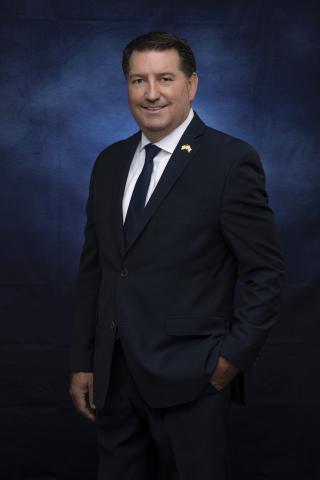
Photo of Tim Grayson
D California Senate · District 9

Sen. Tim Grayson

Compare
Total votes
25,597
all sessions
Attendance
95%
945 missed
Near the chamber average
With party
99%
of cast votes
Near the chamber average
Bipartisan score
0%
crosses aisle rarely
Near the chamber average
Sponsored
1,741
bills & resolutions
Near the chamber average
Committees
14
assignments
1,741 bills and resolutions

Sponsored bills

Total
1,741
Primary
246
Co-sponsor
1,495
This page
1,741
matching current filters
Co-sponsor AB 2713
In committee · California Assembly · Co-sponsor
Tenant protections: just cause termination: rent caps.

Existing law, until January 1, 2030, prohibits an owner, as defined, of residential real property from terminating a tenancy without just cause, stated in the written notice to terminate the tenancy, after a tenant has continuously and lawfully occupied a residential real property for 12 months. Existing law defines "just cause" to mean certain at-fault just causes, including default in the payment of rent, and certain no-fault just causes, including intent to occupy the residential real property by the owner or the owner's spouse, domestic partner, children, grandchildren, parents, or grandparents, as prescribed, withdrawal of the residential real property from the rental market, and intent to demolish or to substantially remodel the residential real property. This bill would revise the intent to occupy just-cause provision described above to mean a good faith intent to occupy the residential real property by the owner or the owner's spouse, domestic partner, children, grandchildren, parents, or grandparents for at least 3 consecutive years. The bill would, among other things, prohibit an owner from terminating a tenancy under that provision if the same owner or relative already occupies a unit on the residential real property or if there is a vacancy on the residential real property. The bill would define the term "owner" for purposes of that provision to mean an owner who is a natural person who has at least a 51% recorded ownership interest in the property. This bill would revise the withdrawal of the residential real property from the rental market just-cause provision described above to mean withdrawal of all of the rental units at the residential real property from the rental market for the purpose of changing the property's use from residential use to nonresidential use or for the purpose of selling each unit on the property for owner-occupancy, only if both of certain criteria are true and described with particularity in a notice to the tenant required to terminate the tenancy, including the owner has previously provided the tenant with a written notice of intent to withdraw the unit from the rental market and describing the intended use of the property 180 days before serving the notice to terminate the tenancy. This bill would revise the intent to demolish or to substantially remodel the residential real property just-cause provision described above by, among other things, requiring an owner to, before issuing a notice to terminate a tenancy based on that just cause, obtain any necessary permits for the demolition or substantial remodel from the applicable governmental agencies. Existing law, until January 1, 2030, prohibits an owner of residential real property from, over the course of any 12-month period, increasing the gross rental rate for a dwelling or a unit more than 5% plus the percentage change in the cost of living, or 10%, whichever is lower, of the lowest gross rental rate charged for that dwelling or unit at any time during the 12 months before the effective date of the increase, as prescribed. This bill would make unenforceable any lease provision that would result in an increase in the gross rental rate for a dwelling unit that exceeds those limits, as specified.

In committee May 26, 2022 1 co-sponsor
Co-sponsor AB 2797
In committee · California Assembly · Co-sponsor
Decarbonizing Fuels Incentive.

Existing law, the Use Fuel Tax Law (UFTL) , imposes a state excise tax on the use of fuel, as defined, at specified rates. This bill would establish in the state treasury the Carbon Neutrality Fund, and would require, for taxable years beginning on or after January 1, 2023, and before January 1, 2029, the California Department of Tax and Fee Administration to pay annually from the fund an incentive payment to a qualified taxpayer on a first-come-first-served basis, as prescribed. The bill would, among other things, require the incentive payment for a taxable year to be an amount equal to the applicable amount, as determined based on the carbon intensity of a transportation fuel, multiplied by the number of diesel gallons equivalent or gasoline gallons equivalent of qualified liquid or gaseous transportation fuel sold by the qualified taxpayer during a taxable year, reported as prescribed. The bill would prohibit the incentive payment in a taxable year from exceeding the amount of tax paid by the qualified taxpayer pursuant to the UFTL in that taxable year and would prohibit the aggregate amount of incentive payments in a taxable year from exceeding $500,000,000.

In committee May 19, 2022 1 co-sponsor
Primary AB 1841
In committee · California Assembly · Lead sponsor
Financial institutions: economic abuse training.

Existing law establishes the Department of Financial Protection and Innovation in the Business, Consumer Services, and Housing Agency, headed by the Commissioner of Financial Protection and Innovation. Under existing law, the commissioner and the department are charged with oversight and enforcement of various laws and financial institutions, including banks, trust companies, credit unions, finance lenders, and residential mortgage lenders. Existing law, the California Consumer Financial Protection Law, authorizes the commissioner, among other things, to develop and implement outreach and education programs to underserved consumers and communities. This bill would require the department, on or before January 1, 2025, to develop, implement, and administer a voluntary online training program for officers and employees of financial institutions, as defined, regarding the economic abuse of victims of domestic violence. The bill would require the online economic abuse training to include, among other components, instruction on the nexus between domestic violence and financial insecurity, and instruction on how to report and respond to economic abuse. The bill would require the department to work with survivors of domestic violence, nonprofit organizations, community groups, and other stakeholders in developing the training required by these provisions, and would require the department to make available on its internet website the training program in its entirety in a format of the department's choosing along with any other materials it deems relevant for the purposes of public education about the economic abuse of victims of domestic violence.

In committee May 19, 2022 0 co-sponsors
Primary AB 2722
In committee · California Assembly · Lead sponsor
Greenhouse gases: work-from-home option.

The California Global Warming Solutions Act of 2006 designates the State Air Resources Board as the state agency responsible for monitoring and regulating sources of emissions of greenhouse gases that cause global warming to reduce those emissions of greenhouse gases. This bill, upon appropriation by the Legislature, would require the state board to assess the emissions of greenhouse gases resulting from work-from-home options offered by employers of the state and compare that with the reduction in the state's overall emissions of greenhouse gases for the same year. The bill would require that the research include specified minimum parameters, make specified recommendations based upon the research, and be posted on the state board's internet website no later than 4 years after the appropriation for the research.

In committee May 19, 2022 0 co-sponsors
Co-sponsor AB 2563
In committee · California Assembly · Co-sponsor
Air pollution: permits: mobile fueling on-demand tank vehicles.

Existing law authorizes air pollution control districts and air quality management districts to establish, by regulation, a permit system to require that before any person builds, erects, alters, replaces, operates, or uses any article, machine, equipment, or other contrivance which may cause the issuance of air contaminants, the person obtain a permit from the district. Existing law requires air pollution control and air quality management districts, except county districts with a population of less than 250,000, to establish, by regulation, a program to provide for the expedited review of permits. A person who violates these requirements, or any rules, regulation, permit, or order of a district is guilty of a misdemeanor. This bill would, except as provided, require air pollution control and air quality management districts to establish a mobile fueling on-demand tank vehicle permit program for mobile fueling on-demand tank vehicle operations, as defined. The bill would require that a mobile fueling on-demand tank vehicle permit program provide, among other things, a consistent permitting process for an operation that requires more than one permit and an expedited permit review and fee schedule. By placing additional duties upon air pollution control and air quality management districts, and expanding the scope of existing crimes, the bill would impose a state-mandated local program. The California Constitution requires the state to reimburse local agencies and school districts for certain costs mandated by the state. Statutory provisions establish procedures for making that reimbursement. This bill would provide that no reimbursement is required by this act for specified reasons.

In committee May 19, 2022 1 co-sponsor
Co-sponsor AB 2325
In committee · California Assembly · Co-sponsor
Coordinated homelessness response: Office of the Interagency Council on Homelessness.

Existing law requires the Governor to establish the California Interagency Council on Homelessness, formerly known as the Homeless Coordinating and Financing Council, and to appoint specified members of that coordinating council. Existing law requires agencies and departments administering state programs created on or after July 1, 2017, to collaborate with the council to adopt guidelines and regulations to incorporate core components of Housing First, as defined. Existing law establishes the goals of the council, which include identifying mainstream resources, benefits, and services that can be accessed to prevent and end homelessness in California. Existing law requires that the coordinating council be under the direction of an executive director, who is under the direction of the Business, Consumer Services, and Housing Agency, and staffed by employees of that agency. This bill would place the California Interagency Council on Homelessness under the jurisdiction of the Office of the Interagency Council on Homelessness, which the bill would establish within the Governor's office, under the control of a director, on or before September 30, 2023. The bill would require the Governor to appoint a director of the office to perform specified duties and responsibilities in connection with overseeing the work of the office. The bill would specify the primary purposes of the office, which would include coordinating homelessness programs, services, data, and policies. The bill would require state agencies and departments with representatives on the council, or workgroups established by the council, to report to and coordinate with the director of the office and would require the director to coordinate with the chairs of the council. The bill would require the office to serve the Governor as the lead entity for ending homelessness in California. The bill would require the office to fulfill various duties including convening a funding workgroup, comprised of council staff and staff working for agencies or departments represented on the council to accomplish specified goals, including, among others, aligning requests for proposals, all-county letters, and notices of funding proposals with standards following evidence-based housing and housing-based service models. The bill would require the documents and meetings of the funding workgroup to be confidential, as provided. The bill would also require the workgroup to coordinate with relevant state agencies and departments to reduce the risk of long-term homelessness by developing specific protocols and procedures to accomplish various goals, including connecting older adults to programs and services that assist independent living. The bill would also require the council, as part of its goals, to develop and implement a statewide strategic plan on homelessness that establishes measurable objective and strategies to enhance state-level accountability, coordination, and best practices. The bill would provide for the transfer of employees who are engaged in the performance of functions for the California Interagency Council on Homelessness, as well as the transfer of debts and liabilities of the Business, Consumer Services, and Housing Agency with respect to overseeing and supporting the council to the Office of the Interagency Council on Homelessness. The bill would require the Deputy Secretary on Homelessness within the Business, Consumer Services, and Housing Agency to be the director of the office, subject to appointment by the Governor and Senate confirmation. The bill would require all unexpended balances of appropriations and other funds available for use in connection with the council to be transferred to the office, as specified, upon appropriation by the Legislature for this purpose. The bill would make other related, conforming changes to these provisions. Existing constitutional provisions require that a statute that limits the right of access to the meetings of public bodies or the writings of public officials and agencies be adopted with findings demonstrating the interest protected by the limitation and the need for protecting that interest. This bill would make legislative findings to that effect.


In committee May 19, 2022 1 co-sponsor
Co-sponsor AB 2457
In committee · California Assembly · Co-sponsor
Motor Vehicle Fuel Tax Law: suspension of tax.

Existing law, the Motor Vehicle Fuel Tax Law, imposes a tax upon each gallon of motor vehicle fuel removed from a refinery or terminal rack in this state, entered into this state, or sold in this state, at a specified rate per gallon. Existing unfair competition laws establish a statutory cause of action for unfair competition, including any unlawful, unfair, or fraudulent business act or practice and unfair, deceptive, untrue, or misleading advertising and acts prohibited by false advertisement laws. This bill would suspend the imposition of the tax on motor vehicle fuels for one year. The bill would require that all savings realized based on the suspension of the motor vehicle fuels tax by a person other than an end consumer, as defined, be passed on to the end consumer, and would make the violation of this requirement an unfair business practice, in violation of unfair competition laws, as provided. The bill would require a seller of motor vehicle fuels to provide a receipt to a purchaser that indicates the amount of tax that would have otherwise applied to the transaction. This bill would also direct the Controller to transfer a specified amount from the General Fund to the Motor Vehicle Fuel Account in the Transportation Tax Fund. By transferring General Fund moneys to a continuously appropriated account, this bill would make an appropriation.

In committee May 16, 2022 1 co-sponsor
Showing 811 to 820 of 1,741 bills
Previous 1 … 81 82 83 … 175 Next