

Passed Jan 30, 2023
1 co-sponsor
Total votes
25,597
all sessions
Attendance
95%
945 missed
Near the chamber average
With party
99%
of cast votes
Near the chamber average
Bipartisan score
0%
crosses aisle rarely
Near the chamber average
Sponsored
1,741
bills & resolutions
Near the chamber average
Committees
14
assignments
1,741 bills and resolutions
Sponsored bills
Total
1,741
Primary
246
Co-sponsor
1,495
This page
1,741
matching current filters
Passed Jan 23, 2023
1 co-sponsor
Evidence: hearsay: exceptions.
Existing law establishes the hearsay rule, which provides that evidence of a statement that was made other than by a witness while testifying at a hearing and that is offered to prove the truth of the matter stated is inadmissible. Existing law provides exceptions to the hearsay rule, including an exception in criminal prosecutions for statements made by victims, when under 12 years of age, describing any act or attempted act of child abuse with or on the child by another, as specified. This bill, Kelsey's Law, would additionally make an exception to the hearsay rule for statements by a victim who is a minor over 12 years of age if the court determines that the victim has an intellectual disability, when describing any act or attempted act of child abuse, as specified.
Failed Oct 24, 2022
1 co-sponsor
Residential real property: foreclosure sales.
Existing law prescribes various requirements to be satisfied before the exercise of a power of sale under a mortgage or deed of trust and prescribes a procedure for the exercise of that power. Existing law, until January 1, 2026, prescribes a process in connection with a trustee's sale of property under a power of sale contained in a deed of trust or mortgage on real property containing one to 4 residential units, inclusive, that provides specified bidding priorities to certain parties, including prospective owner-occupants. This bill would prescribe requirements that would apply to sales of real property containing one to 4 residential dwelling units, inclusive, that is acquired through foreclosure under a mortgage or deed of trust by an institution or that is acquired at a foreclosure sale by an institution, as defined. The bill would require the institution, during the first 30 days after a property is listed, as specified, to only accept offers from eligible bidders, as defined, and to respond, in writing, to all offers received from eligible bidders before considering any other offers. This bill would require an eligible bidder to submit an affidavit or declaration, as specified, with their offer to an institution. By expanding the crime of perjury, this bill would impose a state-mandated local program. This bill would also prohibit an institution from conducting a bundled sale, as defined. The California Constitution requires the state to reimburse local agencies and school districts for certain costs mandated by the state. Statutory provisions establish procedures for making that reimbursement. This bill would provide that no reimbursement is required by this act for a specified reason.
Signed into law Sep 30, 2022
0 co-sponsors
Bar pilots: pilotage rates.
(1) Existing law provides for the regulation and licensing of pilots for Monterey Bay and the Bays of San Francisco, San Pablo, and Suisun. Existing law also establishes, in the Transportation Agency, a Board of Pilot Commissioners for the Bays of San Francisco, San Pablo, and Suisun (Board of Pilot Commissioners) and prescribes the membership, functions, and duties of the Board of Pilot Commissioners with regard to the licensure and regulation of bar pilots. Existing law prescribes the rates of bar pilotage required to be charged by pilots and paid by vessels inward and outward bound through those bays and requires the Board of Pilot Commissioners to recommend that the Legislature, by statute, adopt a schedule of pilotage rates providing fair and reasonable return to pilots engaged in movements other than bar pilotage. Existing law imposes a board operations surcharge of up to 7.5% of all pilotage charges, which is paid by pilots to the Board of Pilot Commissioners. Existing law also imposes, among other things, an incremental rate of additional mills per high gross registered ton as is necessary and authorized by the Board of Pilot Commissioners to recover a pilot's costs of obtaining new pilot boats and of funding design and engineering modifications. Existing law requires all moneys received by the Board of Pilot Commissioners to be paid into the State Treasury to the credit of the Board of Pilot Commissioners' Special Fund, moneys in which are continuously appropriated for the payment of the compensation and expenses of the Board of Pilot Commissioners and its officers and employees. This bill would revise and recast the pilot boat surcharge provisions, including specifying that the costs of obtaining new pilot boats includes preliminary design and engineering and the costs of repowering existing pilot boats or the acquisition of new pilot boats in order to meet the requirements of any rule governing the emissions of commercial harbor craft adopted by the State Air Resources Board. The bill would authorize the pilot boat surcharge to be collected prospectively before the imposition of certain costs, as prescribed. The bill would impose related requirements on the Board of Pilot Commissioners, including, among others, auditing or causing to be audited all pilot boat surcharges. The bill would authorize the Board of Pilot Commissioners to adjust the amount of the surcharge as necessary to efficiently administer the pilot boat surcharge. The bill would require the moneys charged and collected each month from the pilot boat surcharge to be paid to the Board of Pilot Commissioners' Special Fund and credited to the Pilot Boat Surcharge Account, which the bill would establish in the Board of Pilot Commissioners' Special Fund. The bill would continuously appropriate the moneys in the account to fund the pilot boat costs of obtaining new pilot boats and of funding design and engineering modifications for the purposes of extending the service life of existing pilot boats, excluding costs for repair or maintenance, and to cover the administrative costs of the Board of Pilot Commissioners with respect to administration of the account, as specified. By continuously appropriating moneys in the account, the bill would make an appropriation. The bill would establish maximum expenditure levels at specified monetary amounts for the account based on fiscal year. The bill would increase the rates of bar pilotage required to be charged by pilots and paid by vessels inward and outward bound through those bays to a minimum of $3,000 on and after January 1, 2024, for each vessel piloted. The bill would also increase pilotage rates providing fair and reasonable return to pilots engaged in movements other than bar pilotage by 15% on January 1, 2023, except as otherwise established by the bill for certain types of ship movements, and would delete the requirement that the Board of Pilot Commissioners recommend a schedule of those pilotage rates to the Legislature. By increasing pilotage rates, which may thereby increase the amount of the board operations surcharge and the amount of moneys paid into the continuously appropriated Board of Pilot Commissioners' Special Fund, the bill would make an appropriation. The bill would establish, in addition to other charges for pilotage, temporary transit charges at specified amounts for all vessels moved across the bar, with specified exceptions, and for all bay moves and river moves. The bill would make inoperative the temporary transit charges as of the date the Board of Pilot Commissioners publishes the first pilotage tariff pursuant to the bill, as described below. (2) Existing law requires the Board of Pilot Commissioners, from time to time, to review pilotage expenses and establish guidelines for the evaluation and application of these expenses regarding its recommendations for adjustments in rates. Existing law authorizes any party directly affected by pilotage rates established under that provision to petition the Board of Pilot Commissioners for a public hearing, as prescribed. This bill would repeal those provisions. The bill would require the Board of Pilot Commissioners, pursuant to prescribed procedures, to adopt, and cause to be published, a pilotage tariff that establishes fair, just, reasonable, and sufficient rates for the provision of a safe, competent, reliable, and efficient pilotage service. The bill would establish procedures to request a change in the established pilotage rates, including procedures for petitions, notice, comment, hearings and orders, and review. The bill would authorize the adopted pilotage tariff to include the reasonable costs for the setting of tariff rates of the Office of Administrative Hearings and would require those moneys to be paid into, and continuously appropriated from, the Board of Pilot Commissioners' Special Fund, thereby making an appropriation. The bill would provide that pilotage rates imposed pursuant to specified existing law are subject to adjustment under these provisions. Because an increase in pilotage rates may thereby increase the amount of the board operations surcharge and the amount of moneys paid into the continuously appropriated Board of Pilot Commissioners' Special Fund, the bill would make an appropriation. The bill would require the Board of Pilot Commissioners, after the adoption of the first pilotage tariff, to convene a committee to review the effectiveness of the revised ratesetting process and to present and submit a related report to the Legislature, the Governor, and the Secretary of Transportation, as specified. (3) Under existing law, a pilot who is carried to sea against the pilot's will or unnecessarily detained on board a vessel, as provided, is entitled to receive $600 per day, plus expenses, from the owner, operator, or agents of the detaining vessel, or a higher amount as determined pursuant to existing law. This bill would instead specify that this amount, on and after January 1, 2023, is $5,000 per day plus expenses incurred in returning, subject to adjustment by the board. (4) This bill would declare that it is to take effect immediately as an urgency statute.
Signed into law Sep 29, 2022
0 co-sponsors
Income taxes: gross income exclusions: wildfires.
(1) The Personal Income Tax Law and the Corporation Tax Law, in conformity with federal income tax law, generally defines "gross income" as income from whatever source derived, except as specifically excluded, and provides various exclusions from gross income. Until January 1, 2028, this bill would provide an exclusion from gross income for any qualified taxpayer, as defined, for amounts received for costs and losses associated with one or more specified fires from a settlement, as provided. (2) Existing law establishes the continuously appropriated Tax Relief and Refund Account and provides that payments required to be made to taxpayers or other persons from the Personal Income Tax Fund are to be paid from that account. This bill would authorize the refund of overpayments of tax as a result of the above-described exclusion, in prior tax years, payable out of the Tax Relief and Refund Account. By authorizing new payments from a continuously appropriated fund, this bill would make an appropriation. (3) Existing law requires that any bill introduced on or after January 1, 2020, that would authorize certain tax expenditures, as defined, or tax exemptions contain, among other things, specific goals, purposes, and objectives that the tax expenditure or exemption will achieve, detailed performance indicators, and data collection requirements. This bill would include additional information required for any bill authorizing a new tax expenditure. (4) This bill would apply its provisions to taxable years beginning before, on, and after the effective date of this bill. The bill would make legislative findings and declarations regarding the public purpose served by this bill. (5) This bill would declare that it is to take effect immediately as an urgency statute.
Signed into law Sep 29, 2022
1 co-sponsor
Workers' compensation: liability presumptions.
Existing law establishes a workers' compensation system, administered by the Administrative Director of the Division of Workers' Compensation, to compensate an employee for injuries arising out of and in the course of their employment. Existing law requires an injured employee to file a claim form with the employer. Under existing law, except for specified injuries, if liability is not rejected within 90 days after the date the claim form is filed with the employer, the injury is presumed compensable and the presumption is rebuttable only by evidence discovered subsequent to the 90-day period. For certain injuries or illnesses, including hernia, heart trouble, pneumonia, or tuberculosis, among others, sustained in the course of employment of a specified member of law enforcement or a specified first responder, this bill would reduce those time periods to 75 days. The bill would make other conforming changes. Existing law prohibits aggregate disability payments for a single injury occurring on or after January 1, 2008, causing temporary disability from extending for more than 104 compensable weeks within a period of 5 years from the date of injury, except if an employee suffers from certain injuries or conditions. This bill would, for specified firefighters and peace officers claiming illness or injury related to cancer, increase the number of compensable weeks to 240 without limitation as to time from the date of injury. Existing law requires that certain proceedings, including proceedings for the enforcement against the employer or an insurer of any liability for compensation, be instituted before the Workers' Compensation Appeals Board. Existing law authorizes the appeals board to fix and determine, in its award, the total amount of compensation to be paid and specify the manner of payment, or may fix and determine the weekly disability payment to be made and order payment during the continuance of disability. Existing law requires that when payment of compensation has been unreasonably delayed or refused, either prior to or subsequent to the issuance of an award, the amount of the unreasonably delayed or refused payment be increased up to 25% or up to $10,000, whichever is less. Existing law requires the appeals board to use its discretion to accomplish a fair balance and substantial justice between the parties. This bill would require, if liability for an injury has been unreasonably rejected for specified claims of injury or illness, including hernia, heart trouble, pneumonia, or tuberculosis, among others, sustained in the course of employment of a specified member of law enforcement or a specified first responder, the amount of the penalty to be 5 times the amount of the benefits unreasonably delayed due to the rejection of liability. The bill would limit the penalty to no more than $50,000. The bill would require the appeals board to determine the question of whether the rejection of liability is reasonable. The bill would apply this provision to all injuries, without regard to whether the injury occurs before, on, or after the operative date of the bill. Existing law requires the Administrative Director of the Division of Workers' Compensation, among other duties, to develop a workers' compensation information system in consultation with the Insurance Commissioner and the Workers' Compensation Insurance Rating Bureau, with certain data to be collected electronically. This bill would require the division, upon an appropriation by the Legislature, to identify and amend its existing data collection processes to include collection of the date on which a claimant is notified of acceptance, denial, or conditional denial of liability.
Signed into law Sep 29, 2022
1 co-sponsor
Transportation network companies: participating drivers: safety courses.
The Passenger Charter-party Carriers' Act provides for the regulation of transportation network companies by the Public Utilities Commission. The act defines a "transportation network company" to mean an organization operating in California that provides prearranged transportation services for compensation using an online-enabled application or platform to connect passengers with drivers using a personal vehicle, as provided. The act also defines a "participating driver" as any person who uses a vehicle in connection with a transportation network company's online-enabled application or platform to connect with passengers. The act requires a participating driver to possess a valid driver's license, as specified. Under existing law, a violation of the act is a crime. This bill would require a transportation network company, on and after July 1, 2023, to require a participating driver, at no cost to the driver, to complete a safety course that includes specified components once every 2 years as a condition of using the transportation network company's online-enabled application or platform to connect with passengers. The bill would also require a transportation network company to require a vehicle to satisfy the vehicle inspection requirements established by the commission before allowing a participating driver to operate the vehicle as part of its service, and every 12 months or 50,000 miles thereafter, whichever occurs first, as specified. Because a violation of these requirements under the act would be a crime, the bill would impose a state-mandated local program. The bill would require a transportation network company to compensate a participating driver for completing the safety course. The California Constitution requires the state to reimburse local agencies and school districts for certain costs mandated by the state. Statutory provisions establish procedures for making that reimbursement. This bill would provide that no reimbursement is required by this act for a specified reason.
Vetoed Sep 29, 2022
0 co-sponsors
Crimes against public health and safety: illegal dumping.
Existing law prohibits the dumping of waste matter upon a road or highway or in other locations, as specified. A violation of this prohibition, generally, is an infraction punishable by specified fines that escalate for subsequent convictions. Under existing law, the court may, as a condition of probation, order the convicted person to remove, or pay for the removal of, the waste matter. Under existing law, the dumping of commercial quantities of waste, as defined, is punishable as a misdemeanor and also includes escalating fines. This bill would increase the maximum fine for the dumping of commercial quantities of waste by a business that employs more than 10 employees from $3,000 to $5,000 for the first conviction, from $6,000 to $10,000 for the second conviction, and from $10,000 to $20,000 for the third and any subsequent convictions. The bill would require a court, when imposing a fine, to consider the defendant's ability to pay, as specified. This bill would also require, instead of authorize, the court to order a person convicted of dumping commercial quantities of waste to remove, or pay for the removal of, the waste matter that was illegally dumped. The bill would require the court to notify the issuing entity of certain professional or business licenses or permits held by the convicted person, that are related to the illegal dumping activity for which the person has been convicted, if applicable, and would require those entities to post information regarding these convictions on their internet website, as specified. The bill would retain the authorization for the court to order the defendant to pay for cleanup or perform specified community service, but would remove the requirement that it be ordered as a condition of probation.
Signed into law Sep 29, 2022
1 co-sponsor
Small business enterprises.
(1) Existing law requires each state agency that significantly regulates or impacts small business to designate at least one person to serve as a small business liaison for the agency. Existing law requires the small business liaison to be responsible for, among other things, receiving and responding to complaints received by the agency from small businesses and assisting in ensuring that the procurement and contracting processes of the entity are administered in order to meet or exceed the goal of 25% small business participation. This bill would also require the small business liaison to develop an "economic equity first" action plan and policy for the agency to provide, among other things, direction, recommendations, and strategies as to how to ensure that small businesses, as specified, are effectively involved and benefiting from the agency's procurement process. The bill would require the action plan and policy to be adopted by January 1, 2024. The bill would require the action plan to include, as part of a general outreach effort to all small businesses, education, outreach, and stakeholder engagement with representative business organizations and business enterprises owned by women, minorities, and members of the LGBTQ community. (2) Existing law establishes the Office of Small Business Advocate within the Governor's Office of Business and Economic Development, also known as GO-Biz, and prescribes the duties and functions of the Small Business Advocate, who is also the Director of the Office of Small Business Advocate. Existing law requires the advocate to prepare and submit a written annual report to the Governor and the Legislature that describes the activities and recommendations of the office, including an evaluation of the efforts of state agencies and, where appropriate, specific departments, that significantly regulate small businesses to assist minority and other small business enterprises, and make appropriate recommendations to assist the development of these enterprises. This bill would require the annual report to also include details regarding the office's activities to support procurement participation by small businesses, microbusinesses, disabled veteran business enterprises, and businesses owned by women, minorities, or members of the LGBTQ community that also qualify as a small business, microbusiness, or disabled veteran business enterprise, as well as compliance and implementation of specified action plans and policies by state agency liaisons and advocates. The bill would require each state agency to provide information regarding its activities to the advocate upon request. Existing law requires the advocate to post certain information on the GO-Biz or the advocate's internet website, including how to receive assistance in certifying as a small business and identifying and participating in state procurement opportunities. This bill would require the above-described information, and also information in receiving assistance in certifying as a disabled veteran business enterprise, to be easily accessible from the homepage of the Go-Biz internet website. (3) Existing law, the Small Business Procurement and Contract Act, declares that it is essential that opportunity is provided for full participation in our free enterprise system by small business enterprises. This bill would also declare that the state economy is strengthened by the diversity and resiliency of its small businesses and that it is essential to ensure all small businesses are able to fully participate in the domestic and global markets, including businesses owned by women and other specified groups. Existing law requires the Director of General Services and the heads of other state agencies that enter into contracts for the acquisition of goods, services, and information technology and for the construction of state facilities to establish goals for the participation of small businesses and microbusinesses in these contracts, to provide for a small business preference in the award of these contracts, to give special consideration and special assistance to small businesses, and, whenever possible, to make awards to small businesses, as specified. This bill would instead require those directors to establish a minimum goal of 25% procurement participation for small businesses, including microbusinesses. Existing law, requires the department to make rules and regulations for the purpose of administering these provisions. This bill would require the department to consider appropriate remedial actions to be taken in regards to mandatory reporting agencies that failed in 3 out of 5 years to meet their small business or disabled veteran business enterprise goals. The bill would require the department to set forth the department's actions in its consolidated annual report. This bill would require the department to contract for a statewide procurement and contracting disparity study, in order to guide outreach strategies, state government program development, and improvements to contracting policies. The bill would require the department to post the report, with prescribed content, to its internet website on or before January 1, 2025. (4) Existing law establishes the Office of Small Business and Disabled Veteran Business Enterprise Services within the department and charges it with specified duties, including making recommendations to the department and other state agencies for simplification of specifications and terms in order to increase the opportunities for small business, microbusiness, and disabled veteran business enterprise participation. This bill would include, with those recommendations, simplification of specifications and terms in order to increase opportunities for minority-owned business, women-owned business, and LGBTQ-owned business. The bill would add duties for the office of marketing the benefits and availability of state small business certification to businesses that currently hold a federal certification as a disadvantaged business enterprise and making available the option for an applicant or certified firm to voluntarily identify that the business is at least 51% owned by, and whose management and daily operations are controlled by, individuals who identify as one of specified categories. This bill would require the department to make available the option for an applicant or certified firm to voluntarily identify that the business is at least 51% owned by, and whose management and daily operations are controlled by, individuals who identify as one of specified categories. By expanding the crime of perjury, the bill would create a state-mandated local program. This bill would state that its provisions are severable. (5) The California Constitution requires the state to reimburse local agencies and school districts for certain costs mandated by the state. Statutory provisions establish procedures for making that reimbursement. This bill would provide that no reimbursement is required by this act for a specified reason.
Signed into law Sep 29, 2022
1 co-sponsor
Ask Maddy
·
AI policy assistant
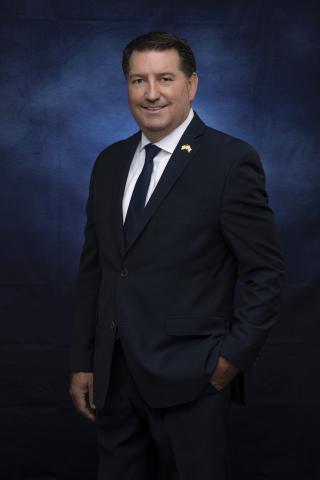
Ask Maddy about Tim Grayson
Scope: california
Hi! I can help you understand Tim Grayson's legislative record. What would you like to know?
Try one of these
i
Maddy answers using official bill text and legislative records. Always verify before sharing.
Sources cited inline