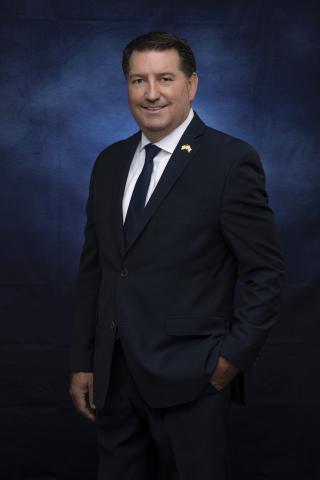
Photo of Tim Grayson
D California Senate · District 9

Sen. Tim Grayson

Compare
Total votes
25,597
all sessions
Attendance
95%
945 missed
Near the chamber average
With party
99%
of cast votes
Near the chamber average
Bipartisan score
0%
crosses aisle rarely
Near the chamber average
Sponsored
1,741
bills & resolutions
Near the chamber average
Committees
14
assignments
1,741 bills and resolutions

Sponsored bills

Total
1,741
Primary
246
Co-sponsor
1,495
This page
1,741
matching current filters
Co-sponsor AB 2276
Passed · California Assembly · Co-sponsor
Motor vehicle insurance: auto body repair.

Existing law makes certain business practices in insurance unlawful, including, but not limited to, an insurer requiring an auto body repair shop, as a condition of participation in the insurer's direct repair program, to pay for the cost of an insured's rental vehicle that is replacing an insured vehicle damaged in an accident, or to pay for the towing charges of the insured with respect to that accident. Existing law also requires any insurer that conducts an auto body repair labor rate survey to determine and set a specified prevailing auto body repair labor rate in a specific geographic area to report the results of that survey to the Department of Insurance, which is required to make the information available upon request. This bill would require an auto body repair shop participating in an auto body repair labor rate survey to declare specified information, including, among other things, that it meets specified equipment requirements and has proof of insurance, as specified. The bill would require an auto body repair labor rate survey to meet specified standards, including that it randomly surveys the number of shops necessary to obtain responses that achieve a minimum confidence level of 90% and a standard error of no more than 10%. The bill would eliminate a rebuttable presumption that the insurer has attempted, in good faith, to effectuate a fair and equitable labor rate or adjustment of the labor rate component of a written estimate, as specified, if the survey complies with specified regulations. The bill would permit an insurer or auto body repair shop to negotiate a labor rate that is higher or lower than the prevailing auto body repair labor rate. This bill would clarify its intent to supplement, and not to supersede, Department of Insurance regulations regarding methods for an insurer to conduct an auto body repair labor rate survey. The bill would also clarify that an insurer is not required to conduct an auto body repair labor rate survey, and that an insurer may use other methodologies to determine a prevailing auto body repair labor rate, as specified.

Passed Aug 29, 2018 1 co-sponsor
Co-sponsor AJR 34
Signed into law · California Assembly · Co-sponsor
Relative to agricultural labor shortages.

This measure would urge the Congress of the United States to acknowledge the problem of a labor shortage in the agricultural industry in California and to work together with California to solve the issue.

Signed into law Aug 28, 2018 1 co-sponsor
Primary AB 2851
Passed · California Assembly · Lead sponsor
Lead exposure: abatement.

Existing law establishes an action for a public nuisance, which affects an entire community or neighborhood, or a considerable number of persons, although the extent of the annoyance or damage inflicted upon individuals may be unequal. Existing law authorizes a private party or a public body to bring an action to abate a public nuisance. This bill would specifically provide that the presence of lead-based paint on or in private or public residential properties or structures, whether considered individually, collectively, or in the aggregate, is not a public nuisance. Existing law, the Childhood Lead Poisoning Prevention Act of 1991, requires the State Department of Public Health to adopt regulations establishing a standard of care at least as stringent as the most recent federal Centers for Disease Control and Prevention screening guidelines, whereby all children are evaluated for risk of lead poisoning by health care providers during each child's periodic health assessment. The standard of care, among others, is required to provide that, upon evaluation, those children determined to be at risk for lead poisoning are required to be screened. Existing law defines "lead poisoning" to mean the disease present when the concentration of lead in whole venous blood reaches or exceeds levels constituting a health risk, as specified in the most recent federal Centers for Disease Control and Prevention guidelines for lead poisoning as determined by the department, or when the concentration of lead in whole venous blood reaches or exceeds levels constituting a health risk as determined by the department, as specified. Existing law creates the Childhood Lead Poisoning Prevention Fund, consisting of fees imposed on manufacturers and other persons formerly, presently, or both formerly and presently engaged in the stream of commerce of lead or products containing lead, or who are otherwise responsible for identifiable sources of lead that have significantly contributed historically, currently contribute, or both have significantly contributed historically and contribute currently to environmental lead contamination. The moneys in the fund are required to be expended, upon appropriation by the Legislature, for the purposes of the act. This bill would establish the Childhood Lead Poisoning Prevention Abatement Fund in the State Treasury. The bill would require moneys in the fund to be allocated, upon appropriation by the Legislature, for the purpose of funding the abatement of lead paint in this state, except for $300,000,000 that would be continuously and directly appropriated to specified cities and counties. The bill would impose a fee, for deposit into the fund, on each architectural coating distributor, as defined. The fee would be calculated as specified, would be initially due and payable no later than January 31, 2019, and would be payable only until January 31, 2028. The fee would be administered and collected by the California Department of Tax and Fee Administration. The bill would bar any action seeking to assert abatement liability against any architectural coating distributor while the distributor pays the fee. The bill would provide that the total amount of fees collected would be $475,000,000 from the commencement of the fee until January 31, 2028. The bill would also provide that the fees would be $47,500,000 in any single fiscal year. The bill would provide that its provisions would not become operative unless the Secretary of State certifies to the California Department of Tax and Fee Administration prior to October 15, 2018, that the plaintiffs in People v. ConAgra Grocery Products Company (2017) 17 Cal.App.5th 51 have reached a binding settlement with all defendants. This bill would declare that it is to take effect immediately as an urgency statute.


Passed Aug 28, 2018 0 co-sponsors
Co-sponsor AB 1788
Signed into law · California Assembly · Co-sponsor
Public health: Valley Fever.

Existing law requires the State Department of Public Health to establish a list of reportable diseases and conditions. Existing law requires, for each reportable disease and condition, the department to specify the timeliness requirements related to the reporting of each disease and condition, and the mechanisms required for, and the content to be included in, reports made. This bill would, until January 1, 2024, authorize the department, for the purpose of reports confirming a case of Valley Fever, to use laboratory criteria for diagnosis, with or without clinical criteria.

Signed into law Aug 28, 2018 1 co-sponsor
Co-sponsor ACR 266
Signed into law · California Assembly · Co-sponsor
Relative to Red Ribbon Week.

This measure would declare October 23 to 31, 2018, inclusive, as Red Ribbon Week, and would encourage all Californians to help build drug-free communities and to participate in drug prevention activities.

Signed into law Aug 27, 2018 1 co-sponsor
Co-sponsor ACR 256
Signed into law · California Assembly · Co-sponsor
Relative to Rosie's Day.

This measure would declare July 27, 2018, as California Bullying Prevention Day, also to be known as Rosie's Day.

Signed into law Aug 27, 2018 1 co-sponsor
Co-sponsor AJR 27
Signed into law · California Assembly · Co-sponsor
Relative to cannabis.

This measure would urge the United States Department of Justice not to direct its enforcement priorities towards California's lawfully and closely regulated cannabis industry, among other things.

Signed into law Aug 27, 2018 1 co-sponsor
Co-sponsor SJR 12
Signed into law · California Senate · Co-sponsor
Relative to international exchange programs.

This measure would encourage the federal government to maintain or restore full funding to integral international exchange programs, such as the Fulbright U.S. Student Program.

Signed into law Aug 24, 2018 1 co-sponsor
Showing 1,391 to 1,400 of 1,741 bills