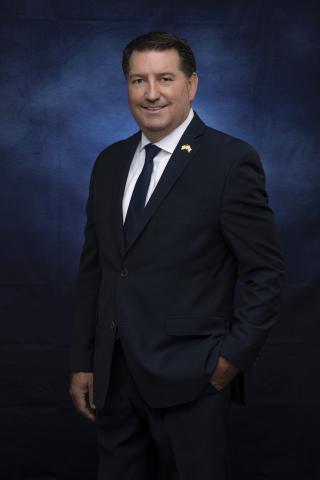
Photo of Tim Grayson
D California Senate · District 9

Sen. Tim Grayson

Compare
Total votes
25,597
all sessions
Attendance
95%
945 missed
Near the chamber average
With party
99%
of cast votes
Near the chamber average
Bipartisan score
0%
crosses aisle rarely
Near the chamber average
Sponsored
1,741
bills & resolutions
Near the chamber average
Committees
14
assignments
1,741 bills and resolutions

Sponsored bills

Total
1,741
Primary
246
Co-sponsor
1,495
This page
1,741
matching current filters
Co-sponsor AJR 17
Passed · California Assembly · Co-sponsor
Relative to missing and murdered Native American women and girls.

This measure would request the President and the Congress of the United States to enact legislation that would strengthen the communication between federal, state, local, and tribal officials, and that would require the United States Department of Justice, United States Department of the Interior, and United States Department of Health and Human Services to seek recommendations from tribes in enhancing the safety of Native American women and girls. The measure would also request that the Attorney General of the State of California begin the collection of data as it relates to missing and murdered Native American women and girls.

Passed Sep 11, 2019 1 co-sponsor
Primary AB 1484
Passed · California Assembly · Lead sponsor
Mitigation Fee Act: housing developments.

The Mitigation Fee Act requires a local agency that establishes, increases, or imposes a fee as a condition of approval of a development project to, among other things, determine a reasonable relationship between the fee's use and the type of development project on which the fee is imposed. Existing law, the Quimby Act, which is within the Subdivision Map Act, authorizes the legislative body of a city or county to require the dedication of land or to impose fees for park or recreational purposes as a condition to the approval of a tentative map or parcel subdivision map if specified requirements are met. The Mello-Roos Community Facilities Act of 1982, after a community facilities district has been created and authorized to levy specified special taxes, authorizes the legislative body, by ordinance, to levy the special taxes at the rate and apportion them in the manner specified in the resolution forming the community facilities district. This bill would prohibit a local agency from imposing a housing impact requirement adopted by the local agency on a housing development project, as defined, unless specified requirements are satisfied by the local agency, including that the housing impact requirement be roughly proportional in both nature and extent to the impact created by the housing development project. The bill, for purposes of these provisions, defines "housing impact requirement" as a fee imposed under the Mitigation Fee Act, dedications of parkland or in-lieu fees imposed under the Quimby Act, a construction excise tax, or landowner-approved taxes imposed under the Mello-Roos Community Facilities Act of 1982. This bill would prohibit a housing impact requirement from curing deficiencies in a public facility serving existing development, unless the amount of the housing impact requirement is roughly proportional both in nature and extent to the housing development project's impact on the public facility. The bill would prohibit a housing impact requirement from being based on providing a level of service, as defined, that exceeds the existing community's current level of service. This bill would require a local agency to adopt a nexus study that is used to demonstrate compliance with the requirements of these provisions, subject to specified public participation requirements. The bill would require a local agency to make an individualized determination that a housing development project will have the same type and amount of impact projected for a type of development analyzed in the nexus study. Existing law requires fees charged by a local agency for specified purposes, including zoning variances, use permits, building inspections, and the processing of maps, to not exceed the estimated reasonable cost of providing the service for which the fee is charged, unless a question regarding the amount of the fee charged in excess of this cost is submitted to, and approved by, 23 of the electors. Existing law provides that these fees may be challenged within 120 days of the effective date of the ordinance or resolution establishing the fee. This bill would additionally provide that those fees are subject to specified protest procedures upon the payment of the fees. This bill would make findings that ensuring access to affordable housing is a matter of statewide concern rather than a municipal affair and, therefore, applies to all cities, including a charter city and a charter city and county. The California Constitution requires the state to reimburse local agencies and school districts for certain costs mandated by the state. Statutory provisions establish procedures for making that reimbursement. This bill would provide that no reimbursement is required by this act for a specified reason.


Passed Sep 9, 2019 0 co-sponsors
Co-sponsor AB 467
Signed into law · California Assembly · Co-sponsor
Competitions on state property: prize compensation: gender equity.

Existing law generally makes it unlawful to offer a prize or other inducement as a reward for the taking of a game bird, mammal, fish, reptile, or amphibian in an individual contest, tournament, or derby. Existing law makes specific exceptions to that general prohibition, including authorizing the Department of Fish and Wildlife to issue a permit, subject to Fish and Game Commission regulations, to a person authorizing that person to offer a prize or other inducement as a reward for the taking of a game fish if it makes a specified finding. Existing law vests the Department of Parks and Recreation with the control of the state park system. Existing regulations of the Department of Parks and Recreation prohibit a person from having control over a game or recreational activity occurring wholly or partially within or on any property owned, operated or administered by the department without an approved special event permit, as defined. Existing law authorizes the State Lands Commission to lease state lands under the jurisdiction of the commission for purposes as the commission deems advisable, including, but not limited to, grazing leases and leases for commercial, industrial, and recreational purposes. The California Coastal Act of 1976 establishes the California Coastal Commission and requires the commission to implement and administer a coastal development permit process within the coastal zone, as defined. The act exempts from the requirement for a coastal development permit a proposed development found to be a temporary event that does not have any significant adverse impact upon coastal resources within the meaning of guidelines adopted by the commission. The act subjects any permit that is issued or any development or action approved on appeal to be subject to reasonable terms and conditions in order to ensure that the development or action will be in accordance with the act. The act also declares that existing laws relating to discrimination and environmental justice apply to the California Coastal Commission and all public agencies implementing the act. The act provides that, as required by existing law relating to discrimination, no person in the State of California, on specified bases including sex, may be unlawfully denied full and equal access to the benefits of, or be unlawfully subjected to discrimination, under specified programs or activities under the act. Under existing law, the Department of Transportation may issue permits authorizing encroachments, as defined, on state highways. Existing law requires the department to either approve or deny an application for an encroachment permit within 60 days of receiving a completed application. This bill would require those entities to include in permit or lease conditions, for a competition event to be held on land under the jurisdiction of the entity, as described, and that awards prize compensation, as defined, to competitors in gendered categories, a requirement that the prize compensation be identical between the gendered categories at each participant level.

Signed into law Sep 9, 2019 1 co-sponsor
Co-sponsor ACR 113
Signed into law · California Assembly · Co-sponsor
Relative to India's Independence Day.

This measure would recognize August 15, 2019, as India's Independence Day, and urge all Californians to join in celebrating India's independence.

Signed into law Sep 9, 2019 1 co-sponsor
Co-sponsor AJR 14
Signed into law · California Assembly · Co-sponsor
Relative to Special Olympics.

This measure would call for continued support and recognition of the many benefits provided by Special Olympics.

Signed into law Sep 9, 2019 1 co-sponsor
Co-sponsor SJR 5
Signed into law · California Senate · Co-sponsor
Relative to California transportation infrastructure.

This measure would urge the Congress and the President of the United States to work together to enact the robust bipartisan federal infrastructure legislation necessary to restore California's and other states' crumbling road and freight infrastructure, respond to growing traffic congestion, and increase investment in public transportation, most particularly, by expanding paratransit services for the elderly and those with special needs. The measure would additionally urge the Congress and the President of the United States to address the shortfall in the federal Highway Trust Fund by restoring the lost purchasing power of the federal fuel tax, in order to provide the long-term funding stability necessary for California and other states.

Signed into law Sep 9, 2019 1 co-sponsor
Co-sponsor ACR 87
Passed · California Assembly · Co-sponsor
Upholding democracy through civic education in public schools.

This measure would endorse activities in public schools that instruct pupils in upholding and sustaining American democracy, encourage, in the strongest terms, California schools to pursue certain recognized designations that reflect specified ethos and values, and encourage publicly elected officials to conduct themselves in ways that strengthen civic engagement and participation in civil society.

Passed Sep 4, 2019 1 co-sponsor
Co-sponsor AJR 21
Passed · California Assembly · Co-sponsor
Relative to reparations for descendants of enslaved persons.

This measure would formally apologize for California's past complicity in enabling and furthering the practice of slavery and would urge the United States Congress and the President of the United States to enact House Resolution 40 to study the legacy of slavery and provide recommendations on redress for descendants of enslaved persons.

Passed Sep 4, 2019 1 co-sponsor
Showing 1,211 to 1,220 of 1,741 bills