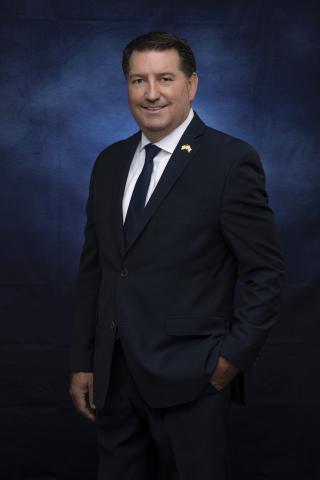
Photo of Tim Grayson
D California Senate · District 9

Sen. Tim Grayson

Compare
Total votes
25,597
all sessions
Attendance
95%
945 missed
Near the chamber average
With party
99%
of cast votes
Near the chamber average
Bipartisan score
0%
crosses aisle rarely
Near the chamber average
Sponsored
1,741
bills & resolutions
Near the chamber average
Committees
14
assignments
1,741 bills and resolutions

Sponsored bills

Total
1,741
Primary
246
Co-sponsor
1,495
This page
1,741
matching current filters
Co-sponsor SCR 31
Signed into law · California Senate · Co-sponsor
Relative to the Willie L. Brown, Jr. Circle and Plaza.

This measure would name the public street, circle, and plaza at 914 and 915 Capitol Mall in the City of Sacramento as the Willie L. Brown, Jr. Circle and Plaza. The measure would request the Department of General Services to determine the cost of erecting the appropriate signage commemorating this special designation and, upon receiving donations from nonstate sources, to cover that cost to erect that signage.

Signed into law Jan 24, 2020 1 co-sponsor
Primary AB 1924
In committee · California Assembly · Lead sponsor
Housing development: fees.

The Mitigation Fee Act authorizes a local agency to charge or imposed a variety of fees, dedications, reservations, or other exactions in connection with the approval of a development project, as defined. Existing law, when a local agency imposes any fee or exaction as a condition of approval of a proposed development, as defined, or development project, prohibits those fees or exactions from exceeding the estimated reasonable cost of providing the service or facility for which the fee or exaction is imposed. This bill would require that a fee levied or imposed on a housing development project by a local agency be proportionate to the square footage of the proposed unit or units. By imposing additional duties on local agencies that impose fees under the Mitigation Fee Act, the bill would impose a state-mandated local program. The California Constitution requires the state to reimburse local agencies and school districts for certain costs mandated by the state. Statutory provisions establish procedures for making that reimbursement. This bill would provide that no reimbursement is required by this act for a specified reason.


In committee Jan 23, 2020 0 co-sponsors
Primary AB 1943
In committee · California Assembly · Lead sponsor
Insulin affordability.

Existing law provides for the regulation of health insurers by the Department of Insurance. Existing law requires a health insurance policy issued, amended, delivered, or renewed on or after January 1, 2000, to include coverage for specified equipment and supplies for the management and treatment of insulin-using diabetes, non-insulin-using diabetes, and gestational diabetes as medically necessary, even if the items are available without a prescription. Existing law requires a health insurance policy issued, amended, delivered, or renewed on or after January 1, 2000, that covers prescription benefits to include coverage for specified diabetes management prescription items, including insulin and glucagon. Under existing law, coinsurance and deductibles for insulin and related necessary supplies are limited to those established for similar benefits within a given policy. This bill would state the intent of the Legislature to enact legislation that would help ensure that insulin is available and affordable to all Californians.

In committee Jan 17, 2020 0 co-sponsors
Primary AB 1903
In committee · California Assembly · Lead sponsor
Crimes: deceptive recordings.

Existing law creates a civil cause of action for using the name, voice, signature, photograph, or likeness of another person, without their consent, in any manner, for the purpose of advertising, selling, or soliciting goods or services. Existing law also creates a civil cause of action for capturing or attempting to capture, in a manner that is offensive to a reasonable person, any type of image or recording of a person engaging in a private, personal, or familial activity. Existing law prohibits the distribution of an intimate image, as described, of an identifiable person that was taken under circumstances in which the person agreed or understood that the image was to remain private. This bill would define a "deepfake" as a recording that has been created or altered in a manner that it would falsely appear to a reasonable observer to be an authentic record of the actual speech or conduct of the individual depicted in the recording. This bill would also criminally prohibit a person from preparing, producing, or developing, without the depicted individual's consent, a deepfake depicting sexual conduct. The bill would also exempt certain recordings including those that are clearly satire or parody and those that contain a clear disclosure that the recording is not an actual record of a real event. This bill would appropriate $25,000,000 from the General Fund to the University of California to fund research to identify and combat the inappropriate use of deepfake technology. By creating a new crime, this bill would impose a state-mandated local program. The California Constitution requires the state to reimburse local agencies and school districts for certain costs mandated by the state. Statutory provisions establish procedures for making that reimbursement. This bill would provide that no reimbursement is required by this act for a specified reason.
In committee Jan 17, 2020 0 co-sponsors
Co-sponsor ACR 28
Passed · California Assembly · Co-sponsor
Sickle Cell Disease Awareness Month.

This measure would recognize September 2020 as Sickle Cell Disease Awareness Month and encourage the Legislature to appropriate funds for research, treatment, and monitoring of sickle cell disease, and for related education and outreach.

Passed Jan 15, 2020 1 co-sponsor
Co-sponsor SB 10
Vetoed · California Senate · Co-sponsor
Mental health services: peer support specialist certification.

Existing law establishes the Medi-Cal program, which is administered by the State Department of Health Care Services and under which qualified low-income persons receive health care benefits. The Medi-Cal program is, in part, governed and funded by federal Medicaid program provisions. Existing law establishes a schedule of benefits under the Medi-Cal program and provides for various services, including various behavioral and mental health services. Existing law, the Mental Health Services Act (MHSA) , an initiative measure enacted by the voters as Proposition 63 at the November 2, 2004, statewide general election, establishes the continuously appropriated Mental Health Services Fund to fund various county mental health programs. The act also requires funds to be reserved for the costs of the State Department of Health Care Services, the California Behavioral Health Planning Council, the Office of Statewide Health Planning and Development (OSHPD) , the Mental Health Services Oversight and Accountability Commission, the State Department of Public Health, and any other state agency to implement all duties pursuant to certain programs provided for by the act, subject to appropriation in the annual Budget Act. The act provides that it may be amended by the Legislature by a 23 vote of each house as long as the amendment is consistent with, and furthers the intent of, the act, and that the Legislature may also clarify procedures and terms of the act by majority vote. This bill would require the State Department of Health Care Services to establish, no later than July 1, 2020, a statewide peer support specialist certification program, as a part of the state's comprehensive mental health and substance use disorder delivery system and the Medi-Cal program. The certification program's components would include, among others, defining responsibilities, practice guidelines, and supervision standards, determining curriculum and core competencies, specifying training and continuing education requirements, establishing a code of ethics, and determining a certification revocation process. The bill would require an applicant for the certification as a peer support specialist to meet specified requirements, including successful completion of the curriculum and training requirements. This bill would require the department to consult with OSHPD and other stakeholders in implementing the certification program, including requiring quarterly stakeholder meetings. The bill would authorize the department to use funding provided through the MHSA, upon appropriation, to develop and administer the certification program, and would authorize the use of these MHSA funds to serve as the state's share of funding to claim federal financial participation under the Medicaid program. This bill would authorize the department to establish a certification fee schedule and to require remittance of fees as contained in the schedule, for the purpose of supporting the department's activities associated with the ongoing administration of the certification program. This bill would require the department to amend the Medicaid state plan to include a certified peer support specialist as a provider type for purposes of the Medi-Cal program and to include peer support specialist services as a distinct service type for purposes of the Medi-Cal program. The bill would require Medi-Cal reimbursement for peer support specialist services to be implemented only if, and to the extent that, federal financial participation is available and the department obtains all necessary federal approvals. The bill also would authorize the department to implement, interpret, or make specific its provisions by means of informal notices, plan letters, plan or provider bulletins, or similar instructions, without taking regulatory action, until regulations are adopted. The bill would require the department to adopt regulations by July 1, 2022, and, commencing July 1, 2020, would require the department to provide semiannual status reports to the Legislature until regulations have been adopted. This bill would declare that it clarifies terms and procedures under the Mental Health Services Act.

Vetoed Jan 13, 2020 1 co-sponsor
Co-sponsor ACR 98
Passed · California Assembly · Co-sponsor
Relative to mental health and substance use treatment.

This measure would urge specified state departments and the Attorney General to use their authority to ensure that health care service plans and health insurers subject to their authority comply with the federal Paul Wellstone and Pete Domenici Mental Health Parity and Addiction Equity Act of 2008.

Passed Jan 9, 2020 1 co-sponsor
Primary AB 1025
Signed into law · California Assembly · Lead sponsor
Transportation: California Transportation Commission: San Ramon Branch Corridor: reimbursement.

Existing law creates the California Transportation Commission, with various powers and duties relative to the programming of transportation capital projects and the allocation of funds to those projects, pursuant to the state transportation improvement program and various other transportation funding programs. Through certain commission resolutions, the commission allocated moneys appropriated to it in the 1980s from the Transportation Planning and Development Account to the County of Contra Costa for the acquisition of a specified right-of-way, and for associated projects, relating to the San Ramon Branch Corridor. Those resolutions require the county to reimburse the state if the county fails to meet specified conditions. This bill would relinquish the rights of the state to reimbursement pursuant to those resolutions. This bill would also require the County of Contra Costa to revise the bylaws of the Iron Horse Corridor Management Program Advisory Committee to: (1) include a seat for a Contra Costa Transportation Authority representative, (2) expand the management program elements to include a new, 7th element that considers proposals to study new and emerging mobility modes and technologies in the corridor, and (3) include a new task in the committee's work program to recommend a framework for acting on these proposals. The bill would also make findings and declarations in support of these requirements. By imposing new duties on local public officials, the bill would create a state-mandated local program. The California Constitution requires the state to reimburse local agencies and school districts for certain costs mandated by the state. Statutory provisions establish procedures for making that reimbursement. This bill would provide that, if the Commission on State Mandates determines that the bill contains costs mandated by the state, reimbursement for those costs shall be made pursuant to the statutory provisions noted above.

Signed into law Oct 12, 2019 0 co-sponsors
Co-sponsor AB 539
Signed into law · California Assembly · Co-sponsor
California Financing Law: consumer loans: charges.

(1) The California Financing Law (CFL) provides for the licensure and regulation of finance lenders and brokers by the Commissioner of Business Oversight. The CFL prohibits anyone from engaging in the business of a finance lender or broker without obtaining a license. A willful violation of the CFL is a crime, except as specified. Under existing law, a licensee who lends any sum of money is authorized to contract for and receive charges at a maximum rate that does not exceed specified sums on the unpaid principal balance per month, ranging from 2 12 % to 1%, based on the consumer loan amount, as specified. This provision, however, does not apply to any loan of a bona fide principal amount of $2,500 or more, as determined in accordance with a provision governing regulatory ceilings and evasion of the CFL. The CFL also authorizes a licensee, as an alternative to the above-described rate charges for consumer loan amounts, to instead contract for and receive charges at the greater of a rate not exceeding 1.6% per month on the unpaid principal balance or a rate not exceeding 5 56 of 1% per month, plus a specified percentage per month, as established by the Federal Reserve Bank of San Francisco, on advances to member banks under federal law, or if there is no single determinable rate, the closest counterpart of this rate. Under existing law, these provisions do not apply to a loan of a bona fide principal amount of $2,500 or more, as specified. The CFL further authorizes a licensee to contract for and receive an administrative fee of a specified amount that varies with the bona fide principal amount of the loan. This bill, entitled the Fair Access to Credit Act, would authorize a finance lender, with respect to a loan of a bona fide principal amount of $2,500 or more but less than $10,000, to contract for or receive charges at a rate not exceeding an annual simple interest rate of 36% plus the Federal Funds Rate. The bill would require finance lenders making loans subject to these provisions to, among other requirements, report each borrower's payment performance to at least one consumer reporting agency that compiles and maintains files on consumers on a nationwide basis and to also offer, at no cost to the borrower, a credit education program or seminar that has been previously reviewed and approved by the commissioner, in accordance with specific requirements. The bill would further specify that a licensee may contract for and receive an administrative fee, as described above, in addition to these charges. (2) Under the CFL, certain principles apply in determining whether a loan is a loan of a bona fide principal amount under specified provisions and whether the regulatory ceiling provision is used for purposes of evading the CFL. This bill would apply these principles to loans of a bona fide principal amount of $2,500 or more but less than $10,000. The bill would also apply these principles to any fees paid to a licensee for the privilege of participating in an open-end credit program. (3) Existing law prohibits licensees subject to the CFL from entering into a contract for a consumer loan that provides for a scheduled repayment of principal over more than the maximum terms set forth in relation to the respective size of the loan. Among other things, this provision prohibits a loan of at least $3,000 but less than $5,000 from exceeding a maximum term of 60 months and 15 days. This bill would increase the maximum principal loan amount under the above schedule to $10,000. The bill would also prohibit a licensee from entering into a contract for a consumer loan that is at least $2,500 but less than $10,000 that provides for a scheduled repayment of principal that is less than 12 months. The bill would also specify that the maximum loan term of 60 months and 15 days does not apply to a loan secured by real property of a bona fide principal amount of at least $5,000. The bill would also prohibit a licensee from charging, imposing, or receiving any penalty for the prepayment of a loan under the CFL, except as specified. (4) The CFL regulates a specific type of consumer loan known as an open-ended loan. The CFL prescribes the amount upon which charges authorized by the CFL may be based, the amount of a minimum monthly payment, the amount of fees, costs, and expenses a licensee may receive, and the amount to be delivered by the licensee at the time the open-ended loan is made. The CFL applies these provisions only to a loan of a bona fide principal amount not exceeding $5,000, as specified. This bill would apply those provisions to an open-ended loan in a bona fide principal amount not exceeding $10,000, as specified. The bill would make conforming and nonsubstantive changes. By expanding the application of the CFL to cover more loans, the bill would expand the scope of an existing crime, thereby imposing a state-mandated local program. The California Constitution requires the state to reimburse local agencies and school districts for certain costs mandated by the state. Statutory provisions establish procedures for making that reimbursement. This bill would provide that no reimbursement is required by this act for a specified reason.

Signed into law Oct 10, 2019 1 co-sponsor
Co-sponsor AB 1400
Signed into law · California Assembly · Co-sponsor
Employment safety: firefighting equipment: mechanics.

Existing law establishes a workers' compensation system, administered by the Administrative Director of the Division of Workers' Compensation, to compensate an employee for injuries sustained in the course of employment. Existing law requires the Commission on Health and Safety and Workers' Compensation to conduct a continuing examination of the workers' compensation system and of the state's activities to prevent industrial injuries and occupational diseases. This bill would require the commission, in partnership with the County of Los Angeles and relevant labor organizations, on or before January 1, 2021, to submit a study to the Legislature, the Occupational Safety and Health Standards Board, and the Los Angeles County Board of Supervisors on the risk of exposure to carcinogenic materials and incidence of occupational cancer in mechanics who repair and clean firefighting vehicles.

Signed into law Oct 10, 2019 1 co-sponsor
Showing 1,171 to 1,180 of 1,741 bills