

Passed Mar 9, 2020
1 co-sponsor
Total votes
25,597
all sessions
Attendance
95%
945 missed
Near the chamber average
With party
99%
of cast votes
Near the chamber average
Bipartisan score
0%
crosses aisle rarely
Near the chamber average
Sponsored
1,741
bills & resolutions
Near the chamber average
Committees
14
assignments
1,741 bills and resolutions
Sponsored bills
Total
1,741
Primary
246
Co-sponsor
1,495
This page
1,741
matching current filters
Relative to California Arbor Day.
This measure would recognize March 7, 2020, as California Arbor Day, and would urge California residents to observe the day with appropriate tree-planting activities and programs.
Passed Mar 9, 2020
1 co-sponsor
Civil rights crimes.
Existing law makes it a misdemeanor to, by force or threat of force, willfully injure, intimidate, interfere with, oppress, or threaten another person in the free exercise or enjoyment of a right or privilege secured by the Constitution or laws of this state or by the Constitution or laws of the United States in whole or in part because of one or more of specified actual or perceived characteristics of the victim, including disability, gender, religion, race, or sexual orientation. Existing law also makes it a misdemeanor to knowingly deface, damage, or destroy the real or personal property of another person for the purpose of intimidating or interfering with the free exercise or enjoyment of a right or privilege secured by the Constitution or laws of this state or by the Constitution or laws of the United States, in whole or in part because of one or more of the same actual or perceived characteristics of the victim. This bill would make the above crimes punishable either as a misdemeanor or as a felony, to be served in county jail for 18 months, or 2 or 3 years. By increasing the punishment for a crime, this bill would impose a state-mandated local program. The California Constitution requires the state to reimburse local agencies and school districts for certain costs mandated by the state. Statutory provisions establish procedures for making that reimbursement. This bill would provide that no reimbursement is required by this act for a specified reason.
In committee Mar 5, 2020
1 co-sponsor
Rosa Parks Day in California: 20th Anniversary.
This measure would memorialize the achievements of Rosa Parks in the Civil Rights Movement and would commemorate the 20th Anniversary of Rosa Parks Day in California on February 4, 2020.
Signed into law Mar 4, 2020
1 co-sponsor
Lead screening.
Existing law requires the State Department of Public Health to maintain an electronic database to support electronic laboratory reporting of blood lead tests, management of lead-exposed children, and assessment of sources of lead exposures. Existing law requires a laboratory that performs a blood lead analysis on human blood drawn in California to report specified information, including the test results and the name, birth date, and address of the person tested, to the department for each analysis on every person tested. Existing law authorizes the department to share the information reported by a laboratory with, among other entities, the State Department of Health Care Services for the purpose of determining whether children enrolled in Medi-Cal are being screened for lead poisoning and receiving appropriate related services. This bill also would additionally require a laboratory that performs a blood lead analysis to report to the department, among other things, the Medi-Cal identification number and medical plan identification number, if available, for each analysis on every person tested.
In committee Mar 4, 2020
1 co-sponsor
Passed Mar 2, 2020
1 co-sponsor
Lead testing.
Existing law, the Childhood Lead Poisoning Prevention Act of 1991, requires the State Department of Public Health to adopt regulations establishing a standard of care at least as stringent as the most recent United States Centers for Disease Control and Prevention screening guidelines, whereby all children are evaluated for risk of lead poisoning by health care providers during each child's periodic health assessment. Existing law requires the standard of care for a child who is determined to be "at risk" for lead poisoning to include the screening of that child. Existing regulations require every health care provider who performs a periodic health assessment of a child to order a child who receives services from a publicly funded program for low-income children to be screened for lead poisoning. Existing law requires a laboratory that performs a blood lead analysis on a specimen of human blood drawn in California to report specified information to the department for each analysis on every person tested. Existing law requires that all information reported be confidential, except that the department is authorized to share the information for the purpose of surveillance, case management, investigation, environmental assessment, environmental remediation, or abatement with the local health department, environmental health agency, or building department, so long as the entity receiving the information otherwise maintains the confidentiality of the information, as specified. Existing law requires the State Department of Public Health to implement and administer a program to meet the requirements of the federal Residential Lead-Based Paint Hazard Reduction Act of 1992. Among other things, the program requires the department to establish certification requirements for persons conducting lead-related construction work, abatement, or lead hazard evaluation. Existing regulations require specified information relating to hazard evaluations for public and residential buildings to be provided to the department. This bill would add to the information that a laboratory is required to provide the Medi-Cal identification number, or other equivalent medical identification number of the person tested. The bill would require, if the person tested is a minor, that the laboratory include the person's contact information and a unique identifier, in a form to be determined by the department, as specified. This bill would require the department to develop and maintain on its internet website a public registry of lead-contaminated locations reported to the department pursuant to the provisions relating to lead hazards in buildings. The bill would require the department to ensure that personally identifiable information, including medical information, is not disclosed or ascertainable from the information available on the registry.
In committee Feb 27, 2020
0 co-sponsors
Reverse mortgages: notifications.
Existing state and federal law regulate the activities of financial institutions. Existing state law regulates reverse mortgage loans and requires a lender to refer a prospective borrower to a housing counseling agency, as specified, and prohibits a lender from accepting a final and complete application for a reverse mortgage loan or assessing any fees without receiving certification, as specified, that the borrower has received loan counseling. Existing law also prohibits a lender from taking a reverse mortgage application before having provided an applicant, prior to meeting with a counseling agency, a specified disclosure notice and checklist that address various aspects of reverse mortgages. This bill would add provisions to the reverse mortgage disclosure notice and checklist, as described above, addressing the status of a nonborrower spouse, the effect of a borrower's death or permanent relocation from the home, and the effect of specified home improvement loans.
In committee Feb 24, 2020
0 co-sponsors
Planning and zoning: housing development: regulation.
The Planning and Zoning Law requires a city, county, or city and county, in exercising its authority to regulate subdivisions, to, among other things, refrain from imposing criteria for design or improvements for the purpose of rendering infeasible the development of housing for any and all economic segments of the community. This bill would make nonsubstantive changes to this provision.
In committee Feb 24, 2020
0 co-sponsors
Electrical corporations: Green Tariff Shared Renewables Program.
Under existing law, the Public Utilities Commission has regulatory authority over public utilities, including electrical corporations. The Green Tariff Shared Renewables Program requires each electrical corporation with 100,000 or more customers in California to file with the commission an application requesting approval of a tariff to administer a program enabling ratepayers to participate directly in offsite electrical generation facilities that use eligible renewable energy resources, consistent with certain legislative findings and statements of intent. Existing law requires those electrical corporations to procure eligible renewable energy resources that are located in reasonable proximity to those ratepayers enrolled in the program, and to provide support for enhanced community renewables programs to facilitate development of eligible renewable energy resource projects located close to the source of demand. This bill would provide that it is the intent of the Legislature to support all forms of clean renewable energy and to provide homebuilders with options for achieving California's bold energy goals, specifically including rooftop photovoltaic and community solar options.
In committee Feb 21, 2020
0 co-sponsors
Ask Maddy
·
AI policy assistant
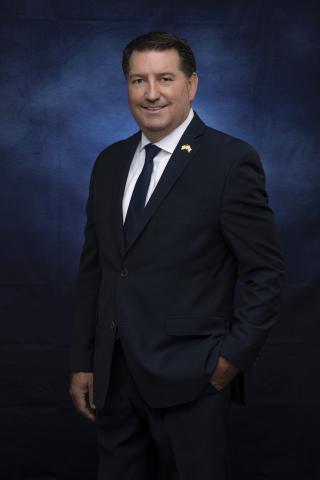
Ask Maddy about Tim Grayson
Scope: california
Hi! I can help you understand Tim Grayson's legislative record. What would you like to know?
Try one of these
i
Maddy answers using official bill text and legislative records. Always verify before sharing.
Sources cited inline