

In committee Feb 4, 2010
1 co-sponsor
Total votes
14,990
all sessions
Attendance
78%
2,860 missed
Among the lowest in the chamber
With party
97%
of cast votes
Lower than 77% of chamber peers
Bipartisan score
2%
crosses aisle rarely
Near the chamber average
Sponsored
163
bills & resolutions
Lower than 93% of chamber peers
Committees
0
assignments
163 bills and resolutions
Sponsored bills
Total
163
Primary
19
Co-sponsor
144
This page
163
matching current filters
Gasoline: vapor recovery systems.
Existing law requires the State Air Resources Board to adopt procedures for determining the compliance of any system designed for the control of gasoline vapor emissions during gasoline marketing operations, including storage and transfer operations, and additional performance standards to ensure that systems for the control of gasoline vapors from motor vehicle fueling operations do not cause excessive spillage and emissions. Existing law prohibits the state board from requiring a gasoline dispensing facility that meets certain requirements from undergoing an Enhanced Vapor Recovery Phase II upgrade until April 1, 2011. This bill, except as specified, would limit the fines imposed on a gasoline dispensing facility that fails to meet an April 1, 2009, compliance deadline to a total of no more than $1,000 for all violations that occur between April 1, 2009, and December 31, 2009, if the gasoline dispensing facility meets specified requirements. This bill would declare that it is to take effect immediately as an urgency statute.
Failed Feb 2, 2010
1 co-sponsor
Sacramento-San Joaquin Delta.
Existing law requires the Department of Water Resources to develop and implement a program of flood control projects at specific Sacramento-San Joaquin Delta locations for the protection of certain public benefits, including the protection of urbanized areas, water quality, recreation, navigation, and fish and wildlife habitats, and for net long-term habitat improvement. Under various laws, a private party may agree to convey an interest in real property to the state or to a 3rd party, or to expend funds in connection with the management of a real property, or both, to mitigate the adverse impacts to the environment resulting from development or other permitted activity. This bill would make an unspecified appropriation from an unspecified source to the department for the purposes of acquiring land or other property interests in certain properties in the Sacramento-San Joaquin Delta and to initiate and implement improvements on those properties for the purposes of flood control, habitat enhancement, reduction of greenhouse gas emissions, recreation, and other visions for a sustainable Delta. The bill would require the Department of Water Resources and the Department of Fish and Game, in consultation with the State Air Resources Control Board, to prepare and submit to the Governor and the Legislature a report on the proposed implementation of the bill. The bill would prohibit the moneys appropriated in the bill from being expended until the report is submitted.
Failed Feb 2, 2010
0 co-sponsors
Forest practices: timber harvesting plans.
The Z'berg-Nejedly Forest Practice Act of 1973 prohibits a person from conducting timber operations, as defined, unless a timber harvesting plan prepared by a registered professional forester has been submitted to the Department of Forestry and Fire Protection, and approved. This bill would make technical, nonsubstantive changes to those provisions.
died Feb 2, 2010
0 co-sponsors
Probation.
Existing law establishes a procedure to by which a probation officer determines the ability of the defendant to pay all or a portion of the reasonable costs of any probation supervision or conditional sentence, as specified. Existing law also provides that if practicable, the court shall order or the probation officer shall set payments for those costs to be made on a monthly basis. Existing law further provides that execution may be issued on the payment order in the same manner as a judgment in a civil action, ad that the order to pay all or part of the costs shall not be enforced by contempt. This bill would require that the court order the payment of the described probation costs as a condition of probation, if probation is granted.
Failed Feb 2, 2010
0 co-sponsors
Vandalism: gang-related graffiti.
Existing law, amended by Proposition 21, an initiative measure enacted by voters at the March 7, 2000, statewide primary election, and requiring a 23 vote of the Legislature to amend, makes a person who maliciously commits specified destructive acts with respect to another's property guilty of vandalism. Existing law requires the court, when appropriate and feasible, to order a defendant who is convicted of violating this provision, or to order the defendant and his or her parents, if the defendant is a minor, to clean up, repair, or replace the damaged property or keep the damaged property or another specified property in the community free of graffiti for up to one year. This bill would provide that if the defacement, damage, or destruction is determined by the finder of fact to further criminal gang activity, the act of vandalism is punishable by imprisonment in a state prison or in the county jail not exceeding one year, or by a fine of not more than $10,000, or by both that fine and imprisonment. The bill would also authorize a court to grant probation and, as a condition of probation, order the defendant to participate in a local intervention program and also order gang terms. By increasing the penalties for a crime, the bill would impose a state-mandated local program. The California Constitution requires the state to reimburse local agencies and school districts for certain costs mandated by the state. Statutory provisions establish procedures for making that reimbursement. This bill would provide that no reimbursement is required by this act for a specified reason.
Failed Feb 2, 2010
1 co-sponsor
Income taxes: credit: adoption costs.
The Personal Income Tax Law authorizes various credits against the taxes imposed by that law, including a credit in an amount equal to 50% of specified adoption costs, not to exceed $2,500 per minor child who is a citizen or legal resident of the United States and who is in the custody of a public agency in this state. This bill would, for taxable years beginning on or after January 1, 2010, and before January 1, 2015, increase the credit limitation to a maximum of $5,000 with respect to the adoption of a minor child, as described, who is over 12 years of age or who was living in a group home or residential treatment facility, as defined, for a period of at least 6 months within 18 months prior to the time the adoption is completed. This bill would take effect immediately as a tax levy.
Failed Feb 2, 2010
1 co-sponsor
Gasoline: vapor recovery systems.
Existing law requires the State Air Resources Board to adopt procedures for determining the compliance of any system designed for the control of gasoline vapor emissions during gasoline marketing operations, including storage and transfer operations, and additional performance standards to ensure that systems for the control of gasoline vapors from motor vehicle fueling operations do not cause excessive spillage and emissions. Existing law prohibits the state board from requiring a gasoline dispensing facility that meets certain requirements from undergoing an Enhanced Vapor Recovery Phase II upgrade until April 1, 2011. Regulations adopted by the state board require an Enhanced Vapor Recovery Phase II upgrade by April 1, 2009, as provided. This bill would prohibit the state board from requiring a gasoline dispensing facility owned or operated by a local government that does not meet these requirements from undergoing an Enhanced Vapor Recovery Phase II upgrade until April 1, 2010. This bill would declare that it is to take effect immediately as an urgency statute.
Failed Feb 2, 2010
1 co-sponsor
Undocumented criminal aliens: costs of incarceration: collection of data.
Existing federal law requires the federal government to compensate a state for the costs of incarcerating undocumented criminal illegal aliens, or to take the undocumented criminal alien into federal custody, as specified. This bill would require the Secretary of the Department of Corrections and Rehabilitation to annually bill the federal government for the costs of incarcerating undocumented criminal aliens within California's correctional system. The bill would require the Attorney General to utilize all available legal resources to obtain compliance with payment of the written bill if the federal government fails to make payment. This bill would also require the Department of Justice to collect data on the total number of, and percentage of, undocumented alien inmates in all state and local correctional institutions in the state and to publish the data on its Internet Web site. The data would be required to be annually updated and published.
died Feb 1, 2010
1 co-sponsor
Apple pests: pest and disease prevention.
Existing law provides that there is in state government the California Apple Commission, comprised of apple handlers and producers, which may recommend to the Secretary of Food and Agriculture maturity standards, enforce laws related to apple production, and promote the sale of apples. This bill, the California Apple Pest and Disease Prevention Act of 2009 (the act) , would provide that no person may handle apples in this state to which certain adopted regulations apply, except as specified. The bill would also provide that it is a crime to handle apples or to fail to meet specified reporting duties or pay required assessments in violation of these provisions. Because this bill would create new crimes, this bill would impose a state-mandated local program. This bill would require the secretary to appoint a committee of 11 individuals from nominations received from the California Apple Commission to administer these provisions. The bill would provide that the duties of the committee, with concurrence by the secretary, include making recommendations to the secretary of designated pests and diseases not already present or identified in California as of January 1, 2007, and of the adoption of regulations establishing terms and conditions for handling apples to prevent the introduction and spread of designated pests or diseases. The bill would also require the secretary to establish a panel to advise the committee and the secretary by providing information regarding the biology and known control methods for the pests and diseases under consideration by the committee. This bill would provide that the Department of Food and Agriculture may investigate complaints referred by the commission and levy civil penalties against persons who violate the act not exceeding $5,000, as specified. The bill would require the secretary to use all funds received under the act for purposes of the act. The bill would make other conforming changes. Existing law authorizes the commission to establish an annual assessment rate to defray the operating costs of the commission. This bill would instead require the commission to be responsible for all costs associated with the act and require the commission to establish an annual assessment rate to defray the costs of the act if the commission's current assessment is deemed not sufficient to cover the costs of the commission or the department associated with the act. The California Constitution requires the state to reimburse local agencies and school districts for certain costs mandated by the state. Statutory provisions establish procedures for making that reimbursement. This bill would provide that no reimbursement is required by this act for a specified reason.
Vetoed Jan 14, 2010
1 co-sponsor
Ask Maddy
·
AI policy assistant
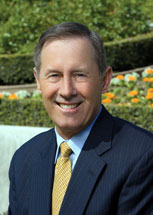
Ask Maddy about Tom Berryhill
Scope: california
Hi! I can help you understand Tom Berryhill's legislative record. What would you like to know?
Try one of these
i
Maddy answers using official bill text and legislative records. Always verify before sharing.
Sources cited inline