

Existing federal law, the Indian Gaming Regulatory Act of 1988, provides for the negotiation and execution of tribal-state gaming compacts for the purpose of authorizing certain types of gaming on Indian lands within a state. The California Constitution authorizes the Governor to negotiate and conclude those compacts, subject to ratification by the Legislature. Existing law expressly ratifies a number of tribal-state gaming compacts, and amendments to tribal-state gaming compacts, between the State of California and specified Indian tribes. The California Environmental Quality Act (CEQA) requires a lead agency to prepare, or cause to be prepared, and certify the completion of, an environmental impact report on a project, as defined, that it proposes to carry out or approve that may have a significant effect on the environment, as defined, or to adopt a negative declaration if it finds that the project will not have that effect. This bill would ratify the tribal-state gaming compact entered into between the State of California and the Cher-Ae Heights Indian Community of the Trinidad Rancheria, the first amendment to the compact between the State of California and the Pinoleville Pomo Nation, California, and the first amendment to the compact between the State of California and the Sycuan Band of the Kumeyaay Nation. The bill would provide that, in deference to tribal sovereignty, certain actions related to these compacts are not projects for the purposes of CEQA. This bill would declare that it is to take effect immediately as an urgency statute.
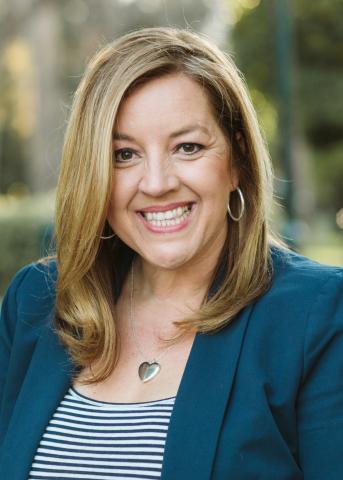
Sen. Angelique Ashby
Sponsored bills
This measure would honor the County of Sacramento's 175th anniversary, commend the county for its rich history, remarkable growth, and ongoing commitment to serving its people, and look forward to its continued success and prosperity.
Existing law makes it a misdemeanor to wear a mask, false whiskers, or any personal disguise, as specified, with the purpose of evading or escaping discovery, recognition, or identification while committing a public offense, or for concealment, flight, evasion, or escape from arrest or conviction for any public offense. This bill would make it a crime for a law enforcement officer to wear a facial covering in the performance of their duties, except as specified. The bill would define law enforcement officer as anyone designated by California law as a peace officer who is employed by a city, county, or other local agency, and any officer or agent of a federal law enforcement agency or law enforcement agency of another state, or any person acting on behalf of a federal law enforcement agency or agency of another state. The bill would make a violation of these provisions punishable as an infraction or a misdemeanor, as specified. By creating a new crime, this bill would impose a state-mandated local program. The bill would require any law enforcement agency operating in California to, by July 1, 2026, maintain and publicly post a written policy limiting the use of facial coverings, as specified. The bill would exempt personnel of any agency from the crime of wearing a facial covering if an agency maintains a policy pursuant to this section no later than July 1, 2026. The bill would deem a policy consistent with these provisions for the purposes of that exception unless a member of the public, an oversight body, or a local governing authority challenges it. The bill would also impose a specified civil penalty against certain officers for tortious conduct, including, but not limited to, false imprisonment or false arrest of an individual while wearing a facial covering. The bill would, if the agency does not address deficiencies within 90 days, authorize the complaining party to proceed to a court of competent jurisdiction for a judicial determination of the exemption, as specified. The bill would define a law enforcement agency for these purposes as any entity of a city, county, or other local agency, that employs anyone designated by California law as a peace officer, any federal law enforcement agency, or any law enforcement agency of another state. By imposing additional duties on local law enforcement agencies, this bill would create a state-mandated local program. This bill would declare its provisions to be severable. This bill would make related findings and declarations. The California Constitution requires the state to reimburse local agencies and school districts for certain costs mandated by the state. Statutory provisions establish procedures for making that reimbursement. This bill would provide that with regard to certain mandates no reimbursement is required by this act for a specified reason. With regard to any other mandates, this bill would provide that, if the Commission on State Mandates determines that the bill contains costs so mandated by the state, reimbursement for those costs shall be made pursuant to the statutory provisions noted above.
Maddy summarySCR 95 is a ceremonial resolution that would establish September 20, 2025, and every September 20 thereafter, as "Soju Day" in the state. It does not create new laws or regulations, nor does it affect any specific individuals or groups. The resolution solely designates an annual date for recognition and celebration. This is purely symbolic, with no concrete policy changes or practical impact beyond the ceremonial observance.
This measure would proclaim September 4, 2025, as Taekwondo Day in California and encourage all residents to recognize and celebrate the positive impact of Taekwondo on individuals, families, and communities throughout the state.
This measure would declare October 28, 2025, as First Responders' Day and would urge all Californians to observe and promote the day with appropriate ceremonies and activities that promote awareness of the contributions of first responders in California.
This measure would proclaim the month of October 2025 as California Firefighter Appreciation Month and October 4, 2025, as California Firefighters Memorial Day.
Maddy summaryACR 106 designates November 2025 as "Court Adoption and Permanency Month" through a symbolic declaration. This concurrent resolution does not create new laws or affect any specific policies or individuals. It serves as a formal recognition to raise public awareness about adoption processes and permanency planning within the court system during that month. The measure is purely commemorative and has no binding legal effect.
Existing law, the California Uniform Controlled Substances Act, categorizes controlled substances into 5 schedules and places the greatest restrictions on those substances contained in Schedule I. Under existing law, the substances in Schedule I are deemed to have a high potential for abuse and no accepted medical use while substances in Schedules II through V are substances that have an accepted medical use, but have the potential for abuse. Existing law restricts the prescription, furnishing, possession, sale, and use of controlled substances, and makes a violation of those laws a crime, except as specified. Existing law defines drug paraphernalia and prohibits, among other things, the manufacture, sale, and possession, as specified, of drug paraphernalia. Existing law excludes from these prohibitions any testing equipment that is designed, marketed, used, or intended to be used to analyze a substance for the presence of fentanyl, ketamine, gamma hydroxybutyric acid, or any analog of fentanyl. This bill would add xylazine to the list of Schedule III substances, as specified. If an animal drug containing xylazine that has been approved under the federal Food, Drug and Cosmetic Act is not available for sale in California, the bill would create an exception for a substance that is intended to be used to compound an animal drug, as specified. The bill would exclude from the prohibitions on paraphernalia any testing equipment to analyze a substance for the presence of xylazine. By creating a new crime, the bill would impose a state-mandated local program. The California Constitution requires the state to reimburse local agencies and school districts for certain costs mandated by the state. Statutory provisions establish procedures for making that reimbursement. This bill would provide that no reimbursement is required by this act for a specified reason.
Existing law creates the Office of Farm to Fork within the Department of Food and Agriculture, and requires the office, to the extent that resources are available, to work with various entities, as prescribed, to increase the amount of agricultural products available to underserved communities and schools in the state. Existing law requires the office, among other things, to identify distribution barriers that affect limited food access and work to overcome those barriers through various actions and to coordinate with school districts and representatives to increase the nutritional profile of foods provided in schools. This bill would create the Food Desert Elimination Grant Program under the administration of the department for the purpose of expanding access to healthy foods in food deserts, as defined, in the state, and areas at risk of becoming food deserts, by providing grants to grocery store operators, as specified. The bill would create the Food Desert Elimination Fund in the General Fund and would authorize the fund to be expended by the department, upon appropriation by the Legislature, for purposes of the program. The bill would authorize the department to collect nonstate, federal, and private funds, require those funds to be deposited into the California Equitable Food Access Account within the Food Desert Elimination Fund, and continuously appropriate moneys in the account to the department for purposes of the program. The bill would authorize the department to award grants for specified purposes to grocery store operators seeking to locate grocery stores in food deserts or to existing grocery stores located in food deserts. The bill would authorize the department to adopt guidelines to implement these provisions. The bill would make the implementation of all of its provisions contingent upon an appropriation by the Legislature. The bill would repeal its provisions on December 31, 2030.