

Maddy summarySenate Resolution 8 is a symbolic resolution by the California Senate urging the Pro Football Hall of Fame Selection Committee to induct NFL quarterback Jim Plunkett into the Pro Football Hall of Fame for the 2025 class. The resolution highlights Plunkett's career achievements, including winning two Super Bowls (with the Raiders in 1981 and 1984), being the first Latino to win the Heisman Trophy (1970), and being the only starting quarterback with two Super Bowl rings not yet inducted. It does not create new policy or affect any group through legislation, as it is a non-binding expression of support addressed to the Hall of Fame committee. The resolution specifically notes Plunkett's historic significance as a trailblazing Latino athlete and his 17-year NFL career.
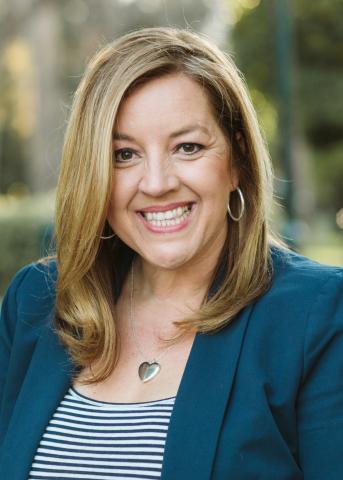
Sen. Angelique Ashby
Sponsored bills
Maddy summarySenate Resolution 6 is a routine procedural measure requiring the Senate President pro tempore to appoint a committee to formally notify the Assembly that the Senate is organized and ready to begin its 2025-26 legislative session. It does not create new laws or affect any constituents; it simply follows standard legislative protocol for the start of a new session. The resolution was introduced and adopted by the Senate on December 2, 2024, as a standard step to confirm the Senate's readiness to conduct business. This is a non-substantive procedural action with no policy impact.
Existing law defines an assault as an unlawful attempt, coupled with present ability, to commit a violent injury on the person of another. Existing law defines a battery as any willful and unlawful use of force or violence upon the person of another. Under existing law, an assault or battery committed against a physician or nurse engaged in rendering emergency medical care outside a hospital, clinic, or other health care facility is punishable by imprisonment in a county jail not exceeding one year, by a fine not exceeding $2,000, or by both that fine and imprisonment. This bill would also make an assault or battery committed against a physician, nurse, or other health care worker of a hospital engaged in providing services within the emergency department punishable by imprisonment in a county jail not exceeding one year, by a fine not exceeding $2,000, or by both that fine and imprisonment. The bill would authorize a health facility that maintains and operates an emergency department to post a notice in the emergency department stating that an assault or battery against staff is a crime, and may result in a criminal conviction, as provided. By expanding the scope of a crime, this bill would impose a state-mandated local program. The California Constitution requires the state to reimburse local agencies and school districts for certain costs mandated by the state. Statutory provisions establish procedures for making that reimbursement. This bill would provide that no reimbursement is required by this act for a specified reason.
Under existing law, in any civil action that contains allegations of sexual harassment, sexual assault, or sexual battery, opinion evidence, reputation evidence, and evidence of specific instances of a plaintiff's sexual conduct with someone other than the alleged perpetrator, is not admissible by the defendant in order to prove consent by the plaintiff or the absence of injury to the plaintiff. This bill would also make the specified types of evidence inadmissible in such civil actions when being used to attack the credibility of the plaintiff's testimony on consent or absence of injury. Under existing law, in any sexual battery civil action involving a minor and an adult who is in a position of authority, as specified, evidence of the plaintiff minor's sexual conduct with the defendant adult is not admissible to prove consent by the plaintiff or the absence of injury to the plaintiff. Existing law authorizes evidence of the minor plaintiff's sexual conduct to be introduced only to attack the credibility of the plaintiff or to prove something other than consent by the plaintiff if, upon a hearing of the court out of the presence of the jury, the defendant proves that the probative value of that evidence outweighs the prejudice to the plaintiff, as specified. This bill would remove the requirement, in cases involving a minor and an adult who is in a position of authority, that prior to the introduction of specified types of evidence, a court hold a hearing out of the presence of the jury, where the defendant bears the burden to prove that the probative value of the evidence outweighs the prejudice. The introduction of evidence relating to the sexual conduct of the minor in such cases would be evaluated under procedures already in place under existing law.
Existing law establishes the California Community Colleges, the California State University, and the University of California as the 3 public segments of postsecondary education in the state. The missions and functions of these segments are set forth in the Donahoe Higher Education Act. Existing law requires each campus of the California State University and the California Community Colleges, and requests each campus of the University of California, to host on its internet website a student parent internet web page that contains information that clearly lists all on- and off-campus student parent services and resources, as specified, including, among other student parent services and resources, information on the California Earned Income Tax Credit and the Young Child Tax Credit. This bill would require the information on student parent internet web pages to include additional information on student parent services and resources, including several other federal and state tax credits, state and federal financial aid applications and programs, and the California Work Opportunity and Responsibility to Kids program. The bill would require each campus of the California Community Colleges and the California State University, and would request each campus of the University of California to, on or before the start of the 2026–27 academic year, (1) implement a policy developed by the respective systemwide chancellor or president for estimating and adjusting cost of attendance information for student parents, as specified, (2) enter student parent data for specified uses into the respective systemwide data management information system, as revised to accommodate this data by the systemwide chancellor or president pursuant to the bill, and (3) update its campus net price calculator to include a baseline student parent cost estimate, as specified. By imposing new duties on community college districts, the bill would impose a state-mandated local program. The California Constitution requires the state to reimburse local agencies and school districts for certain costs mandated by the state. Statutory provisions establish procedures for making that reimbursement. This bill would provide that, if the Commission on State Mandates determines that the bill contains costs mandated by the state, reimbursement for those costs shall be made pursuant to the statutory provisions noted above.
Existing law establishes the State Department of Public Health to implement and administer various programs relating to public health. The department administers the California Overdose Surveillance Dashboard that provides data on state- and local-level drug-related overdose outcomes for California, including, among other data, the number of deaths related to fentanyl overdoses. Existing law requires the department to update the dashboard to reflect additional information, as specified. This bill would require the department to use best efforts to utilize all of its relevant data regarding overdoses in the state to monitor and identify current trends of fentanyl-related deaths of children 0 to 5 years of age, inclusive. The bill would require the department to develop guidance and spread awareness of the trends to protect and prevent children from fentanyl exposure. The bill would require the department, on or before January 1, 2026, to annually distribute its findings and guidance to local health departments, county boards of supervisors, and the Legislature. The bill would repeal these provisions on January 1, 2029.
Existing law, the Control, Regulate and Tax Adult Use of Marijuana Act of 2016 (AUMA) , an initiative measure, authorizes a person who obtains a state license under AUMA to engage in commercial adult-use cannabis activity pursuant to that license and applicable local ordinances. Existing law, the Medicinal and Adult-Use Cannabis Regulation and Safety Act (MAUCRSA) , among other things, consolidates the licensure and regulation of commercial medicinal and adult-use cannabis activities and requires the Department of Cannabis Control to administer its provisions. Under MAUCRSA, the Department of Cannabis Control has sole authority to license and regulate commercial cannabis activity, which MAUCRSA defines to include, among other activities, the sale of cannabis and cannabis products. Existing law requires all civil penalties imposed and collected by a court in actions brought for violations of MAUCRSA to be deposited into the General Fund, except as provided. Existing law places various advertising and marketing restrictions on licensees, including prohibiting a licensee from publishing or disseminating advertising or marketing that is attractive to children, and from advertising or marketing cannabis or cannabis products in a manner intended to encourage consumption by persons under 21 years of age or on an advertising sign within 1,000 feet of a daycare center, school, or youth center. Existing law also prohibits a licensee from advertising or marketing on a billboard or similar advertising device located on an interstate highway or on a state highway that crosses the California border. This bill would expand the above-described restrictions to a person engaged in commercial cannabis activity, whether licensed or unlicensed. Existing law governs the cultivation of industrial hemp in this state and establishes a registration program administered by county agricultural commissioners and the Department of Food and Agriculture for growers of industrial hemp, hemp breeders, and established agricultural research institutions, as defined. The Sherman Food, Drug, and Cosmetic Law, among other things, regulates the labeling of food, beverages, and cosmetics and makes it a crime to distribute in commerce any food, drug, device, or cosmetic if its packaging or labeling does not conform to these provisions. Violation of the Sherman Food, Drug, and Cosmetic Law is a misdemeanor. Existing law imposes various advertising requirements on hemp manufacturers, as defined, including, among other things, prohibiting directly targeting advertising or marketing to children or to persons who are pregnant or breastfeeding. This bill would instead require a manufacturer, distributor, or seller of industrial hemp to comply with advertising and marketing restrictions similar to those under MAUCRSA as described above. By expanding the scope of a misdemeanor, this bill would impose a state-mandated local program. This bill would authorize the Attorney General, a city attorney, or a county counsel to bring and maintain an action to redress a violation of the above-described advertising and marketing restrictions. The bill would require the Attorney General, a city attorney, or a county counsel who prevails in an action to be awarded injunctive relief and would authorize them to be awarded reasonable attorney's fees and costs and civil penalties of not more than $5,000 per violation for a licensed cannabis business or an industrial hemp registrant and not more than $30,000 for an unlicensed cannabis business or an unregistered business engaged in the sale of products that contain industrial hemp, as specified. The bill would require civil penalties awarded in an action to be distributed pursuant to existing law provisions referenced above. The bill would prohibit a defendant from being subject to more than one action in connection with the same, or substantially similar, advertising or marketing, except as provided. The bill would prohibit these provisions from being construed to limit or otherwise alter, in any way, any other authority conferred by law upon the Attorney General, the department, or any other state or local officer or agency, as specified. The California Constitution requires the state to reimburse local agencies and school districts for certain costs mandated by the state. Statutory provisions establish procedures for making that reimbursement. This bill would provide that no reimbursement is required by this act for a specified reason.
Existing law, the Knox-Keene Health Care Service Plan Act of 1975, provides for the licensure and regulation of health care service plans by the Department of Managed Health Care and makes a willful violation of the act a crime. Existing law also provides for the regulation of health insurers by the Department of Insurance. Existing law requires health care service plan contracts and health insurance policies to provide coverage for certain services and treatments, including medical transportation services. Existing law establishes the Medi-Cal program, administered by the State Department of Health Care Services and under which qualified low-income individuals receive health care services, including emergency medical transport. The Medi-Cal program is, in part, governed and funded by federal Medicaid program provisions. Existing law, until January 1, 2031, authorizes a local emergency medical services (EMS) agency to develop a community paramedicine or triage to alternate destination program that, among other things, provides case management services to frequent EMS users or triage paramedic assessments, respectively. This bill would require a health care service plan contract or health insurance policy issued, amended, or renewed on or after July 1, 2025, to establish a process to reimburse for services provided by a community paramedicine program, a triage to alternate destination program, and a mobile integrated health program, as defined. The bill would require those contracts and policies to require an enrollee or insured who receives covered services from a noncontracting program to pay no more than the same cost-sharing amount that they would pay for the same covered services received from a contracting program. The bill would prohibit reimbursement rates adopted pursuant to this provision from exceeding the health care service plan's or health insurer's usual and customary charges for services rendered. Because a willful violation of these provisions by a health care service plan would be a crime, the bill would impose a state-mandated local program. The bill would also make services provided by these programs covered benefits under the Medi-Cal program. The bill would condition this Medi-Cal coverage on an appropriation, receipt of any necessary federal approvals, and the availability of federal financial participation. The California Constitution requires the state to reimburse local agencies and school districts for certain costs mandated by the state. Statutory provisions establish procedures for making that reimbursement. This bill would provide that no reimbursement is required by this act for a specified reason.
Existing law authorizes the court to issue an order to restrain a person to prevent acts of domestic violence, abuse, and sexual abuse, and to provide for a separation of the persons involved in the domestic violence for a period sufficient to permit these persons to seek resolution. Existing law authorizes a person who has suffered harassment, as defined, to seek a temporary restraining order and an order prohibiting harassment. Existing law prohibits denial of the right to petition when the petitioner has vacated the household to avoid abuse, and, under certain conditions, in the case of a marital relationship. This bill would specify the jurisdictions in which the petitioner may file for a restraining order, including, among other jurisdictions, the superior court in the county where the defendant resides, where the offense occurred, or where the petitioner resides or is temporarily located. The bill would expressly state that an individual need not be a resident of the state to file a petition for a restraining order under these provisions. The bill would also declare the severability of its provisions.
(1) Existing federal law, the Victims of Crime Act of 1984, creates the Crime Victims Fund and authorizes federal financial assistance to states for the purpose of supporting eligible crime victim assistance programs. Existing law creates various programs under the Office of Emergency Services related to crime prevention and education, including, among other things, programs concerning family violence prevention and domestic violence prevention. This bill, the California Victims of Crime Act, would establish the California Crime Victims Fund in the State Treasury and would require that moneys deposited in the fund be continuously appropriated to the Office of Emergency Services to support crime victims services. The bill would require the Office of Emergency Services to seek advisement from the Victims of Crime Act Steering Committee on priorities for utilizing the funds and would require the Treasurer to provide an annual report to the Legislature on the amounts deposited into the fund. By continuously appropriating moneys to the Office of Emergency Services for the support of crime victim services, the bill would make an appropriation. (2) Existing law establishes the aggravated white-collar crime enhancement which imposes enhanced penalties against a person who commits 2 or more related felonies, a material element of which is fraud or embezzlement, that involve a pattern of related felony conduct, and the pattern of related felony conduct involves the taking or loss of more than $100,000, as specified. This bill would authorize a court to impose an additional fine, known as the corporate white collar criminal enhancement, against a corporation that is convicted of a misdemeanor or felony. The bill would authorize the court to determine the amount of the fine, but would set specified limits. The bill would require the court to consider certain factors when determining the amount of the fine, including, among other things, the nature and seriousness of the offense and the corporation's assets, liabilities, and net worth, as specified. The bill would require that any moneys collected under this provision be deposited into the California Crime Victims Fund. (3) The California Constitution entitles the victim of a crime to restitution. Existing law requires the court in each criminal case to order a convicted defendant to pay full restitution to the victim and a separate restitution fine, as specified. This bill would, if a corporation is convicted of a misdemeanor or felony offense, require the court to impose a separate and additional restitution fine, as specified. The bill would authorize the court to determine the amount of the restitution fine, but would impose specified maximums. The bill would require any moneys collected under this provision to be distributed to the California Crime Victims Fund and the prosecuting agency that brought the criminal prosecution, as specified.