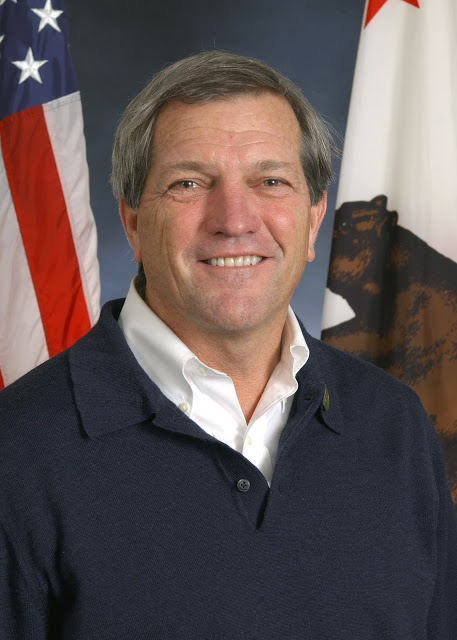
Photo of Mark DeSaulnier
D California Senate · District 7

Sen. Mark DeSaulnier

Compare
Total votes
20,889
all sessions
Attendance
96%
512 missed
Higher than 96% of chamber peers
With party
99%
of cast votes
Higher than 96% of chamber peers
Bipartisan score
0%
crosses aisle rarely
Lower than 99% of chamber peers
Sponsored
635
bills & resolutions
Lower than 92% of chamber peers
Committees
0
assignments
635 bills and resolutions

Sponsored bills

Total
635
Primary
191
Co-sponsor
444
This page
635
matching current filters
Co-sponsor SB 135
Signed into law · California Senate · Co-sponsor
Animal abuse: cattle: tail docking.

Existing law makes it a misdemeanor for any person to cut the solid part of the tail of any horse in the operation known as "docking." This bill would likewise prohibit the docking of cattle, as defined, but would exclude from the application of the crime of cattle docking emergency veterinary treatment performed, as specified. By expanding the scope of an existing crime, this bill would impose a state-mandated local program. The California Constitution requires the state to reimburse local agencies and school districts for certain costs mandated by the state. Statutory provisions establish procedures for making that reimbursement. This bill would provide that no reimbursement is required by this act for a specified reason.


Signed into law Oct 11, 2009 1 co-sponsor
Co-sponsor AB 1464
Signed into law · California Assembly · Co-sponsor
Transportation: California Bicycle Routes of National, State, or Regional Significance Act.

Existing law requires the Department of Transportation, in cooperation with county and city governments, to establish minimum safety design criteria for the planning and construction of bikeways and roadways where bicycle travel is permitted. This bill would enact the California Bicycle Routes of National, State, or Regional Significance Act, which would authorize the department to establish a process for identifying and promoting bicycle routes of national, state, or regional significance, as specified. The bill would authorize the department to form an advisory committee to help implement the process for identifying and promoting these bicycle routes. The bill would authorize the department to establish a process for organizations, including, but not limited to, local bicycle organizations, private entities, or local or state governmental entities, to nominate a route for inclusion in the system of bicycle routes of national, state, or regional significance. The bill would authorize the department to install bicycle route signs identifying these bicycle routes, as specified. The bill would provide that applicants or nominating entities may pay the cost for bicycle route signs, as determined by the department.

Signed into law Oct 11, 2009 1 co-sponsor
Co-sponsor AB 166
Signed into law · California Assembly · Co-sponsor
Vessels: abandonment: abatement.

Existing law makes it an infraction with a minimum $500 fine and maximum $3,000 fine for a person to abandon a vessel upon a public waterway or public or private property without the express or implied consent of the owner or person in lawful possession or control of the property, except for the urgent and immediate concern for the safety of those aboard the vessel. Existing law provides that 80% of the moneys collected as fines shall be deposited in the Abandoned Watercraft Abatement Fund. Upon appropriation by the Legislature, moneys in the fund may be used for grants to be awarded by the Department of Boating and Waterways to local agencies for the abatement and removal of abandoned, wrecked, and dismantled vessels, or parts of those vessels. This bill would increase the minimum fine to $1,000. The bill would also allow the moneys in the fund to be used for the abatement and removal of a hulk, derelict, wreck, or parts of any ship, or other watercraft sunk, beached, or allowed to remain in an unseaworthy or dilapidated condition upon municipal or other public corporation property, and for the disposal of a surrendered vessel, as defined. This bill would prohibit the state from assuming liability for any injuries or damages to a person or entity, public or private, connected to or resulting from the processing or disposal of a surrendered vessel. These changes would be repealed as of January 1, 2014. Existing law authorizes wrecked property that is an unseaworthy derelict or hulk, or abandoned property removed from a navigable waterway, as specified, to be sold or otherwise disposed of by the public agency that removed or caused the removal of the property, subject to specified conditions, including that the property has been appraised by disinterested persons, and has an estimated value of less than $2,000. This bill would, until January 1, 2014, except from these specified conditions the removal and sale or disposition of a surrendered vessel, as defined. The bill would require the Department of Boating and Waterways to track the number of surrendered vessels accepted by a public agency that disposes of those vessels using grant funds from the Abandoned Watercraft Abatement Fund from January 1, 2010, to January 1, 2013, inclusive, and the total amount of expenditure from that fund for surrendered vessels during the same period. The bill would require the department to report that information to the Assembly Committee on Transportation and the Senate Committee on Natural Resources and Water with any recommendations for revising or continuing the use of fund moneys for those purposes.

Signed into law Oct 11, 2009 1 co-sponsor
Primary SB 283
Signed into law · California Senate · Lead sponsor
Department of Water Resources: recycled water systems.

Existing law, the Water Recycling Act of 2006, requires the Department of Water Resources, in consultation with the State Department of Health Services, on or before July 1, 2008, to adopt and submit to the California Building Standards Commission regulations to establish a state version of Appendix J of the Uniform Plumbing Code to provide design standards to safely plumb buildings with both potable and recycled water systems. This bill would revise the date the Department of Water Resources is required to adopt and submit regulations, as specified, to the commission to December 31, 2009. The bill would, commencing July 1, 2011, and annually thereafter, require the department to review and update, as necessary, the regulations. This bill would declare that it is to take effect immediately as an urgency statute.

Signed into law Oct 11, 2009 0 co-sponsors
Co-sponsor AB 116
Signed into law · California Assembly · Co-sponsor
Transportation authorities and districts: contracts.

(1) Existing law establishes bridge and highway districts and various regional transportation authorities and transit districts, including the Santa Clara Valley Transportation Authority, the Alameda-Contra Costa Transit District, and the Golden Gate Bridge, Highway and Transportation District, and prescribes the powers and duties of each, including procedures for awarding contracts and procurement. Existing law, with respect to the purchases of supplies, equipment, and materials by bridge and highway districts that exceed $20,000, requires the contract to be let to the lowest responsible bidder, and, with respect to purchases by the Santa Clara Valley Transportation Authority and the Alameda-Contra Costa Transit District that exceed $25,000, requires the contract to be let to the lowest responsible bidder. Existing law requires the Santa Clara Valley Transportation Authority and the Alameda-Contra Costa Transit District to publish a notice requesting bids to be published in a newspaper of general circulation, and requires bridge and highway districts to advertise bids as specified. This bill instead would require contracts of the Santa Clara Valley Transportation Authority, the Alameda-Contra Costa Transit District, and the Golden Gate Bridge, Highway and Transportation District, under which the expenditure for the purchase of supplies, equipment, and materials exceeds $100,000, to be let to the lowest responsible bidder or to the responsible bidder who submits a proposal that provides the best value, as defined. The bill would revise the notice requirement to require that notice requesting bids be published at least once in a newspaper of general circulation and on the authority's or district's procurement Internet Web site. The bill also would require the authority or district, to the extent practicable, to obtain a minimum of 3 quotations, either written or oral, that permit prices and terms to be compared, whenever the expected expenditure required for the purchase of supplies, equipment, or materials exceeds $2,500, but does not exceed $100,000. Existing law requires contracts by the San Mateo County Transit District for the purchase of supplies, equipment, and materials in excess of $25,000 to be awarded to the lowest responsible bidder after competitive bidding, except in an emergency declared by the vote of 7 members of the board, and allows the board to authorize the general manager to act for the board when the contract is for less than $50,000. This bill would delete these provisions and would instead require a contract by the San Mateo County Transit District for the purchase of all supplies, equipment, and materials, when the expenditure required exceeds $100,000, to be by contract to the lowest responsible bidder or to the responsible bidder who submitted a proposal that provides the best value, as specified. The bill would require the district, to the extent practicable, to obtain a minimum of 3 quotations whenever the expected expenditure exceeds $2,500, but does not exceed $100,000, and would require notice requesting bids to be published, as specified. By expanding the duties of a local agency, this bill would impose a state-mandated local program. (2) The California Constitution requires the state to reimburse local agencies and school districts for certain costs mandated by the state. Statutory provisions establish procedures for making that reimbursement. This bill would provide that no reimbursement is required by this act for a specified reason.
Signed into law Oct 11, 2009 1 co-sponsor
Co-sponsor AB 407
Signed into law · California Assembly · Co-sponsor
Continuing care contracts: retirement communities: closure.

Existing law contains provisions relating to supervision of continuing care contracts, including requirements governing continuing care communities and contracts. Existing law requires the State Department of Social Services to regulate activity relating to continuing care contracts, and requires that continuing care retirement communities maintain an environment that enhances residents' independence and self-determination and in that regard imposes various requirements on a care provider. Existing law defines various terms for purposes of those contracts and requirements, and imposes specified civil and criminal penalties for violations of those provisions. This bill would define the term "permanent closure" for purposes of those provisions, to mean prescribed events that will cause the relocation of residents. This bill would impose various requirements on a provider with respect to the permanent closure of a continuing care retirement community facility, or a portion thereof, as specified, including providing 120 days' written notice to the department, and affected residents or designated representatives of these residents of the intended date of closure of a facility. The bill would require a provider, no less than 90 days prior to the permanent closure of a continuing care retirement community facility, or a portion thereof, to provide the department, affected residents and their representatives, and the local long-term care ombudsman program, with a written closure and relocation plan for the facility, containing specified information. The bill would require the department to monitor the implementation of the closure and relocation plan, as necessary, to ensure full compliance by the provider, and would prohibit a provider from taking any action to relocate a resident or to close the facility, until the plan has been prepared and submitted to the department by the provider and provided to the affected residents of the facility, the affected residents' designated representatives, and the local long-term care ombudsman program. The bill would also require the provider, in the case of a permanent closure, to offer the resident the choice of replacement housing, monetary compensation equal to the remaining value of the contract, or an alternative arrangement mutually agreed upon by the provider and the resident. Because this bill would change the definition of a crime, it would impose a state-mandated local program. The California Constitution requires the state to reimburse local agencies and school districts for certain costs mandated by the state. Statutory provisions establish procedures for making that reimbursement. This bill would provide that no reimbursement is required by this act for a specified reason.

Signed into law Oct 11, 2009 1 co-sponsor
Co-sponsor AB 1203
Signed into law · California Assembly · Co-sponsor
Transportation bond funds: transit system safety.

Existing law, the Highway Safety, Traffic Reduction, Air Quality, and Port Security Bond Act of 2006, authorizes the issuance of $19.925 billion of general obligation bonds for specified purposes. Existing law requires the deposit of $1 billion of the bond proceeds in the Transit System Safety, Security, and Disaster Response Account to be used, upon appropriation, for capital projects that provide increased protection against a security and safety threat, and for capital expenditures to increase the capacity of transit operators to develop disaster response transportation systems that can move people, goods, and emergency personnel and equipment in the aftermath of a disaster impairing that movement. Existing law requires the allocation of 25% of these funds for capital expenditures to regional public waterborne transit agencies authorized to operate a regional public water transit system, as specified, and requires the California Emergency Management Agency (Cal EMA) to administer a grant application and award program for transit agencies eligible to receive the funds. Existing law requires Cal EMA to select eligible projects to receive those grants by February 1 of each fiscal year in which funds are appropriated for that purpose. This bill would additionally require Cal EMA, by February 1 of each fiscal year, in which funds are appropriated for that purpose, to provide the Controller with a list of projects and the sponsoring agencies eligible to receive an allocation. The bill would require the Controller, upon receipt of this information, to commence any necessary actions to allocate funds to those agencies, as specified.

Signed into law Oct 11, 2009 1 co-sponsor
Co-sponsor AB 20
Signed into law · California Assembly · Co-sponsor
University of California: California State University: contracts.

Existing law establishes the University of California (UC) as a public trust administered by the Regents of the University of California. Employees of the UC provide instruction to students and conduct research at each of the 10 campuses of the UC, which are located in Berkeley, Davis, Irvine, Los Angeles, Merced, Riverside, San Diego, San Francisco, Santa Barbara, and Santa Cruz. Existing law establishes the California State University (CSU) , under the administration of the Trustees of the California State University, as one of the other segments of public postsecondary education in this state. This bill would require the Department of General Services, to negotiate and establish a model contract with standard contract provisions with both the regents and the trustees by July 1, 2010. The trustees would be required to, and the regents would be urged to, negotiate and establish with the Department of General Services the model contract applicable to their university by July 1, 2010. The bill would define the term contract to mean a research, training, or service agreement between the state and the UC or CSU, or a grant from the state to the UC or CSU for research, training, or service. The bill would require that, to the extent feasible, these standard contract provisions include, but not necessarily be limited to, provisions relating to specified legal issues. The bill would require that the standard provisions in a model contract agreed upon under the bill be used in contracts entered into between the UC or CSU and the state, unless both contracting parties mutually determine that a specific standard contract provision is inappropriate or inadequate for a specific contract. The bill would authorize the Department of General Services to use the services of any state agency, defined to include every state office, officer, department, division, bureau, board, and commission, in implementing the bill. The bill would make the CSU and UC responsible for the Department of General Services' facilitation and associated support costs required to implement the bill.

Signed into law Oct 11, 2009 1 co-sponsor
Co-sponsor ACR 54
Signed into law · California Assembly · Co-sponsor
Relative to education finance.

This measure would state the intent of the Legislature that the State of California generate sufficient funds for, and allocate sufficient funds to, education, so as to bring per-pupil spending up to or beyond the national average, and to a level that accounts for the actual cost of educating California's diverse pupil population.

Signed into law Sep 16, 2009 1 co-sponsor
Co-sponsor AJR 10
Signed into law · California Assembly · Co-sponsor
Social Security: retirement benefits: public employees.

This measure would request the President and the Congress of the United States to enact the Social Security Fairness Act of 2009, which would repeal the Government Pension Offset and the Windfall Elimination Provision from the Social Security Act.

Signed into law Sep 16, 2009 1 co-sponsor
Showing 391 to 400 of 635 bills
Previous 1 … 39 40 41 … 64 Next