

Passed Mar 10, 2014
1 co-sponsor
Total votes
26,098
all sessions
Attendance
98%
455 missed
Near the chamber average
With party
99%
of cast votes
Near the chamber average
Bipartisan score
0%
crosses aisle rarely
Lower than 76% of chamber peers
Sponsored
951
bills & resolutions
Lower than 78% of chamber peers
Committees
0
assignments
951 bills and resolutions
Sponsored bills
Total
951
Primary
341
Co-sponsor
610
This page
951
matching current filters
Medi-Cal: performance measures.
Existing law provides for the Medi-Cal program, which is administered by the State Department of Health Care Services, under which qualified low-income individuals receive health care services. The Medi-Cal program is, in part, governed and funded by federal Medicaid Program provisions. Under existing law, one of the methods by which Medi-Cal services are provided is pursuant to contracts with managed care plans. Existing federal law generally requires that a state that contracts with certain managed care plans ensure that an external quality review is performed by an External Quality Review Organization (EQRO) . This bill would require, when the department enters into a new contract with an EQRO for the EQRO to perform work associated with Medi-Cal managed care programs, that the department include in the terms of the new contract a requirement that, upon approval of the contract, the EQRO stratify all patient-specific Healthcare Effectiveness Data and Information Set measures, or their External Accountability Set performance measure equivalent, by certain characteristics, including geographic area and primary language. The bill would require the department to publicly report this analysis on the department's Internet Web site. The bill would provide that its provisions only be implemented to the extent that funding is available.
Vetoed Mar 6, 2014
0 co-sponsors
Insurance affordability programs: application form.
Existing law requires the California Health and Human Services Agency, in consultation with specified entities, to establish a single, standardized, accessible application form and related renewal procedures for insurance affordability programs, as defined, in accordance with specified requirements. Existing law authorizes the form to include questions that are voluntary for applicants to answer regarding demographic data categories, including race, ethnicity, primary language, disability status, and other categories recognized by the federal Secretary of Health and Human Services pursuant to federal law. Chapter 3 of the First Extraordinary Session of the Statutes of 2013, to be effective on the 91st day after adjournment of that session, amended these provisions, among others, to implement various provisions of the federal Patient Protection and Affordable Care Act (PPACA) . This bill would authorize the form to also include questions that are voluntary for applicants to answer regarding sexual orientation and gender identity or expression. The bill would, effective January 1, 2015, require the form to include questions that are voluntary for applicants to answer regarding the demographic data categories specified.
Vetoed Mar 6, 2014
0 co-sponsors
Health care coverage: Medi-Cal: eligibility.
Existing law provides for the Medi-Cal program, which is administered by the State Department of Health Care Services, under which qualified low-income individuals receive health care services. The Medi-Cal program is, in part, governed and funded by federal Medicaid Program provisions. This bill would, effective January 1, 2014, and under specified federal provisions applicable to qualified pregnant women and children, provide that a woman shall be eligible for full-scope Medi-Cal benefits if her income is less than 100% of the federal poverty level as determined, counted, and valued in accordance with federal law. The bill would require the department to adopt regulations implementing that provision by January 1, 2017, and to provide semiannual status reports to the Legislature until that time. Because counties are required to make Medi-Cal eligibility determinations and this bill would expand Medi-Cal eligibility, the bill would impose a state-mandated local program. The California Constitution requires the state to reimburse local agencies and school districts for certain costs mandated by the state. Statutory provisions establish procedures for making that reimbursement. This bill would provide that, if the Commission on State Mandates determines that the bill contains costs mandated by the state, reimbursement for those costs shall be made pursuant to these statutory provisions.
Vetoed Mar 6, 2014
0 co-sponsors
Passed Feb 27, 2014
1 co-sponsor
Political Reform Act of 1974.
(1) Existing law, the Political Reform Act of 1974, provides for the comprehensive regulation of campaign financing, including requiring the reporting of campaign contributions and expenditures, as defined, and imposing other reporting and recordkeeping requirements on campaign committees, as defined. The act requires the Secretary of State, in consultation with the Fair Political Practices Commission, to develop online and electronic filing processes for specified entities. A violation of the act's provisions is punishable as a misdemeanor. This bill would revise the terms "late contribution" and "late independent expenditure," as defined in the act, to "election-cycle contribution" and "election-cycle independent expenditure," respectively, and would make conforming changes. The bill would also increase the fines and penalties imposed for campaign statements and reports that are filed late. This bill would declare the intent of the Legislature that the Secretary of State develop a single, statewide electronic filing system that consolidates the filing of all campaign committee statements and reports and all lobbyist, lobbying firm, and lobbyist employer reports. This bill would also require the Secretary of State to develop a feasibility study report for the electronic filing system by December 31, 2014, as specified. (2) The act requires each committee to have a designated treasurer who is identified in the statement of organization. A committee may not make an expenditure without the authorization of the treasurer. This bill would require a treasurer to complete an online training course, designed and administered by the Commission, that addresses the statutes and regulations governing the financing of campaigns and the duties and responsibilities of a treasurer within 20 business days after being designated as the treasurer. (3) By expanding the scope of an existing crime, this bill would impose a state-mandated local program. The California Constitution requires the state to reimburse local agencies and school districts for certain costs mandated by the state. Statutory provisions establish procedures for making that reimbursement. This bill would provide that no reimbursement is required by this act for a specified reason. (4) The Political Reform Act of 1974, an initiative measure, provides that the Legislature may amend the act to further the act's purposes upon a 23 vote of each house and compliance with specified procedural requirements. This bill would declare that it furthers the purposes of the act.
Vetoed Feb 27, 2014
1 co-sponsor
Passed Feb 10, 2014
1 co-sponsor
Higher Education Employer-Employee Relations Act: employees.
Existing law, known as the Higher Education Employer-Employee Relations Act, contains provisions relating to employer-employee relations between the state and the employees of state institutions of higher education, including the University of California and the California State University, as well as the Hastings College of the Law. These provisions assign major responsibilities for implementation to the Public Employment Relations Board. Under the act, an "employee" or "higher education employee" is defined as any employee of the Regents of the University of California, the Directors of the Hastings College of the Law, or the Trustees of the California State University. The act further provides that the board may find student employees whose employment is contingent on their status as students are employees only if the services they provide are unrelated to their educational objectives, or that those educational objectives are subordinate to the services they perform and that coverage under this act would further the purposes of the act. This bill would provide that student employees whose employment is contingent upon their status as students are employees or higher education employees for purposes of the act. The act prohibits "scope of representation," for purposes of the University of California only, from including, among other things, conditions for the award of certificates and degrees to students. This bill would provide that the conditions for the award of certificates and degrees to students that are outside of the scope of representation include what is required for students to achieve satisfactory progress toward their degrees.
In committee Feb 3, 2014
1 co-sponsor
Healing arts: licensure and certification requirements: military experience.
Existing law provides for the licensure and regulation of various healing arts professions and vocations by boards within the Department of Consumer Affairs. Existing law requires the rules and regulations of these healing arts boards to provide for methods of evaluating education, training, and experience obtained in military service if such training is applicable to the requirements of the particular profession or vocation regulated by the board. Under existing law, specified other healing arts professions and vocations are licensed or certified and regulated by the State Department of Public Health. In some instances, a board with the Department of Consumer Affairs or the State Department of Public Health approves schools offering educational course credit for meeting licensing or certification qualifications and requirements. This bill would require the State Department of Public Health, upon the presentation of evidence by an applicant for licensure or certification, to accept education, training, and practical experience completed by an applicant in military service toward the qualifications and requirements to receive a license or certificate for specified professions and vocations if that education, training, or experience is equivalent to the standards of the department. If a board within the Department of Consumer Affairs or the State Department of Public Health accredits or otherwise approves schools offering educational course credit for meeting licensing and certification qualifications and requirements, the bill would, not later than January 1, 2015, require those schools seeking accreditation or approval to have procedures in place to evaluate an applicant's military education, training, and practical experience toward the completion of an educational program that would qualify a person to apply for licensure or certification, as specified. Under existing law, the Department of Veterans Affairs has specified powers and duties relating to various programs serving veterans. Under existing law, the Chancellor of the California State University and the Chancellor of the California Community Colleges have specified powers and duties relating to statewide health education programs. With respect to complying with the bill's requirements and obtaining specified funds to support compliance with these provisions, this bill would require the Department of Veterans Affairs, the Chancellor of the California State University, and the Chancellor of the California Community Colleges to provide technical assistance to the healing arts boards within the Department of Consumer Affairs, the State Department of Public Health, and to the schools offering, or seeking to offer, educational course credit for meeting licensing qualifications and requirements.
Failed Feb 3, 2014
1 co-sponsor
Counties: coroners.
Existing law authorizes a coroner, upon authorization by the county board of supervisors, to charge and collect the actual expense incurred by the coroner in removing the body from the place of death and keeping the body until its release, from the person entitled to control the disposition of the remains, as specified. Existing law prohibits the charge in cases in which the coroner ascribes the death to the criminal act of another, unless the coroner has reasonable grounds to believe that the deceased was involved in any criminal activity that contributed to his or her own death. This bill would instead prohibit the charge in cases in which the law enforcement agency investigating the death ascribes the death to the criminal act of another, unless the law enforcement agency investigating the death has reasonable grounds to believe that the deceased was involved in any criminal activity that contributed to his or her own death.
Failed Feb 3, 2014
0 co-sponsors
Ask Maddy
·
AI policy assistant
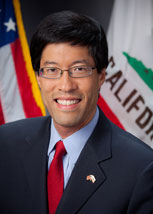
Ask Maddy about Richard Pan
Scope: california
Hi! I can help you understand Richard Pan's legislative record. What would you like to know?
Try one of these
i
Maddy answers using official bill text and legislative records. Always verify before sharing.
Sources cited inline