

Passed Feb 26, 2018
1 co-sponsor
Total votes
26,098
all sessions
Attendance
98%
455 missed
Near the chamber average
With party
99%
of cast votes
Near the chamber average
Bipartisan score
0%
crosses aisle rarely
Lower than 76% of chamber peers
Sponsored
951
bills & resolutions
Lower than 78% of chamber peers
Committees
0
assignments
951 bills and resolutions
Sponsored bills
Total
951
Primary
341
Co-sponsor
610
This page
951
matching current filters
Relative to the Lunar New Year Celebration.
This measure would recognize the Lunar New Year Celebration.
Passed Feb 13, 2018
1 co-sponsor
Passed Feb 12, 2018
1 co-sponsor
State employment: supervisors.
Existing law requires that supervisors of state employees represented by State Bargaining Unit 5 Highway Patrol, State Bargaining Unit 6 Corrections, or State Bargaining Unit 8 Firefighters, receive salary and benefits changes at least generally equivalent to the salary and benefits granted to employees they supervise. Existing law requires that the benefit packages be economically equivalent, but does not compel the benefits to be identical. Existing law requires that the specific benefits that these supervisors receive be determined through a meet and confer process. This bill would extend these requirements to the salary and benefits changes for supervisors of state employees represented by State Bargaining Unit 7 Protective Services and Public Safety, if they are classified as peace officers by the Department of Human Resources.
In committee Feb 1, 2018
0 co-sponsors
Clinics: licensing.
Existing law requires any person, firm, association, partnership, or corporation desiring a license for a clinic to file a verified application with the State Department of Public Health, as provided. The department is authorized to issue a provisional license to a clinic if certain criteria are met. This bill would make technical, nonsubstantive changes to that provision.
In committee Feb 1, 2018
0 co-sponsors
Public employee retirement plans: automatic enrollment and escalation.
Existing federal law prescribes requirements for different types of tax-qualified retirement plans that permit employees to contribute portions of their pretax wages to individual retirement accounts or that provide for deferred compensation. Existing law authorizes the Department of Human Resources to establish and administer tax-deferred savings plans in accordance with specified provisions of federal law. This bill would authorize a state or local public employer participating in an employee supplemental retirement savings plan, defined to include specified deferred compensation plans and payroll deduction individual retirement account plans, to make a deduction from the wages or compensation of an employee for contributions attributable to automatic enrollment and automatic escalation in the employee retirement plan. The bill would require an employer that provides for automatic enrollment in a supplemental retirement savings plan to provide a default investment option and default investment plan that meets a variety of specified criteria, including providing employees an opportunity to opt out or withdraw. The bill would provide that an employer that provides automatic enrollment or automatic escalation in an employee retirement plan subject to these provisions is not liable for the investment decisions made by the employer on behalf of any participating employee with respect to the default investment of contributions made for that employee to the plan. The bill would prohibit an employer from making deductions from the compensation of represented employees in the absence of a collectively bargained memorandum of understanding or other collective bargaining agreement authorizing those deductions. The bill would also prohibit an employer that makes employer contributions to an employee retirement plan that implements automatic enrollment or escalation from contributing at a greater rate for nonrepresented, managerial, or supervisory employees than that contributed for represented employees who are in related retirement membership classifications, except in specified instances. The bill would prohibit vendors for the default investment plan from using that relationship to market other products. The bill would prohibit personnel, including members of governing bodies, acting on behalf of an employer from receiving consideration from a vendor in exchange for the promotion of a vendor product.
In committee Feb 1, 2018
0 co-sponsors
Bill of Rights for the Children and Youth of California: joint legislative committee.
Existing law provides for the care and welfare of children and youth in various contexts, including, but not limited to, child welfare services, foster care, health care, nutrition, homeless assistance, and education. Assembly Concurrent Resolution 80 of the 2009–10 Regular Session states the Legislature's support for a Bill of Rights for the Children and Youth of California that resolves to invest in all children and youth in order to achieve specified goals, including having safe and healthy environments. This bill would make legislative findings and declarations relating to the needs and well-being of children and youth in California. The bill would create, until November 30, 2024, the Joint Legislative Committee on Children and Youth, with 18 members appointed by the Senate Committee on Rules and the Speaker of the Assembly, as specified. The bill would require the committee to develop "California's Promise to its Children and Youth," a framework for the care and welfare of children and youth in various contexts, including, but not limited to, health care, nutrition, homeless assistance, education, and foster care, as specified. The bill would require the committee to consider an unspecified Senate Concurrent Resolution, the Bill of Rights for the Children and Youth of California, if it is enacted and takes effect on or before January 1, 2018, for purposes of developing the framework. This bill would require the Senate Committee on Rules to make money available from the Senate Operating Fund, as it deems necessary, for the expenses of the committee and its members. The bill would require the committee to report to the Legislature on its activities at the close of each legislative session. The bill would require the committee, by November 30, 2020, to develop a plan to implement the framework by January 1, 2024, and to identify and propose comprehensive tax reform solutions to increase revenue predictability and ensure sufficiency of revenues adequate to support the implementation of the framework, as specified. This bill would make the provisions relating to the committee inoperative on November 30, 2024, and would repeal them as of January 1, 2025.
In committee Feb 1, 2018
0 co-sponsors
Sugar-sweetened beverages: health warnings.
(1) Existing federal law, the Federal Food, Drug, and Cosmetic Act, regulates, among other things, the quality and packaging of foods introduced or delivered for introduction into interstate commerce and generally prohibits the misbranding of food. Existing federal law, the Nutrition Labeling and Education Act of 1990, governs state and local labeling requirements, including those that characterize the relationship of any nutrient specified in the labeling of food to a disease or health-related condition. Existing state law, the Sherman Food, Drug, and Cosmetic Law, generally regulates misbranded food and provides that any food is misbranded if its labeling does not conform with the requirements for nutrient content or health claims as set forth in the Federal Food, Drug, and Cosmetic Act and the regulations adopted pursuant to that federal act. Existing law requires that a food facility, as defined, make prescribed disclosures and warnings to consumers, as specified. A violation of these provisions is a crime. Existing state law, the Pupil Nutrition, Health, and Achievement Act of 2001, also requires the sale of only certain beverages to pupils at schools. The beverages that may be sold include fruit-based and vegetable-based drinks, drinking water with no added sweetener, milk, and in middle and high schools, an electrolyte replacement beverage if those beverages meet certain nutritional requirements. This bill would establish the Sugar-Sweetened Beverages Health Warning Act, which would prohibit a person from distributing, selling, or offering for sale a sugar-sweetened beverage in a sealed beverage container, or a multipack of sugar-sweetened beverages, in this state unless the beverage container or multipack bears a health warning, as prescribed. The bill also would require every person who owns, leases, or otherwise legally controls the premises where a vending machine or beverage dispensing machine is located, or where a sugar-sweetened beverage is sold in an unsealed container, to place a specified safety warning in certain locations, including on the exterior of any vending machine that includes a sugar-sweetened beverage for sale. (2) Under existing law, the State Department of Public Health, upon the request of a health officer, as defined, may authorize the local health department of a city, county, city and county, or local health district to enforce the provisions of the Sherman Food, Drug, and Cosmetic Law. Existing law authorizes the State Department of Public Health to assess a civil penalty against any person in an amount not to exceed $1,000 per day, except as specified. Existing law authorizes the Attorney General or any district attorney, on behalf of the State Department of Public Health, to bring an action in a superior court to grant a temporary or permanent injunction restraining a person from violating any provision of the Sherman Food, Drug, and Cosmetic Law. This bill, commencing July 1, 2018, would provide that any violation of the provisions described in (1) above, or regulations adopted pursuant to those provisions, is punishable by a civil penalty of not less than $50, but no greater than $500. This bill would also create the Sugar-Sweetened Beverages Safety Warning Fund for the receipt of all moneys collected for violations of those provisions. The bill would allocate moneys in this fund, upon appropriation by the Legislature, to the department for the purpose of enforcing those provisions. The bill would make legislative findings and declarations relating to the consumption of sugar-sweetened beverages, obesity, and dental disease.
In committee Feb 1, 2018
1 co-sponsor
Student support services: Dream Resource Liaisons.
(1) Existing law establishes the segments of the public postsecondary education system in the state, including the University of California administered by the Regents of the University of California, the California State University administered by the Trustees of the California State University, and the California Community Colleges administered by the Board of Governors of the California Community Colleges. Existing law provides that a student, other than a nonimmigrant alien, as defined, who has attended high school in California for 3 or more years, who has graduated from a California high school or attained the equivalent thereof, who has registered at or attends an accredited institution of higher education in California not earlier than the fall semester or quarter of the 2001–02 academic year, and who, if he or she is an alien without lawful immigration status, has filed an affidavit, as specified, is exempt from paying nonresident tuition at the California Community Colleges and the California State University. This bill would, commencing with the 2018–19 academic year, require the California Community Colleges and the California State University, and request the University of California, to designate a Dream Resource Liaison on each of their respective campuses, as specified, to assist students meeting specified requirements, including undocumented students, by streamlining access to all available financial aid and academic opportunities for those students. By requiring community colleges to designate a Dream Resource Liaison, this bill would impose a state-mandated local program. The bill would encourage those institutions to establish Dream Resource Centers, and would authorize those centers to provide specified support services. This bill would authorize the trustees, the board of governors, and the regents to seek and accept on behalf of the state any gift, bequest, devise, or donation whenever the gift and the terms and conditions thereof will aid in the creation and operation of Dream Resource Centers for their respective systems. (2) Existing law establishes a system of public elementary and secondary schools in this state, and authorizes local educational agencies throughout the state to operate schools and provide instruction to pupils in kindergarten and grades 1 to 12, inclusive. This bill would require the governing board of a school district or county office of education that maintains any of grades 9 to 12, inclusive, to designate a Dream Resource Liaison at each of their respective campuses that includes any of those grades. By requiring certain school districts and county offices of education to designate a Dream Resource Liaison, this bill would impose a state-mandated local program. (3) The California Constitution requires the state to reimburse local agencies and school districts for certain costs mandated by the state. Statutory provisions establish procedures for making that reimbursement. This bill would provide that, if the Commission on State Mandates determines that the bill contains costs mandated by the state, reimbursement for those costs shall be made pursuant to the statutory provisions noted above.
Failed Feb 1, 2018
1 co-sponsor
Practice of medicine: hospitals.
The Medical Practice Act establishes the Medical Board of California for the licensure, regulation, and discipline of physicians and surgeons. The act provides that the regular practice of medicine in a licensed general or specialized hospital having 5 or more physicians and surgeons on the medical staff without specified provisions governing the operation of the hospital relating to patient medical records and to the organization, membership, and self-governance of the medical staff constitutes unprofessional conduct subject to discipline by the board under the act. A violation of the act, unless otherwise expressly provided, is a crime. This bill would expand those specified provisions to include a provision that the award or maintenance of hospital or clinical privileges, or both, shall not be contingent on participation in a program for maintenance of certification, and, in the case of a public hospital, as defined, a provision that physicians and surgeons providing substantial direct patient care, as defined, may limit hospital committee voting rights on issues affecting patient care to those physicians and surgeons providing substantial direct patient care. Because this bill would change the definition of a crime, it would thereby impose a state-mandated local program. The California Constitution requires the state to reimburse local agencies and school districts for certain costs mandated by the state. Statutory provisions establish procedures for making that reimbursement. This bill would provide that no reimbursement is required by this act for a specified reason.
In committee Feb 1, 2018
0 co-sponsors
Ask Maddy
·
AI policy assistant
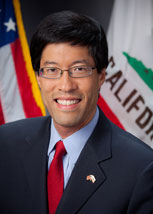
Ask Maddy about Richard Pan
Scope: california
Hi! I can help you understand Richard Pan's legislative record. What would you like to know?
Try one of these
i
Maddy answers using official bill text and legislative records. Always verify before sharing.
Sources cited inline