

Existing federal law, the federal Patient Protection and Affordable Care Act (PPACA) , enacts various healthcare coverage market reforms. Among other things, the PPACA requires each state to establish an American Health Benefit Exchange that facilitates the purchase of qualified health plans by qualified individuals and qualified small employers and requires that state entity to meet certain other requirements. Existing law creates the California Health Benefit Exchange (the Exchange) , also known as Covered California, for the purpose of facilitating the enrollment of qualified individuals and qualified small employers in qualified health plans as required under the PPACA. Until January 1, 2023, existing law requires the Exchange, among other duties, to administer an individual market assistance program to provide assistance, including premium assistance subsidies, to program participants with household incomes at or below 600% of the federal poverty level. This bill would reduce premiums to zero for program participants with household incomes at or below 138% of the federal poverty level, and would specify the premium assistance subsidy amount for program participants with household incomes of 139% to 600%, inclusive, of the federal poverty level. The bill would require the financial assistance administered by the Exchange to include cost-sharing reduction assistance to reduce the copays, deductibles, coinsurance, out-of-pocket maximums, and other cost sharing of a program participant with a household income of 200% to 400%, inclusive, of the federal poverty level.
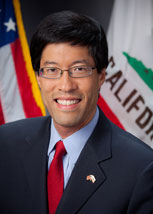
Sponsored bills
Existing law provides for the Medi-Cal program, which is administered by the State Department of Health Care Services, under which qualified low-income individuals receive health care services. The Medi-Cal program is, in part, governed by, and funded pursuant to, federal Medicaid program provisions. Existing law establishes the Administrative Claiming process under which the department is authorized to contract with local governmental agencies and local educational consortia for the purpose of obtaining federal matching funds to assist with the performance of administrative activities relating to the Medi-Cal program that are provided by a local governmental agency or local educational agency (LEA) . Existing law also provides that specified services provided by LEAs are covered Medi-Cal benefits and are reimbursable on a fee-for-service basis under the LEA Medi-Cal billing option. Existing law requires the department to engage in specified activities relating to the LEA Medi-Cal billing option, such as amending the Medicaid state plan to ensure that schools are reimbursed for all eligible services and examining methodologies for increasing school participation in the LEA Medi-Cal billing option. Existing law requires that these activities be funded and staffed by proportionately reducing federal Medicaid payments allocable to LEAs for the provision of benefits funded by federal Medicaid program payments under the LEA Medi-Cal billing option in an amount not to exceed $1,500,000 annually. This bill would require the State Department of Education to, no later than July 1, 2020, establish a School-Based Health Unit for the purpose of administering current health-related programs under the purview of the State Department of Education and advising it on issues related to the delivery of school-based Medi-Cal services in the state. The bill would require the unit to, among other things, provide technical assistance, outreach, and informational materials to LEAs on allowable services and on the submission of claims. The bill would authorize the unit to form advisory groups, as specified, and, to the extent necessary, would require the State Department of Health Care Services to make available to the unit any information on other school-based dental, health, and mental health programs, and school-based health centers, that may receive Medi-Cal funding. The bill would require the unit to be supported through an interagency agreement with the State Department of Health Care Services, and would authorize the unit to receive additional funds from grants and other sources. The bill would increase the annual funding limit for the activities of the State Department of Health Care Services that support the LEA Medi-Cal billing option to $2,000,000, and would require that $500,000 of that amount be available for transfer to the State Department of Education to support the unit pursuant to that interagency agreement, with any unexpended funds to be returned. The bill would require the State Department of Health Care Services to collaborate with the unit, as specified, and would require a certain summary of activities prepared by the State Department of Health Care Services to include, among other things, activities conducted in coordination with the unit.
Existing law requires the adopted course of study for grades 1 to 12, inclusive, to include, among other subjects, the social sciences. Existing law encourages instruction in the area of social sciences for grades 7 to 12, inclusive, which may include instruction on the Vietnam War, including a component drawn from personal testimony of Southeast Asians who were involved in the Vietnam War and men and women who contributed to the war effort on the homefront, as specified. Existing law requires the State Board of Education, with the assistance of the Superintendent of Public Instruction, to establish a list of textbooks and other instructional materials that highlight the contributions of minorities in the development of California and the United States. Existing law establishes the Instructional Quality Commission and requires the commission to, among other things, recommend curriculum frameworks to the state board. Existing law requires the commission to develop and submit to the state board a model curriculum in Hmong history and cultural studies, as specified. Existing law requires the commission, on or before December 31, 2022, to submit the model curriculum to the state board for adoption, and requires the state board to adopt, modify, or reject the model curriculum on or before March 31, 2023. Existing law requires the Superintendent, following the adoption of the model curriculum, to post the model curriculum on the State Department of Education's internet website for use on a voluntary basis by educators. Existing law requires, if the state board modifies the model curriculum, that the state board explain, in writing, the reasons for the modifications to the Governor and certain committees of the Legislature. Existing law also requires the state board to provide, in a public meeting, written reasons for modifying the model curriculum, as specified. Existing law, beginning in the school year following the adoption of the model curriculum, encourages local educational agencies, as defined, to use the model curriculum to provide instruction in kindergarten and grades 1 to 12, inclusive. Existing law provides that implementation of these provisions is subject to the receipt of grants, donations, or other financial support from private or public sources for its purposes, including, but not limited to, an appropriation in the annual Budget Act or another statute. This bill would require that model curriculum to additionally cover Laotian history and cultural studies, as provided. The bill would delay by one year the deadlines for the commission to submit the model curriculum to the state board, and for the state board to adopt, modify, or reject the model curriculum, and would set those deadlines at December 31, 2023, and March 31, 2024, respectively. The bill would delete the provisions requiring the state board to provide written reasons for modifying the model curriculum submitted by the commission.
(1) Existing law generally grants to the Division of Occupational Safety and Health jurisdiction over every employment and place of employment necessary to adequately enforce and administer all laws, standards, and orders. Existing law creates the Occupational Safety and Health Standards Board and, among other things, requires it to adopt standards developed by the division relating to workplace violence prevention plans at hospitals. This bill would require the State Department of State Hospitals, the State Department of Developmental Services, or the Department of Corrections and Rehabilitation to report the total number of assaults against employees at each facility operated by the respective department quarterly, as specified, to all the state bargaining units at the department. The bill would require that each department also report this information to the Legislature and the chairs of certain committees annually, as specified. The bill would prescribe the information to be reported and would require that the information protect the confidentiality of certain parties. The bill would define terms for the purposes of these provisions. (2) Existing constitutional provisions require that a statute that limits the right of access to the meetings of public bodies or the writings of public officials and agencies be adopted with findings demonstrating the interest protected by the limitation and the need for protecting that interest. This bill would make legislative findings to that effect.
Existing law requires the governing board of any school district to give diligent care to the health and physical development of pupils and authorizes the governing board of a school district to employ properly certified persons for the work. Existing law requires a school of a school district or county office of education and a charter school to notify pupils and parents or guardians of pupils no less than twice during the school year on how to initiate access to available pupil mental health services on campus or in the community, or both, as provided. This bill, contingent on an appropriation made for these purposes, would require the State Department of Education to identify an evidence-based training program for a local educational agency to use to train classified and certificated school employees having direct contact with pupils on youth mental and behavioral health, as specified. The bill would define a local educational agency for purposes of these provisions to mean a county office of education, school district, state special school, or charter school that serves pupils in any of grades 7 to 12, inclusive. The bill would require a local educational agency, on or before January 1, 2023, to certify to the department that at least 10% of its classified employees and at least 10% of its certificated employees having direct contact with pupils at each schoolsite, or at least 2 classified employees and at least 2 certificated employees having direct contact with pupils at each schoolsite, whichever is greater, have received the youth mental and behavioral health training identified by the department. To the extent this bill, if implemented, would impose additional duties on local educational agencies, the bill would impose a state-mandated local program. The California Constitution requires the state to reimburse local agencies and school districts for certain costs mandated by the state. Statutory provisions establish procedures for making that reimbursement. This bill would provide that, if the Commission on State Mandates determines that the bill contains costs mandated by the state, reimbursement for those costs shall be made pursuant to the statutory provisions noted above.
Existing law provides for the Medi-Cal program, which is administered by the State Department of Health Care Services, under which qualified low-income individuals receive health care services either through a fee-for-service or managed care delivery system. The Medi-Cal program is, in part, governed and funded by federal Medicaid program provisions. Existing law authorizes the department to enter into various types of contracts for the provision of services to beneficiaries, including contracts with prepaid health plans. Existing law requires subcontracts entered into by a prepaid health plan to contain the amount of compensation or other consideration that a subcontractor will receive under the terms of the subcontract with the prepaid health plan, and to meet specified requirements, including compliance with the Knox-Keene Health Care Service Plan Act of 1975. This bill would require a Medi-Cal managed care plan to conduct, commencing January 1, 2022, specified audits of its subcontractors, including an annual medical audit of any subcontractor that performs delegated functions involving medical review and decisionmaking. The bill would authorize a Medi-Cal managed care plan to conduct additional medical audits of a subcontract, for good cause, to contract with a professional organization to perform medical audits, and to collaborate or share medical audit findings with another Medi-Cal managed care plan if 2 or more Medi-Cal managed care plans subcontract with the same subcontractor in lieu of completing separate audits. The bill would require a Medi-Cal managed care plan to report to the department the findings and certificate of completion of, and any deficiencies discovered by, the finalized annual medical audit, and to make available the finalized medical audit upon the department's request. The bill would require the department to post the annual medical report on its internet website, to develop a standardized process for Medi-Cal managed care plan audits that meets specified requirements, including requirements related to corrective action validation, and to provide this guidance to the Medi-Cal managed care plans by means of an all-plan letter.
Existing law provides for the Medi-Cal program, which is administered by the State Department of Health Care Services, under which qualified low-income individuals receive health care services. The Medi-Cal program is, in part, governed and funded by federal Medicaid program provisions. Existing law includes emergency and essential diagnostic and restorative dental services, and dental prophylaxis cleanings and dental examinations within the scope of benefits that may be provided to eligible recipients under the Medi-Cal program. Existing law authorizes specified Medi-Cal providers to recommend, after consultation with the beneficiary, and to receive reimbursement for, certain dental restorative materials other than the covered benefit of amalgam. This bill would authorize a provider of services for the treatment of dental caries to provide, and receive reimbursement for, the application of silver diamine fluoride when used as a caries arresting agent, as specified, if the provider first consults with the beneficiary and obtains written informed consent, and if the treatment is included as part of a comprehensive treatment plan, to the extent that federal financial participation is available and any necessary federal approvals have been obtained. The bill would permit a registered dental hygienist in alternative practice who meets the requirements of the bill to bill for the services described in the bill. The bill would limit availability of the described services to specified Medi-Cal beneficiary populations. The bill would authorize the department to implement its provisions by means of all-county letters, provider bulletins, or similar instructions, without taking further regulatory action.
Existing law requires the governing board of each school district to fix the length of the schoolday for the several grades and classes of the schools maintained by the school district in accordance with specified provisions of law. This bill would require the schoolday for middle schools and high schools, including those operated as charter schools, to begin no earlier than 8:00 a.m. and 8:30 a.m., respectively, by July 1, 2022, or the date on which a school district's or charter school's respective collective bargaining agreement that is operative on January 1, 2020, expires, whichever is later, except for rural school districts. To the extent the bill imposes new duties on school districts and charter schools, the bill would impose a state-mandated local program. The bill would encourage the State Department of Education to post specified information on its internet website, including research on the impact of sleep deprivation on adolescents and the benefits of a later school start time, and to advise school districts and charter schools of this posting. The California Constitution requires the state to reimburse local agencies and school districts for certain costs mandated by the state. Statutory provisions establish procedures for making that reimbursement. This bill would provide that, if the Commission on State Mandates determines that the bill contains costs mandated by the state, reimbursement for those costs shall be made pursuant to the statutory provisions noted above.
Existing law, the Knox-Keene Health Care Service Plan Act of 1975, provides for the licensure and regulation of health care service plans by the Department of Managed Health Care, and makes a willful violation of the act a crime. Existing law provides for the regulation of health insurers by the Department of Insurance. Existing law requires a health care service plan or health insurer offering a contract or policy in the individual or small group market to file specified information, including total earned premiums and total incurred claims for each contract or policy form, with the appropriate department at least 120 days before implementing a rate change. Existing law requires a health plan that exclusively contracts with no more than 2 medical groups in the state to disclose actual trend experience information in lieu of disclosing specified annual medical trend factor assumptions and projected trends, as specified. Existing law requires the Department of Managed Health Care to conduct an annual public meeting regarding large group rates. This bill, commencing July 1, 2020, would expand those requirements to apply to large group health care service plan contracts and health insurance policies, and would impose additional rate filing requirements on large group contracts and policies. On and after July 1, 2020, the bill would require a plan or insurer to disclose with a rate filing specified information by geographic region for individual, grandfathered group, and nongrandfathered group contracts and policies, including the price paid compared to the price paid by the Medicare Program for the same services in each benefit category. The bill would eliminate separate reporting and disclosure requirements for a health plan that exclusively contracts with no more than 2 medical groups in the state. On and after July 1, 2020, the bill would require a health care service plan that fails to file specified information to disclose other information by market and by geographic region. If a plan or insurer fails to provide all the information required, the bill would specify that the filing is an unjustified rate on and after July 1, 2020. The bill would authorize a large group contractholder that has experience-rated or blended coverage and meets specified criteria to apply to the Department of Managed Health Care or Department of Insurance, as appropriate, within 60 days of receiving notice of a rate change to review a rate change and determine if it is unreasonable or not justified, and would require the appropriate department to use reasonable efforts to complete the review within 60 days of receiving all the information required to make a determination. The bill would require the Department of Managed Health Care to conduct a public meeting regarding large group rates in every even-numbered year. Because a willful violation of the bill's requirements relative to health care service plans would be a crime, the bill would impose a state-mandated local program. The California Constitution requires the state to reimburse local agencies and school districts for certain costs mandated by the state. Statutory provisions establish procedures for making that reimbursement. This bill would provide that no reimbursement is required by this act for a specified reason.