

Relative to Foster Care Month.
This measure would declare the month of May 2009 as Foster Care Month.
Failed Nov 30, 2010
1 co-sponsor
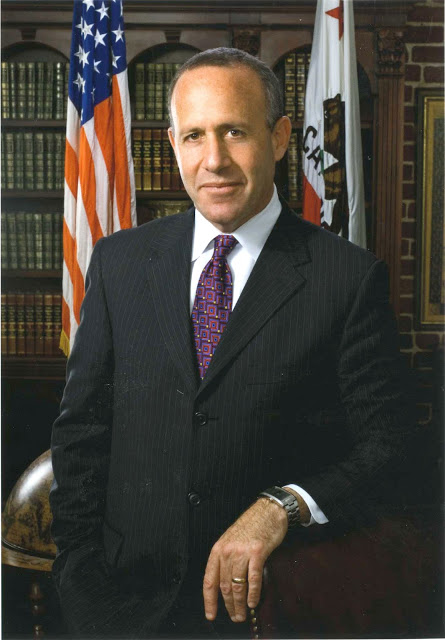
This measure would declare the month of May 2009 as Foster Care Month.
(1) The Personal Income Tax Law and The Corporation Tax Law authorize various credits against the taxes imposed by those laws. This bill, in accordance with legislative findings contained in this bill and for calendar years beginning on or after January 1, 2011, would, for a business entity, as described, that provides career technical education, authorize a credit against those taxes, subject to specified limitations, in an amount equal to that reserved and allocated by the Superintendent of Public Instruction. This bill would impose specified duties on the Superintendent of Public Instruction, the Franchise Tax Board, and the State Board of Equalization in administering the credits. (2) The Personal Income Tax Law and the Corporation Tax Law authorize various credits against the taxes imposed by those laws, including a hiring credit for qualified taxpayers who hire qualified employees, as defined, within enterprise zones, subject to specific criteria. Qualified employees includes, for purposes of the credit, an ex-offender, as defined. Existing law requires a taxpayer to obtain, from specified agencies, a certification providing that a qualified employee meets the requirements of the credit. This bill would, for taxable years beginning on or after January 1, 2011, revise the definition of "qualified employee" for this purpose, by providing that an ex-offender includes an individual who has been convicted of a felony or a misdemeanor offense punishable by incarceration, or a person charged with a felony or misdemeanor punishable by incarceration but placed on probation without a finding of guilt, with specified exclusions. This bill would also, for taxable years beginning on or after January 1, 2011, revise the definition of "qualified employee" by removing, as an element of eligibility as a qualified employee, residency in a targeted employment or targeted tax area. Additionally, this bill would require taxpayers to apply for, and obtain, the certification of a qualified employee within 42 days of the date of hire of the qualified employee. This bill would also make technical, nonsubstantive changes to remove obsolete references in the credit provisions. This bill would take effect immediately as a tax levy.
In honor of the service of Ronald M. George as the Chief Justice of California, this measure designates the Civic Center Complex, comprised of the Earl Warren Building and the Hiram W. Johnson State Office Building, located at the Civic Center Plaza in the City and County of San Francisco, as the Ronald M. George Justice Center.
This measure would provided that the Legislative Office Building located at 1020 N Street in Sacramento be named the William L. Cavala Legislative Office Building.
The Personal Income Tax Law authorizes a credit against the taxes imposed by that law in an amount equal to the lesser of 5% of the purchase price or $10,000 in the case of the purchase of a qualified principal residence on and after March 1, 2009, and before March 1, 2010, but not to exceed an aggregate limitation of $100,000,000 for all credits allowable. Existing law requires a certification that the residence has never been occupied be provided to the Franchise Tax Board within one week of the sale of the qualified principal residence. This bill would limit the credit to taxpayers who purchased a qualified principal residence on and after March 1, 2009, and before July 3, 2009, and on and after the effective date of this bill and before March 1, 2010. This bill would also require the aggregate limitation of credits to be reduced by a specified amount per certification received by the Franchise Tax Board. (2) The bill would appropriate the sum of $44,000 from the General Fund to the Franchise Tax Board, in augmentation of a specified appropriation made in the 2009-10 Budget Act. (3) This bill would declare that it is to take effect immediately as an urgency statute.
This measure would provide that the 2009–10 Sixth Extraordinary Session of the Legislature shall stand adjourned sine die at midnight on the date that this measure has been adopted by both houses of the Legislature.
(1) Existing law requires that, when a reduction in the number of certificated employees employed by a school district is authorized for specified reasons, the layoffs occur in order of employee seniority. Existing law provides certain exceptions to this requirement, including an exception for purposes of maintaining or achieving compliance with constitutional requirements related to equal protection of the laws. Existing law requires, for 39 months from the date of termination, that any employee who in the meantime has not attained 65 years of age have the preferred right to reappointment, in the order of original employment, as specified. Existing law provides certain exceptions to this requirement, including an exception for purposes of maintaining or achieving compliance with constitutional requirements related to equal protection of the laws. This bill would provide that this exception relates to both pupils and certificated employees. The bill would require that, when classroom teachers, as defined, are subject to notice and layoffs pursuant to these provisions, that the proportion of classroom teachers terminated at schools in deciles 1 to 3, inclusive, of the Academic Performance Index in any given year as part of a reduction in the number of employees pursuant to these provisions be no greater than the proportion of classroom teachers noticed and, when applicable, terminated, respectively, in the school district as a whole. (2) Existing law requires, when a reduction in the number of certificated employees employed by a school district is authorized for specified reasons, the notice of the termination of the services of an employee in the subsequent school year be given by the governing board to the employee, in a prescribed manner, before May 15. Existing law requires the superintendent of the district, prior to March 15 and before an employee is given the described notice, to give written notice to the governing board and the employee that it has been recommended that the notice be given to the employee, and stating the reasons therefor. Existing law authorizes an employee who is given this notice to request a hearing to determine if there is cause for not reemploying him or her for the ensuing year. Existing law requires that an administrative law judge conduct this hearing, and issue a proposed decision to the governing board containing certain findings of fact and a determination as to the sufficiency of cause for the termination. This bill would require that this determination also include a determination as to whether the notices of termination issued at schools in deciles 1 to 3, inclusive, of the Academic Performance Index violate the aforementioned limit on terminations of classroom teachers.
Existing law, the California High-Speed Train Act, creates the High-Speed Rail Authority to develop and implement a high-speed train system in the state, with specified powers and duties. Existing law, the Safe, Reliable High-Speed Passenger Train Bond Act for the 21st Century, provides for the issuance of $9.95 billion in general obligation bonds for high-speed rail and related purposes. This bill would require the authority to contract with the Employment Development Department to develop a labor market assessment of the workforce and identify the education and skills needed for construction, operation, and maintenance of the high-speed train system. The bill, in that regard, would require the department to consult and work cooperatively with the Mineta Transportation Institute at the California State University at San Jose and to consult with other workforce assessment efforts, as specified. The bill would require the authority and the department to form an advisory committee, as specified, to advise the authority and the department on the availability of skilled labor relative to the high-speed train project and on options for workforce training programs in that regard. The bill would require the labor market assessment to be submitted to the Legislature and incorporated into the authority's biennial revised business plan. This bill would appropriate $500,000 from the High-Speed Passenger Train Bond Fund to the authority for these purposes, as specified. The bill would also make related legislative findings and declarations.
Existing law prohibits any person from engaging in any trade practice determined to be an unfair method of competition or an unfair or deceptive act or trade practice in the business of insurance. This bill would provide that it is an unfair and deceptive act or practice in the business of insurance if an insurer uses a retained-asset account, as defined, and does not take certain actions. The bill would specify the penalty for this unfair and deceptive act or practice.
(1) Under existing law, the Public Utilities Commission (PUC) has regulatory authority over public utilities, including electrical corporations, as defined. Existing law requires the PUC to require the state's 3 largest electrical corporations, Pacific Gas and Electric Company, San Diego Gas and Electric, and Southern California Edison, to identify a separate electrical rate component to fund programs that enhance system reliability and provide in-state benefits. This rate component is a nonbypassable element of local distribution and collected on the basis of usage. Existing PUC resolutions refer to the nonbypassable rate component as a "public goods charge." The public goods charge moneys are collected to support cost-effective energy efficiency and conservation activities, public interest research and development not adequately provided by competitive and regulated markets, and renewable energy resources. The existing Warren-Alquist State Energy Resources Conservation and Development Act establishes the State Energy Resources Conservation and Development Commission (Energy Commission) . The act requires the commission to certify sufficient sites and related facilities that are required to provide a supply of electric power sufficient to accommodate projected demand for power statewide. The act requires the commission to transmit a copy of an application for certification of a site and related facility to, among other entities, each federal and state agency having jurisdiction or special interest in matters pertinent to the proposed site and related facilities and to the Attorney General. This bill would require an applicant to inform the United States Department of Defense of a proposed project and that an application will be filed with the commission if the site and related facility specified in the application is proposed to be located within 1,000 feet of a military installation, or lies within special use airspace or beneath a low-level flight path, as defined. Existing law establishes the Renewable Resource Trust Fund as a fund that is continuously appropriated, with certain exceptions for administrative expenses, in the State Treasury, and requires that certain moneys collected to support renewable energy resources through the public goods charge are deposited into the fund and authorizes the Energy Commission to expend the moneys pursuant to the Renewable Energy Resources Program. The program states the intent of the Legislature to increase the amount of electricity generated from eligible renewable energy resources per year so that amount equals at least 20% of total retail sales of electricity in California per year by December 31, 2010. This bill would revise the Renewable Energy Resources Program to state the intent of the Legislature to increase the amount of electricity generated from eligible renewable energy resources per year, so that amount equals at least 33% of total retail sales of electricity in California per year by December 31, 2020. The bill would revise certain terms used in the program, and revise certain eligibility criteria for a renewable electrical generation facility, as defined, pursuant to the program. (2) Existing law expresses the intent of the Legislature, in establishing the California Renewables Portfolio Standard Program (RPS program) , to increase the amount of electricity generated per year from eligible renewable energy resources, as defined, to an amount that equals at least 20% of the total electricity sold to retail customers in California per year by December 31, 2010. The RPS program requires that a retail seller of electricity, including electrical corporations, community choice aggregators, and electric service providers, purchase a specified minimum percentage of electricity generated by eligible renewable energy resources, as defined, in any given year as a specified percentage of total kilowatthours sold to retail end-use customers each calendar year. The RPS program requires the PUC to implement annual procurement targets for each retail seller to increase its total procurement of electricity generated by eligible renewable energy resources by at least an additional 1% of retail sales per year so that 20% of its retail sales of electricity are procured from eligible renewable energy resources no later than December 31, 2010. Existing law requires the PUC to make a determination of the existing market cost for electricity, which PUC decisions call the market price referent, and to limit an electrical corporation's obligation to procure electricity from eligible renewable energy resources, that exceeds the market price referent, by a specified amount. This bill would express the intent that the amount of electricity generated per year from eligible renewable energy resources be increased to an amount that equals at least 20% of the total electricity sold to retail customers in California per year by December 31, 2013, and 33% by December 31, 2020. The bill would require the PUC, by January 1, 2012, to establish the quantity of electricity products from eligible renewable energy resources to be procured by each retail seller for specified compliance periods, sufficient to ensure that the procurement of electricity products from eligible renewable energy resources achieves 25% of retail sales by December 31, 2016, and 33% of retail sales by December 31, 2020, and that retail sellers procure not less than 33% of retail sales in all subsequent years. The bill, consistent with the goals of procuring the least-cost and best-fit eligible renewable energy resources that meet project viability principles, would require that all retail sellers procure a balanced portfolio of electricity products from eligible renewable energy resources, as specified. The bill would require the PUC to waive enforcement of the renewables portfolio standard procurement requirement if the PUC finds that the retail seller has demonstrated certain conditions exist that are beyond the control of the retail seller and will prevent compliance, and has taken all reasonable actions under its control to achieve compliance. The bill would require the PUC to direct each electrical corporation to annually prepare a renewable energy procurement plan containing specified matter and require, to the extent feasible, that the plan be proposed, reviewed, and adopted by the commission as part of, and pursuant to, a general procurement plan process. The bill would require the commission to direct all retail sellers to prepare and submit an annual compliance report. The bill would delete the existing market price referent provisions, and instead require the PUC to establish a limitation for each electrical corporation on the procurement expenditures for all eligible renewable energy resources used to comply with the renewables portfolio standard. The bill would require that by January 1, 2016, the PUC report to the Legislature assessing whether each electrical corporation can achieve a 33% renewables portfolio standard by December 31, 2020, and maintain that level thereafter, within the cost limitations. The bill would provide that, if the cost limitation for an electrical corporation is insufficient to support the projected costs of meeting the renewables portfolio standard procurement requirements, the electrical corporation is authorized to refrain from entering into new contracts or constructing facilities beyond the quantity that can be procured within the limitation, unless eligible renewable energy resources can be procured without exceeding a de minimis increase in rates, consistent with the electrical corporation's general procurement plan. The bill would delete an existing requirement that the PUC adopt flexible rules for compliance for retail sellers. The bill would revise the definitions of certain terms for purposes of the RPS program, would revise certain provisions applicable only to an electrical corporation with 60,000 or fewer customer accounts in California that serves retail end-use customers outside of California, and would add provisions applicable to certain smaller electrical corporations. The bill would authorize an electrical corporation to apply to the PUC for approval to construct, own, and operate an eligible renewable energy resource, and would require the PUC to approve the application if certain conditions are met, until electrical corporation owned and operated resources provide 8.25% of the corporation's anticipated retail sales. Under existing law, a violation of the Public Utilities Act or any order, decision, rule, direction, demand, or requirement of the PUC is a crime. Because the provisions of this bill are within the act and require action by the PUC to implement its requirements, a violation of these provisions would impose a state-mandated local program by expanding the definition of a crime. (3) Under existing law, the governing board of a local publicly owned electric utility is responsible for implementing and enforcing a renewables portfolio standard for the utility that recognizes the intent of the Legislature to encourage renewable resources, while taking into consideration the effect of the standard on rates, reliability, and financial resources and the goal of environmental improvement. This bill would repeal this provision, and instead generally make the requirements of the RPS program applicable to local publicly owned electric utilities, except that the utility's governing board would be responsible for implementation of those requirements, instead of the PUC, and certain enforcement authority with respect to local publicly owned electric utilities would be given to the Energy Commission and State Air Resources Board, instead of the PUC. By placing additional requirements upon local publicly owned electric utilities, the bill would impose a state-mandated local program. (4) Existing law requires the Energy Commission to certify eligible renewable energy resources, to design and implement an accounting system to verify compliance with the RPS requirements by retail sellers, and to develop tracking, accounting, verification, and enforcement mechanisms for renewable energy credits, as defined. This bill would require the Energy Commission to design and implement an accounting system to verify compliance with the RPS requirements by retail sellers and local publicly owned electric utilities. The bill would require the Energy Commission, among other things, to adopt regulations specifying procedures for enforcement of the RPS requirements that include a public process under which the Energy Commission is authorized to issue a notice of violation and correction with respect to a local publicly owned electric utility and for referral to the State Air Resources Board for penalties imposed pursuant to the California Global Warming Solutions Act of 2006 or other laws if that act is suspended or repealed. This bill would revise the definition of renewable energy credit. The bill would require the Energy Commission, by June 30, 2011, to study and provide a report to the Legislature that analyzes run-of-river hydroelectric generating facilities, as defined, in British Columbia, including whether these facilities are, or should be, included as renewable electrical generation facilities for purposes of the Renewable Energy Resources Program administered by the Energy Commission or eligible renewable energy resources for purposes of the RPS program. (5) Existing law requires the PUC to prepare and submit to the Governor and the Legislature a written report annually before February 1 of each year on the costs of programs and activities conducted by an electrical corporation or gas corporation that have more than a specified number of customers in California. This bill would require the PUC to prepare and submit to the policy and fiscal committees of the Legislature, annually before February 1 of each year, a report on (A) all electrical corporation revenue requirement increases associated with meeting the renewables portfolio standard, (B) all cost savings experienced, or costs avoided, by electrical corporations as a result of meeting the renewables portfolio standard, (C) all costs incurred by electrical corporations for incentives for distributed and renewable generation, (D) all cost savings experienced, or costs avoided, by electrical corporations as a result of incentives for distributed generation and renewable generation, (E) specified costs for which an electrical corporation is seeking recovery in rates that are pending determination or approval by the PUC, (F) the decision number of each PUC decision in the prior year authorizing an electrical corporation to recover costs incurred in rates, (G) any changes in the prior year in load serviced by an electrical corporation, and (H) the efforts each electrical corporation is taking to recruit and train employees to ensure an adequately trained and available workforce. (6) The bill would require the PUC, by July 1, 2011, to determine the effective load carrying capacity of wind and solar energy resources on the electrical grid. The bill would require the PUC to use those values in establishing the contribution of those resources toward meeting specified resource adequacy requirements. (7) The Public Utilities Act prohibits any electrical corporation from beginning the construction of, among other things, a line, plant, or system, or of any extension thereof, without having first obtained from the PUC a certificate that the present or future public convenience and necessity require or will require that construction, termed a certificate of public convenience and necessity. This bill would require the PUC to issue a decision on an application for a certificate of public convenience and necessity within 18 months of the filing of a completed application under specified circumstances. (8) Existing law establishes the Department of Fish and Game in the Natural Resources Agency, and generally charges the department with the administration and enforcement of the Fish and Game Code. This bill would require the department to establish an internal division with the primary purpose of performing comprehensive planning and environmental compliance services with priority given to projects involving the building of eligible renewable energy resources. (9) The existing restructuring of the electrical industry within the Public Utilities Act provides for the establishment of an Independent System Operator (ISO) . Existing law requires the ISO to ensure efficient use and reliable operation of the transmission grid consistent with achieving planning and operating reserve criteria no less stringent than those established by the Western Electricity Coordinating Council and the American Electric Reliability Council. Pursuant to existing law, the ISO's tariffs are required to be approved by the FERC. This bill would require the ISO and other California balancing authorities to work cooperatively to integrate and interconnect eligible renewable energy resources to the transmission grid by the most efficient means possible with the goal of minimizing the impact and cost of new transmission facilities needed to meet both reliability needs and the renewables portfolio standard procurement requirements, and to accomplish this in a manner that respects the ownership, business, and dispatch models for transmission facilities owned by electrical corporations, local publicly owned electric utilities, joint power agencies, and merchant transmission companies. (10) This bill would appropriate $322,000 from the Public Utilities Commission Utilities Reimbursement Account to the PUC for additional staffing to identify, review, and approve transmission lines reasonably necessary or appropriate to facilitate achievement of the renewables portfolio standard. (11) The California Constitution requires the state to reimburse local agencies and school districts for certain costs mandated by the state. Statutory provisions establish procedures for making that reimbursement. This bill would provide that no reimbursement is required by this act for a specified reason.