

Passed Dec 5, 2016
1 co-sponsor
Total votes
31,521
all sessions
Attendance
91%
1,943 missed
Lower than 89% of chamber peers
With party
99%
of cast votes
Near the chamber average
Bipartisan score
0%
crosses aisle rarely
Near the chamber average
Sponsored
1,487
bills & resolutions
Near the chamber average
Committees
0
assignments
1,487 bills and resolutions
Sponsored bills
Total
1,487
Primary
263
Co-sponsor
1,224
This page
1,487
matching current filters
Sex crimes: rape.
Existing law defines rape and spousal rape as an act of sexual intercourse accomplished under specified circumstances indicating a lack of consent, force, or duress, as specified. Existing law additionally makes various acts, including sodomy and oral copulation without consent or sexual intercourse with a minor, unlawful as sexual assault. This bill would state the findings of the Legislature that all forms of nonconsensual sexual assault may be considered rape for purposes of the gravity of the offense and the support of survivors and would state that this is declarative of existing law.
Signed into law Sep 30, 2016
1 co-sponsor
Single-user restrooms.
Existing law requires a public agency, as defined, that serves the public or is open to the public and maintains toilet facilities to make those facilities available to the public free of charge. Existing law requires publicly and privately owned facilities where the public congregates, as defined, to maintain a sufficient number of temporary or permanent toilet facilities to meet the needs of the public at peak hours. Existing law also requires each business establishment to provide, within reasonable access, a sufficient number of toilet facilities for the use of the employees. This bill would, commencing March 1, 2017, require all single-user toilet facilities in any business establishment, place of public accommodation, or government agency to be identified as all-gender toilet facilities, as specified. The bill would authorize inspectors, building officials, or other local officials responsible for code enforcement to inspect for compliance with these provisions during any inspection.
Signed into law Sep 29, 2016
1 co-sponsor
Political Reform Act of 1974: Secretary of State: online filing and disclosure system.
The Political Reform Act of 1974 generally requires elected officials, candidates for elective office, and committees formed primarily to support or oppose a candidate for public office or a ballot measure, along with other entities, to file periodic campaign statements. The act requires that these campaign statements contain prescribed information related to campaign contributions and expenditures of the filing entities. Existing law, the Online Disclosure Act, requires the Secretary of State, in consultation with the Fair Political Practices Commission, to develop online and electronic filing processes for use by these persons and entities. This bill, in addition, would require the Secretary of State, in consultation with the Commission, to develop and certify for public use an online filing and disclosure system for campaign statements and reports that provides public disclosure of campaign finance and lobbying information in a user-friendly, easily understandable format. The Political Reform Act of 1974, an initiative measure, provides that the Legislature may amend the act to further the act's purposes upon a 23 vote of each house and compliance with specified procedural requirements. This bill would declare that it furthers the purposes of the act.
Signed into law Sep 29, 2016
1 co-sponsor
Employment: unfair practices.
Existing law prohibits an employer or any other person from engaging in, or directing another person to engage in, an unfair immigration-related practice against a person for the purpose of or intent to retaliate against any person for exercising a protected right, as specified. Existing law defines requesting more or different documents than are required under federal law, or refusing to honor documents tendered that on their face reasonably appear to be genuine, as an unfair immigration-related practice. This bill would make it unlawful for an employer to request more or different documents than are required under federal law, to refuse to honor documents tendered that on their face reasonably appear to be genuine, to refuse to honor documents or work authorization based upon the specific status or term of status that accompanies the authorization to work, or to reinvestigate or reverify an incumbent employee's authorization to work, as specified. The bill would authorize an applicant for employment or an employee who is subject to an unlawful act that is prohibited by these provisions, or a representative of that applicant for employment or employee, to file a complaint with the Division of Labor Standards Enforcement. The bill would specify that any person who violates these provisions shall be subject to a penalty imposed by the Labor Commissioner not exceeding $10,000, and be liable for equitable relief.
Signed into law Sep 28, 2016
1 co-sponsor
Department of Finance: infrastructure investment.
Existing law creates the Department of Finance and provides that the department has general powers of supervision over all matters concerning the financial and business policies of the state. The Public Employees' Retirement Law (PERL) creates the Public Employees' Retirement System (PERS) and provides a defined benefit to its members based on age at retirement, service credit, and final compensation. PERL vests management and control of PERS in the Board of Administration of the Public Employees' Retirement System, including the exclusive control of the investment of the retirement fund, and requires the board and its officers and employees to discharge their duties with respect to this system solely in the interest of the participants and beneficiaries. This bill would authorize the Department of Finance to identify infrastructure projects in the state for which the department will guarantee a rate of return on investment for an investment made in that infrastructure project by the Public Employees' Retirement System. The bill would create the Reinvesting in California Special Fund as a continuously appropriated fund and would require the moneys in the fund to be used to pay the rate of return on investment. The bill would require the rate of return on investment to be subject to the availability of moneys in the fund. The bill would also state the intent of the Legislature to identify special funds to be transferred into the fund for the purposes of these provisions. By creating a new continuously appropriated fund, this bill would make an appropriation.
Vetoed Sep 27, 2016
1 co-sponsor
Vehicles: impoundment: prostitution.
Existing law authorizes a city, county, or city and county to adopt an ordinance declaring a motor vehicle to be a nuisance subject to an impoundment period of up to 30 days when the motor vehicle is involved in the commission of any one or more of specified crimes related to prostitution or illegal dumping of commercial quantities of waste matter upon a public or private highway or road if the owner or operator of the vehicle has had a prior conviction for the same offense within the past 3 years. Existing law requires the ordinance to include specified provisions related to notice, the payment of towing, storage, and administrative fees, the provision of a poststorage hearing, and the release of the impounded vehicle. This bill would also provide that a vehicle used in the commission of a crime related to prostitution by a person buying or attempting to buy sexual services is a nuisance subject to an impoundment period of up to 30 days. The bill would impose the same procedures for impoundment, storage, and release of the vehicle as are provided under the ordinance-authorizing provisions described above, without the requirement that an ordinance be passed in order to authorize local authorities to make use of the impounding authority.
Vetoed Sep 27, 2016
0 co-sponsors
Vehicle safety: recalls.
Existing law generally regulates the transfer and registration of motor vehicles. Existing federal law requires a motor vehicle manufacturer to notify the owner or purchaser of a motor vehicle when the manufacturer determines that the vehicle contains a safety-related defect or when the manufacturer is ordered by the federal Secretary of Transportation to notify vehicle owners and purchasers that a vehicle has a safety-related defect. Existing federal law also prohibits a motor vehicle dealer from selling a vehicle if it has been notified of a safety-related defect by the manufacturer, except as specified. A violation of the Vehicle Code is a crime. This bill would enact the Consumer Automotive Recall Safety Act, which would prohibit a dealer or rental car company, as defined, with a motor vehicle fleet of 34 or fewer loaner or rental vehicles from loaning, renting, or offering for loan or rent a vehicle subject to a manufacturer's recall after receiving a notice of the recall, as specified, until the vehicle has been repaired, except as specified. The act would also require the Department of Motor Vehicles (DMV) to include a specified recall disclosure statement with each vehicle registration renewal notice. By creating new prohibitions, the violation of which would be a crime under existing law, this bill would impose a state-mandated local program. Existing law requires a vehicle franchisor to properly fulfill every warranty agreement made by it and adequately and fairly compensate each of its franchisees for labor and parts used to fulfill that warranty when the franchisee has fulfilled warranty obligations of diagnostics, repair, and servicing. This bill would specify that the warranty obligations include all costs directly associated with the disposal of hazardous materials that are associated with a recall repair. The bill would provide, for purposes of the above-described warranty obligations, that a warranty includes a recall conducted pursuant to federal motor vehicle safety laws. The bill would state that this provision is declaratory of existing law. Existing law authorizes the DMV to suspend or revoke the license issued to a dealer, transporter, manufacturer, manufacturer branch, remanufacturer, remanufacturer branch, distributor, or distributor branch upon determining that the person to whom the licensed was issued has, among other things, violated provisions relating to issuance of licenses and certificates to manufacturers, transporters, and dealers. This bill would also authorize the DMV to suspend or revoke the license issued to the above-mentioned persons upon determining that the person has violated any provision of the Consumer Automotive Recall Safety Act. The bill would state findings and declarations of the Legislature relative to vehicle recalls. The California Constitution requires the state to reimburse local agencies and school districts for certain costs mandated by the state. Statutory provisions establish procedures for making that reimbursement. This bill would provide that no reimbursement is required by this act for a specified reason.
Signed into law Sep 27, 2016
1 co-sponsor
Human trafficking: minors.
Existing law proscribes the crime of human trafficking, as defined. A person who causes, induces, or persuades, or attempts to cause, induce, or persuade, a person who is a minor at the time of commission of the offense to engage in a commercial sex act, with the intent to effect or maintain a violation of any of specified sex offenses, is guilty of human trafficking. Existing law also proscribes the crime of prostitution. Existing law authorizes or requires, as specified, the probation officer of a county to exercise various duties with respect to a minor who has been found to be within the jurisdiction of the juvenile court on the ground that he or she has violated a law or statute, or that he or she has suffered, or there is a substantial risk that he or she will suffer, abuse or neglect. Existing law establishes the Board of State and Community Corrections to provide statewide leadership, coordination, and technical assistance to promote effective state and local efforts and partnerships in California's adult and juvenile criminal justice system. This bill would, only until January 1, 2022, require the Board of State and Community Corrections to establish a pilot project in up to 4 counties that elect to participate in the pilot project and would authorize the Counties of Sacramento, San Diego, San Joaquin, and Santa Clara to elect to participate in the pilot project. The bill would authorize each participating county to determine whether that county's probation department or child welfare agency, or both, would create and operate a program funded by the pilot project. The bill would require a program funded by the pilot project to provide services to youth within that county's jurisdiction that address the need for services relating to the commercial sexual exploitation of youth. The bill would state that the purpose of the pilot project is to test a service model that would produce improved outcomes for youth victims of human trafficking. The bill would also require a county that elects to participate in the pilot project and establishes a program pursuant to these provisions to conduct at least one evaluation of the program's impact and effectiveness and to submit that evaluation to the board. The bill would provide that the pilot project established pursuant to these provisions would be funded contingent upon an appropriation in the annual Budget Act. The bill would provide that funds appropriated for these purposes shall be administered by the Board of State and Community Corrections.
Vetoed Sep 26, 2016
1 co-sponsor
Dual status minors.
Existing law requires the probation department and the child welfare services department in each county to jointly develop a written protocol, as specified, to ensure appropriate local coordination in the assessment of a minor who is both a dependent child and a ward of the juvenile court. Existing law requires, whenever a minor appears to be both a dependent child and a ward of the juvenile court, the county probation department and the child welfare services department, pursuant to that jointly developed written protocol, to initially determine which status will serve the best interests of the minor and the protection of society. Existing law authorizes the probation department and the child welfare services department in a county to create a jointly written protocol to allow the 2 departments to jointly assess and produce a recommendation that the child be designated as a dual status child, as specified. Existing law requires the protocol to include a plan to collect data, and requires the Judicial Council to collect and compile the data. Existing law requires the Judicial Council to prepare an evaluation of the results of the implementation of the protocol, as specified, and to report its findings and any resulting recommendations to the Legislature within 2 years of the date those counties first deem a child to be a dual status child. This bill would instead require the Judicial Council to convene a committee comprised of stakeholders involved in serving the needs of dependents or wards of the juvenile court, as specified. The bill would require the committee, by January 1, 2018, to develop and report to the Legislature its recommendations to facilitate and enhance comprehensive data and outcome tracking for the state's youth involved in both the child welfare system and the juvenile justice system, and would require the recommendations to include specified information, including standardized definitions related to these youth. The bill would also require the State Department of Social Services, on or before January 1, 2019, to implement a function within the applicable case management system that will enable county child welfare agencies and county probation departments to identify youth described above who are within their counties, and to issue instructions to all counties on the manner in which to completely and consistently track the involvement of these youth in both the child welfare system and the juvenile justice system.
Signed into law Sep 26, 2016
0 co-sponsors
Ask Maddy
·
AI policy assistant
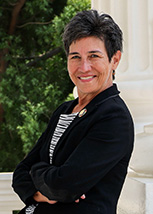
Ask Maddy about Susan Eggman
Scope: california
Hi! I can help you understand Susan Eggman's legislative record. What would you like to know?
Try one of these
i
Maddy answers using official bill text and legislative records. Always verify before sharing.
Sources cited inline