

Passed Feb 10, 2020
1 co-sponsor
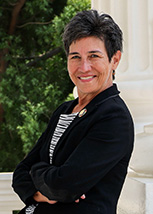
Total votes
31,521
all sessions
Attendance
91%
1,943 missed
Lower than 89% of chamber peers
With party
99%
of cast votes
Near the chamber average
Bipartisan score
0%
crosses aisle rarely
Near the chamber average
Sponsored
1,487
bills & resolutions
Near the chamber average
Committees
0
assignments
1,487 bills and resolutions
Sponsored bills
Total
1,487
Primary
263
Co-sponsor
1,224
This page
1,487
matching current filters
Water rights: stockponds.
The California Constitution requires that the water resources of the state be put to beneficial use to the fullest extent of which they are capable and that the waste or unreasonable use or unreasonable method of use of water be prevented. The Water Rights Permitting Reform Act of 1988 authorizes any person to obtain a right to appropriate water for a small domestic, small irrigation, or livestock stockpond use upon registering the use with the State Water Resources Control Board, as prescribed, payment of a registration fee, and application of the water to reasonable and beneficial use with due diligence. Existing law generally provides that the owner of a dam or other water impoundment structure constructed before January 1, 1969, with a capacity not in excess of 10 acre-feet on January 1, 1975, has a valid water right for the use of the water for specified purposes relating to livestock watering use, if that person files a claim for a water right accompanied by a fee with the board not later than December 31, 1997. Existing law requires the board to issue a certificate of the validity of the water right to a claimant who establishes a water right under these provisions. This bill would provide that the owner of a stockpond built prior to January 1, 2019, that does not have a capacity greater than 10 acre-feet may obtain a right to appropriate water for the principal purpose of watering livestock if that person files a claim for a water right with the board accompanied by a fee not later than December 31, 2021, with certain exceptions. Upon the issuance of a certificate by the board for an appropriation of water obtained under the bill's provisions, the bill would require the board to provide in writing conditions to which the appropriation is subject. The bill would require the board to establish reasonable general conditions to which all appropriations of water made under the bill's provisions are to be subject and would authorize the board to revise the conditions from time to time. Existing law authorizes the board to adopt regulations requiring measurement and reporting of water diversion and use by persons including, among others, those authorized to appropriate water under a permit, a license, a registration for small domestic, small irrigation, or livestock stockpond use, or a certification for livestock stockpond use. This bill would require the board to assume for purposes of those measurement and reporting regulations that the capacity of a stockpond declared with a specified type of established water rights claim is the total amount of water diverted annually.
Failed Feb 3, 2020
1 co-sponsor
Education finance: Higher Education Facilities Bond Act of 2020.
(1) Under the Higher Education Facilities Bond Act of 1986, the Higher Education Facilities Bond Act of 1988, and the Higher Education Facilities Bond Act of June 1992, the issuance, pursuant to the State General Obligation Bond Law, of bonds in an amount not to exceed $400,000,000, $600,000,000, and $900,000,000, respectively, and the expenditure of the revenues therefrom, were authorized for the purpose of aid to the University of California and the California State University for, among other things, the construction and equipping of educational facilities, as specified. Existing law establishes the Higher Education Facilities Finance Committee to administer those acts, and to authorize the issuance and sale of bonds to the extent necessary to fund the education facilities construction apportionments expressly authorized by the Legislature in the annual Budget Act. More recently, the Class Size Reduction Kindergarten-University Public Education Facilities Bond Act of 1998, the Kindergarten-University Public Education Facilities Bond Act of 2002, the Kindergarten-University Public Education Facilities Bond Act of 2004, and the Kindergarten-University Public Education Facilities Bond Act of 2006 authorized the issuance of bonds and the expenditure of revenues therefrom for the University of California and the California State University, as well as for the California Community Colleges and public elementary and secondary schools. Article XVI of the California Constitution requires measures authorizing general obligation bonds to specify the single object or work to be funded by the bonds, and further requires a bond act to be approved by a 23 vote of each house of the Legislature and a majority of the voters. This bill would enact the Higher Education Facilities Bond Act of 2020 which, upon approval by the state electorate, would authorize the issuance of state general obligation bonds in the total amount of $7,000,000,000. The proceeds of the bonds issued and sold under the bill would be available for the construction, reconstruction, and remodeling of existing or new facilities, as specified, at the University of California, the Hastings College of the Law, and the California State University in specified proportions, including $3,000,000,000 for the construction of new campuses of the California State University. (2) This bill would provide for the submission of the Higher Education Facilities Bond Act of 2020 to the voters at the November 3, 2020, statewide general election.
Failed Feb 3, 2020
0 co-sponsors
Special districts: change of organization: mitigation of revenue loss.
The Cortese-Knox-Hertzberg Local Government Reorganization Act of 2000 provides the sole and exclusive authority and procedure for the initiation conduct, and completion of changes of organization and reorganization for cities and districts by a local agency formation commission established in each county. That act requires that a proposal for certain changes of organization, regarding services provided within a special district, including a proposal for the establishment of new or different functions or class of services, or the divestiture of the power to provide particular functions or class of services, within all or part of the jurisdictional boundaries of a special district, be made by a resolution of application adopted by the legislative body of that special district that includes specified matters and is submitted with a plan for services, prepared as provided. The act requires the commission to review and approve or disapprove a proposal for the establishment of new or different functions or class of services, or the divestiture of the power to provide particular functions or class of services, within all or part of the jurisdictional boundaries of a special district, as specified. The act additionally authorizes the commission to impose various terms and conditions to a change of organization or reorganization, including the imposition of taxes, assessments, and other charges for specified purposes. This bill would authorize the commission to propose, as part of the review and approval of a proposal for the establishment of new or different functions or class of services, or the divestiture of the power to provide particular functions or class of services, within all or part of the jurisdictional boundaries of a special district, that the special district, to mitigate any loss of property taxes, franchise fees, and other revenues to any other affected local agency, provide payments to the affected local agency from the revenue derived from the proposed exercise of new or different functions or classes of service. The bill would specify that any payment by the special district to an affected local agency in satisfaction of the proposal would not be considered the payment of a tax from which the special district would be exempt, as provided.
Failed Feb 3, 2020
0 co-sponsors
Restorative Justice Pilot Program.
Existing law authorizes a court to grant pretrial diversion to a defendant in specified cases, including when the defendant is suffering from a mental disorder, specified controlled substances crimes, and when the defendant was, or currently is, a member of the United States military. This bill, until January 1, 2025, would require the Board of State and Community Corrections to establish the Restorative Justice Pilot Program and, upon appropriation of money for this purpose by the Legislature, would require the board to make 5-year grants to up to 3 counties to establish and operate restorative justice diversion programs. As part of the program, commencing January 1, 2021, the bill would require a court to defer an eligible defendant's sentence for up to 36 months while the defendant undergoes specified counseling. The bill would require, after counseling and other preparation of the parties, the responsible party to encounter, in a facilitated setting, the victims, or surrogates chosen to stand in for the victims, and directly address the harms the responsible person has caused. The bill would require the victim to be given the opportunity to assist in the shaping of the amends with which the responsible party is required to comply and would require the responsible party, the victim, and representatives of community stakeholders to jointly agree on a restorative justice plan that will bring amends to the victim and the community and help the responsible party make changes that will prevent the commission of additional crimes. This bill would require the board to establish requirements for all counties participating in the program to collect consistent data and to report that data to the board or a qualified research organization designated by the board. The bill would require the board to designate a qualified independent research organization to analyze the data collected and issue a report on the findings, as specified. Existing law provides that, except as otherwise provided by statute, all relevant evidence is admissible. The California Constitution provides for the Right to Truth-In-Evidence, which requires a 23 vote of the Legislature to exclude any relevant evidence from any criminal proceeding, as specified. This bill would make specified statements, and information derived from those statements, made as a part of the program inadmissible in any action or proceeding.
In committee Feb 3, 2020
1 co-sponsor
Plastic bags.
Existing law, until January 1, 2020, requires an operator of a store, as defined, to establish an at-store recycling program that provides to customers the opportunity to return clean plastic carryout bags to that store, and requires a manufacturer of plastic carryout bags to develop educational materials to encourage the reduction, reuse, and recycling of plastic bags and make those materials available to those stores. This bill would extend the operation of those requirements to January 1, 2021.
Failed Feb 3, 2020
0 co-sponsors
Collaborative court program incentives.
Existing law authorizes a court to grant pretrial diversion to a defendant in specified cases, including when the defendant is suffering from a mental disorder, specified controlled substances crimes, and when the defendant was, or currently is, a member of the United States military. Existing law imposes various fines, fees, penalties, and assessments on a defendant in a criminal proceeding, including the fine set by statute, restitution fines and fees, and assessments to support the state court system. This bill would require the court, when an indigent defendant enters a collaborative court program, to waive all penalties assessed over the base fines for current and prior nonfelony violations of the Vehicle Code and other misdemeanors or infractions. The bill would also require the court to suspend all remaining fines for an indigent defendant pending successful completion of the collaborative court program and authorize the court to determine how an indigent defendant will satisfy the suspended fines by specified methods that include a complete or partial waiver of the fines. The bill would reinstate all previously waived or suspended fines for a defendant who is removed from a collaborative court program prior to completion and prosecution proceeds or sentencing is imposed. The bill would define terms for its purposes and make legislative findings and declarations in support of its provisions.
Failed Feb 3, 2020
0 co-sponsors
Water: underground storage.
Under existing law, the right to water or to the use of water is limited to that amount of water that may be reasonably required for the beneficial use to be served. Existing law provides for the reversion of water rights to which a person is entitled when the person fails to beneficially use the water for a period of 5 years. Existing law declares that the storing of water underground, and related diversions for that purpose, constitute a beneficial use of water if the stored water is thereafter applied to the beneficial purposes for which the appropriation for storage was made. This bill would instead provide that any diversion of water to underground storage constitutes a diversion of water for beneficial use for which an appropriation may be made if the diverted water is put to beneficial use, as specified. The bill would provide that the forfeiture periods of a water right do not include any period when the water is being used in the aquifer or storage area or is being held in underground storage for later application to beneficial use.
Failed Feb 3, 2020
0 co-sponsors
Sacramento-San Joaquin Delta: Delta Stewardship Council.
Existing law, the Sacramento-San Joaquin Delta Reform Act of 2009, establishes the Delta Stewardship Council, which consists of 7 members, and requires the council to develop, adopt, and commence implementation of a comprehensive management plan for the Delta, known as the Delta Plan. This bill would increase the membership of the council to 13 members, including 11 voting members and 2 nonvoting members, as specified. By imposing new duties upon local officials to appoint new members to the council, the bill would impose a state-mandated local program. The California Constitution requires the state to reimburse local agencies and school districts for certain costs mandated by the state. Statutory provisions establish procedures for making that reimbursement. This bill would provide that, if the Commission on State Mandates determines that the bill contains costs mandated by the state, reimbursement for those costs shall be made pursuant to the statutory provisions noted above.
Failed Feb 3, 2020
1 co-sponsor
Agricultural vehicles: beekeeping.
Existing law generally regulates the use of agricultural vehicles and defines agricultural vehicle to mean a vehicle or combination of vehicles with a gross combination weight rating or a gross vehicle weight rating of 26,000 pounds or less, if certain conditions are met, including that the vehicle is operated by a farmer or other specified individual and used exclusively in the conduct of agricultural operations when operating in commerce. Existing law, until January 1, 2023, exempts agricultural vehicles from the Basic Inspection of Terminals (BIT) program, which, among other things, makes it unlawful for a motor carrier to operate specified vehicles without identifying to the Department of the California Highway Patrol all terminals in the state where vehicles may be inspected by the department. Existing law requires the Department of the California Highway Patrol, in consultation with the Department of Motor Vehicles, to report to the Governor and the Legislature by January 1, 2022, about the impact of excluding agricultural vehicles from the BIT program. This bill would include a beekeeping vehicle as an agricultural vehicle for these purposes and would further require the Department of the California Highway Patrol and Department of Motor Vehicles to report to the Governor and the Legislature by January 1, 2022, about the impact of excluding agricultural vehicles used for beekeeping from the BIT program.
Failed Feb 3, 2020
0 co-sponsors
Ask Maddy
·
AI policy assistant
Ask Maddy about Susan Eggman
Scope: california
Hi! I can help you understand Susan Eggman's legislative record. What would you like to know?
Try one of these
i
Maddy answers using official bill text and legislative records. Always verify before sharing.
Sources cited inline