

Passed Mar 28, 2022
0 co-sponsors
Total votes
31,521
all sessions
Attendance
91%
1,943 missed
Lower than 89% of chamber peers
With party
99%
of cast votes
Near the chamber average
Bipartisan score
0%
crosses aisle rarely
Near the chamber average
Sponsored
1,487
bills & resolutions
Near the chamber average
Committees
0
assignments
1,487 bills and resolutions
Sponsored bills
Total
1,487
Primary
263
Co-sponsor
1,224
This page
1,487
matching current filters
Passed Mar 21, 2022
1 co-sponsor
Passed Mar 17, 2022
1 co-sponsor
Relative to Rose Ann Vuich Recognition Day.
This measure would proclaim January 27, 2022, as Rose Ann Vuich Recognition Day, in recognition of Senator Rose Ann Vuich as the first woman elected to the California State Senate, to honor Senator Vuich's service to the Senate, and to appropriately reflect the Senator's stature and legacy.
Signed into law Mar 11, 2022
1 co-sponsor
Childcare services: alternative payment programs: direct deposits: reserve funds.
(1) The Child Care and Development Services Act, administered by the State Department of Social Services, establishes a system of childcare and development services for children up to 13 years of age. Existing law requires the department to contract with local contracting agencies for alternative payment programs for childcare services to be provided throughout the state. Existing law requires the alternative payment program to reimburse childcare providers based upon specified criteria, including the actual days and hours of attendance for those families with variable schedules. This bill would instead require the alternative payment program to reimburse childcare providers based upon the maximum certified hours of need, as documented. (2) The act requires an alternative payment program to verify childcare provider rates no less frequently than once a year. The act requires the department to develop regulations for addressing discrepancies in the childcare provider rate levels identified through the rate verification process described above. This bill would delete these provisions. (3) The act authorizes a contractor to retain a reserve fund balance for alternative payment model and certificate childcare contracts, as provided. The act prohibits these funds from exceeding either 2% of the sum of the parts of each contract, as provided, or $1,000, whichever is greater. This bill would instead prohibit the funds from exceeding either 15% of the sum of the parts of each contract, as provided, or $1,000, whichever is greater. (4) Existing law, the Early Education Act, requires the Superintendent of Public Instruction, to, among other things, provide an inclusive and cost-effective preschool program. The Early Education Act and the Child Care and Development Services Act authorize alternative payment programs and providers operating or providing services under the acts to use digital signatures that comply with state and federal standards and authorize the use of digital forms to allow families to apply for services. This bill would instead authorize the use of electronic signatures and forms.
Vetoed Feb 10, 2022
1 co-sponsor
Mental Health Services Act: innovative programs.
Existing law, the Mental Health Services Act (MHSA) , an initiative measure enacted by the voters as Proposition 63 at the November 2, 2004, statewide general election, establishes the continuously appropriated Mental Health Services Fund to fund various county mental health programs and requires counties to spend those funds as specified. As part of the MHSA, existing law requires counties to engage in specified planning activities, including creating and updating a 3-year program and expenditure plan through a stakeholder process. Existing law authorizes counties to spend 5% of MHSA money on innovative programs, upon approval of the Mental Health Services Oversight and Accountability Commission. Existing law authorizes the MHSA to be amended by a 23 vote of the Legislature if the amendments are consistent with, and further the purposes of, the MHSA. This bill would amend the MHSA by authorizing counties, until January 1, 2025, to expend unencumbered innovative program funds to expand a program implementing the full-service partnership model, including those that prioritize unserved or underserved populations that typically receive services through innovative programs. The bill would require, prior to expending the funds, that the county mental health program seek approval from the commission and that the county board of supervisors adopt specified findings. The bill would require that the commission approve or deny the request to use funds within 45 days of receiving it. The bill would require a county mental health program using funds pursuant to these provisions to report annually to the commission, as specified. This bill would state the finding and declaration of the Legislature that this change is consistent with, and furthers the intent of, the MHSA.
In committee Feb 1, 2022
1 co-sponsor
Conversion of motels and hotels: streamlining.
Existing law, until January 1, 2026, authorizes a development proponent to submit an application for a multifamily housing development containing 2 or more residential units, which satisfies specified objective planning standards, that is subject to a streamlined, ministerial approval process, as provided, and not subject to a conditional use permit. Existing law requires a local government to notify the development proponent in writing if the local government determines that the development conflicts with any of those objective standards by a specified time; otherwise, the development is deemed to comply with those standards. Existing law generally requires that not less than the general prevailing rate of per diem wages, as specified, be paid to workers employed on a public work project that exceeds $1,000. Existing law establishes requirements that apply when a public entity is required by statute or regulation to obtain an enforceable commitment that a bidder, contractor, or other entity will use a skilled and trained workforce to complete a contract or project. Existing law also authorizes a public entity to require that a bidder, contractor, or other entity use a skilled and trained workforce to complete a contract or project. This bill would authorize a development proponent to submit an application for a development for the complete conversion, as defined, of a structure with a certificate of occupancy as a motel or hotel into multifamily housing units to be subject to a streamlined, ministerial approval process, provided that development proponent reserves 10% of the proposed housing units for lower income households, unless a local government has affordability requirements that exceed these requirements. The bill would require the structure proposed to be converted be vacant for at least 6 months prior to the submission of the application, except as provided. The bill would require the development proponent to comply with specified requirements regarding the payment of prevailing rate or per diem wages for construction work related to the part of the development that is a public work and the use of a skilled and trained workforce on the development, except as provided. The bill would require a local government to notify the development proponent in writing if the local government determines that the development conflicts with any of these objective standards within 30 days of submitting a complete application; otherwise, the development would be deemed to comply with those standards. This bill would restrict a local government's authority to impose automobile parking standards for a development subject to these provisions and would prohibit imposition of parking standards for a project that is located within specified areas. The bill would prohibit a local government from imposing any standard requiring a minimum or maximum unit size. The bill would prohibit a local government from imposing any density restriction on a development subject to these provisions, except that the total number of housing units created by the conversion shall not exceed the total number of units offered by the hotel or motel. By imposing new duties upon local agencies with respect to the streamlined approval process described above, the bill would impose a state-mandated local program. The California Environmental Quality Act (CEQA) requires a lead agency, as defined, to prepare, or cause to be prepared, and certify the completion of, an environmental impact report on a project that it proposes to carry out or approve that may have a significant effect on the environment or to adopt a negative declaration if it finds that the project will not have that effect. CEQA also requires a lead agency to prepare a mitigated negative declaration for a project that may have a significant effect on the environment if revisions in the project would avoid or mitigate that effect and there is no substantial evidence that the project, as revised, would have a significant effect on the environment. CEQA does not apply to the approval of ministerial projects. The approval process established by this bill would be ministerial in nature, thereby exempting the approval of development projects subject to that approval process from CEQA. The bill would include findings that changes proposed by this bill address a matter of statewide concern rather than a municipal affair and, therefore, apply to all cities, including charter cities. The California Constitution requires the state to reimburse local agencies and school districts for certain costs mandated by the state. Statutory provisions establish procedures for making that reimbursement. This bill would provide that no reimbursement is required by this act for a specified reason.
In committee Feb 1, 2022
0 co-sponsors
Medical Device Right to Repair Act.
The Sherman Food, Drug, and Cosmetic Law regulates the packaging, labeling, and advertising of drugs and devices, and is administered by the State Department of Public Health. Among other things, the law prohibits a person from conducting a home medical device retail facility business in this state unless the person has obtained a license from the department and sets forth standards for operating that facility. Existing law authorizes the department to waive any licensing requirements for a medical device retail facility when, in the opinion of the department, a high standard of patient safety, consistent with good patient care, can be provided by the licensure of a home medical device retail facility that does not meet all of the requirements for licensure. This bill would enact the Medical Device Right to Repair Act, and would require an original manufacturer of powered medical equipment used in the treatment, monitoring, or diagnosis of a patient to provide documentation, parts, service access methods, and tools used to inspect, diagnose, maintain, and repair powered medical equipment to a hospital and an independent service organization engaged by the hospital for the purpose of providing medical equipment maintenance and repair, on fair and reasonable terms, as defined. The bill would exempt from these requirements any trade secret information. The bill would subject an original equipment manufacturer who knowingly violates these provisions to specified civil penalties, and would authorize the Attorney General or a district attorney, county counsel, or city attorney to bring a civil action for this purpose.
In committee Feb 1, 2022
0 co-sponsors
Income tax: credits: food banks.
The Personal Income Tax Law and the Corporation Tax Law allow various credits against the taxes imposed by those laws, including, for taxable years beginning on or after January 1, 2017, and before January 1, 2022, a credit for qualified taxpayers in an amount equal to 15% of the qualified value of fresh fruits or vegetables and specified raw agricultural products or processed foods donated to a food bank. In accordance with specified requirements imposed on bills containing new tax expenditures, existing law requires the Franchise Tax Board to report to the Legislature on or before December 1, 2019, and each December 1 thereafter until January 1, 2021, regarding the utilization of those tax credits and requires specified data to be included in the report. This bill would extend the authorization for those tax credits to a taxable year beginning before January 1, 2027. The bill would extend the requirement of the reports until January 1, 2026. This bill would take effect immediately as a tax levy.
died Feb 1, 2022
0 co-sponsors
Private postsecondary education.
The federal Higher Education Act of 1965 prohibits, as a condition of participating in federal student aid programs, a for-profit private postsecondary educational institution from deriving less than 10 percent of its revenues for each fiscal year from sources other than federal financial assistance, as defined. Under the federal act, if an institution fails to comply with the requirement for 2 consecutive fiscal years, it loses its eligibility to participate in federal financial assistance programs for at least two fiscal years. The California Private Postsecondary Education Act of 2009 provides for the regulation of private postsecondary educational institutions by the Bureau for Private Postsecondary Education in the Department of Consumer Affairs. This bill would prohibit private postsecondary educational institutions, commencing with the 2023–24 academic year, from enrolling California residents if, pursuant to that federal law, for the previous 2 consecutive fiscal years or 2 out of the previous 3 fiscal years it derived less than 10 percent of its revenues from sources other than federal financial assistance.
In committee Feb 1, 2022
0 co-sponsors
Ask Maddy
·
AI policy assistant
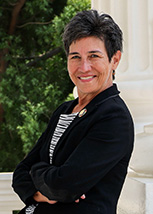
Ask Maddy about Susan Eggman
Scope: california
Hi! I can help you understand Susan Eggman's legislative record. What would you like to know?
Try one of these
i
Maddy answers using official bill text and legislative records. Always verify before sharing.
Sources cited inline