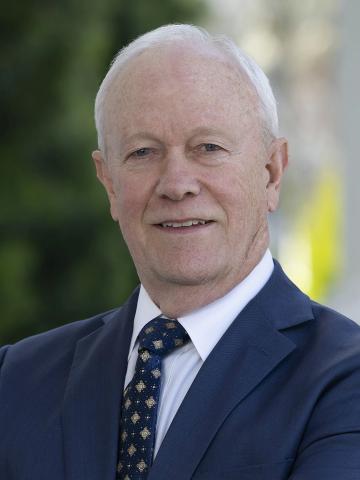
Photo of Jerry McNerney
D California Senate · District 5

Sen. Jerry McNerney

Compare
Total votes
4,118
all sessions
Attendance
99%
28 missed
Higher than 87% of chamber peers
With party
99%
of cast votes
Higher than 75% of chamber peers
Bipartisan score
0%
crosses aisle rarely
Lower than 83% of chamber peers
Sponsored
139
bills & resolutions
Near the chamber average
Committees
12
assignments
139 bills and resolutions

Sponsored bills

Total
139
Primary
41
Co-sponsor
98
This page
139
matching current filters
Co-sponsor ACR 153
Signed into law · California House · Co-sponsor
Relative to Irish American Heritage Month.

This measure would, among other things, designate March 2026 as Irish American Heritage Month in honor of 102 years of diplomatic relations between the United States and Ireland and would commemorate the multitude of contributions that Irish Americans have made to this country and state.

Signed into law Apr 21, 2026 1 co-sponsor
Co-sponsor SCR 141
Signed into law · California Senate · Co-sponsor
Relative to Women's Equal Pay Day.

This measure would recognize March 26, 2026, as Women's Equal Pay Day in California, in recognition of the need to eliminate the gender gap in earnings by women and to promote policies to ensure equal pay for all.

Signed into law Apr 21, 2026 1 co-sponsor
Co-sponsor AB 1984
In committee · California House · Co-sponsor
Corporate powers: political spending power.

Existing constitutional law establishes the First Amendment right of freedom of speech. Existing case law, including Citizens United v. Federal Election Commission (2010) 558 U.S. 310 and other judicial precedents, establishes that corporate entities have First Amendment rights to engage in political speech and places limits on the suppression of political speech. Existing law regulates the formation and operation of various types of business and nonprofit entities, including corporations, nonprofit corporations, limited liability corporations, limited partnerships, limited liability partnerships, and unincorporated associations and sets forth their powers and duties. Existing law requires the Secretary of State to receive and process corporate and nonprofit entity filings, maintain records of those filings, and perform related duties. This bill would redefine the powers of artificial persons, as defined, organized under the Corporations Code to specify that those powers do not include political spending power, as defined. The bill would revoke all powers, privileges, and capacities previously granted to corporations under state law and provide that a corporation operating under the jurisdiction of this state possesses only those powers, privileges, and capacities specifically granted in the Corporations Code. The bill would declare void any act undertaken by a corporation beyond the scope of its granted powers, and would require that corporation to forfeit all granted powers. The bill would authorize reinstatement of granted powers after, among other things, disgorgement of all money used in the exercise of political spending power. The bill would authorize the Secretary of State to adopt rules regarding, among other things, reinstatement of forfeited powers. The bill would authorize the Attorney General with authority to enforce its provisions. This bill would make its provisions severable and would further specify the intent and preference of the Legislature that corporations hold no powers at all, rather than be vested with political spending power. The bill would make related findings and declarations.

In committee Apr 20, 2026 1 co-sponsor
Co-sponsor SCR 134
Signed into law · California Senate · Co-sponsor
Relative to Nowroz.

This measure would recognize March 21, 2026, as the beginning of the International Day of Nowroz and extend best wishes for a peaceful and prosperous Nowroz to all Californians.

Signed into law Apr 17, 2026 1 co-sponsor
Co-sponsor SR 88
Passed · California Senate · Co-sponsor
Relative to modern biotechnology.

Maddy summarySenate Resolution 88 is a commemorative measure that formally recognizes the 50th anniversary of modern biotechnology and the 20th anniversary of the California Biotechnology Foundation. The resolution highlights California's historical role in pioneering biotech innovations like genetic engineering and gene editing, noting the industry's significant economic impact and contributions to medical advancements. It does not alter any laws or policies but serves to honor the scientists, innovators, and policymakers who have driven progress in the field.

Passed Apr 9, 2026 1 co-sponsor
Co-sponsor AB 2156
Signed into law · California House · Co-sponsor
Holidays: Farmworkers Day.

Existing law designates specific days as holidays in this state, including Cesar Chavez Day on March 31, and requires the Governor to annually proclaim March 31 as Cesar Chavez Day. This bill would instead designate March 31 as Farmworkers Day and would require the Governor to annually proclaim March 31 as Farmworkers Day. This bill would declare that it is to take effect immediately as an urgency statute.

Signed into law Mar 26, 2026 1 co-sponsor
Primary SR 83
Passed · California Senate · Lead sponsor
Relative to Colorectal Cancer Awareness Month.

Maddy summaryThis Senate Resolution designates March 2026 as Colorectal Cancer Awareness Month in California to promote education and early detection of the disease. The bill highlights the importance of screening, noting that timely tests can prevent colorectal cancer, which is a leading cause of death and disproportionately affects certain demographic groups. By officially recognizing this month, the Senate aims to encourage the public to learn about the risks and benefits of getting screened. The resolution also directs the Secretary of the Senate to send copies of the document to the sponsoring legislator for distribution.

Passed Mar 9, 2026 0 co-sponsors
Co-sponsor SR 82
Passed · California Senate · Co-sponsor
Relative to Children's Dental Health Month.

Maddy summarySenate Resolution 82 declares February 2026 as Children's Dental Health Month in California to raise awareness about the importance of oral health. The resolution highlights that tooth decay is a major public health issue affecting many children, particularly those from disadvantaged backgrounds, and notes that untreated dental problems can lead to missed school days and learning difficulties. While acknowledging recent improvements in access to Medi-Cal dental services, the bill emphasizes the need for continued efforts to prevent cavities through education and preventive care. This measure serves as a symbolic recognition rather than establishing new laws or funding, aiming to encourage policymakers and the public to focus on childhood oral health.

Passed Mar 5, 2026 1 co-sponsor
Co-sponsor SB 643
Vetoed · California Senate · Co-sponsor
Carbon Dioxide Removal Purchase Program.

Existing law establishes the State Air Resources Board as the state agency responsible for monitoring and regulating sources emitting greenhouse gases. Existing law requires the state board to establish a Carbon Capture, Removal, Utilization, and Storage Program, as provided, to evaluate the efficacy, safety, and viability of carbon capture, utilization, or storage technologies and carbon dioxide removal technologies and facilitate the capture and sequestration of carbon dioxide from those technologies, where appropriate. Existing law requires the Secretary of the Natural Resources Agency, in consultation with the state board, to publish a framework for governing agreements regarding 2 or more tracts of land overlying the same geologic storage reservoir or reservoirs for purposes of managing, developing, and operating a carbon dioxide capture, removal, or sequestration project, as provided. This bill would require the state board to establish and administer the Carbon Dioxide Removal Purchase Program as a competitive grant process for eligible carbon dioxide removal projects, as specified. The bill would require the state board, on or before January 1, 2028, and annually thereafter, to conduct and publish on its internet website a survey of carbon dioxide removal projects existing or in development within the state, and, on or before December 31, 2027, and annually thereafter, until December 31, 2035, to publish on its internet website a report describing Carbon Dioxide Removal Purchase Program activities completed and carbon dioxide removal projects to date, as specified. The bill would require the state board, on or after July 1, 2026, but on or before December 31, 2035, to fund carbon dioxide removal projects in an amount totaling $50,000,000. The bill would authorize up to 10% of that amount to be used to supplement necessary administrative costs in establishing the program. The bill would prohibit carbon dioxide removal projects from exceeding $25,000,000 of grants toward qualified carbon dioxide removals in any one of specified project categories or $12,500,000 of grants towards any one individual carbon dioxide removal project sponsor, except as specified. The bill would require that eligible carbon dioxide removal projects permanently retire the contracted tons of removed carbon dioxide from any future carbon dioxide removals credit issuance. The bill would require the state board, on or before January 1, 2028, to adopt guidelines, including the definition of an eligible carbon dioxide removal project, for the program, which the bill would require to be consistent with certain provisions governing carbon dioxide capture, removal, or sequestration projects, as specified. The bill would make implementation of these provisions contingent upon an appropriation by the Legislature for purposes of the program. The bill would require all funds to be available for encumbrance or expenditure until June 30, 2035, and to be available for liquidation until June 30, 2035.


Vetoed Mar 2, 2026 1 co-sponsor
Primary SB 787
Vetoed · California Senate · Lead sponsor
Energy: equitable clean energy supply chains and industrial policy in California.

Existing law requires the State Energy Resources Conservation and Development Commission (Energy Commission) to adopt, on a biennial basis, an integrated energy policy report that contains an overview of major energy trends and issues facing the state, including supply, demand, pricing, reliability, efficiency, and impacts on public health and safety, the economy, resources, and the environment. Existing law requires that the report present policy recommendations based on an in-depth and integrated analysis of the most current and pressing energy issues facing the state. This bill would require the Energy Commission, on or before March 1, 2027, to designate a person within the Energy Commission or identify and retain an external candidate to serve as the Senior Counselor on Industrial Policy and Clean Energy Development, and would require the senior counselor to, among other things, convene working groups that focus on certain issues, as provided. The bill would require the Energy Commission, the Governor's Office of Business and Economic Development, the Labor and Workforce Development Agency, the Public Utilities Commission, the Department of General Services, and the office of the Treasurer, on or before March 1, 2027, to enter into a memorandum of understanding on equitable clean energy supply chains and industrial policy in California with specified goals and provisions, as provided. The bill would require the senior counselor to track and coordinate the work under the memorandum of understanding and to prepare an annual report summarizing the key findings and recommendations resulting from that work. The bill would require that the report be presented at a public meeting of the Energy Commission and be published on the Energy Commission's internet website. The bill would establish in the State Treasury the Equitable Clean Energy Supply Chain and Industrial Policy Fund and would, upon appropriation by the Legislature, authorize the moneys in the fund to be expended for purposes of the bill.

Vetoed Mar 2, 2026 0 co-sponsors
Showing 71 to 80 of 139 bills
Previous 1 7 8 9 14 Next