

Passed Sep 10, 2015
1 co-sponsor
Total votes
23,049
all sessions
Attendance
95%
896 missed
Higher than 87% of chamber peers
With party
99%
of cast votes
Near the chamber average
Bipartisan score
0%
crosses aisle rarely
Near the chamber average
Sponsored
741
bills & resolutions
Near the chamber average
Committees
0
assignments
741 bills and resolutions
Sponsored bills
Total
741
Primary
265
Co-sponsor
476
This page
741
matching current filters
Relative to the Tony Gwynn Memorial Freeway.
This measure would designate the portion of Interstate 15 from Camino Del Norte to Scripps Poway Parkway/Mercy Road in the County of San Diego as the Tony Gwynn Memorial Freeway. The measure would also request the Department of Transportation to determine the cost of appropriate signs showing this special designation and, upon receiving donations from nonstate sources covering that cost, to erect those signs.
Signed into law Sep 10, 2015
1 co-sponsor
Passed Sep 10, 2015
0 co-sponsors
Veterans: Team AMVETS.
This measure would commend AMVETS Department of California, also known as Team AMVETS, for providing benefits and services to veterans, and for playing an important role in the community for 70 years.
Signed into law Sep 8, 2015
1 co-sponsor
Landlords: notice of pesticide use.
Existing law regulates the hiring of dwelling units, as defined. Existing law requires a landlord of a residential dwelling unit to provide a new tenant with certain disclosures, including, but not limited to, specified notice from a registered structural pest control company regarding the use of pesticides at the dwelling unit if a contract for periodic pest control service has been executed. This bill, with certain exceptions, would require the landlord or the landlord's authorized agent, as defined, to provide a tenant, and, if certain conditions are met, any tenant of adjacent units, with specified notice of the use of pesticides at the dwelling unit if the landlord or authorized agent applies any pesticide without a licensed pest control operator. The bill, with certain exceptions, would require the posting of a similar notice at least 24 hours prior to application of any pesticide to a common area without a licensed pest control operator, unless the pest poses an immediate threat to health and safety, in which case the notice would be required to be posted as soon as practicable, but not later than one hour after the pesticide is applied. For routine application pursuant to a schedule in common areas, the bill would require a notification to existing tenants prior to the initial routine application and to new tenants at the time that the lease agreement is entered into.
Signed into law Sep 8, 2015
0 co-sponsors
Primary drinking water standards: hexavalent chromium: compliance plan.
The California Safe Drinking Water Act provides for the operation of public water systems and imposes on the State Water Resources Control Board various duties and responsibilities for the regulation and control of drinking water in the State of California. The act requires the state board to adopt primary drinking water standards for contaminants in drinking water based upon specified criteria, and required a primary drinking water standard to be established for hexavalent chromium by January 1, 2004. Existing law authorizes the state board to grant a variance from primary drinking water standards to a public water system. Existing law makes certain violations of the act a crime. This bill would authorize, until January 1, 2020, the state board, at the request of a public water system that prepares and submits a compliance plan to the state board, to grant a period of time to achieve compliance with the primary drinking water standard for hexavalent chromium by approving the compliance plan, as prescribed. This bill would require a public water system to provide specified notice regarding the compliance plan to the persons served by the public water system and the public water system to send written status reports to the state board. This bill would prohibit a public water system from being deemed in violation of the primary drinking water standard for hexavalent chromium while implementing an approved compliance plan or while state board action on its proposed and submitted compliance plan is pending. The bill would authorize the state board to direct revisions to a compliance plan if the board makes certain determinations and would prohibit a public water system from being granted a period of time to achieve compliance under certain circumstances, including if the public water system does not submit a revised compliance plan or the revised compliance plan is disapproved. The bill would authorize the state board to implement, interpret, or make specific these provisions by means of criteria, published on its Internet Web site. To the extent that a public water system, when requesting approval of a compliance plan or submitting a report pursuant to these provisions, would make any false statement or representation, this bill would expand the scope of a crime and impose a state-mandated local program. The California Constitution requires the state to reimburse local agencies and school districts for certain costs mandated by the state. Statutory provisions establish procedures for making that reimbursement. This bill would provide that no reimbursement is required by this act for a specified reason. This bill would declare that it is to take effect immediately as an urgency statute.
Signed into law Sep 4, 2015
0 co-sponsors
Voting: apportionment.
This measure would urge the Supreme Court of the United States to uphold the federal constitutional principle of "one person, one vote" and not deny California's children and immigrants equal protection under the law.
Signed into law Sep 4, 2015
1 co-sponsor
State real property: surplus.
(1) Existing law provides that the Director of General Services may acquire and dispose of surplus state real property where that property is not needed by another state agency and the Legislature has authorized disposal of the property. Existing law also specifies the manner in which the department is to dispose of surplus state real property. This bill would authorize the director to dispose of 2 specified parcels of state property pursuant to these provisions. (2) The California Constitution requires that the proceeds from the sale of surplus state property be used to pay the principal and interest on bonds issued pursuant to the Economic Recovery Bond Act until the principal and interest on those bonds are fully paid, after which these proceeds are required to be deposited into the Special Fund for Economic Uncertainties, a continuously appropriated fund. Existing law similarly requires that the net proceeds received from any real property disposition be paid into the Deficit Recovery Bond Retirement Sinking Fund Subaccount, a continuously appropriated fund previously established by the California Constitution, until the bonds issued pursuant to the act are retired, and afterward be paid into the Special Fund for Economic Uncertainties. By increasing the amount transferred into continuously appropriated funds, this bill would make an appropriation. This bill would declare that it is to take effect immediately as an urgency statute.
Signed into law Sep 1, 2015
0 co-sponsors
Voter participation.
Existing law generally requires all state, county, municipal, district, and school district elections be held on an established election date. Existing law also establishes certain dates for statewide elections. Existing law requires any state, county, municipal, district, and school district election held on a statewide election date to be consolidated with a statewide election, except as provided. This bill, commencing January 1, 2018, would prohibit a political subdivision, as defined, from holding an election other than on a statewide election date if holding an election on a nonconcurrent date has previously resulted in voter turnout for a regularly scheduled election in that political subdivision being at least 25% less than the average voter turnout within the political subdivision for the previous 4 statewide general elections, except as specified. This bill would require a court to implement appropriate remedies upon a violation of this prohibition. The bill would authorize a voter who resides in a political subdivision where a violation is alleged to file an action in superior court to enforce this prohibition, and it would allow a prevailing plaintiff other than the state or political subdivision to collect a reasonable attorney's fee and litigation expenses, as provided.
Signed into law Sep 1, 2015
0 co-sponsors
Public Utilities Commission: fees.
Under existing law, the Public Utilities Commission has regulatory authority over public utilities. Existing law requires the commission to charge and collect a fee of $75 for filing each application for a certificate of public convenience and necessity, or for the mortgage, lease, transfer, or assignment of a certificate. This bill would require a fee of $500 for filing these applications and would authorize the commission to adjust this fee based on the Consumer Price Index. Existing law establishes the Public Utilities Commission Utilities Reimbursement Account and generally provides that all fees and charges collected under the Public Utilities Code from each public utility, except penalties, be paid into the fund. Other existing law provides that specified fees, including, but not limited to, the fee for filing each application for a certificate of public convenience and necessity, or for the mortgage, lease, transfer, or assignment of a certificate, are required to be paid at least once each month into the State Treasury to the credit of the General Fund. This bill would repeal the provision that requires certain fees to be paid at least once each month into the State Treasury to the credit of the General Fund.
Signed into law Sep 1, 2015
0 co-sponsors
Ask Maddy
·
AI policy assistant
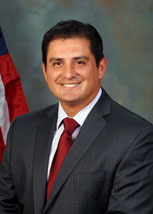
Ask Maddy about Ben Hueso
Scope: california
Hi! I can help you understand Ben Hueso's legislative record. What would you like to know?
Try one of these
i
Maddy answers using official bill text and legislative records. Always verify before sharing.
Sources cited inline