

Passed Apr 30, 2018
1 co-sponsor
Total votes
23,049
all sessions
Attendance
95%
896 missed
Higher than 87% of chamber peers
With party
99%
of cast votes
Near the chamber average
Bipartisan score
0%
crosses aisle rarely
Near the chamber average
Sponsored
741
bills & resolutions
Near the chamber average
Committees
0
assignments
741 bills and resolutions
Sponsored bills
Total
741
Primary
265
Co-sponsor
476
This page
741
matching current filters
Relative to federal Temporary Protected Status.
This measure would condemn the decision to end the Temporary Protected Status designation for El Salvador, Haiti, Nicaragua, and Sudan. The measure would also urge the United States Congress to enact a bipartisan permanent solution for Salvadorans, Haitians, Nicaraguans, Hondurans, and Sudanese with Temporary Protected Status.
In committee Apr 30, 2018
0 co-sponsors
Planning and zoning: transit-rich housing bonus.
The Planning and Zoning Law requires, when an applicant proposes a housing development within the jurisdiction of a local government, that the city, county, or city and county provide the developer with a density bonus and other incentives or concessions for the production of lower income housing units or for the donation of land within the development if the developer, among other things, agrees to construct a specified percentage of units for very low, low-, or moderate-income households or qualifying residents. This bill would require a local government to, if requested, grant a development proponent of a transit-rich housing project a transit-rich housing bonus if that development at the time of submittal meets specified planning standards, including complying with demolition permit requirements, complying with any local inclusionary housing ordinance or, if the local government has not adopted an inclusionary housing ordinance, agreeing to provide a specified percentage of awarded units as onsite affordable housing, preparing a relocation benefits and assistance plan, complying with any locally adopted objective zoning standards, complying with any locally adopted minimum unit mix requirements, and if the development includes specified types of parcels, agreeing to replace those units and to offer units at one of 2 specified affordable rates. The bill would define a transit-rich housing project as a residential development project the parcels of which are all within a 12 mile radius of a major transit stop or a 14 mile radius of a stop on a high-quality bus corridor. The bill would exempt an eligible applicant who receives a transit-rich housing bonus from various requirements, including maximum controls on residential density, maximum controls on floor area ratio that are lower than a specified amount, minimum automobile parking requirements except as provided, maximum height limitations that are less than a specified amount unless those increases would have a specific, adverse impact upon public health and safety, and zoning or design controls that have the effect of limiting additions onto existing structures or lots that comply with those maximum floor area ratios and height limitations. The bill would require an eligible applicant, which this bill would define to mean a development proponent who receives a transit-rich housing bonus, to provide each resident of the development with a recurring monthly transit pass with the applicable transit agency that provides service to the major transit stop or high quality transit corridor that qualified the applicant for the bonus at no cost to the residents. The bill would require an eligible applicant to provide benefits to eligible displaced persons who are displaced by the development, including requiring the applicant to offer a right to remain guarantee to those tenants, and to make payments to eligible displaced persons for moving and related expenses as well as for relocation benefits. The bill would also require an eligible applicant to submit a relocation benefit and assistance plan for approval to the applicable local government to that effect, and to provide specified information and assistance to eligible displaced persons. This bill would provide that the provisions described above become operative on January 1, 2021, in order to provide an opportunity for local governments to conduct studies and to adopt or update any ordinances as necessary. The bill would authorize a local government, no later than July 1, 2020, to apply to the Department of Housing and Community Development for a one-time one-year extension in order to delay the operation of those provisions with respect to parcels located within the jurisdictional boundaries of that local government until January 1, 2022. The bill would require the department to review any application submitted, and to grant it if the department makes specified findings. The bill would require the department to post on its Internet Web site the final decision of any application that the department granted to delay the operation of these provisions. This bill, commencing January 1, 2019, would provide that if a local government adopts any ordinance on or after January 1, 2018, that eliminates zoning designations or decreases residential zoning capacity within an existing zoning district, then any development proponent who submits an application for a transit-rich housing bonus on or after the operative date of these provisions as described above, will be deemed to be consistent with the requirements of these provisions if that development complies with zoning designations that were authorized on January 1, 2018. The bill would declare that its provisions address a matter of statewide concern and apply equally to all cities and counties in this state, including a charter city. By adding to the duties of local planning officials, this bill would impose a state-mandated local program. The California Constitution requires the state to reimburse local agencies and school districts for certain costs mandated by the state. Statutory provisions establish procedures for making that reimbursement. This bill would provide that no reimbursement is required by this act for a specified reason.
died Apr 19, 2018
1 co-sponsor
Passed Apr 2, 2018
0 co-sponsors
Passed Mar 19, 2018
1 co-sponsor
Passed Mar 19, 2018
1 co-sponsor
County mental health plans.
Existing law, the Mental Health Services Act (MHSA) , an initiative measure enacted by the voters as Proposition 63 at the November 2, 2004, statewide general election, establishes the continuously appropriated Mental Health Services Fund to fund various county mental health programs. Existing law requires each county mental health program to report specified information about services and expenditures. This bill would state the intent of the Legislature to enact legislation that would require compliance from county mental health programs regarding reporting requirements established pursuant to the MHSA.
In committee Mar 8, 2018
0 co-sponsors
Attorneys.
The State Bar Act provides for the licensure and regulation of attorneys by the State Bar of California, a public corporation governed by a board of trustees. The act provides that protection of the public is the highest priority of the State Bar of California and the board of trustees in exercising their licensing, regulatory, and disciplinary functions. This bill would express the intent of the Legislature to enact legislation that would diversify the legal profession.
In committee Mar 8, 2018
0 co-sponsors
Tijuana River.
Under the Porter-Cologne Water Quality Control Act, the state board and the California regional water quality control boards are the principal state agencies with authority over matters relating to water quality. The act requires the state board to formulate and adopt state policies for water quality control and requires the regional boards to adopt regional water quality control plans in compliance with the state policies. Under the act, the state board and the regional boards prescribe requirements for the discharge of waste that could affect the quality of the waters of the state. This bill would state the intent of the Legislature to enact legislation to undertake the development of instream or offline structures to temporarily or permanently intercept and divert sewage, solid waste, or sediment from the Tijuana River main channel or tributary canyons, as specified.
In committee Mar 8, 2018
0 co-sponsors
School safety: policies and procedures: pupil harassment and bias-based bullying.
Existing law, the Safe Place to Learn Act, requires the State Department of Education to assess whether local educational agencies have taken certain actions related to educational equity, including adopting a policy that prohibits discrimination, harassment, intimidation, and bullying based on specified characteristics such as disability, gender, gender identity, gender expression, nationality, race or ethnicity, religion, or sexual orientation, or association with a person or group with one or more of the specified characteristics. This bill would state the intent of the Legislature to enact legislation that would require school districts to implement policies and procedures to effectively address pupil harassment and bias-based bullying in California schools.
In committee Mar 8, 2018
0 co-sponsors
Ask Maddy
·
AI policy assistant
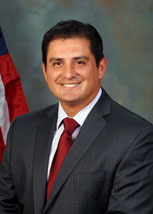
Ask Maddy about Ben Hueso
Scope: california
Hi! I can help you understand Ben Hueso's legislative record. What would you like to know?
Try one of these
i
Maddy answers using official bill text and legislative records. Always verify before sharing.
Sources cited inline